Fertilizer Burn on Maranta Leuconeura: Causes, Checks &
Quick answer
Fertilizer burn on prayer plant shows as crispy brown leaf margins and white salt crust on soil-often after full-strength feed or winter feeding. First step: flush the pot with plain water until it runs freely from the drain holes, then stop all fertilizer for 4–6 weeks.
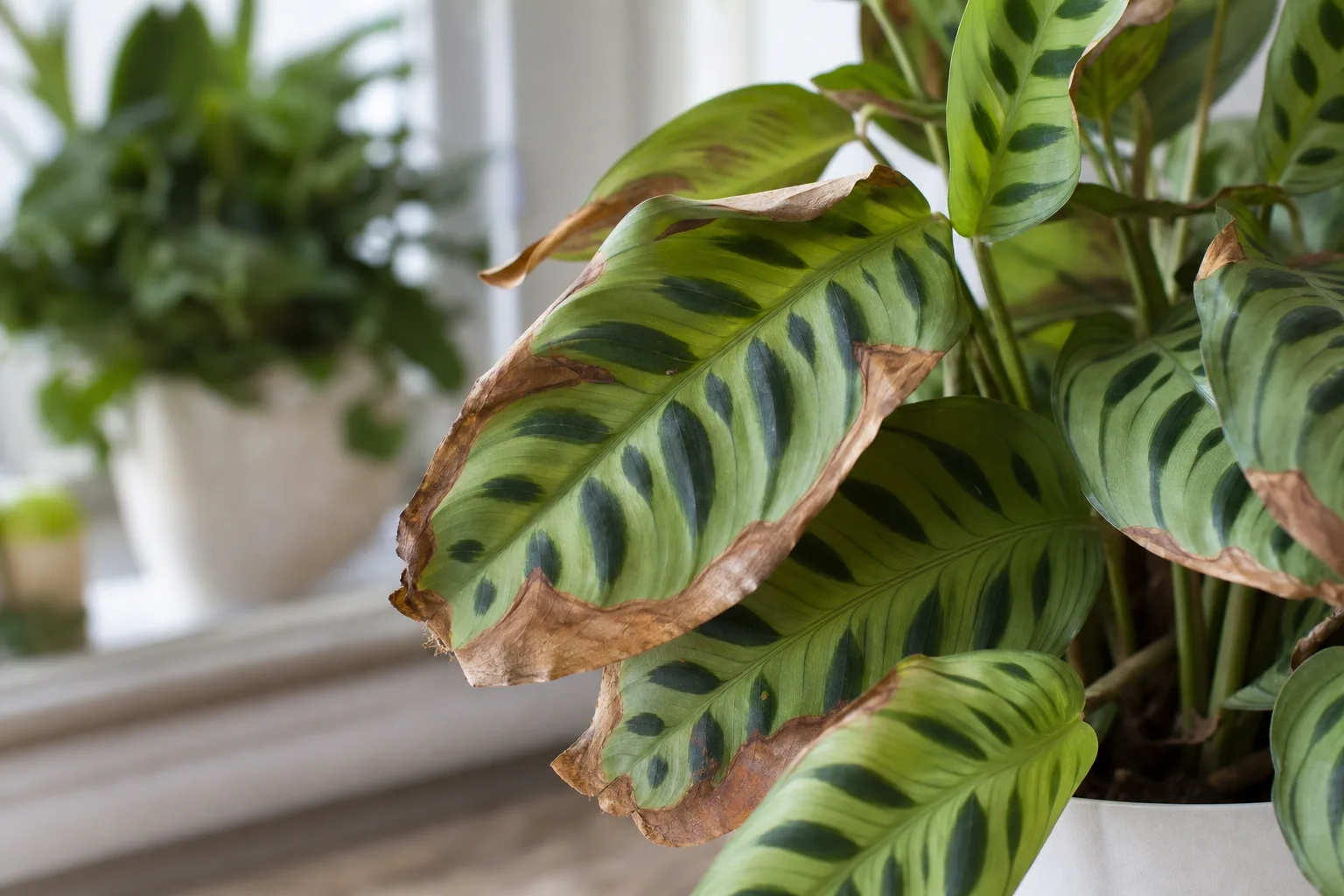
Fertilizer Burn on Maranta Leuconeura: Causes, Checks & Fixes
This guide covers fertilizer burn on Maranta Leuconeura. See also the general Fertilizer Burn guide, watering, and light pages for this plant.
Fertilizer Burn on Maranta Leuconeura: Causes, Checks & Fixes
Quick answer
Fertilizer burn on Maranta leuconeura happens when soluble salts build up in the pot faster than the plant’s shallow rhizomes can handle. Prayer plants are moderate feeders during active growth, but they punish heavy doses, dry-soil feeding, and off-season applications with the same symptom many owners blame on dry air: crispy brown leaf tips and margins on patterned foliage.
First step: flush the pot thoroughly with plain room-temperature water until it runs freely from the drain holes, then stop all fertilizer for at least four to six weeks. Empty the saucer so the roots are not sitting in salty runoff. Do not trim heavily or repot on day one unless roots are already blackened and limp.
What fertilizer burn looks like on Maranta Leuconeura
Salt damage on prayer plants usually shows up on leaf edges before it collapses the whole plant. Watch for these patterns:
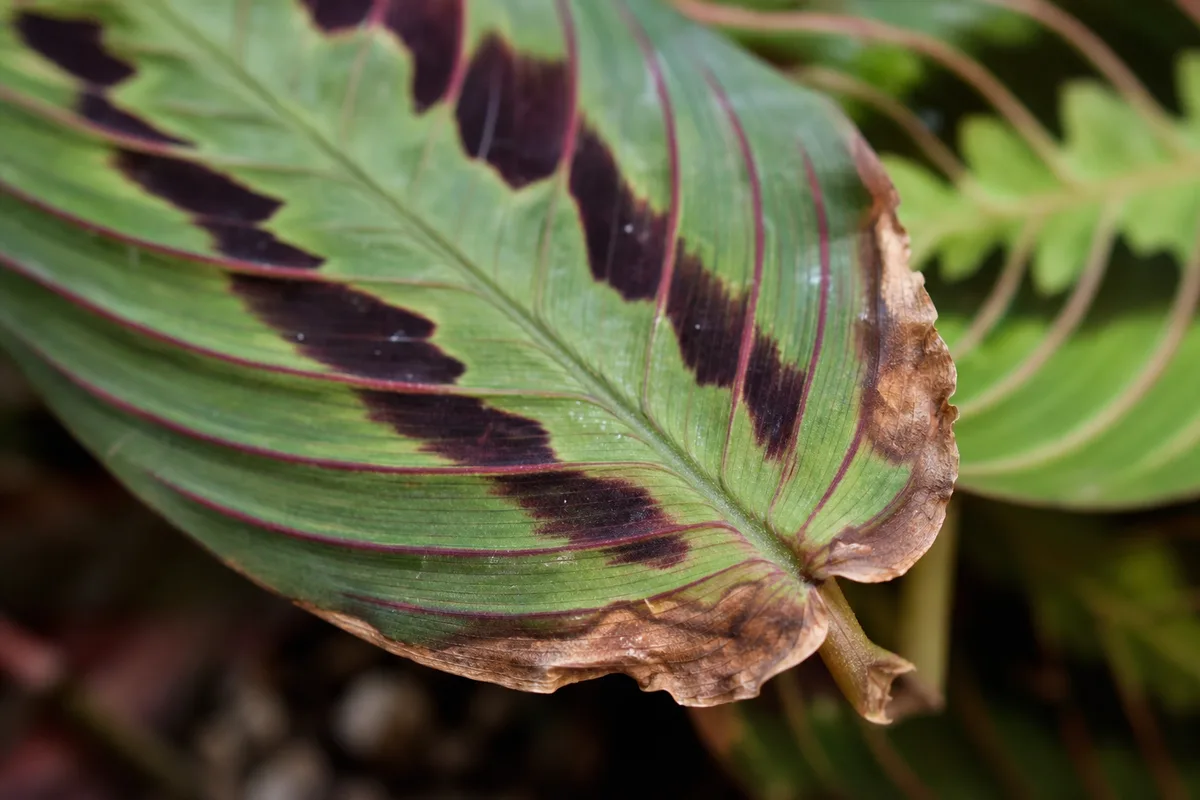
Fertilizer Burn symptoms on Maranta Leuconeura - compare with healthy tissue on the same plant.
Early signs:
- Crispy brown tips or margins on otherwise green, patterned leaves
- White or tan crystalline crust on the soil surface or inner pot rim
- Slight leaf curl at the edges while the center of the leaf stays colored
- New leaves emerging smaller or with tan margins already present
- Nightly leaf-folding still happening, but leaves feel papery at the edges
Progressed damage:
- Brown margins spreading inward on multiple leaves at once
- Lower leaves yellowing, wilting, or dropping without obvious pest damage
- Stunted new growth during warm, bright months when the plant should be pushing leaves
- Darkened, limp root tips when you slip the plant from the pot
- Soil that smells sharp or looks crusty even when moisture is adequate
Because Maranta spreads from horizontal rhizomes near the soil surface, outer leaves on a trailing basket often show burn first while inner growth still looks acceptable-a clue that salts are concentrating in the root zone rather than humidity failing room-wide.
Why prayer plant gets fertilizer burn easily
Maranta leuconeura is a low-growing tropical perennial with fine, shallow roots adapted to steady moisture and gentle nutrition-not concentrated salt spikes. Several traits make over-feeding backfire quickly:
- Shallow rhizomes - Roots sit near the soil surface where fertilizer salts accumulate fastest, especially in small pots.
- Thin leaves - Broad foliage transpires actively; when salts damage roots, margins dry out first, mimicking humidity stress.
- Indoor feeding habits - Owners often use full label strength, add slow-release pellets on top of liquid feed, or keep feeding after growth slows in autumn.
- Moist-soil culture - Prayer plants like evenly moist mix, which slows leaching. Without periodic flushing, salts from monthly feeding build up over a season.
- Foliar contact - Liquid fertilizer splashed on patterned leaves can scorch tissue directly, separate from root-zone burn.
Winter makes the problem worse. Reduced light and cooler rooms slow uptake, so fertilizer applied in winter can harm plants-exactly when many owners assume a yellow leaf means “needs food.”
How to confirm fertilizer burn is the cause
Work through these checks before changing humidity, Maranta Leuconeura repotting guide, or adding more nutrients:
- Recent feeding history - Did you fertilize within the past two weeks? Did you use full strength, slow-release spikes, or feed when soil was dry? Timing strongly supports burn.
- Salt crust - Scrape the soil surface lightly with a finger. White or gritty residue that returns after watering points to soluble salt buildup.
- Soil moisture and pot weight - Burn can occur with moist soil. If the pot is heavy and wet but leaves still crisp at edges after feeding, salts are a prime suspect. Bone-dry soil with light pot weight suggests underwatering instead.
- Root check - Slide the plant partway out. Healthy Maranta roots are pale and firm. Brown, blackened, or slimy roots after heavy feeding confirm advanced damage.
- Humidity and water quality - If a hygrometer reads above 50% near the plant, edges still crisp, and there was no recent feed, look next at fluoride or mineral tip burn from tap water-a common lookalike on prayer plants.
- New versus old leaves - Uniform tip burn on leaves present before your last feed suggests humidity or water quality. Margins that worsened only after feeding favor fertilizer burn.
If you fed on dry soil, doubled the dose “for growth,” or applied granular fertilizer to the surface, you likely have confirmation without needing a conductivity meter.
First fix for Maranta Leuconeura
Flush the pot with plain water until at least 10% of the volume runs out the bottom, then repeat once more a few hours later or the next day.
Use room-temperature water-filtered or tap is fine for flushing. Let the pot drain fully and discard saucer water each time. This leaches soluble salts away from the shallow rhizomes. After the second flush, hold all fertilizer for four to six weeks minimum, even if new growth looks pale. Resume only when the plant pushes clean leaves and the soil surface stays free of new crust.
While salts are clearing:
- Keep your normal moist-but-not-soggy Maranta Leuconeura watering guide; do not let the plant go bone dry to “balance” the flush.
- Move fertilizer bottles out of reach so a stressed plant does not get fed by habit.
- Wipe any dried fertilizer residue off leaf surfaces with a damp cloth if foliar splashing occurred.
If slow-release pellets were mixed into the soil or white crust returns within days of flushing, plan a repot into fresh mix after the plant stabilizes-scraping pellets from the surface alone may not be enough when both pellet and liquid fertilizers were used together.
Step-by-step recovery
Once flushing is complete, support recovery in this order:
- Pause feeding - Mark the calendar. Maranta needs a full rest from nutrients while roots recover; feeding too soon re-burns tender root tips.
- Maintain stable humidity and light - Maranta Leuconeura light guide and 55–60% RH help new leaves emerge cleanly. Do not compensate for burn by overwatering on Maranta Leuconeura.
- Trim selectively - After two weeks without spreading damage, snip fully brown edges following the natural leaf shape. Leave partially green tissue intact.
- Monthly plain-water flush during the next feeding season - When you eventually resume feed at half strength, flush with plain water once between fertilizer applications to prevent repeat buildup.
- Repot only if roots fail - If roots are black and mushy after a severe overdose, repot into airy, fresh mix and trim dead roots. Skip repotting for mild tip burn with firm roots.
Avoid stacking stress: do not repot, fertilize, and prune hard in the same week on a prayer plant recovering from salt damage.
Recovery timeline and what improvement looks like
Salt recovery is gradual. Expect:
- 3–7 days - Edge browning stops spreading; no new white crust after watering.
- 2–4 weeks - Roots regain firmness; the plant stops dropping lower leaves.
- 4–8 weeks - New leaves open with cleaner margins; you can consider diluted feeding only after this if growth is actively restarting.
Old brown tissue will not green up-judge success by unstopped burn and fresh growth, not repaired tips. If margins keep worsening four weeks after double flushing with firm roots, reassess water quality and humidity before feeding again.
Signs the problem is worsening:
- Crown or rhizome softening while soil stays moist
- Sudden mass leaf drop after a recent feed
- Roots turning black and stringy despite flushing
- White crust returning within days of two thorough leaches
Those patterns mean escalate-repot into fresh soil, trim dead roots, and extend the feeding pause.
Lookalike symptoms to rule out
| What you see | More likely cause | Quick differentiator |
|---|---|---|
| Crispy tips after recent feeding | Fertilizer burn | White soil crust; timing matches feed date |
| Crispy tips, no recent feed, dry room | Low humidity | Hygrometer below 45%; winter heating season |
| Crispy tips, stable humidity, old soil | Fluoride / tap-water salts | Persists without feeding; improves with filtered water |
| Yellow lower leaves, soggy soil | Overwatering / root rot on Maranta Leuconeura | Mushy roots; sour smell |
| Pale new leaves, no crust | Nutrient deficiency | No burn margins; older leaves yellow first |
| Bleached patches on upper leaves | Direct sun scorch | Sun-facing side; not linked to feeding |
Fertilizer burn and fluoride tip burn look nearly identical on Maranta-feeding history and soil crust are the fastest way to tell them apart.
Mistakes to avoid
- Feeding a dry or stressed plant - Fertilizer on dry roots concentrates salts immediately at the root interface.
- Using full-strength indoor doses - Prayer plants respond to light, monthly half-strength feed during growth, not heavy bursts.
- Winter feeding - Growth slows when light drops; unused nutrients become toxic in the root zone.
- Slow-release pellets plus liquid feed - Combining both in a small pot is a common path to sudden margin burn.
- Misting or watering with fertilizer solution - Splashed leaves scorch independently of root damage.
- Feeding again to “green up” burned leaves - More fertilizer on salt-stressed roots deepens the problem.
- Skipping the second flush - One quick rinse often leaves enough salts to keep damaging shallow rhizomes.
Maranta care cross-check
Fertilizer burn rarely happens in isolation. Confirm these basics while the plant recovers:
- Light - Bright indirect light during the feeding season; dim winter light means no feed.
- Water - Keep top 2 cm evenly moist in growth; water before any future fertilizer application.
- Humidity - 55–60% RH reduces stacked edge stress while roots heal.
- Water quality - Filtered or settled water prevents fluoride burn from masking or mimicking recovery.
- Season - Feed March through September at most; pause entirely in late autumn and winter.
Maranta leuconeura is not a heavy feeder like fast-growing vines. Treat fertilizer as maintenance during active growth, not a rescue tool for every yellow leaf.
How to prevent fertilizer burn next time
- Half strength, monthly, spring through early fall only - Match dose to active leaf production, not the calendar alone.
- Water the day before feeding - Apply diluted fertilizer only to already-moist soil.
- Flush monthly during the feeding season - Run plain water through the pot until it drains freely to leach residual salts.
- Skip slow-release in small pots - Liquid control is safer for shallow-rooted prayer plants.
- Wipe splashes off leaves - Rinse foliage if fertilizer contacts patterned tissue.
- Track feed dates - A simple log prevents double dosing after a growth spurt.
Conclusion
Fertilizer burn on Maranta leuconeura is salt damage, not a mysterious leaf curse. Crispy margins, white soil crust, and timing that matches a recent feed tell the story before roots fail. Flush twice, stop feeding for several weeks, and let new prayer-plant leaves prove the rhizomes have recovered before you reach for the fertilizer bottle again. Old burned edges will not heal-but clean new growth and a crust-free pot surface mean you fixed the real problem.
When to use this page vs other Maranta Leuconeura guides
- Maranta Leuconeura watering guide - Use for routine moisture checks before assuming fertilizer burn is the main issue.
- Maranta Leuconeura problems hub - Browse all 40 common issues on this species.
- Brown Tips on Maranta Leuconeura - Different entry point when symptoms overlap with fertilizer burn.