Nitrogen Deficiency on Manjula Pothos: Causes, Checks &
Quick answer
Nitrogen deficiency on Manjula Pothos shows as uniform pale yellowing on oldest lower leaves while newer growth stays light green on firm roots in draining soil. First step: confirm the pattern is not overwatering or low light, read your fertilizer N-P-K label, then apply one half-strength balanced liquid feed to moist soil during active growth.
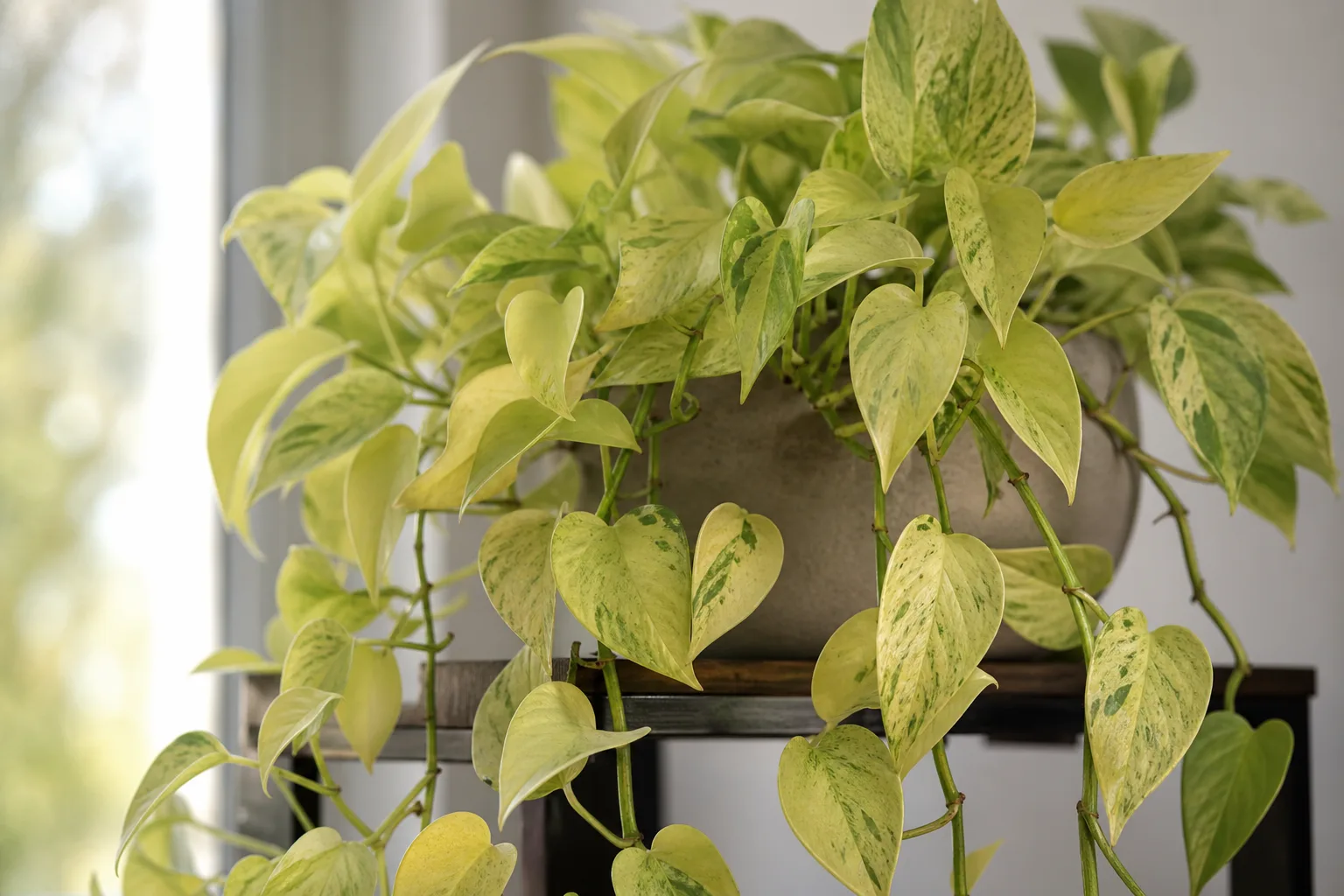
Nitrogen Deficiency on Manjula Pothos: Causes, Checks & Fixes
This guide covers nitrogen deficiency on Manjula Pothos. See also the general Nitrogen Deficiency guide, watering, and light pages for this plant.
Nitrogen Deficiency on Manjula Pothos: Causes, Checks & Fixes
Quick answer
Scope: Use this page when oldest lower leaves turn uniformly pale yellow on firm-stemmed Manjula vines in draining soil. For ongoing feeding schedules, N-P-K product choices, and seasonal pause rules, see the Manjula Pothos fertilizer guide. For brown scorch on old leaf margins, use potassium deficiency instead.
Nitrogen deficiency on Manjula Pothos (Epipremnum aureum ‘Manjula’) usually appears as uniform pale yellowing on the oldest lower leaves while newer foliage stays light green and smaller than usual. Because nitrogen is a mobile nutrient, the plant pulls it from older tissue to fuel new growth when supplies run low.
First step: confirm the yellowing pattern and rule out overwatering before feeding. Stick a finger into the top 4–5 cm of mix per our watering guide. Lower-leaf yellowing on firm stems in soil that dries on a normal schedule points to depleted nitrogen-not chronic wet feet. If that matches, read your fertilizer N-P-K label, then apply one half-strength balanced liquid fertilizer to moist soil during spring or summer active growth.
What nitrogen deficiency looks like on Manjula Pothos
Separate true nitrogen shortage from normal aging, natural variegation, and lookalike problems:
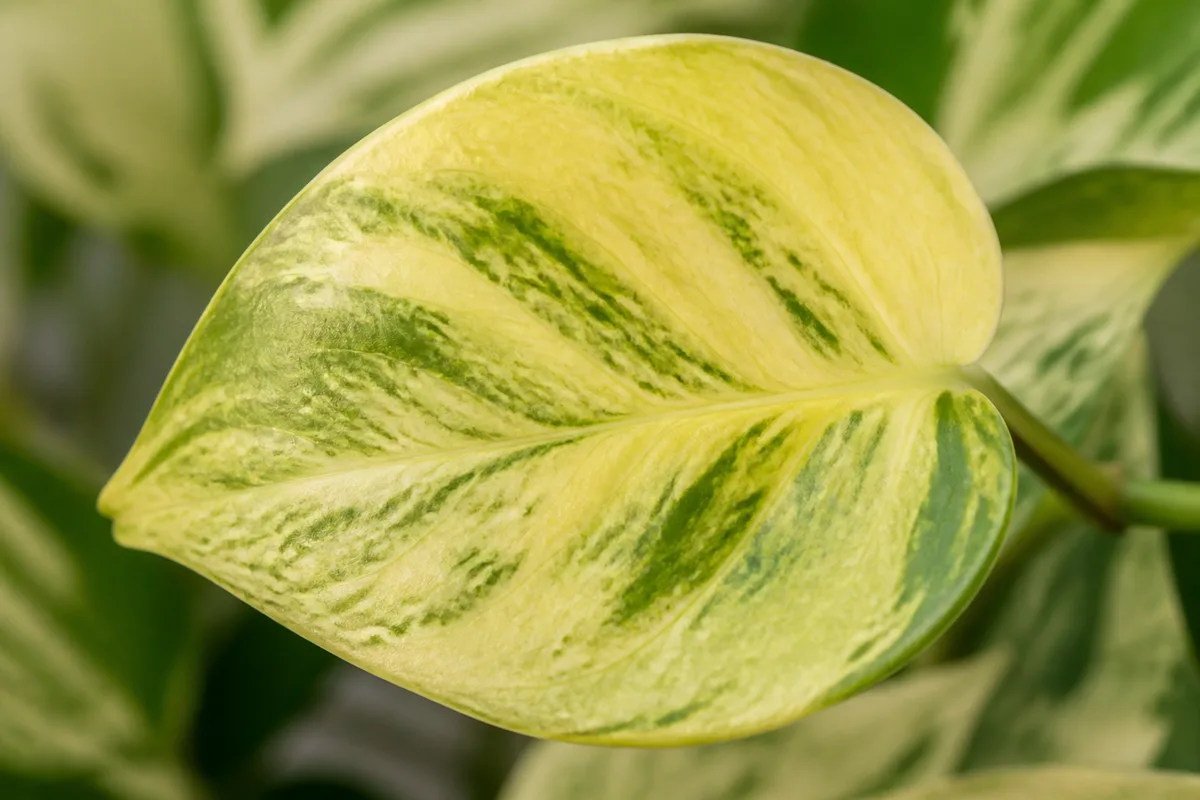
Nitrogen Deficiency symptoms on Manjula Pothos - compare with healthy tissue on the same plant.
Typical nitrogen-deficiency pattern
- Oldest leaves near the pot turn uniformly pale yellow or washed-out light green-not mottled brown spots or crisp margins
- Yellowing starts low on the vine and may climb slowly if deficiency continues
- New leaves still emerge but stay smaller, thinner, or lighter than earlier foliage
- Overall growth feels sluggish for Manjula’s already slow baseline-fewer new leaves over a whole growing season
- Stems stay firm; soil cycles between wet and dry on your usual schedule
What is often normal on Manjula
- One or two lower leaves yellowing and dropping on long trailing vines after months of growth
- Slow unfurling-marbled leaves taking one to two weeks to open is cultivar-normal
- Heavy cream-and-white variegation that looks pale by nature but still has distinct green swirls
Visual diagnostic cues (what to compare)
Without a photo in hand, compare these two patterns side by side at the pot:
Uniform old-leaf nitrogen shortage: Entire lower leaves-including both green swirls and pale sectors-shift to the same washed-out yellow-green. Stems at those nodes stay firm. Mix dries normally at 4–5 cm depth.
Low-light all-green reversion: New leaves at vine tips emerge mostly solid green with long internodes, while only one or two old leaves may yellow. The problem is photon shortage, not depleted nitrogen-see not enough light before feeding.
Manjula’s broad, wavy variegated leaves carry less green tissue than golden pothos. When nitrogen runs low, the plant cannot maintain chlorophyll in older leaves first-so the pattern on which leaves fade matters more than overall paleness.
Why Manjula Pothos gets nitrogen deficiency
Depleted potting mix without repotting or feed
Container mix loses available nitrogen as you water repeatedly over months and years. A Manjula sitting in the same peat-based soil for two or more seasons without fertilizer or fresh mix often shows older leaves turning yellow from low fertility while roots remain healthy.
Manjula is a slower-growing, bushy cultivar than golden or neon pothos, so owners sometimes skip feeding entirely-light hunger can go unnoticed until lower leaves fade across several vines.
Active growth without replacement nutrients
During spring and summer, Manjula pushes new marbled leaves every few weeks when light and water are right. That growth consumes nitrogen. Pothos in bright indirect light uses nutrients faster than one in a dim corner-but only if you actually feed during the active season. UF/IFAS production guidelines note that variegated pothos lose color and leaf size below about 150 foot-candles, which also slows nutrient demand-another reason to fix light before assuming hunger.
Root problems blocking uptake (not true deficiency)
Overwatered mix, root rot, or compacted soil can prevent roots from absorbing nitrogen even when fertilizer is present. UC IPM notes unhealthy roots cannot take up nutrients from soil regardless of fertilizer present. Feeding a plant with mushy roots adds salt stress without fixing uptake.
Low light masquerading as pale, hungry foliage
Insufficient light produces mostly green new leaves as Manjula compensates for weak photosynthesis-different from uniform old-leaf yellowing. Variegated pothos lose coloring in lower light on new growth, not necessarily uniform chlorosis on the oldest leaves alone.
How to confirm the cause
Work through these checks in order:
- Leaf age - Are the oldest lower leaves uniformly pale while newer leaves are lighter green but still growing? That fits mobile nitrogen shortage. Interveinal yellow on new leaves suggests iron or other issues.
- Soil moisture - Probe the top 4–5 cm deep. Soil wet for a week or more with yellow lower leaves suggests overwatering. Soil that dries on schedule supports a nutrient read.
- Stem firmness - Soft stems at nodes while mix stays damp means root stress-fix water before fertilizer.
- Light at the plant - All-green new leaves in a dim spot point to light first. Adequate bright indirect light with old-leaf yellowing only supports deficiency.
- N-P-K label check - Read the three numbers on your last fertilizer bottle. A balanced formula such as 10-10-10 or 20-20-20 supplies nitrogen along with phosphorus and potassium. If you have not fed in a full growing season-or only used a bloom booster with low first number-depleted nitrogen is more likely. For ongoing product choice and seasonal schedule, see the fertilizer guide.
- Feed and repot history - No fertilizer for a full growing season, or the same mix for two-plus years, increases deficiency likelihood.
- Root spot-check (if unsure) - Slide the plant out gently. Firm white or tan roots in dry-down mix fit deficiency. Brown mushy roots mean rot.
If overwatering, low light, or root rot fit better, treat those first. Fertilizer on a stressed Manjula rarely helps and can burn roots.
Lookalike decision table
| Pattern | Leaf age | Variegation clue | Soil / stems | First action |
|---|---|---|---|---|
| Nitrogen deficiency | Oldest leaves uniformly pale | New leaves smaller, lighter green | Firm stems; normal dry-down | Half-strength balanced feed |
| Potassium deficiency | Lower leaves with brown margins | New tips may look OK | Firm stems; crust possible | Read label; see K deficiency |
| Overwatering | Lower yellow; may spread fast | Cream sectors dull first | Wet, heavy pot; soft nodes | Stop watering; see overwatering |
| Low light | Few old leaves; mostly new growth | All-green new leaves, long internodes | Normal moisture | Move to brighter light |
| Natural senescence | One or two old leaves only | Strong new marbling | Normal | No feed needed |
| Root rot | Yellow climbs with decline | Collapsing variegation | Wet, sour; mushy roots | Root rot recovery |
First fix for Manjula Pothos
Once lower-leaf uniform yellowing appears on firm roots in draining soil that dries normally, and light is already bright indirect:
Apply one half-strength dose of balanced liquid houseplant fertilizer to moist-not dry or saturated-soil.
Worked dilution example
If your label says 10-10-10 at 1 teaspoon per gallon for houseplants, mix ½ teaspoon per gallon instead-that is half strength. For a typical 6-inch Manjula pot, use roughly ¼ cup of that diluted solution, poured slowly until a little drains from the bottom, then empty the saucer. Hold additional fertilizer for three to four weeks while you watch new growth.
Water lightly the day before if the mix is dry. Do not stack repotting, heavy pruning, and feeding on the same day. Manjula responds better to one clear correction at a time.
For the full seasonal feeding calendar after this correction, follow the Manjula Pothos fertilizer guide.
Step-by-step recovery
After the first correct feed:
- Maintain dry-down watering - Allow the top 4–5 cm of mix to dry between waterings per our watering guide. Better light and corrected feeding increase water use slightly-adjust frequency, not volume per drink.
- Repeat light feeding through summer - If new leaves deepen in color over two to three weeks, continue half-strength balanced feed monthly through the active season. Skip fertilizer when the plant is dormant in winter.
- Remove spent lower leaves - Once new growth looks stable, trim fully yellow older leaves for appearance. They will not re-green.
- Repot if mix is exhausted - If the plant has not been repotted in two or more years, refresh with standard potting mix plus 20–30% perlite at the next spring repot-not as an emergency day-one fix unless roots are severely bound.
- Upgrade light if variegation stays weak - Manjula needs stronger indirect light than all-green pothos. Pale new marbling after feeding may still mean the window is too dim.
Avoid high-nitrogen full-strength feeds on variegated Manjula. Excess nitrogen pushes lush green growth and can reduce variegation on new leaves even when the plant was genuinely hungry.
Recovery timeline
Older yellow leaves seldom regain full green color. Judge recovery by new foliage: deeper green swirls in the marbling, normal leaf size for Manjula, and resumed leaf frequency of one every two to four weeks in summer.
Expect visible improvement on the next one to two leaves within two to four weeks after a correct spring or summer feed. Winter corrections may show little until day length increases in March.
If no new-leaf improvement appears eight weeks after confirmed good light, dry-down watering, and two light feeds in summer, inspect roots for rot or repot into fresh mix.
Lookalike symptoms to rule out
Overwatering - Yellow lower leaves plus wet soil for days, soft stems, sour smell. Fix drainage and watering; fertilizer worsens salt load on damaged roots.
Low light / variegation loss - New leaves emerge mostly green with long internodes. Move to brighter indirect light before feeding.
Natural senescence - One or two old leaves yellow on an otherwise vigorous vine with strong new marbling. No feed needed.
Root rot - Mushy brown roots, collapsing stems. Repot and trim decay; feeding cannot restore dead root tissue.
Iron or micronutrient issues - Yellow veins with green tissue, or new-leaf-specific patterns. Balanced feed helps general deficiency; iron problems need different diagnosis.
For broad yellow leaves triage when multiple causes overlap, use that guide alongside this page.
Mistakes to avoid
Do not fertilize dry soil-diluted feed on dry roots causes burn. Do not feed waterlogged or newly repotted Manjula until it stabilizes for two weeks. Do not use full-strength outdoor fertilizer indoors. Do not assume every pale variegated patch is nitrogen shortage-Manjula’s white sectors are naturally low in chlorophyll. Do not feed in winter when pothos growth slows or pauses unless the plant sits under strong grow lights with active new leaves.
How to prevent nitrogen deficiency next time
Feed lightly at half strength monthly during spring and summer when Manjula is actively unfurling leaves. Pause in autumn and winter. Repot every one to two years into airy perlite-rich mix so baseline nutrition refreshes. Pair feeding with bright indirect light-nutrients only support growth the plant can photosynthesize. Flush the pot with plain water occasionally if you feed regularly, to prevent salt buildup that blocks uptake.
Keep Manjula out of pet reach when handling fertilizer-pothos contains calcium oxalate crystals toxic to cats and dogs if chewed. Contact your veterinarian if a pet ingests fertilizer or plant material.
When to worry
Escalate when yellowing reaches new growth within days while soil stays wet, stems soften, or roots are mushy on inspection-those patterns are rot or severe water stress, not simple nitrogen shortage. Follow root rot recovery if inspection confirms decay.
A few uniformly pale lower leaves on firm stems in old mix during summer, with otherwise normal new marbling, is manageable with one corrected feed and patience.
FAQs
How can I confirm nitrogen deficiency on Manjula Pothos?
Confirm when the oldest lower leaves turn uniformly pale yellow or light green while newer leaves stay smaller and lighter but still grow, soil dries normally between waterings at 4–5 cm depth, and stems stay firm. Wet soggy mix with soft stems points to overwatering, not hunger.
Is pale white variegation on Manjula the same as nitrogen deficiency?
No. Manjula’s cream and white sectors are naturally low in chlorophyll and look pale by design. True nitrogen shortage shows uniform yellowing across entire older leaves-including green swirls-not just the variegated patches, and it climbs slowly up the vine when feeding has been absent for months.
Will yellow Manjula Pothos leaves recover after feeding?
Older yellow leaves rarely re-green fully. Recovery means new marbled leaves unfurl with stronger green tones and normal size within two to four weeks after one correct feed in spring or summer-not instant color return on damaged foliage.
Can too much nitrogen hurt Manjula variegation?
Yes. Excess nitrogen pushes lush green growth and can reduce white marbling on new leaves even when the plant was genuinely hungry. Use half-strength balanced feed, not high-nitrogen full-strength products, and watch the newest leaf’s variegation as your scorecard.
How do I prevent nitrogen deficiency on Manjula Pothos next time?
Feed balanced liquid fertilizer at half strength monthly in spring and summer only when the plant is actively growing, repot every one to two years into fresh perlite-rich mix, and never skip light and watering checks before assuming the plant needs more nitrogen.
Related Manjula Pothos guides
- Manjula Pothos overview - cultivar context and full care map
- Fertilizer guide - ongoing N-P-K schedule; this page owns old-leaf uniform yellow diagnosis
- Potassium deficiency - brown marginal scorch on lower leaves, not uniform chlorosis
- Yellow leaves - broad yellowing triage when multiple causes overlap
- Overwatering - wet-soil lookalike with wilt paradox
- Root rot - mushy roots blocking nutrient uptake
- Not enough light - all-green new-leaf reversion masquerade
- Watering - 4–5 cm dry-check rhythm
- Soil - perlite mix and drainage
- Repotting - refresh exhausted mix after two-plus years
- Light - variegation and nutrient-use coupling
Related tool
Use the Fertilizer Dilution Calculator to narrow causes for nitrogen deficiency on this plant before changing multiple variables at once.