Draft Stress on Manjula Pothos: Causes, Checks & Fixes
Quick answer
Draft stress on Manjula Pothos shows as curled, limp, or yellowing leaves on the vine facing a vent, door, or cold window while soil moisture stays normal. First step: move the pot at least one metre away from AC returns, heating registers, and exterior doors into stable 18–29°C air before changing watering or repotting.
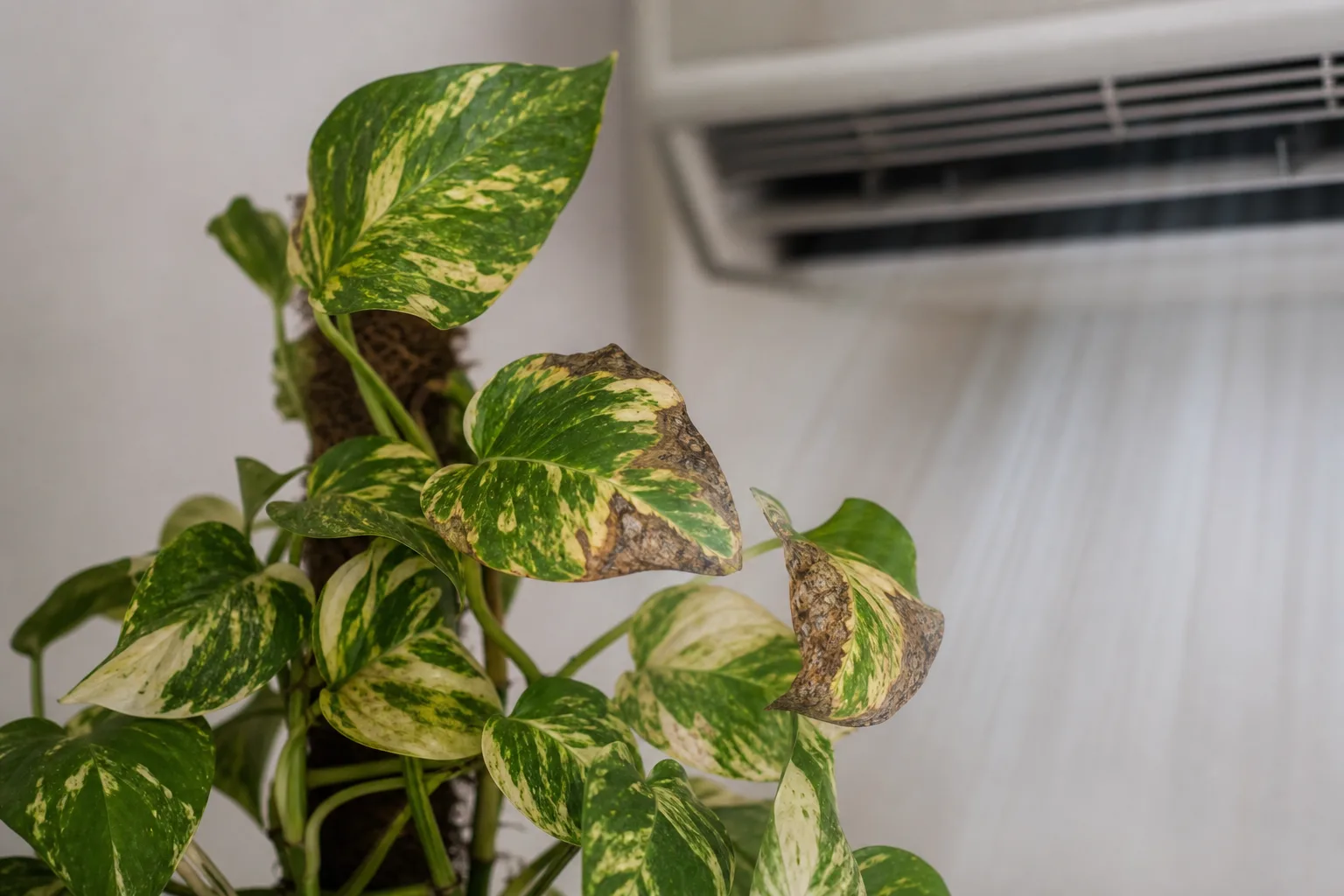
Draft Stress on Manjula Pothos: Causes, Checks & Fixes
This guide covers draft stress on Manjula Pothos. See also the general Draft Stress guide, watering, and light pages for this plant.
Draft Stress on Manjula Pothos: Causes, Checks & Fixes
Quick answer
Draft stress on Manjula Pothos (Epipremnum aureum ‘Manjula’) happens when cold air from AC vents, winter windows, or frequently opened doors hits broad, variegated leaves faster than the rest of the room warms. You will see curled, limp, or yellowing foliage on one side of the vine while soil moisture and stem firmness stay normal.
First step: move the pot at least one metre away from AC returns, heating registers, exterior doors, and cold window glass into stable 18–29°C (65–85°F) air. Do not repot, fertilize, or increase watering until the plant has sat in corrected placement for one to two weeks.
Warning: Do not overwater a chilled Manjula in damp mix. Cold soil holds moisture longer, and extra water is the fastest path to root rot-not recovery from draft curl.
Draft stress vs. cold damage on Manjula Pothos
These two pages overlap but answer different questions:
| Situation | Use this page (draft stress) | Use cold damage |
|---|---|---|
| Trigger | Ongoing AC, vent, door, or window airflow | Acute frost snap, car ride, or sudden chill event |
| Pattern | Directional curl on one vine face | Widespread blackening or collapse after one cold night |
| Soil | Usually normal moisture | May be cold and wet from winter overwatering |
| First fix | Relocate away from airflow | Warm stable room; trim blackened tissue |
Chronic HVAC draft stress is this page’s job. Acute cold injury after frost or transport belongs on the cold-damage guide.
What draft stress looks like on Manjula Pothos
Draft injury on Manjula is directional and sudden, not a slow whole-pot decline.
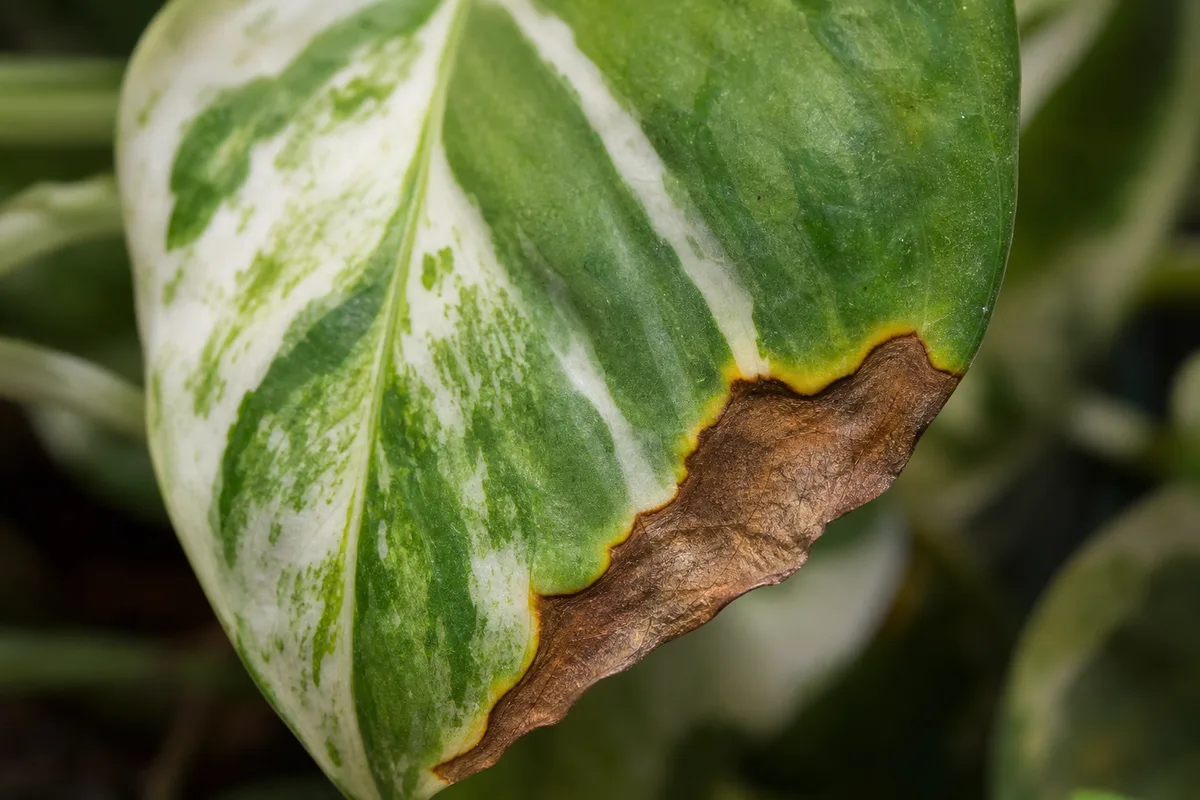
Draft Stress symptoms on Manjula Pothos - compare with healthy tissue on the same plant.
Typical signs include:
- Leaf curl or cupping on vines nearest a vent, door, or window-often the cream and white sections first
- Overnight limpness that improves by midday, then returns when cold air blows again
- Yellowing on exposed leaves without sour soil smell or mushy stems at nodes
- Brown crispy patches on variegated margins after repeated cold nights near glass
- Stalled new growth on a trailing section while the rest of the plant looks unchanged
- Damage on one face of the basket-the side facing the draft-not uniform tip burn on every leaf
What draft stress does not look like: black soft spots spreading inward, sticky residue under leaves, webbing, or whole-vine collapse with wet soil. Those patterns point to disease, pests, or overwatering-not air movement alone.
Manjula’s broad, wavy leaves carry more cream and white tissue than golden pothos. Variegated sections lack chlorophyll and lose turgor quickly when chilled, so asymmetric damage on white margins is a hallmark of draft stress on this cultivar rather than generic underwatering.
Why Manjula Pothos gets draft stress
Pothos evolved in warm, humid tropical understories. Indoors, they prefer stable warmth between 60°F and 85°F-not the micro-climates created by HVAC systems and glass.
Manjula is slower growing and more variegated than most pothos cultivars. That combination matters for draft sensitivity: damaged leaves linger visually longer, and the plant replaces tissue less quickly after a chill event. Heavy white variegation also means less photosynthetic backup when cold air slows metabolism on exposed leaves.
Common draft sources in real homes:
- Winter windows - Single-pane or poorly sealed glass drops leaf-surface temperature at night even when the thermostat reads 21°C
- AC vents and returns - Cold dry air in summer chills leaves within seconds of each cycle
- Heating registers and radiators - Hot dry blasts scorch margins on the facing vine; RHS advises keeping epipremnums away from radiators and cold draughts alike
- Exterior doors - Repeated cold blasts when entries open, especially for hanging baskets near front doors
- New plant shock - Moving from a humid greenhouse bench to a drafty apartment stacks relocation stress with hidden airflow problems
Draft stress becomes dangerous when cold soil stays wet. Chilled roots absorb water slowly while the mix remains damp for weeks-the setup that invites root rot on any pothos, especially in winter.
Symptom lookalike comparison table
| Pattern | Direction | Soil / stems | Season cue | Urgency |
|---|---|---|---|---|
| Draft stress | One vine face toward vent/window | Firm stems; normal dry-down | AC startup or winter glass | Low–medium |
| Cold damage | Widespread after one event | May be cold and wet | Frost night or transport | Medium–high |
| Underwatering | Whole-vine limp | Bone dry throughout | Any | Medium |
| Low humidity | Even tip burn on many leaves | Normal moisture | Winter heating | Low |
| Overwatering / rot | Yellow from base up | Wet, sour; soft nodes | Any | High |
| Sun scorch | Window-facing bleached patches | Normal moisture | After light move | Low |
How to confirm the cause
Work through these checks before repotting or changing your watering rhythm:
- Airflow mapping - Hold your hand at leaf height near the pot at night and when AC or heat runs. A noticeable cold or hot blast within arm’s reach strongly implicates drafts.
- Asymmetric pattern - Compare vines on different sides of the hanger. Draft damage favors the exposed face; uniform tip browning on all leaves may be low humidity or salt burn instead.
- Soil moisture check - Insert a finger into the top 3–5 cm. Normal dry-down with curled leaves on one side fits draft stress. Soggy soil plus soft stems suggests overwatering is the main issue-or overlapping with cold wet roots.
- Seasonal timing - Symptoms appearing after first frost, AC season startup, or moving to a new room support environmental injury over pest or disease.
- New growth test - Watch the next leaf that unfurls after you relocate the plant. Clean margins on new tissue confirm placement was the trigger; continued curl means airflow is still wrong or another stressor remains.
- Pest cross-check - Flip leaves for stippling, webbing, or grit. Spider mites favor dry warm air but require separate treatment-draft fixes alone will not clear an infestation.
If the whole plant yellows evenly, soil smells sour, or stems soften at multiple nodes, prioritize root inspection over draft correction.
First fix for Manjula Pothos
Move the pot to a stable spot at least one metre from AC vents, heating registers, exterior doors, and cold window glass, with trailing vines not hanging in the direct air path.
This costs nothing, works immediately, and tells you within one to two weeks whether placement drove the symptoms. Manjula handles a single careful relocation better than day-one repotting-avoid bouncing the pot between rooms every few days.
After the move, leave watering exactly as it was when soil dried normally. Do not water more to “comfort” a chilled plant-that deepens rot risk when cold mix already holds moisture longer than in summer.
Step-by-step recovery
After relocation:
- Raise the pot off cold sills - Use a stand or coaster so the container is not in direct contact with chilled glass or a metal windowsill ledge.
- Redirect vents - Close or deflect floor registers and AC louvers so air does not blow across foliage. Redirecting airflow beats misting for draft stress.
- Hold fertilizer and repotting - Give the plant two to three weeks of boring stability before any other intervention. Stressed Manjula vines need calm conditions, not stacked fixes.
- Trim fully dead leaves - Remove leaves that are entirely brown or black with clean scissors. Partial curl on green tissue can wait until new growth looks healthy.
- Monitor new unfurling leaves - Manjula leaves open slowly; judge recovery by the next two or three new leaves, not by old damaged tissue regreening.
- Adjust watering only if dry-down changed - Cooler rooms slow evaporation. If soil stays wet longer after fixing drafts, wait for the top 3–5 cm to dry before the next drink-see our watering guide for cooler-room rhythm.
If stems stay firm, smell stays neutral, and new growth emerges clean within three weeks, the plant is on track. Softening nodes or spreading yellowing with wet soil means unpot and inspect roots.
Recovery timeline
Correcting placement can stop new curl within three to seven days if vents or windows were the main trigger. Visible clean new growth typically takes two to four weeks on Manjula because this cultivar grows slower than neon or golden pothos.
Old yellowed or browned sections will not revert to green. Success means no fresh damage on new leaves and firm stems throughout the recovery window.
If four weeks pass in stable air and new leaves still emerge curled or burnt, revisit light intensity and water quality before assuming drafts were the only factor.
Lookalike symptoms to rule out
Underwatering - Whole-vine limpness, bone-dry soil throughout the pot, and crispy tissue from tips inward on multiple leaves at once. Fix watering first; moving away from drafts will not rehydrate a dry root ball.
Low humidity - Even brown tips on many leaves, often in winter, without directional damage on one vine face.
Overwatering and root rot - Yellowing from petiole outward, sour soil, mushy stems. Opposite of the firm-stem pattern pure draft stress usually produces.
Direct sun scorch - Large papery brown patches on white variegation facing a south window, usually after a sudden move to stronger light-not tied to AC or winter glass chill.
Spider mites - Yellow stippling, fine silk on undersides, gritty feel when wiped.
Cold damage vs heat blast - Radiator scorch browns the facing side with accelerated surface drying; cold window drafts often produce curl and overnight limpness with slower soil dry-down in winter.
Mistakes to avoid
Do not overwater a chilled plant-pothos should be kept out of drafts and cold wet soil is more dangerous than cold dry soil on Manjula Pothos.
Do not repot on day one when symptoms appeared after a move or season change. Stabilize placement first unless roots are already mushy.
Do not mist leaves in a drafty corner expecting recovery. Moisture evaporates in minutes while cold air keeps hitting tissue; misting does not fix ambient airflow.
Do not hang Manjula directly over a floor register because the basket looks good there-trailing vines sit in the blast path all day.
Do not expect old curled leaves to flatten completely. Wait for clean new growth as your proof the fix worked.
Do not ignore asymmetric damage while checking roots on a healthy-looking side of the plant-draft stress is often localized.
How to prevent draft stress next time
- Keep Manjula at least one metre from AC vents, returns, and exterior doors year-round
- Avoid windowsill contact in winter-use an inward table or stand when trailing near glass
- Redirect HVAC airflow with vent deflectors rather than accepting blasts on foliage
- Acclimate new purchases slowly when moving from a humid shop to a drafty home; hold other care changes for two weeks
- Group plants modestly to buffer micro-climates, but do not crowd so airflow stalls and foliage stays damp
- Watch cream variegation on new leaves each season change-it flags environmental stress before green tissue shows damage
- Maintain bright indirect light without hot afternoon sun on white sections-see light placement
When to worry
Draft stress alone is usually medium severity and recoverable on Manjula with firm stems and healthy roots. You do not need emergency fungicides or repotting for directional curl on an otherwise sound vine.
Escalate care when:
- Stems soften at nodes while soil stays wet-cold plus overwatering may have triggered rot
- Blackened tissue spreads after frost exposure through glass-trim affected leaves and stabilize warmth fast; see cold damage
- Multiple vines collapse within a week despite corrected placement-check wilting guidance
- New growth reverts entirely to green on pale, weak leaves-that often signals insufficient light stacked with stress, not drafts alone
If only older leaves on the draft-facing side show damage and new growth is clean after relocation, the plant is stable. Trim cosmetic damage or tolerate it until new vines cover the basket.
Related Manjula Pothos guides
- Manjula Pothos overview - cultivar context and full care map
- Light guide - bright indirect without hot afternoon sun on white sections
- Watering guide - cooler-room dry-down rhythm after draft correction
- Cold damage - acute frost or transport chill; this page owns ongoing HVAC draft stress
- Wilting - full collapse when stems soften
- Underwatering - whole-vine dry-down, not directional curl
- Overwatering - cold plus wet soil overlap
- Low humidity - even tip burn without directional pattern
- Spider mites - stippling and webbing in dry warm corners
- Not enough light - green reversion on new growth vs. draft curl
Related tool
Use the Plant Problem Diagnosis Tool to narrow causes for draft stress on this plant before changing multiple variables at once.