Deformed New Growth on Manjula Pothos: Causes, Checks &
Quick answer
Deformed new growth on Manjula Pothos usually means thrips or aphids feeding on unfurling leaves-not the plant's normal wavy edges. First step: inspect the newest leaves and undersides with a magnifier; if you see silvery scarring, black specks, or soft-bodied insects, isolate the plant and rinse every leaf surface thoroughly.
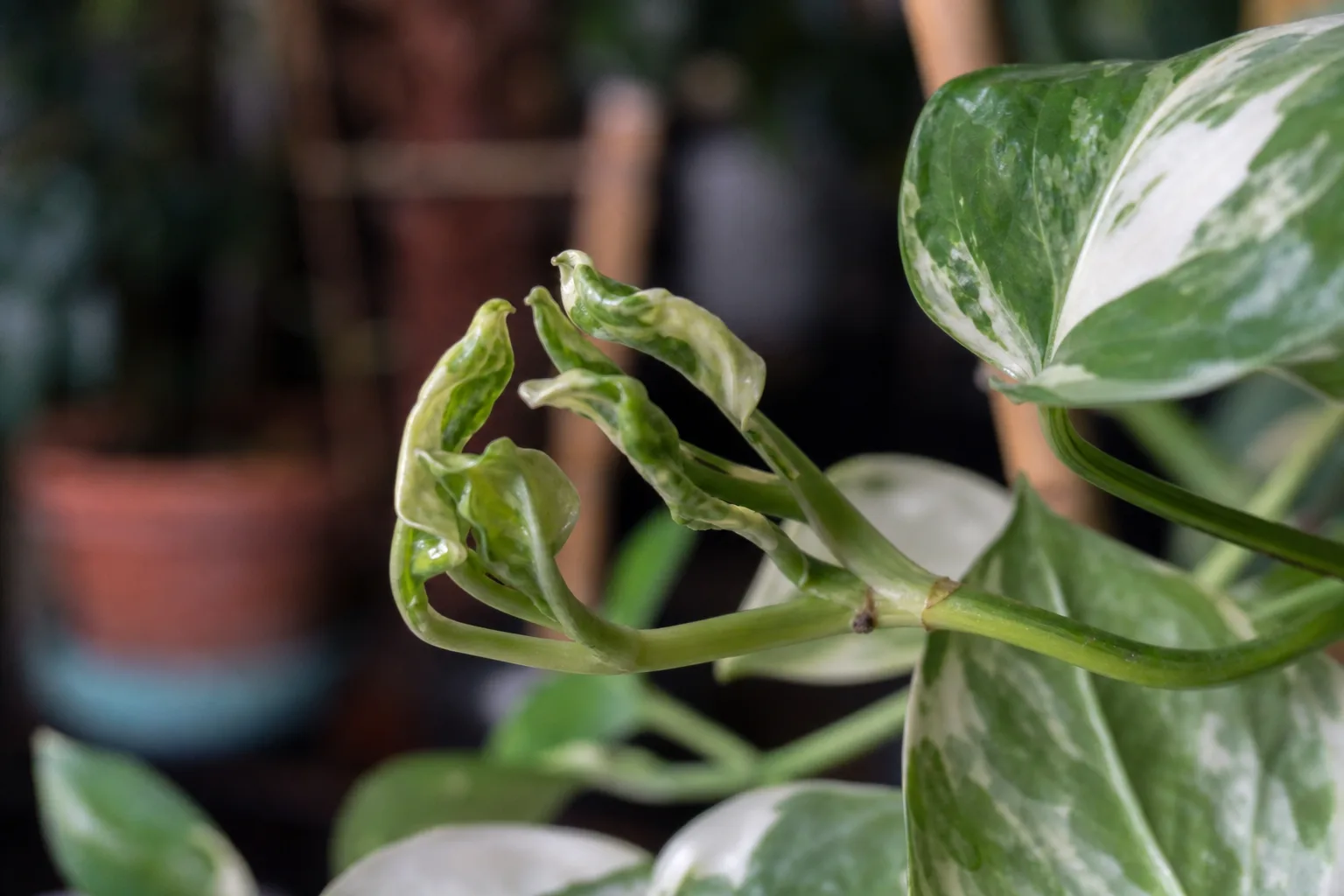
Deformed New Growth on Manjula Pothos: Causes, Checks & Fixes
This guide covers deformed new growth on Manjula Pothos. See also the general Deformed New Growth guide, watering, and light pages for this plant.
Deformed New Growth on Manjula Pothos: Causes, Checks & Fixes
Quick answer
Deformed new growth on Manjula Pothos usually means thrips or aphids feeding on unfurling leaves-not the plant’s normal wavy edges. First step: inspect the newest leaves and undersides with a magnifier; if you see silvery scarring, black specks, or soft-bodied insects, isolate the plant and rinse every leaf surface thoroughly.
Epipremnum aureum ‘Manjula’ is a patented, slower-growing pothos with broad, marbled leaves. Those cream-and-green blades unfurl over one to two weeks, giving pests a long window to scar tissue before you notice. The trick is separating normal Manjula waviness from abnormal twisting, puckering, or stunting on the newest leaves only.
What deformed new growth looks like on Manjula Pothos
Healthy Manjula leaves are heart-shaped with smooth wavy or ruffled margins-that curl is part of the cultivar, not damage. Worry when new growth at vine tips shows a different pattern:
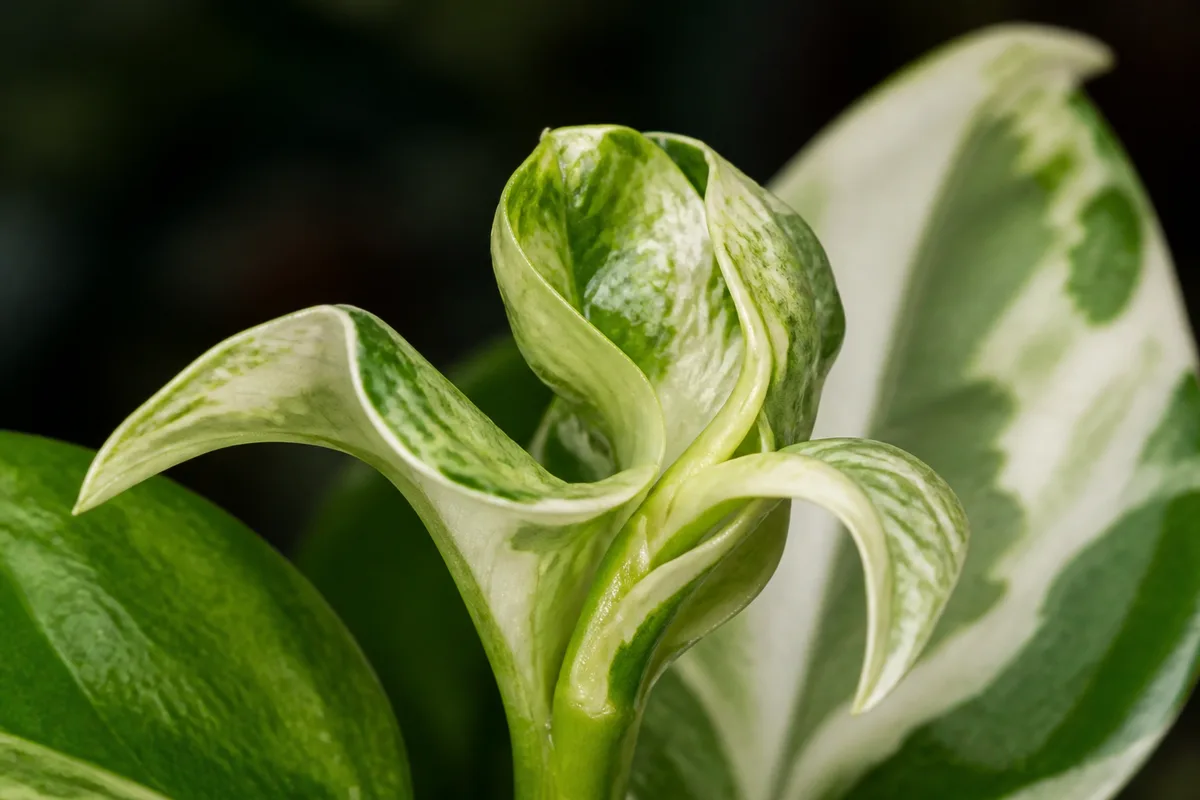
Deformed New Growth symptoms on Manjula Pothos - compare with healthy tissue on the same plant.
- Leaves stuck halfway unfurled, crinkled, or twisted like crumpled paper
- Smaller than expected blades on an otherwise mature vine, with torn or scarred edges
- Silvery or bronze streaks on pale variegated sections that do not wipe off
- Tiny black varnish-like specks (thrips droppings) on leaf faces or petioles
- Clustered soft-bodied insects on tender shoots and leaf undersides (aphids)
- New leaves emerging mostly solid green with odd puckering-often low light plus pest stress combined
Older leaves farther down the vine may look perfectly normal while every new tip is damaged. That tip-only pattern strongly points to sap-sucking pests rather than a whole-pot watering problem.
Normal waviness vs true deformation
Clemson Extension describes Manjula as having broad, upright leaves with pointed tips and a slower, bushier habit than other pothos cultivars. The wavy edge is expected. Deformation adds random scarring, asymmetry, or leaves that never fully expand. If only the margin curls while the blade is flat, glossy, and evenly variegated, you are seeing Manjula character-not a crisis.
Why Manjula Pothos gets deformed new growth
Thrips on unfurling leaves
Thrips are the most common cause of twisted new growth on pothos. Clemson HGIC notes that thrips feed by scraping surface cells, leaving leaves silvery or speckled, and that flowers may be streaked or distorted because of feeding-the same mechanical damage happens when they attack leaves still in the sheath. On Manjula, pale cream sections show damage faster than on all-green golden pothos.
Aphids on tender shoots
Clemson Extension describes aphids on new growth and leaf undersides, with yellowing, misshapen leaves, stunted growth, and new buds deformed as sap is removed. Manjula’s trailing vine tips are soft and slow to harden, so aphids often cluster where the next leaf is forming.
Insufficient light (small or reverting leaves)
Manjula needs more light than many pothos to hold white variegation. Clemson HGIC states that lower light may cause variegated varieties to lose some of their coloring. University of Maryland Extension adds that too little light produces spindly stretch, faded leaf color, and poor growth. On Manjula this often looks like small, mostly green new leaves-not classic thrips scarring, but easy to misread as “deformed” when you expected broad marbled blades.
Cold drafts and temperature swings
Clemson HGIC warns that hot and cold air from vents and windowsills can dry leaves and damage plant cells. Wisconsin Horticulture notes that low temperatures or abrupt drops from high heat can cause scattered brown patches, often in leaf centers. A leaf half-unfurled during a cold draft may finish opening with a puckered brown zone that will not heal flat.
Pesticide or fertilizer injury
Clemson HGIC lists distortion of leaves and buds among symptoms of pesticide injury on houseplants, often appearing within five to ten days after spraying. Heavy fertilizer on dry soil can also burn tender new tissue. Avoid diagnosing pests and spraying everything at once-you may create new deformation while the original cause remains.
How to confirm the cause
Work from vine tips inward:
- Half-unfurled leaves first - Damage concentrated here suggests thrips or aphids; whole-vine small green leaves suggest light.
- White-paper shake test - Tap a suspect leaf over white paper; thrips show as tiny moving specks.
- Magnifier scan - Check undersides and petiole joints for aphids, mealybug wax, or thrips nymphs.
- Silvery streak check - Thrips scarring does not wipe off like hard-water residue.
- Light audit - If leaves are small and reverting to green without scarring or insects, compare placement to Manjula Pothos light guide for several hours daily.
- Recent events - Note cold windows, new purchases nearby, or pesticide sprays in the last two weeks.
Confirmed thrips or aphids beat every other explanation when new tips alone are scarred and older leaves look fine.
First fix for Manjula Pothos
Inspect the newest leaves and undersides; if you find thrips, aphids, or mealybugs, isolate the plant and rinse every leaf surface thoroughly with lukewarm water.
Move Manjula away from your collection the same day you confirm pests. Delay lets thrips and aphids reach other pothos, philodendrons, and syngoniums on shared shelves.
Once isolated:
- Wrap the pot in plastic so soil stays put during rinsing.
- Direct water at every leaf underside, petiole joint, and half-unfurled tip-contact pests live where sap is easiest to reach.
- After rinsing, apply insecticidal soap labeled for houseplants if infestation is beyond a few leaves; Clemson HGIC notes insecticidal soaps are contact products effective against aphids, mealybugs, and thrips when they touch the pest directly.
- Repeat rinsing every five to seven days for at least three weeks; eggs hatch on a staggered schedule.
If inspection finds no pests and new leaves are small or all-green, make one change: move to brighter indirect light and wait two weeks before fertilizing. Do not repot and prune every vine the same day.
Step-by-step recovery
After the initial rinse (or light correction):
- Keep Manjula in bright indirect light with good airflow-not direct midday sun on rinsed leaves.
- Remove only leaves that are more than half scarred and block inspection; leave partial damage until clean new growth appears.
- Re-treat or re-rinse on schedule if pests were confirmed; skipping a week often restarts the cycle on slow Manjula tips.
- Watch for two to three clean unfurling leaves in a row before declaring success-one good leaf is not enough.
- Resume half-strength fertilizer only after new growth looks normal for four weeks.
If deformation persists with no pests after a light move, check roots for rot (soft stems, sour soil) before assuming nutrients are the fix.
Recovery timeline
Manjula is a slower-growing cultivar per Clemson Extension, so expect four to eight weeks before several consecutive clean leaves prove recovery. Thrips-damaged tissue never flattens; new blades must replace it. Light-related small leaves improve over two to four weeks after brighter placement if variegation returns on unfurling foliage.
Signs you are winning: glossy new blades with normal wavy margins, no fresh silvery streaks, stable variegation, and firm stems at nodes.
Signs the problem is worsening: every new leaf emerges damaged within days, webbing or honeydew appears, or stems soften while soil stays wet.
Lookalike symptoms
- Normal wavy edges on mature leaves without tip scarring
- Leggy stretch with long internodes but otherwise smooth leaves-see light, not thrips
- Brown crispy patches on white sections from direct sun-scorch, not insect distortion
- Yellow lower leaves with wet soil-overwatering pattern, not new-tip deformation
- Spider mite stippling with fine webbing at nodes-dots on upper surface, not thrips’ black specks
Mistakes to avoid
Do not confuse Manjula’s natural ruffle with pest damage and strip healthy leaves. Do not spray pesticide on a hot window sill-Clemson HGIC lists leaf distortion as a common pesticide-injury symptom. Do not fertilize stressed plants to “push” new growth. Do not place Manjula in harsh direct sun to fix deformation; variegated cream tissue burns easily. Wear gloves when handling cut tissue-pothos contains calcium oxalate crystals toxic to pets if ingested.
How to prevent deformed new growth next time
Quarantine new plants for two weeks and inspect vine tips before mixing collections. Keep Manjula in bright, indirect light so it grows steadily-variegated cultivars lose color in dim corners per Clemson HGIC. Maintain 40–60% humidity so leaves unfurl without tearing at the edges. Avoid cold drafts during winter unfurling. Check trailing tips monthly; on Manjula, the newest leaf is your early-warning system.
When to worry
Escalate if every vine tip produces damaged leaves for three weeks despite rinsing, if stems soften at nodes with sour soil, or if deformation spreads after a known pest-free light correction. A single twisted leaf after Manjula Pothos repotting guide or a cold night often needs only stable care-not disposal.
Conclusion
Deformed new growth on Manjula Pothos is usually pest damage on tender unfurling tissue, not the cultivar’s normal wavy margins. Inspect vine tips first, isolate and rinse when thrips or aphids are present, and move to brighter indirect light when leaves are small and reverting without scarring. Judge recovery by consecutive clean new leaves, not by old scarred blades.
When to use this page vs other Manjula Pothos guides
- Manjula Pothos watering guide - Use for routine moisture checks before assuming deformed new growth is the main issue.
- Manjula Pothos problems hub - Browse all 40 common issues on this species.