Black Spots on Manjula Pothos: Causes, Checks & Fixes
Quick answer
True black spots on Manjula Pothos are not part of its cream-and-green variegation. First step: feel the top 3–5 cm of mix for wetness, inspect whether spots are spreading, and stop wetting leaves before you prune or spray.
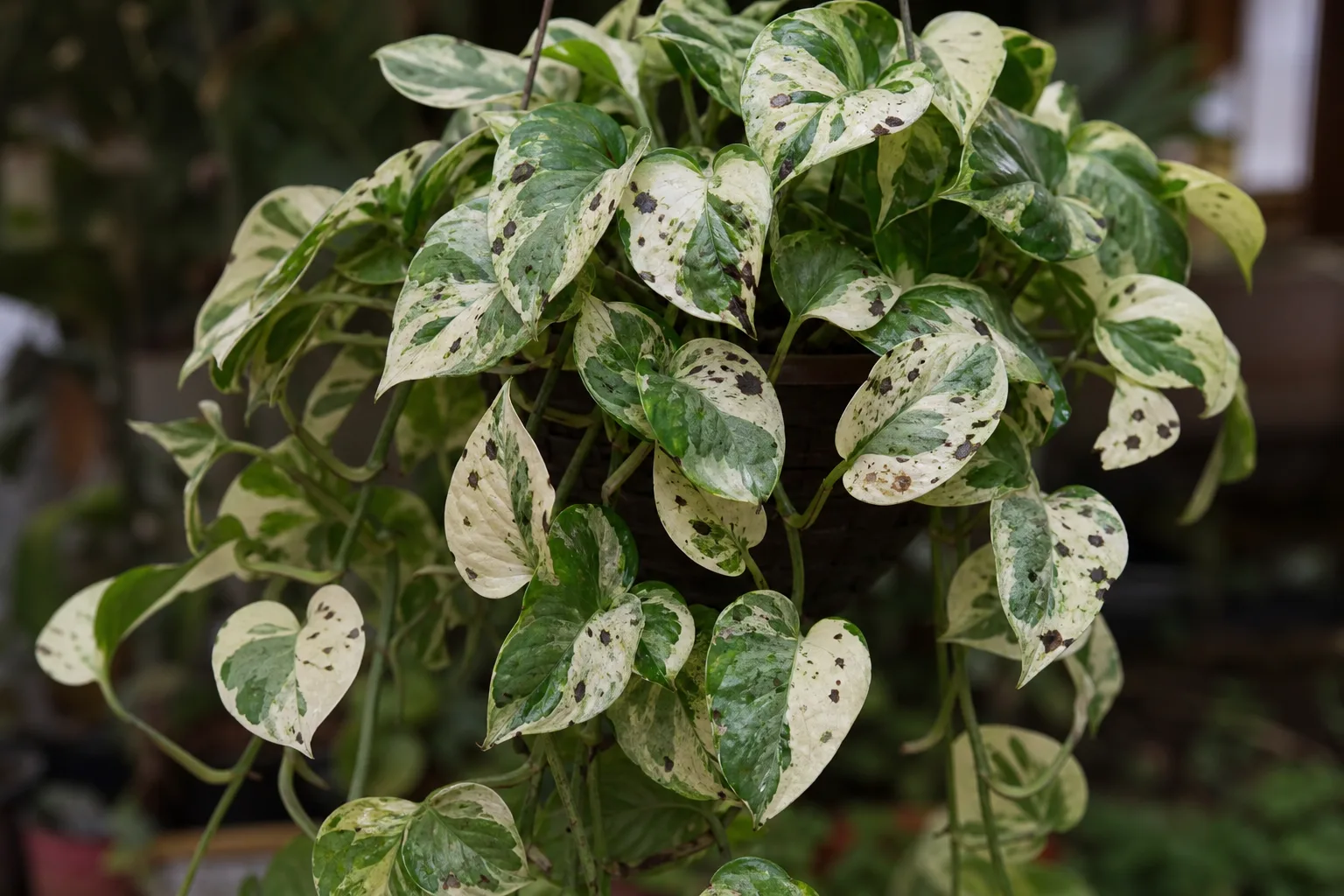
Black Spots on Manjula Pothos: Causes, Checks & Fixes
This guide covers black spots on Manjula Pothos. See also the general Black Spots guide, watering, and light pages for this plant.
Black Spots on Manjula Pothos: Causes, Checks & Fixes
Quick answer
Black spots on Manjula Pothos (Epipremnum aureum ‘Manjula’) are not part of the plant’s natural variegation. Healthy Manjula leaves show stable swirls of cream, white, silver-green, and green. True black spots are localized dead tissue-often circular or irregular patches that appear or enlarge over days, sometimes with yellow halos or water-soaked margins.
First step: feel the top 3–5 cm of mix and stop wetting foliage today. Wet soil plus spreading black lesions often points to root rot on Manjula Pothos or splash-borne pathogens. Dry, firm mix with isolated dry black marks on one bumped leaf is more likely physical damage. Do not prune heavily or spray fungicide until you know which pattern you have.
What black spots look like on Manjula Pothos
On Manjula, black spots stand out sharply against pale variegation. A cream section may show a dark rim while neighboring green tissue stays clean-unlike stable variegation, which never gains a spreading margin or yellow halo.
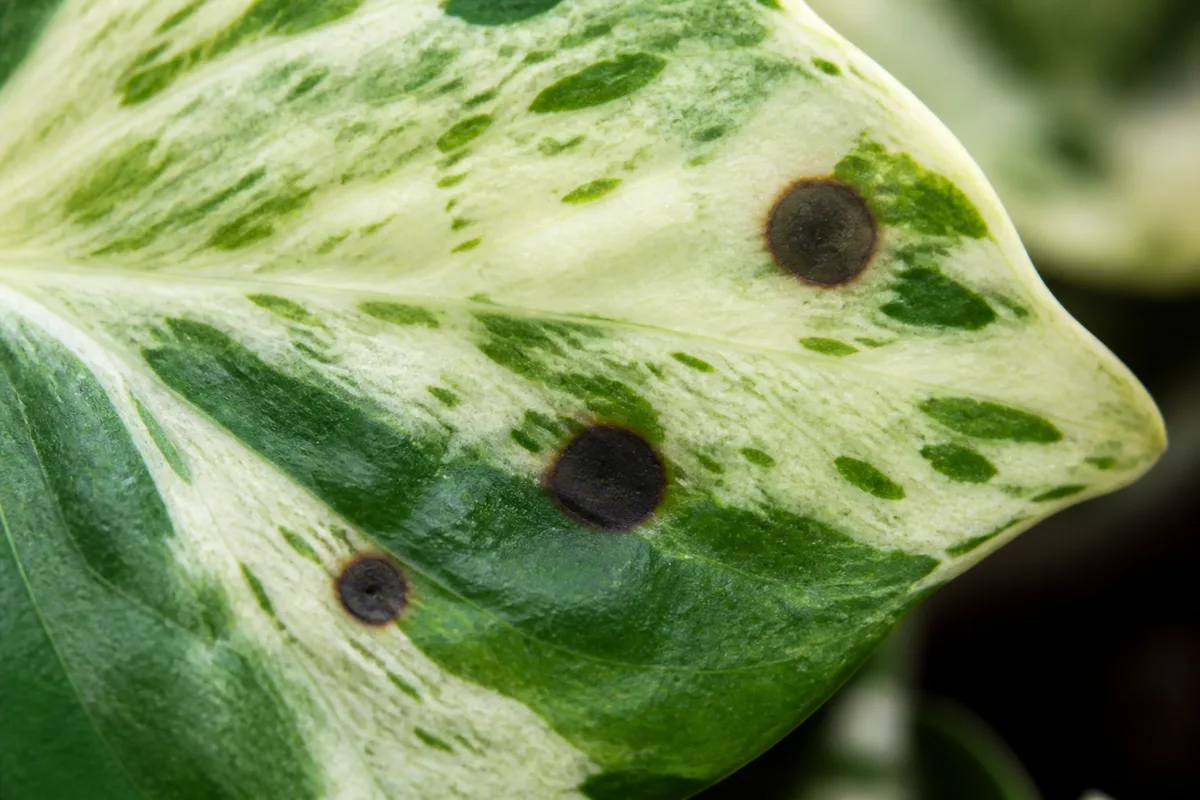
Black Spots symptoms on Manjula Pothos - compare with healthy tissue on the same plant.
Fungal leaf spots often start as tan or brown circles that darken to black. Fungal lesions may show yellowish margins or concentric ring patterns, and small black dots-the fruiting bodies of fungi-can appear inside dead tissue. Spots may merge until whole leaves brown and drop.
Bacterial spotting tends to look water-soaked at first, with angular patches bounded by veins. Advanced bacterial collapse can smell rotten. On pothos, bacterial wilt turns veins in leaves and stems black-a different, more systemic pattern than a single surface spot.
Root-rot-related blackening shows dark brown to black leaf tissue when infection moves from roots upward. Phytophthora root rot causes pothos leaves to turn dark brown to black while veins stay green-a useful distinction from bacterial wilt. Yellowing from the base up and limp vines despite wet soil often accompany this pattern.
Rhizoctonia blight produces irregular dark necrotic spots on pothos leaves, sometimes with leaves matting together. It is more common in propagation and wet greenhouse conditions but can appear in home collections with contaminated soil or splash.
Overwatering margin blackening differs from round spots. Pothos can show blackening of leaf margins with overwatering-typically crisp or dark edges rather than scattered circular lesions.
Not black spots: stable cream and green variegation present since the leaf unfurled; small dry brown marks from a shelf bump that never spread; sun scorch on the leaf face nearest a hot window.
Why Manjula Pothos gets black spots
Manjula shares pothos disease susceptibility, but several traits make black spots more visible and sometimes more likely in home care:
Heavy variegation shows damage fast. Pale sections have less chlorophyll and recover slowly. A spot that would barely show on solid green Jade pothos can look alarming on Manjula’s cream swirls.
Broad, wavy leaves hold moisture. Manjula’s larger leaf surface stays wet longer after misting or splashing than smaller cultivars. Fungi spread when leaf surfaces stay wet and humidity is high.
Slower growth after stress. Manjula is a slower-growing patented cultivar than golden pothos. A plant already stressed by dim light or soggy mix has less energy to outgrow infection.
Waterlogged roots in low light. Manjula needs bright indirect light to use water efficiently. In dim corners, mix stays wet for days-inviting Phytophthora and the leaf blackening that follows root failure.
Wet-leaf care habits. Overhead watering, evening misting, and crowded trailing vines on shelves trap humid air and keep foliage damp overnight-the same conditions extension guides cite for indoor leaf spot outbreaks.
Infected debris and shared tools. Fungi survive on dead plant matter in soil. Spotted leaves left on the mix and scissors used on multiple plants without sterilizing reintroduce spores after every watering.
How to confirm the cause
Work through these checks in order before you cut or spray:
- Timeline - Do spots appear or spread over days? Static marks that never change suggest old injury, not active disease.
- Soil moisture - Stick a finger into the top 3–5 cm. Soggy mix plus yellowing and limp vines strongly supports root rot over isolated fungal spot.
- Pattern - Circular spots with halos suggest infection. Uniform margin blackening with wet soil points to overwatering. Black veins on cut stems suggest bacterial wilt.
- Moisture history - Recent misting, overhead watering, or a humid closed shelf supports leaf pathogens.
- Leaf underside - Spider mites cause stippling and webbing, not discrete water-soaked lesions. Mealybugs leave white cottony clusters.
- Stem firmness - Soft, dark nodes at the soil line indicate advanced rot or bacterial collapse. Firm green stems with surface spots alone are less alarming.
- Neighbor plants - Matching spots on nearby pothos or philodendrons confirm contagious spread.
If only one leaf shows a small dry black mark after contact with a shelf and soil is appropriately dry, physical damage is more likely than an epidemic.
First fix for Manjula Pothos
Feel the top 3–5 cm of mix-then keep foliage dry and remove only leaves with active spreading spots.
If soil is wet, do not water. Move Manjula to bright indirect airflow, empty the saucer, and stop misting. With clean, sharp scissors, cut off leaves whose black spots are enlarging or show yellow halos or mushy tissue. Bag and discard them in household trash-not indoor compost. Wipe blades with rubbing alcohol between cuts and before touching another plant.
Hold fertilizer until new growth looks clean. Do not repot on day one unless roots smell sour and stems are soft-confirm rot first.
Step-by-step recovery
After the initial moisture check and selective pruning:
- Quarantine the plant at arm’s length from other collections until spread stops.
- Pull fallen debris off the soil surface; discard-it harbors spores.
- Switch permanently to soil-level watering; never wet leaves at night.
- Increase airflow by spacing vines and avoiding enclosed humid corners.
- Monitor daily for one week. Mark a reference leaf and watch whether the spot enlarges.
- Correct chronic overwatering if mix stayed wet-Manjula needs soil allowed to dry between waterings in perlite-rich airy mix.
- If root rot is confirmed-sour smell, mushy roots, black leaves with green veins and wet soil-unpot, trim rotted roots, repot in fresh mix, and water less often. See root-rot guidance if stems are collapsing.
- If fungal spots persist on new leaves after two weeks of dry culture, consider a houseplant-labeled copper soap or biofungicide per label directions-test on one leaf first because variegated tissue can be sensitive.
Bacterial wilt with black veins and ooze on cut stems rarely saves the whole plant. Take firm green cuttings with nodes above the affected zone as backup before discarding the base.
Recovery timeline
Mild fungal leaf spot on a healthy Manjula often stabilizes within one to three weeks after you remove infected leaves and dry the foliage. New leaves should unfurl without fresh black lesions. Because Manjula opens leaves slowly, wait two full weeks before judging failure.
Spotted old leaves never green up again-judge success by clean new growth and halted spread, not by repairing black tissue.
Severe Phytophthora or bacterial collapse with soft stems and foul odor rarely saves the whole plant. Propagate from unaffected vines if firm tissue remains above the damage.
Lookalike symptoms
- Leaf spot disease (general) - Overlaps with black spots; same dry-foliage fix applies. Black-spot pages focus on dark lesions specifically and root-rot blackening.
- Sunburn - Bleached or crispy patches on leaves facing a hot window; usually not circular with yellow halos.
- Cold damage - Pale or translucent patches after cold exposure; often follows a draft event, not gradual spot spread.
- Fertilizer burn - Brown margins from salt buildup; rarely isolated round black spots.
- Natural variegation - Stable cream and green patterns since unfurling; no enlarging margin.
Mistakes to avoid
Do not assume every dark mark on variegated tissue is disease-confirm spread first. Do not mist infected leaves hoping humidity will help-it keeps pathogens wet. Do not compost spotted foliage indoors. Do not apply fungicide to every brown mark before drying the plant and confirming disease. Do not return Manjula to a crowded shelf while spots are still spreading. Avoid overhead showering unless leaves can dry within an hour in bright airflow.
Wear gloves when handling cut tissue-Manjula Pothos contains insoluble calcium oxalates and is toxic to cats and dogs if chewed.
Manjula Pothos care cross-check
Black spot prevention aligns with normal Manjula care: bright indirect light, watering when the top 3–5 cm of mix dries, perlite-rich airy soil at pH 6.0–6.5, and 40–60% humidity without wetting leaves. A Manjula in dim light with weekly overhead watering stays vulnerable even after you remove spotted leaves.
Trailing pots below other plants often catch splash from above-move them or water neighbors carefully.
How to prevent black spots next time
Water early in the day at soil level so incidental splashes dry quickly. Space plants for airflow. Sterilize pruning tools between specimens. Quarantine new pothos for two weeks before mixing collections. Remove fallen leaves from the soil surface promptly. Skip routine misting unless you run a humidifier without wetting foliage. Use well-draining mix and let the top 3–5 cm dry before each drink.
When to worry
Escalate if spots enlarge daily despite dry leaves, stems soften at nodes, leaves drop in clusters, black veins appear on cut stems, or tissue smells rotten. Mild scattered black spots on a few lower leaves usually respond to moisture correction and removal. Systemic bacterial wilt or advanced Phytophthora with mushy stems may mean discarding the plant and starting fresh from clean stem cuttings.
Conclusion
Black spots on Manjula Pothos are dead tissue-not normal variegation. Confirm whether mix is wet, spots are spreading, and foliage has stayed damp. Keep leaves dry, remove actively infected foliage, correct watering, and judge recovery by clean new growth. Prevent recurrence with soil-level watering, spacing, clean tools, and bright indirect light so the pot dries predictably.
When to use this page vs other Manjula Pothos guides
- Manjula Pothos watering guide - Use for routine moisture checks before assuming black spots is the main issue.
- Manjula Pothos problems hub - Browse all 40 common issues on this species.
- White Spots on Manjula Pothos - Different entry point when symptoms overlap with black spots.