White Spots on Manjula Pothos: Causes, Checks & Fixes
Quick answer
White spots on Manjula Pothos are often natural variegation, hard-water residue, mealybugs, or powdery mildew-not all need treatment. First step: wipe one suspicious patch with a damp cloth to see whether it rubs off, moves, or is part of the leaf.
White Spots on Manjula Pothos: Causes, Checks & Fixes
This guide covers white spots on Manjula Pothos. See also the general White Spots guide, watering, and light pages for this plant.
White Spots on Manjula Pothos: Causes, Checks & Fixes
Quick answer
White spots on Manjula Pothos are often natural variegation, hard-water residue, mealybugs, or powdery mildew-not all need treatment. First step: wipe one suspicious patch with a damp cloth to see whether it rubs off, moves, or is part of the leaf.
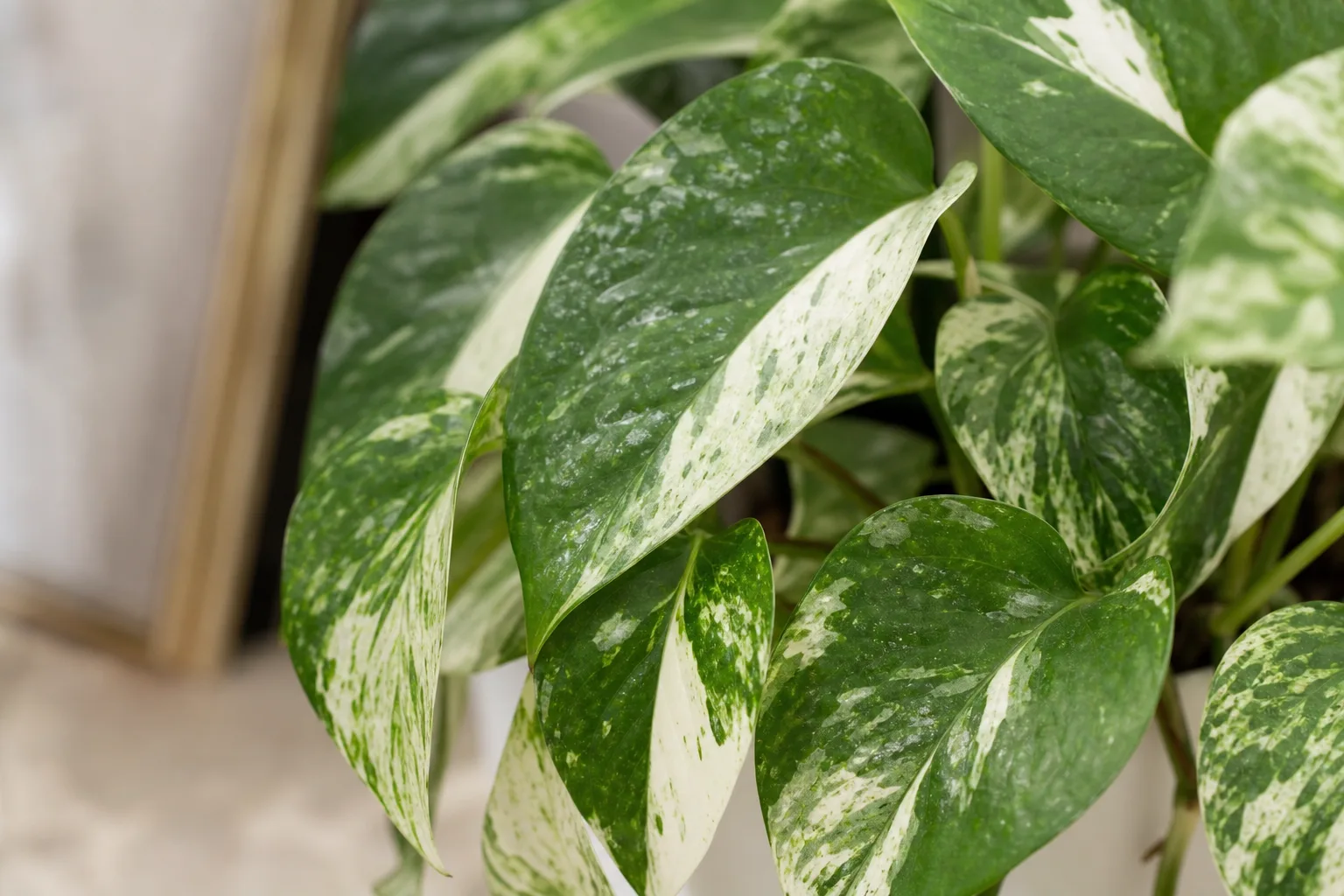
Epipremnum aureum ‘Manjula’ is a patented, slower-growing pothos cultivar with wide, wavy leaves swirled in cream, white, silver-green, and green. That heavy pale variegation is the reason so many owners search for “white spots” in the first place. The diagnostic job is separating the plant’s normal painterly pattern from crusty mineral deposits, cottony pest clusters, or spreading fungal film.
What white spots look like on Manjula Pothos
Healthy Manjula leaves show soft, blended variegation without a raised texture. Manjula foliage is heavily flecked and splashed, with creamy areas that often contain speckles of other colors rather than crisp borders. Those pale swirls are fixed in the tissue-you cannot wipe them off, and they follow each leaf’s unique pattern.
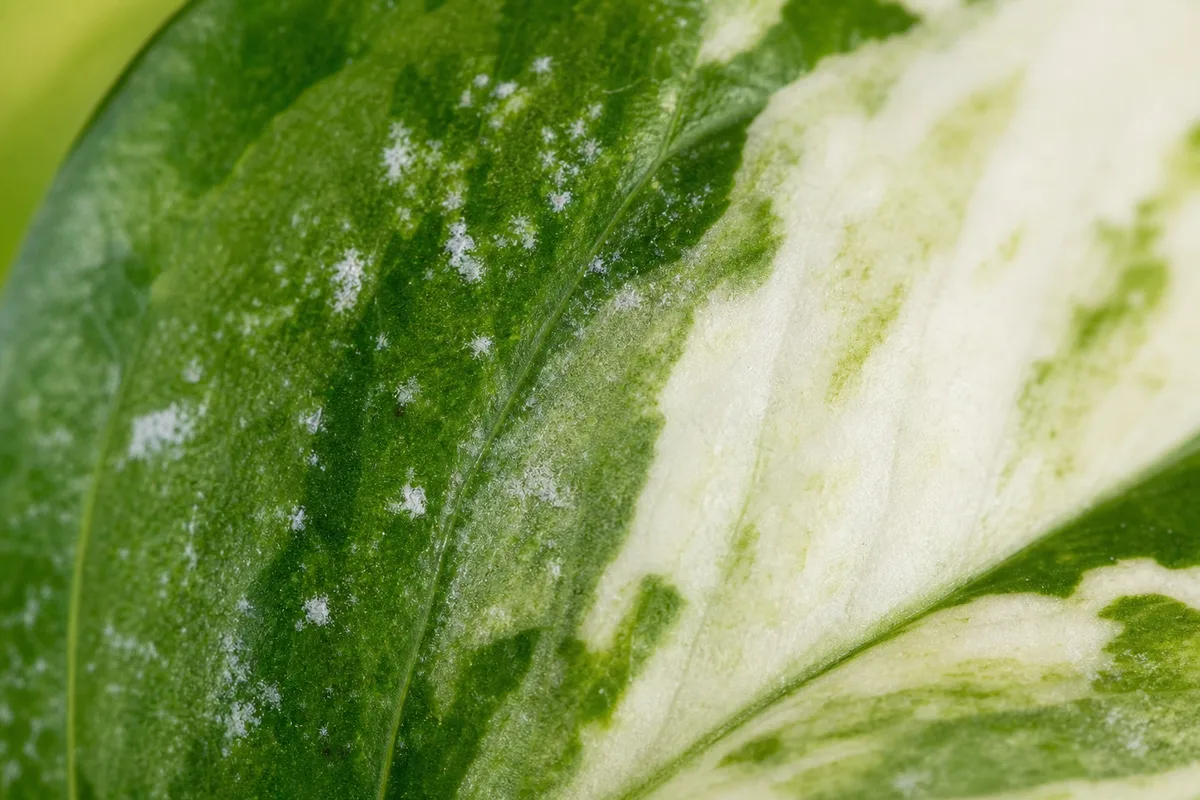
White Spots symptoms on Manjula Pothos - compare with healthy tissue on the same plant.
Problem white spots look and behave differently:
- Mineral deposits appear as chalky white crust on the leaf surface, often along margins or wherever water dried. They feel gritty and wipe away with a damp cloth, leaving green or cream tissue underneath.
- Mealybugs show as cottony white clumps in leaf axils, at stem nodes, and on leaf undersides-not as smooth color patches. They may leave sticky honeydew on nearby leaves.
- Powdery mildew forms a dusty white coating that can start as discrete circular spots before spreading. It sits on the surface and may wipe off temporarily but returns as the fungus grows.
- Fertilizer salt splash looks like pale crystallized specks, often on lower leaves after overhead watering or foliar feeding.
On Manjula, pale variegated sections make mineral crust and early mildew easier to notice than on all-green pothos. Mealybugs, conversely, are easier to miss because they hide in the same white-heavy axils where cream and green meet on wavy blades.
Why Manjula Pothos gets white spots
Natural variegation is the most common “white spot” source-and it is not a problem. Manjula was selected for marbled cream-and-white foliage. Low light can fade variegation or push new leaves toward green, but stable pale swirls on mature leaves are normal.
Hard-water and fertilizer residue is the next most frequent indoor cause. Mineral salt deposits appear as white crystallized coatings on leaves when hard water evaporates from the surface. Manjula owners often mist trailing vines or water from above; water drying on wavy, pale leaves leaves obvious white specks that look alarming against cream tissue.
Mealybugs are among the most common pests on pothos. Wisconsin Horticulture reports that mealybugs appear as white, cottony masses, frequently in leaf axils and on lower leaf surfaces. Trailing Manjula vines offer many sheltered axils where pests can feed unnoticed while the plant’s own white variegation provides camouflage.
Powdery mildew thrives where air is stagnant and leaves stay damp. Powdery mildew on indoor plants begins as small spots of powdery white growth before spreading across leaf surfaces. Manjula pots grouped on shelves, in humid bathrooms, or near crowded plant collections can develop mildew even though pothos is generally easy to grow.
Stress does not cause white spots directly, but overwatered Manjula in dim corners grows slowly and is harder to inspect. Weak, soft tissue also makes mealybug damage spread faster before you notice sticky leaves or stunted new growth.
How to confirm the cause
Do not treat from a single pale leaf. Work through this order:
- Wipe test - Dampen a soft cloth and gently rub one suspicious white area. Variegation stays put. Mineral crust lifts off. Mildew may smear and return within days. Mealybugs feel waxy or cottony and may leave a sticky smear.
- Location check - Deposits cluster where water dries (tips, upper surfaces, leaves below the watering stream). Mealybugs cluster at nodes and axils. Mildew often starts on upper leaf faces and spreads across adjacent tissue.
- Axil and underside inspection - Follow trailing vines node by node. Clemson HGIC recommends checking leaf undersides and axils where pests are most often found; use magnification if needed.
- Touch and stickiness - Honeydew makes leaves shiny and tacky. Mineral dust feels dry and powdery. Natural variegation feels like normal leaf tissue.
- Spread rate - Watch the same leaf for one week. Stable pale swirls mean variegation. New crust after each watering points to water quality. Expanding dusty patches suggest mildew. Growing cottony clusters confirm mealybugs.
If several vines show sticky residue, moving white clumps, and distorted new leaves together, treat as an active pest problem-not a cosmetic water issue.
First fix for Manjula Pothos
Wipe one suspicious white patch with a damp soft cloth and note what happens.
This single test tells you which path to take before you isolate, spray, or repot:
- If the spot wipes off as dry crust - Mineral or fertilizer residue is the likely cause. Wipe affected leaves with plain water, switch to lower-mineral water, and water at soil level so wavy foliage stays dry.
- If you expose cottony, oval insects - Mealybugs are confirmed. Isolate the plant immediately before treating nodes and axils.
- If white dust smears but returns on the same leaf within a few days - Suspect powdery mildew. Isolate and remove the worst affected leaves; improve airflow before any spray.
- If nothing rubs off and the pattern matches the leaf’s normal swirls - No fix is needed. Move on to a light and watering check only if new growth is losing variegation.
Make one correction at a time. Do not shower, alcohol-dab, repot, and fertilize on the same day.
Step-by-step recovery
Mineral deposits
- Wipe leaves with a soft cloth dampened with plain water. Maryland Extension recommends using a low-mineral water source to prevent recurrence.
- Stop overhead watering and misting on Manjula’s wavy leaves.
- Flush the pot from the top with several volumes of clear water every four to six months if salt crust also appears on the soil surface.
- Re-check new leaves after two to three waterings. Fresh growth should emerge clean if the water source was the issue.
Mealybugs
- Isolate Manjula away from other pothos, philodendrons, and syngoniums.
- Dab visible insects with a cotton swab dipped in rubbing alcohol. Clemson HGIC notes that wiping mealybugs with a cotton swab dipped in rubbing alcohol works for light infestations on houseplants.
- Spray insecticidal soap thoroughly into axils and along trailing stems. Repeat weekly for at least three weeks because wax and hidden eggs survive the first pass.
- Inspect neighboring plants and quarantine any with axil cotton or sticky leaves.
Powdery mildew
- Isolate the plant and pick off heavily coated leaves.
- Increase spacing and airflow around the pot. Maryland Extension states that increasing air circulation helps reduce powdery mildew pressure indoors.
- Avoid wetting foliage when watering. Keep Manjula in Manjula Pothos light guide-not dim corners where mildew persists.
- Re-check weekly for four weeks. If dusty patches spread despite cultural changes, consider discarding severely infected plants to protect the collection.
Recovery timeline
Mineral crust on a few leaves often clears within one to two wipe-and-water cycles once you switch water and stop wetting foliage. Light mealybug colonies on one or two vines typically need three to four weekly treatment rounds before you trust new growth. Powdery mildew may take four to six weeks to stop spreading after isolation, leaf removal, and airflow improvements.
Old leaves with etched crust, stippling, or mildew scarring will not return to perfect variegation. Judge success by new Manjula leaves unfurling with their normal cream-and-green swirls and no fresh white dust, crust, or cotton at the nodes.
Lookalike symptoms to rule out
Natural variegation follows each leaf’s unique swirl and never feels raised or sticky. Thrips cause silvery scarring and black varnish-like droplets, not cottony axil clusters. Spider mites produce fine stippling and webbing on undersides, not chalky surface crust. Sunburn bleaches or browns pale sections after direct sun exposure-it does not look powdery or cottony. Low-light reversion pushes new leaves toward solid green rather than adding random white spots on mature foliage.
Mistakes to avoid
- Treating normal Manjula variegation as disease and stripping healthy pale tissue.
- Spraying fungicide or alcohol before confirming the spot type with a wipe test.
- Misting wavy leaves with hard tap water, which guarantees recurring white crust on cream sections.
- Ignoring axil crevices on trailing vines because the upper leaf face looks fine.
- Over-fertilizing a stressed plant; salt deposits and soft new growth both worsen spotting problems.
- Handling sap without gloves; Manjula Pothos is toxic to cats and dogs via calcium oxalate crystals.
Manjula Pothos care cross-check
White spots often appear while another care factor is slightly off. Quick checks:
- Light - Manjula needs bright indirect light to hold variegation. Dim light fades cream sections and makes abnormal spotting harder to notice against pale, stretched leaves.
- Watering - Allow the top 3–5 cm of soil to dry before watering. Soggy mix weakens vines and invites root problems that stall recovery from pests or mildew.
- Airflow - Trailing pots against walls or crowded shelves trap humidity against wavy leaves. A few centimeters of space reduces mildew risk.
- Water quality - If crust returns every week, switch from hard tap water to filtered or rainwater for routine watering.
How to prevent white spots next time
Water Manjula at soil level and keep wavy foliage dry during routine care. Use lower-mineral water if chalky crust has appeared before. Wipe smooth leaf surfaces every two to three weeks during inspection-Clemson HGIC notes that washing smooth-leaved plants every two to three weeks discourages pest infestations and keeps residue from building on glossy foliage.
Quarantine new plants for six weeks and inspect axils weekly before placing them beside your Manjula. Keep the plant in bright indirect light so normal variegation stays vivid and any abnormal white dust, crust, or cotton stands out immediately on new unfurling leaves.
When to worry
Escalate beyond basic wiping and cultural fixes when:
- White dusty patches spread to new vines within a week despite dry foliage and better airflow
- Multiple axils show cottony clusters and sticky honeydew at the same time
- New leaves emerge distorted, curled, or heavily coated while soil moisture is normal
- Mineral crust keeps returning on every new leaf even after switching water-check for fertilizer salt buildup in the mix
- Treatment rounds fail after three consistent weekly cycles
Severely mildew-coated or mealybug-infested Manjula plants may be cheaper to replace from a clean cutting than to salvage when webbing, sooty mold, or stem softening has spread through most of the trailing vine.
Conclusion
White spots on Manjula Pothos are often the plant’s own variegation-not a crisis. When they are not, the pattern and wipe test separate mineral crust, mealybugs, and powdery mildew quickly. Start with one damp-cloth check, then match the fix to what you find: cleaner water and dry leaves for deposits, isolation and axil treatment for mealybugs, and airflow plus leaf removal for mildew. Prevent recurrence with soil-level watering, quarantine, and monthly node inspections on trailing vines. Judge recovery by clean new variegated growth-not by old leaves returning to flawless color.
When to use this page vs other Manjula Pothos guides
- Manjula Pothos watering guide - Use for routine moisture checks before assuming white spots is the main issue.
- Manjula Pothos problems hub - Browse all 40 common issues on this species.
- Black Spots on Manjula Pothos - Different entry point when symptoms overlap with white spots.