Java Fern Pruning: When, Where & What to Cut
Java Fern Pruning: When, Where & What to Cut
Java Fern Pruning: When, Where & What to Cut
Start every Java Fern grooming session with one move: during a water change, feel the rhizome - it should be firm - then snip off any leaf that is fully brown, black, transparent, or more than half melted, cutting flush where the petiole meets the rhizome without scoring the stem. That single habit handles most tanks for months. Rhizome division and rot surgery are separate, occasional jobs.
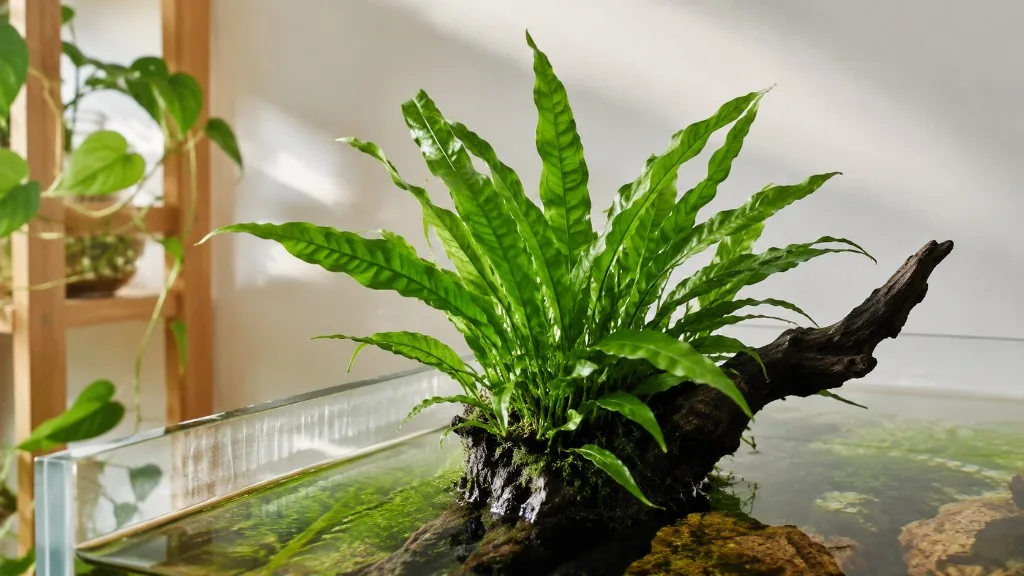
Java Fern (Microsorum pteropus) is a slow-growing rhizomatous epiphyte from Southeast Asian streams. It anchors to rock and wood with thin holdfast roots while the thick horizontal rhizome stays exposed in the water column. Unlike stem plants such as Rotala or Ludwigia, Java Fern does not branch from random points on a leaf blade. New foliage emerges from the rhizome. That biology changes every cutting rule you may know from terrestrial houseplants or fast aquarium stems.
What Java Fern Pruning Means in an Aquarium
Java Fern pruning falls into three distinct jobs. Leaf removal takes off individual foliage that is aged, melting, algae-bound, or physically damaged while leaving the rhizome intact. Rhizome division splits one attached plant into two or more sections for propagation or size control. Rot surgery excises soft, infected rhizome tissue - a rescue cut, not routine grooming.
What it does not mean: shearing the clump into a tight mound, pinching leaf tips to force bushiness, or following a “remove one-third of foliage” houseplant rule. Cut a petiole stub halfway up a blade and no replacement leaf sprouts from that stub. Aquasabi’s rhizome-plant trimming guide explains that new leaves and roots develop at the rhizome tip and from lateral shoots along the stem - not from mid-leaf wounds.
A healthy attached plant may need no trimming beyond the occasional dead leaf for several months. Pruning earns its place when decaying tissue fouls water quality, algae-choked leaves block light to neighbors, the rhizome has outgrown its hardscape slot, or you need a clean division for a second tank.
Epiphyte Anatomy - Rhizome, Petioles, and Holdfasts
Identify three structures before scissors touch tissue. The rhizome is the firm, creeping stem from which all growth arises - Tropica describes a 15–30 cm fern grown attached to wood or stone, never with the rhizome buried. Holdfast roots dangle beneath and grip surfaces; they are not where new leaves form. Each leaf connects through a short petiole (leaf stalk).
Mature plants also produce adventitious plantlets - miniature ferns with tiny leaves and roots - on older leaf undersides, often near dark bumps that are developing spore structures. Confusing a healthy plantlet for damage, or slicing through a firm rhizome while chasing a dead leaf, is how experienced aquascapers lose an otherwise bulletproof plant.
What Pruning Cannot Fix
Trimming removes symptoms; it does not correct a buried rhizome, intense light bleaching upper leaf surfaces, chronic potassium deficiency showing as pinholes, or ammonia spikes in an uncycled tank. If black or melting leaves return on fresh growth within a few weeks after a thorough cleanup, inspect attachment, lighting, and water quality before you cut again. Pruning buys time and keeps detritus out of the water - it does not replace good epiphyte placement.
What to Inspect Before You Cut
Run a quick diagnostic before any cut. Feel the rhizome with clean fingers - firm and dense is healthy; soft, jelly-like, or foul-smelling tissue is rot and needs rhizome surgery, not a leaf snip. Count how many fully green leaves remain; Java Fern photosynthesizes slowly, so stripping too much green tissue at once stresses a plant that cannot replace leaves quickly.
Check attachment: is the rhizome fully exposed above substrate, or has gravel drifted over it during the last rescape? Is cotton thread or fishing line crushing the stem? Fix smothering or crushing before or alongside trimming - otherwise fresh cuts sit in stagnant tissue and fail to heal.
Note whether the plant is mid-melt from emersed nursery stock converting to submerged growth. During melt, the rhizome may stay firm while older leaves die - that is not the same as rot, and aggressive stripping on day three makes recovery harder.
Firm Rhizome vs Soft Rot
Healthy rhizome tissue feels like a dense green-brown rope. Rot presents as soft, dark, sometimes slimy sections, often where gravel buried part of the stem or a rough cut crushed the surface. Leaves attached to rotting rhizome tissue darken and melt from the petiole base upward. That pattern requires cutting back to firm tissue on both sides of the mushy zone, then reattaching only healthy sections with the rhizome fully exposed.
Black Spots - Spores, Melt, Burn, or Rot
“Black Java Fern leaves” describes at least four different situations. Tropica notes that black spots under leaves are sporangia - reproductive structures, not disease. These appear as orderly rows of tiny dark bumps on otherwise healthy green leaf undersides and may develop into adventitious plantlets over one to three weeks. They feel firm, do not smell, and do not spread as formless mush.
Problematic blackness involves uniformly dark, soft, waterlogged leaf tissue, or black mush spreading from the rhizome into attached petioles. Light burn from intense fixtures produces crisp brown-to-black patches on upper leaf surfaces exposed to direct light - trimming helps appearance, but you must reduce intensity or move the plant to shade. Nutrient stress, particularly low potassium in high-light tanks, often begins as pinholes that enlarge and brown before leaves look broadly damaged.
When to Trim Java Fern
Java Fern does not follow a terrestrial calendar. Aquarium plants under stable lighting have no meaningful “late spring” pruning window. Trim when you see specific conditions: dead or melting leaves, algae-choked foliage, overcrowding that blocks light, or a rhizome that has outgrown its hardscape placement.
Frequency varies by setup. In a low-tech community tank with moderate light, many keepers trim once every two to four months during a water change. In high-bioload turtle tanks or brightly lit aquascapes, monthly touch-ups may be needed because algae coats leaves faster and melt happens more often after moves or parameter swings. Because growth is slow, err on the side of less cutting - targeted removal of failing leaves beats shearing the entire clump.
Routine Cosmetic Cleanup
Remove leaves that are clearly finished: fully brown or black blades, transparent melting tissue, or leaves more than half covered in hair or brush algae you cannot rub off without tearing the plant. Also remove foliage that hangs into filter intakes, blocks heater thermostats, or shades foreground plants you are establishing.
Work leaf by leaf rather than shearing the whole clump. Identify the worst offenders first - fully dead material and heavy algae load - then step back and assess balance. An over-trimmed Java Fern can look bare for six to eight weeks; that is normal if the rhizome stayed firm and exposed.
Adventitious plantlets are an aesthetic choice, not a health requirement. Leaving them creates a layered look over time. Removing them once they have a few leaves and visible roots gives propagation material - snip or gently detach and attach to hardscape with thread or gel cyanoacrylate.
Acclimation Melt and Emergency Rot Removal
Java Fern melt - widespread yellowing, browning, or transparent softening, often after purchase or a tank move - is frequently acclimation-related. Nursery plants grown emersed shed air-adapted leaves while the rhizome pushes new submersed growth. Trim the worst melting leaves to keep detritus out of the water, but do not panic-cut every discolored blade on day three if the rhizome remains firm.
Emergency trimming escalates when you see rhizome rot. Act immediately: remove the plant if needed, trim away all mushy rhizome material with a sharp sterilized blade until you reach firm tissue, and reattach only the healthy portion with the rhizome fully exposed. Any leaf attached to removed rotten sections goes in the bin - do not leave melting tissue in the tank.
If melt continues for more than three weeks on a firm rhizome with no new leaf buds appearing, trimming alone will not fix the problem. Inspect for buried rhizome sections, excessive light, nutrient imbalance, and water-quality swings before cutting again.
The First Cut: Removing a Dead or Damaged Leaf
Once you have flagged leaves that should go and confirmed the rhizome is firm, follow a consistent sequence. Sterilize aquascaping scissors with rubbing alcohol and let them dry. Gently stabilize the rhizome or attached wood so the leaf does not pull the clump when snipped. Position scissor tips at the petiole base where it meets the rhizome, parallel to the rhizome surface rather than punching straight down into it. Make one clean cut through the petiole - no sawing. Remove the leaf from the tank immediately rather than letting it float.
If a leaf pulls away with almost no resistance and leaves a clean rhizome surface, it was already detached enough that trimming was mostly cleanup. If you encounter resistance, use scissors rather than pulling - torn petiole bases decay faster than clean cuts.
Cut Placement at the Petiole Base
The ideal cut removes the entire petiole stub without scoring the rhizome. Aim for zero to two millimeters of petiole base at most - essentially flush with the rhizome contour. A short stub browns cosmetically but usually causes no harm if it dries cleanly. A long stub dies back slowly and can look like a tiny rotting peg for weeks.
Never cut into rhizome flesh while chasing a stubborn petiole. If angle is awkward because the plant is wedged against rock, trim the leaf blade first for visibility, then return for the petiole base cut. Some keepers temporarily untie a Java Fern from wood to trim on a tray outside the tank, then reattach within a few minutes so the rhizome does not dry out.
Tools and Sterilization
Use curved or straight aquascaping scissors with fine tips. Household kitchen scissors are often too large and crush petioles instead of slicing cleanly. A sharp razor blade suits rhizome division or rot removal, where you need one long pass through thick tissue.
Sterilize blades before you start and between plants if trimming multiple specimens. Wipe with isopropyl alcohol (70%) and let it evaporate, or dip briefly in a 1:20 bleach solution and rinse thoroughly when dealing with suspected rot. Schedule trimming during a partial water change when possible - lowering the waterline a few inches makes the petiole junction visible.
How Much Foliage You Can Safely Remove
There is no one-third rule for this slow grower. Remove only leaves that are clearly failing - fully dead, melting, or so algae-coated that cleaning would tear the blade. Taking off several problem leaves in one session is fine if the rhizome stays firm and enough green foliage remains to photosynthesize.
Avoid stripping the plant to a bare rhizome unless you are performing rot surgery and have no choice. A small rhizome with only two or three leaves left will survive but look sparse for months. Aquasabi recommends not removing healthy leaves and roots from newly planted rhizome plants - give them time to settle before any cosmetic thinning.
When manicuring for aquascape shape, remove outer leaves that break the silhouette before touching inner healthy foliage. Java Fern rarely needs thinning the way stem-plant groups do; it needs targeted removal of failing tissue and optional plantlet management.
Rhizome Trimming and Division
Leaf trimming controls appearance and removes failing tissue. Rhizome trimming controls size, propagates new plants, and removes rot that would otherwise kill the entire specimen. Both require sharp tools, sterilization, and the rule that every surviving section keeps multiple leaves and holdfast roots.
When to Split the Rhizome
Divide or shorten a Java Fern rhizome when it has outgrown its placement, when you want a second plant for another tank, or when you must cut out rotten tissue in the middle of a long rhizome - Tropica notes propagation is easy by splitting the horizontal rhizome, leaving two healthy ends that can be reattached separately.
Choose segments with at least three to five healthy leaves and a cluster of holdfast roots each. Smaller sections sometimes survive but recover very slowly in low-nutrient tanks. Cut straight through the rhizome in one motion with sterilized scissors or a razor. If removing rot from the center, cut back on both sides of the mushy zone until tissue is firm throughout the cross-section.
Never remove more than half the rhizome length in one session unless you are propagating and accept that the parent clump will look sparse for months while it regrows.
Reattaching Divided Sections
Work quickly if you remove the plant from water - epiphyte rhizomes tolerate brief air exposure, but do not let them dry for more than a few minutes. Reattach each section to rock or wood with fishing line, cotton thread, or a small dab of gel cyanoacrylate on the holdfast area - not smeared across the whole rhizome. Position the rhizome horizontally with water circulation around it. Bury only the thin holdfast roots if you must weigh the plant down; never the rhizome body.
Recovery After Pruning
Leaf removal shows little visible change for weeks, then a new leaf may emerge from a rhizome bud. After rhizome division or rot surgery, expect a recovery pause of two to four weeks before obvious new leaf growth in a stable, cycled tank. Avoid relocating the plant repeatedly during this window. Maintain consistent lighting on the low to moderate side, perform regular water changes to manage organics from trimmed tissue, and hold off on aggressive algae scrubbing near healing cut surfaces.
Timeline and Signs Pruning Worked
Success looks like a firm rhizome, gradual new submersed leaves emerging from bud points along the upper rhizome surface, and no spread of soft tissue from previous cut sites. Adventitious plantlets on retained leaves may continue developing - that is normal reproductive activity, not a sign of stress.
Signs You Trimmed Too Much or Missed the Cause
Warning signs include a rhizome that softens after trimming, no new buds after four to six weeks in stable water, or repeated melt on fresh leaves within a month. If black leaves return on new growth after rhizome surgery, the underlying cause - burial, light burn, water quality, or chronic deficiency - is still active. Trimming and division solve structural problems; they do not replace exposed rhizome placement and balanced tank maintenance.
Mistakes to Avoid
Burying the rhizome after trimming or rescape is the most common fatal error. Tropica warns that covering the rhizome causes rot. Mid-leaf cuts leave dying petiole stubs that add nothing to future shape and sometimes decay into the rhizome. Pulling leaves by hand tears rhizome tissue when resistance appears - always use scissors.
Confusing spore patches with rot leads to unnecessary trimming of healthy reproductive leaves. Over-stripping during acclimation melt removes photosynthetic tissue the plant still needs while transitioning. Dull or unsterilized tools crush petioles and can spread bacteria between epiphytes in the same tank. Tying thread too tight crushes rhizome tissue and mimics rot symptoms within days.
Conclusion
Java Fern pruning is precise, rhizome-safe cleanup - not frequent shaping. The cut belongs at the petiole base, flush with a firm, exposed rhizome. Black leaves are not always an emergency: spore spots and old-leaf senescence are normal; mushy rhizome tissue and rapid whole-plant darkening demand immediate rot removal and a hard look at attachment and water conditions.
Build a simple habit around water changes: scan for melting or dead blades, trim them at the rhizome with sterilized scissors, remove debris from the tank, and confirm the rhizome still sits fully in the water column. Reserve rhizome cuts for propagation, size control, or rot surgery, and give the slow-growing plant time to respond before you trim again.
When to use this page vs other Java Fern guides
- Java Fern overview - Start here for whole-plant context before deep-diving this topic.
- Java Fern problems hub - Jump to symptom-specific fix guides when this care topic does not resolve the issue.
- Leggy Growth on Java Fern - Escalate here when pruning adjustments are not enough.
- Plant Leaning on Java Fern - Escalate here when pruning adjustments are not enough.
- Slow Growth on Java Fern - Escalate here when pruning adjustments are not enough.