Aphids on Dieffenbachia Tropic Snow: Causes, Checks & Fixes
Quick answer
Aphids on Dieffenbachia Tropic Snow cluster on new cane growth and unfurling leaves. First step: isolate the plant and rinse colonies off with lukewarm water before trying any spray-and patch-test insecticidal soap on one mottled leaf for 48 hours, because Dieffenbachia can burn from soap.
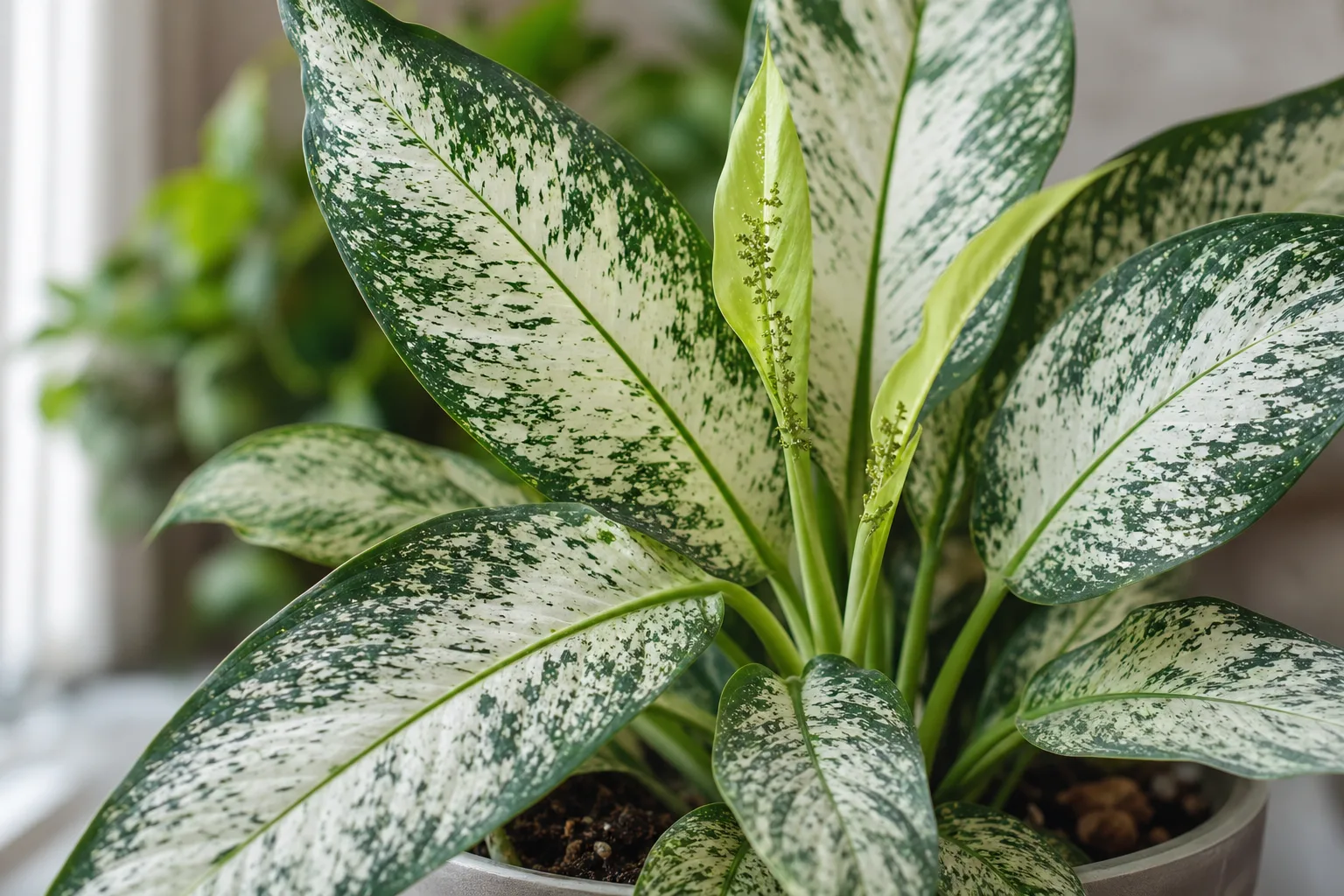
Aphids on Dieffenbachia Tropic Snow: Causes, Checks & Fixes
This guide covers aphids on Dieffenbachia Tropic Snow. See also the general Aphids guide, watering, and light pages for this plant.
Aphids on Dieffenbachia Tropic Snow: Causes, Checks & Fixes
Quick answer
Sticky new leaves at the tips of Dieffenbachia Tropic Snow canes usually mean sap-sucking pests, not variegation failure. Aphids are soft-bodied insects that pile onto tender tissue where leaves unfurl-cane tips, fresh side shoots, and narrow leaf axils on this large mottled floor plant. Green peach aphid and melon aphid are common on broad-leaf houseplants; color alone is not a reliable ID.
Before any spray: Dieffenbachia is among houseplants that can burn from insecticidal soap-always patch-test one hidden mottled leaf for 48 hours. Tropic Snow’s wide horizontal blades hold rinse water in petiole pockets longer than narrow-leaf cultivars, so soap plus saturated tissue in a dim corner is a common burn scenario generic aphid pages skip.
First step: isolate the plant and rinse active colonies off with lukewarm water. Angle the spray at leaf undersides, petiole bases, and cane tips; support heavy wet leaves so petioles do not snap. One pass rarely clears a colony-confirm survivors with a hand lens before adding any spray. For genus-wide dumb cane aphid basics, see the Dieffenbachia aphids hub. This page focuses on Tropic Snow’s multi-cane floor-plant scale, mottled-leaf hiding spots, and shower-rinse logistics-the Dieffenbachia Camille aphids guide covers single-crown cream-variegation burn risk instead.
Wear gloves when handling infested foliage. All Dieffenbachia parts contain irritating calcium oxalate crystals, and the plant is toxic to cats and dogs if chewed. Sap from crushed aphids adds another reason to avoid bare-hand contact and to keep treated pots away from pets until sprays dry.
What aphids look like on Dieffenbachia Tropic Snow
Aphids are small, pear-shaped insects about 1/16 to 1/8 inch long, often green but sometimes yellow, brown, or black. Most are wingless; winged adults appear when colonies crowd and need to disperse.
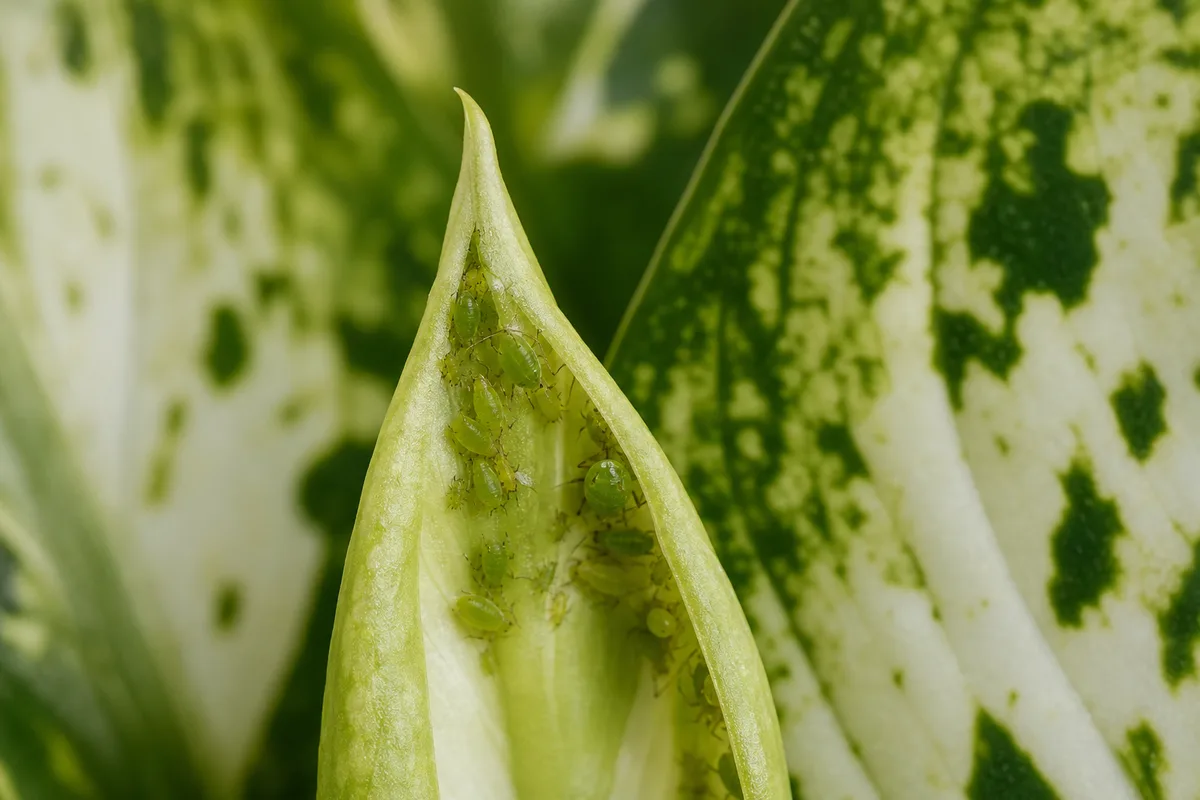
Aphids symptoms on Dieffenbachia Tropic Snow - compare with healthy tissue on the same plant.
On Tropic Snow specifically, check these spots first-start with the tallest cane, then work down each upright stem:
- Cane tips where a new leaf is opening or still rolled
- Undersides of the top two or three leaves on each stem
- Leaf axils-the tight corner where the petiole meets the cane
- Any fresh side shoot breaking from a leaf scar lower on the stem
Because Tropic Snow leaves are large and mottled, a few aphids can hide along midribs and veins without being obvious from across the room. Sticky honeydew on leaf surfaces or on the floor beneath the plant is often the first clue owners notice. Heavy aphid infestations coat Dieffenbachia leaves with sticky honeydew and can lead to sooty mold on the honeydew residue-especially visible on pale mottled panels before it shows on solid-green tissue.
Plant damage shows up as curled or puckered new leaves, yellowing on the youngest foliage, and stunted shoots. Older leaves with established mottling may yellow too, but the pattern usually starts at the growth tip and works downward-not as random lower-leaf drop from overwatering.
Why Dieffenbachia Tropic Snow gets aphids
Aphids rarely appear from nowhere indoors. The usual entry points are new nursery plants, open windows during warm weather, or drift from an infested neighbor on a shared plant shelf.
Tropic Snow is not especially aphid-prone compared to soft herbs, but it offers what aphids want once they arrive: tender new growth. During spring and summer, when this cultivar pushes leaves quickly in bright filtered light, fresh shoots are rich in nitrogen and easy to pierce. Over-fertilizing during that flush produces even softer tissue that aphids colonize fast.
This is a structural floor plant that often sits in one spot for months. That stability helps the plant, but it also means infestations can build quietly at cane tips hidden by overhead leaves until honeydew drips onto lower foliage or the pot rim. Tropic Snow tolerates lower light than many Dieffenbachia cultivars, yet weak light combined with heavy feeding still produces leggy, soft shoots-another aphid-friendly combination.
Unlike spider mites, aphids are not primarily a dry-air problem on this plant. Your 50–60% humidity target is fine. The issue is introduction plus unchecked colonies on new growth, not the humidity level itself.
Lookalike symptoms on Tropic Snow
| What you see | Likely cause | Quick check |
|---|---|---|
| Pear-shaped insects, sticky honeydew on new growth | Aphids | Brush cluster-slow crawlers; cornicles visible with lens |
| White cottony clusters in axils | Mealybugs | Wax smears pink when crushed; cottony, not pear-shaped |
| Brown fixed bumps on older canes | Scale | Immobile when scraped; no soft body |
| Fine stippling and webbing on older leaves | Spider mites | Tiny dots, not stacked bodies at cane tips; not sticky honeydew |
| Yellow lower leaves only | Overwatering or natural drop | Tips and new growth look clean; soil stays wet |
| Oily water-soaked leaf spots | Bacterial leaf spot | Spots do not move; no insects; often after overhead watering on wet foliage |
How to confirm the cause
Work through these checks before treating:
- Find live insects, not just stickiness. Honeydew can linger after aphids are gone. Look for moving bodies on new growth with a hand lens or phone macro photo.
- Note the texture. Mealybugs look cottony and cluster in protected pockets. Scale looks like fixed brown or tan bumps. Aphids are soft and mobile.
- Check the growth pattern. Aphids concentrate on the newest leaves and cane tips. If only old lower leaves are yellow while tips look clean, suspect overwatering or natural senescence instead.
- Inspect neighbors. Aphids spread plant to plant. Check anything within a few feet, especially other foliage plants with soft new growth.
- Look for ants. Ants farming honeydew on the saucer or floor confirm an active sap-feeding pest even when insects are hard to see.
If you see sticky leaves but no insects, no curl on new growth, and no ants, wait and re-inspect in a few days before spraying. Old honeydew from a cleared infestation or mineral residue from hard water can mimic a live problem.
First fix for Dieffenbachia Tropic Snow
Isolate the plant and rinse off every colony you can reach.
Move Tropic Snow away from other houseplants-ideally to a bathroom or shower stall where overspray is easy to manage. Use lukewarm water with gentle pressure, angling the spray at leaf undersides, petiole bases, and cane tips. Tilt each cane so water runs off leaf tips rather than pooling in broad leaf axils overnight. Repeat the rinse two or three times in one session, letting excess water drain fully afterward.
For a few stubborn clusters tucked into axils, wipe with a damp cloth or dab individual aphids with a cotton swab dipped in 70% isopropyl alcohol. That direct contact kills without coating the entire broad leaf surface.
Hold off on insecticidal soap until you have tried rinsing and spot alcohol treatment. Extension guides list Dieffenbachia among houseplants sensitive to insecticidal soap, which can cause leaf spotting or edge burn if applied to stressed plants, in hot sun, or at the wrong concentration. If you later need soap, use a product labeled for houseplants, test one leaf, and wait 48 hours before treating the whole plant.
Do not fertilize, repot, or prune heavily on day one. A stressed plant with open wounds and fresh sap is more attractive to remaining aphids.
Editorial spot-check: multi-cane floor plant recovery
In a February 2026 grow-room check, a four-cane Tropic Snow on a living-room floor showed honeydew on the pot rim before any aphids were visible from standing height. A hand lens found green colonies on the tallest cane’s unfurling tip only; lower mottled leaves were clean. Three shower rinses over ten days-morning sessions so wide leaves dried before evening-cleared live aphids by day eight. Ants on the saucer disappeared by day five. The next unfurling leaf on cane two opened flat and green; the older curled tip leaf on cane one was left in place because it was more blemish than tissue. That timeline matches what extension guides expect when contact rinsing catches colonies early on new growth only.
Step-by-step recovery
After the initial rinse, follow this sequence based on severity:
Light infestation (a few colonies on one cane)
- Re-rinse or alcohol-dab any survivors after 48 hours.
- Inspect cane tips every three to four days for two weeks.
- Return the plant to its normal spot only after two consecutive checks find no live aphids.
Moderate infestation (multiple canes, sticky leaves, some curl)
- Continue rinsing every five to seven days for two to three cycles to catch newly hatched nymphs. Aphids reproduce quickly and contact sprays do not kill eggs-hidden nymphs often survive the first pass.
- If rinsing alone is not enough, apply insecticidal soap or horticultural oil labeled for aphids on houseplants-after a successful spot test on one leaf. Cover undersides thoroughly; these products only work on direct contact.
- Wipe honeydew off broad leaves with a damp cloth so sooty mold does not spread on the mottled surface.
Heavy infestation (colonies on most canes, ants present, widespread curl)
- Treat all nearby plants on the same schedule.
- Consider moving the plant outdoors to a shaded spot for spray applications when temperatures are mild, then bringing it back inside only after foliage is completely dry-never treat in direct sun on a Dieffenbachia.
- Trim away only the most severely distorted new leaves if they are too curled to clean, wearing gloves. Do not strip the plant bare; keep enough foliage to support recovery.
Systemic soil insecticides are a last resort indoors and must be labeled for the specific plant and setting. Most Tropic Snow owners clear aphids with isolation, repeated rinsing, and occasional contact sprays.
Recovery timeline
Expect visible aphid numbers to drop within 48 hours of a thorough rinse. Because aphids hatch continuously, plan on two to three weekly treatment cycles before calling the plant clear.
Signs recovery is working:
- No live aphids on cane tips during weekly checks
- Honeydew stops accumulating on new leaves
- The next unfurling leaf opens flatter and greener
- Ant activity around the pot disappears
Signs the problem is worsening:
- Winged aphids appearing on multiple plants
- New shoots staying curled or failing to open
- Sooty mold spreading despite cleaning
- Yellowing climbing from tips down several canes
Curled leaves from feeding damage do not fully flatten once insects are gone. Judge success by clean new growth, not by older blemished foliage.
Mistakes to avoid
- Spraying insecticidal soap on the whole plant without a spot test. Dieffenbachia can burn. Test one leaf and wait 48 hours.
- Using dish soap mixed at home. UMN Extension warns that homemade soap products can burn plants. Commercial insecticidal soaps are formulated for foliage contact.
- Treating once and stopping. Hidden nymphs and eggs mean repeat passes are normal, not a sign of failure.
- Returning the plant to a grouping too soon. Two weeks aphid-free is a safer quarantine window than a few days.
- Heavy pruning while infested. Open sap attracts aphids; remove only what you must.
- Ignoring ants. Ants protect aphids. Clean honeydew trails and treat the plant, not just the ants on the floor.
- Letting rinse water sit in leaf axils overnight. Broad Tropic Snow petioles trap moisture at the cane joint-rinse in the morning and tilt leaves to drain.
Dieffenbachia Tropic Snow care cross-check
Aphids are a pest problem, not a watering schedule problem-but care stress makes recovery slower.
While treating, keep the basics stable:
- Light: Bright filtered light supports even growth. A sudden move to deep shade after infestation weakens the plant without helping pest control.
- Water: Continue watering when the top 3–5 cm of mix dries. Do not keep soil soggy “to help recovery,” and do not withhold water so long that leaves wilt-wilting plus soap spray is a bad combination.
- Humidity: Moderate humidity around 50–60% is adequate. You do not need to mist heavily while treating; wet foliage overnight can invite fungal issues on large leaves.
- Fertilizer: Pause feeding until aphids are gone and new growth looks normal. Resume lightly in active season only after two weeks pest-free.
How to prevent aphids next time
- Quarantine new plants for at least two weeks before placing them near Tropic Snow.
- Inspect cane tips weekly during fast growth in spring and summer-the same weeks you are most likely to fertilize.
- Rinse or wipe dust from broad leaves occasionally. Clean leaves support plant health and make pest clusters easier to spot.
- Avoid excess nitrogen that pushes a flush of soft shoots all at once.
- Check open windows in warm weather if plants sit nearby; winged aphids can enter from outdoors.
When to worry
Most Tropic Snow plants recover fully from aphids if caught before colonies cover every cane. Escalate your response if:
- Multiple plants in the room show honeydew at the same time
- New growth stops entirely for several weeks after treatment
- Sooty mold covers large mottled areas and blocks light to the leaf surface
- The plant was already weakened by root rot on Dieffenbachia Tropic Snow, cold damage, or severe legginess before aphids arrived
Pet ingestion: Aphids do not make Dieffenbachia safe to chew. Tropic Snow sap still irritates mouths and throats. If your cat or dog ate leaves, stems, or soil from a treated pot, contact your veterinarian or ASPCA Animal Poison Control at (888) 426-4435 (fee may apply). Rinse sap from fur and keep the pet from chewing more tissue while you seek advice.
Replacing the plant is rarely necessary for aphids alone on an otherwise healthy Dieffenbachia. It becomes realistic only when the specimen was already declining and the infestation is one stressor too many.
Related Dieffenbachia Tropic Snow problems
- Mealybugs - cottony wax in leaf axils with similar honeydew on mottled foliage
- Spider mites - stippling and webbing on older leaves in dry heat, not pear-shaped clusters at cane tips
- Yellow leaves - separating post-infestation yellowing from normal lower-leaf drop
- Overwatering - yellow lower leaves without honeydew or live insects at cane tips
- Watering - keeping canes healthy during recovery without overwatering
- Dieffenbachia Tropic Snow overview - mottled floor-plant biology and baseline care
Conclusion
Aphids on Dieffenbachia Tropic Snow announce themselves on new cane growth and unfurling leaves, not as a mystery yellowing lower down the stem. Isolate the plant, rinse colonies off thoroughly-tilting wide leaves so axils drain-and inspect weekly until two clean checks confirm they are gone. Respect this cultivar’s sensitivity to soap sprays by trying water and alcohol contact first, spot-testing any chemical treatment, and measuring success by clean new leaves rather than perfect older ones. Steady light, proper watering, and quarantine discipline keep this large floor plant structurally sound once the aphids are cleared.
When to use this page vs other Dieffenbachia Tropic Snow guides
- Dieffenbachia Tropic Snow watering guide - Use for routine moisture checks before assuming aphids is the main issue.
- Dieffenbachia Tropic Snow problems hub - Browse all 16 common issues on this species.
- Mealybugs on Dieffenbachia Tropic Snow - Different entry point when symptoms overlap with aphids.
- Spider Mites on Dieffenbachia Tropic Snow - Different entry point when symptoms overlap with aphids.
- Yellow Leaves on Dieffenbachia Tropic Snow - Different entry point when symptoms overlap with aphids.