Dieffenbachia Camille Pruning: When, How, and Mistakes
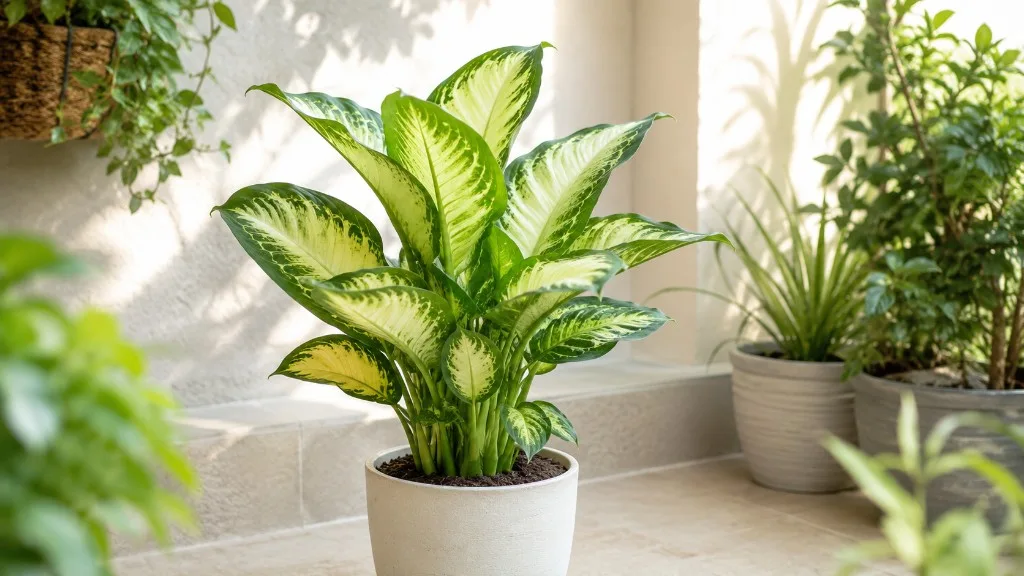
Dieffenbachia Camille Pruning: When, How, and Mistakes to Avoid
Dieffenbachia Camille Pruning: When, How, and Mistakes to Avoid
When a Dieffenbachia Camille starts looking like a lollipop - cream leaves clustered at the top of a bare cane - pruning can restore proportion, but only if you understand what this cultivar loses with every cut. Start by removing fully yellow or clearly damaged leaves at the petiole base while wearing gloves. That single grooming step clears failing tissue without sacrificing the healthy cream-centered foliage Camille is grown for.
Dieffenbachia seguine ‘Camille’ grows as upright canes with alternate leaves on thick stems. New shoots emerge from buds at nodes - the rings where leaves attach - and from the terminal bud at the tip. The Missouri Botanical Garden lists dieffenbachia among common indoor foliage plants in the Araceae family. NC State Extension notes its use as a container plant and documents toxicity concerns. Camille’s pale center panels photosynthesize less efficiently than all-green leaves, so aggressive pruning weakens recovery. Correct light before you shorten canes - variegation scorches in direct sun and fades in dim corners.
What Pruning Does for Camille
Three pruning types apply to this compact dumb cane cultivar.
Grooming removes yellow lower leaves, trims minor brown tips, and cuts broken petioles flush with the cane. Cane shortening reduces height on a leggy stem by cutting above a node where latent buds can activate. Rejuvenation harvests the healthy top crown as a tip cutting while the rooted base regrows from lower nodes - useful when the lower cane is bare but the upper cluster is still sound.
Camille is usually kept as a table or stand plant, not a tall floor specimen. Light shaping early prevents the bare-cane silhouette that forces drastic rejuvenation later.
When Camille Needs Pruning
Prune when you see fully yellow leaves, soft rotting stems, broken petioles, or a single cane leaning enough to destabilize the pot. Lower-leaf yellowing on an otherwise firm plant is often normal senescence - wait until a leaf is mostly yellow before removing it.
Spring through early summer is the safest window for cane topping and major reshaping, when warm temperatures and active growth help latent buds break within weeks. Grooming of dead or damaged tissue can happen any time.
Leggy Canes and Fading Variegation
Leggy Camille - wide internodes, small new leaves, mostly green new growth - usually signals insufficient light, not a fertilizer shortage. Clemson HGIC notes dieffenbachia tolerates low light but grows reduced in dim conditions. Move gradually toward bright filtered light with sheer-curtain protection for cream centers. Then shorten the cane above a node where healthy leaves remain, or remove the top as a propagation cutting.
When Not to Prune
Skip major cane work when the plant is wilting from root rot on Dieffenbachia Camille, recently repotted, or sitting in a cold draft below about 18°C (65°F). Do not strip healthy cream-variegated leaves to hide bare lower cane without a plan - either shorten and root the top or accept a staged rejuvenation over two sessions. Growth pause in winter is normal dormancy, not a pruning trigger.
What to Check Before You Cut
Run through a quick inspection before any blade touches tissue:
- Cane firmness - soft, mushy lower stems mean rot; trace cuts back to firm white or green tissue only.
- Leaf color - distinguish senescing lower leaves from upper crown decline.
- Petiole integrity - a snapped petiole leaves Camille lopsided for months if left hanging.
- Node health - look for swollen rings with visible buds below the planned cut.
- Light exposure - if new growth is mostly green, improve light before reshaping.
Tools, Gloves, and Sterilization
Use sharp bypass pruners for cane cuts and fine scissors for petioles. Wipe blades with 70% isopropyl alcohol between cuts on diseased tissue. Iowa State Extension recommends sanitizing between cuts when removing infected material.
Always wear gloves. Dieffenbachia sap contains calcium oxalate crystals that cause intense oral and skin irritation - the common name “dumb cane” reflects swelling that can temporarily inhibit speech if sap contacts mouth tissue. The ASPCA classifies dieffenbachia as toxic to cats and dogs. Work away from children and pets, bag trimmings securely, and wash hands and tools after finishing even if gloves were worn.
Where to Cut on Canes and Leaves
Cut placement determines whether Camille branches or leaves a dead stub.
Yellow or damaged leaf: slice the petiole at the base where it meets the cane - never leave a torn stub.
Brown tips: follow the natural leaf contour with scissors, removing only dead tissue. If more than half the blade is damaged, remove the whole leaf at the petiole base instead.
Leggy cane: cut the stem 5–10 mm above a firm node with a visible bud. Multiple nodes below the cut may activate, producing side shoots.
Bare cane with healthy top: remove the crown below the lowest healthy leaves as a tip cutting; shorten the remaining base cane to a lower node.
Rot: cut back into firm white or green stem tissue. Discard mushy sections - never propagate soft cane.
Dieffenbachia does not sprout from bare internodes. A cut placed mid-stem between nodes typically dies back without producing new growth.
How Much You Can Safely Remove
Follow the one-third rule: remove no more than one-third of total foliage in one session. Camille recovers more slowly than green dieffenbachia cultivars because variegated leaves contribute less photosynthate. If multiple canes need shortening, spread major work across two spring or summer sessions rather than one hard cutback.
Step-by-Step Camille Pruning
- Inspect cane firmness, leaf color, and petiole integrity.
- Put on gloves and sterilize tools.
- Remove fully yellow and broken leaves first - this is always the opening move.
- Trim minor brown tips cosmetically if the underlying cause (humidity, fluoride, watering) is already corrected.
- Shorten one leggy cane at a time, reassessing balance between cuts.
- Bag sap-bearing trimmings immediately.
- Wash hands and tools.
- Hold fertilizer for two to three weeks until new growth appears.
Recovery and Aftercare
New shoots from nodes typically appear within three to six weeks during warm, bright-indirect conditions. Camille prefers moderate to high humidity around 50–60% and soil that dries slightly in the top 3–5 cm between waterings. Rotate the pot weekly so variegated leaves do not lean excessively toward the window.
Signs Pruning Worked vs Went Too Far
Pruning worked: firm cane tissue at cut sites, new buds swelling within four weeks, upright petioles on fresh leaves, stable variegation on new growth.
Pruning went too far or was mistimed: persistent wilt despite appropriate watering, softening cane above or below the cut, no bud break after six weeks in warm active growth, crown collapse with yellowing upper leaves.
Persistent droop after pruning usually points to overwatering on Dieffenbachia Camille, cold stress, or excessive foliage removal - not a normal short-term response.
Using Pruned Canes for Propagation
Clemson HGIC describes rooting cane sections and tip cuttings in warm, humid conditions. NC State Extension recommends cane sections 5–8 cm long with at least one node, laid horizontally or planted vertically with a bud facing up. Use firm cane only. Variegation on rooted cuttings may differ from the parent - select sections from well-variegated tissue when possible.
Common Mistakes to Avoid
Pruning without gloves - sap exposure is painful and dangerous around pets and children.
Removing too many cream leaves - weakens an already slow variegated plant.
Cutting mid-internode - upper stub dies back without sprouting.
Ignoring broken petioles - Camille stays lopsided for months after mechanical damage.
Pruning during rot or wilt crisis - fix roots and moisture first.
Expecting instant bushiness - side shoots take weeks to months even in active growth.
Topping without improving light - repeat legginess with smaller, greener new leaves.
When to use this page vs other Dieffenbachia Camille guides
- Dieffenbachia Camille overview - Start here for whole-plant context before deep-diving this topic.
- Dieffenbachia Camille problems hub - Jump to symptom-specific fix guides when this care topic does not resolve the issue.
- Leggy Growth on Dieffenbachia Camille - Escalate here when pruning adjustments are not enough.
- Slow Growth on Dieffenbachia Camille - Escalate here when pruning adjustments are not enough.
- Brown Tips on Dieffenbachia Camille - Escalate here when pruning adjustments are not enough.
Related Dieffenbachia Camille guides
- Dieffenbachia Camille overview
- Dieffenbachia Camille watering
- Dieffenbachia Camille light
- Dieffenbachia Camille soil
- Dieffenbachia Camille propagation
- Dieffenbachia Camille fertilizer
- Leggy Growth on Dieffenbachia Camille
- Slow Growth on Dieffenbachia Camille
- Brown Tips on Dieffenbachia Camille
- Dieffenbachia Camille problems