Brown Tips on Croton: Causes, Checks & Fixes
Quick answer
Brown tips on croton (Codiaeum variegatum) most often trace to dry indoor air near vents, underwatering that thick waxy leaves hide until margins crisp, unacclimated direct sun, or salt buildup from fertilizer. First step: move the pot off heating vents and AC drafts, then probe the top half-inch to one inch of mix before you add water or raise humidity.
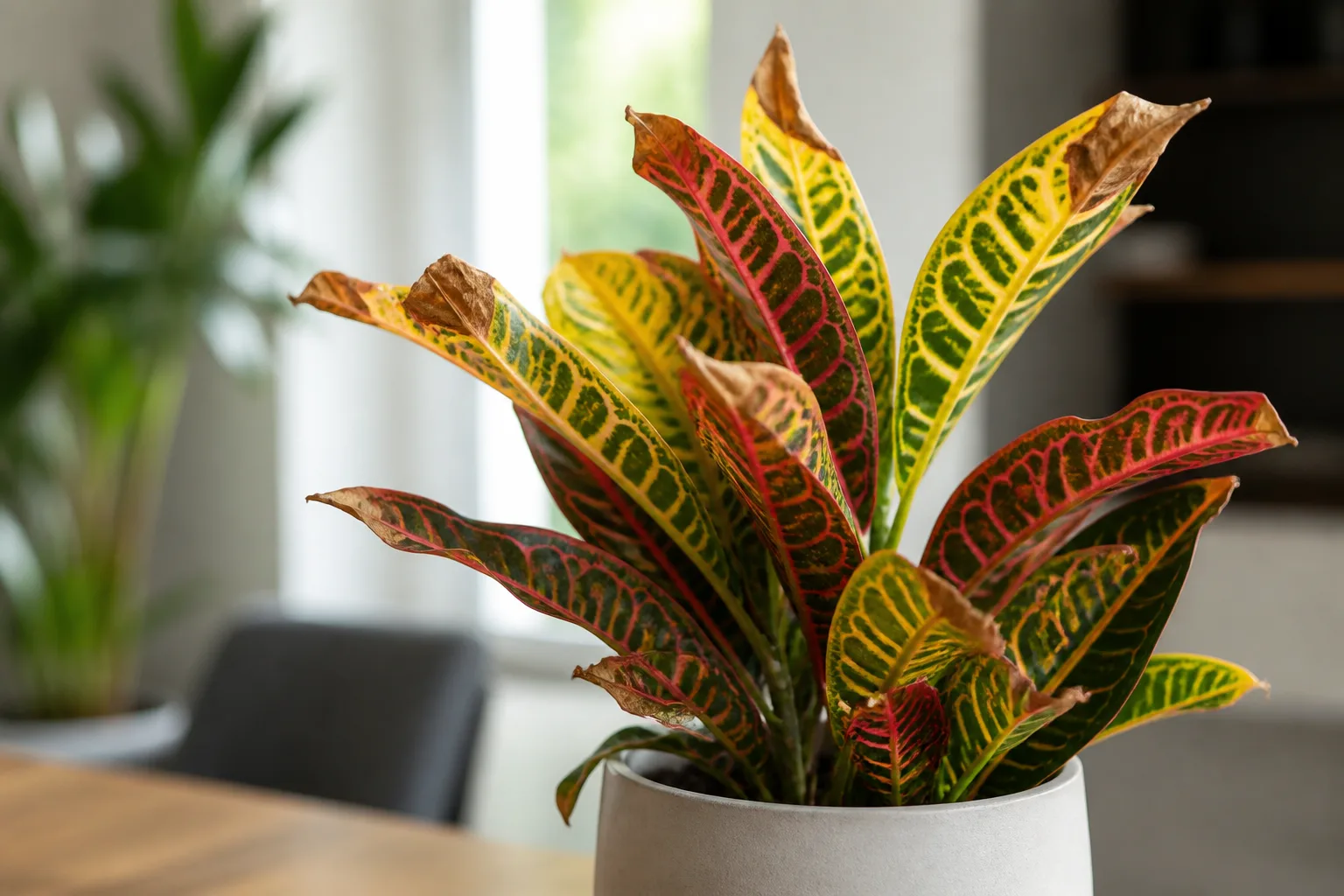
Brown Tips on Croton: Causes, Checks & Fixes
This guide covers brown tips on Croton. See also the general Brown Tips guide, watering, and light pages for this plant.
Brown Tips on Croton: Causes, Checks & Fixes
Quick answer
Brown tips on croton (Codiaeum variegatum) are a margin stress signal, not one diagnosis. On this tropical spurge with thick, waxy, leathery leaves, the leading triggers are dry indoor air near vents and radiators, inconsistent watering or underwatering that the foliage hides until tips crisp, unacclimated direct sun scorch, fertilizer salt buildup, and cold drafts below about 50°F. Croton evolved in warm, humid forest margins across Malaysia, Indonesia, and the Pacific islands-it shows stress at leaf edges faster than many common houseplants because transpiration pulls water from the farthest tissue first.
First step: move the pot off heating vents, radiators, and AC drafts, then probe the top half-inch to one inch of mix before you add water. Thick croton leaves delay obvious wilting, so brown tips often appear while soil is still moderately dry-or while owners overwater because tips look “thirsty.” Fixing placement and confirming moisture at depth beats misting, repotting, or fertilizing on day one.
Separate cosmetic aging on one or two lower leaves from a pattern that hits new growth, sun-facing margins, or most of the plant.
What brown tips look like on Croton
Croton carries glossy, leathery leaves in bold reds, oranges, yellows, and greens on upright woody stems. Cultivars like Petra and Mammy develop pigment as new leaves mature-fresh tips often start green or yellow-green before color fills in, which is normal foliage development, not pathological browning. Tip damage shows up in distinct patterns:
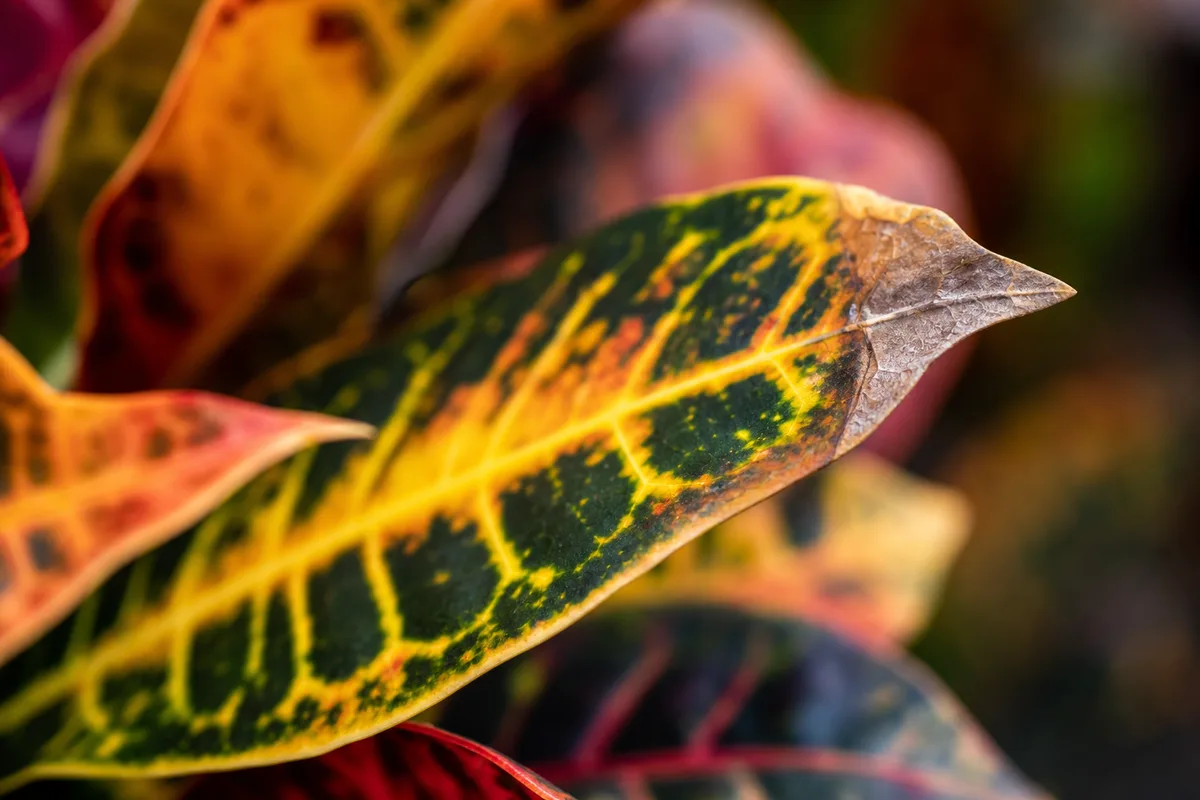
Brown Tips symptoms on Croton - compare with healthy tissue on the same plant.
- Dry-air tip burn - Oldest or most exposed leaves develop dry, tan-to-brown tips and margins while newer variegated growth stays firm. Tips feel papery, not soft. The pot often sits near a radiator, heating vent, or cold AC draft. On heavily variegated foliage, color may fade at margins before the leaf center changes.
- Underwatering tip stress - Tips and edges crisp while the pot feels light, mix is dry through the top inch, and mature leaves may curl slightly before drooping. Croton’s waxy coating slows visible wilt, so tip burn is often the first drought signal rather than obvious limp foliage.
- Sun scorch - Patchy brown or gray-dull margins on the side facing a window, especially after a sudden move to harsh afternoon sun through glass. Differs from uniform tan tips on every leaf-scorch is localized to exposed surfaces and may show bleached or washed-out gray areas on variegated cultivars.
- Salt or fertilizer burn - Tips brown on multiple leaves, sometimes with white crust on the soil surface or pot rim. Often follows heavy feeding or months without a plain-water flush during active growth.
- Cold-draft damage - Water-soaked or brown tissue along margins after a cold night near uninsulated glass or repeated exposure below about 50°F. May pair with leaf drop that looks like relocation shock.
- Spider mite stippling (lookalike) - Fine pale dots on undersides with webbing and progressive margin browning in hot, dry air-not clean papery tip necrosis alone. See the spider mites guide if webbing is present.
- Normal cosmetic aging - One or two oldest bottom leaves may show minor tip browning over months on an otherwise stable plant. New growth above stays clean. Low priority if watering, light, and placement are sound.
Worry when browning hits new center growth, spreads down margins on most leaves, or pairs with wet, sour-smelling soil-not when a single old Petra leaf near a winter vent shows a few millimeters of tan tip.
Why Croton gets brown tips
Dry indoor air and harsh airflow are the most common cause
Croton needs moderate to high humidity and warm temperatures indoors-typically 40–60% relative humidity adapts well, but heated winter rooms often drop far lower. Leaf tips are the farthest point from roots, so they lose moisture first when hot or cold dry air pulls water from margins faster than roots can replace it.
Pots on windowsills above radiators, beside floor vents, or in the direct path of AC are frequent triggers. NC State Extension recommends placing croton on a bed of wet pebbles indoors to meet humidity needs, and notes spider mite susceptibility increases in dry interiorscape conditions. This pattern usually affects leaves nearest the dry microclimate while growth farther from the draft stays cleaner-unless the airflow is constant enough to hit everything.
Inconsistent watering and underwatering
Wisconsin Extension describes croton as having moderate water needs-water when the top half-inch to an inch of soil dries out, with reduced watering in winter. Croton drops leaves if kept too wet or too dry for extended periods, and the symptoms overlap: yellowing, tip browning, leaf fall.
Because croton leaves are thick and waxy, mature foliage may look firm while the root zone has been dry long enough for margins to crisp. Owners who see brown tips and add water without checking depth sometimes alternate drought and flood-both stress margins. Match the rhythm in our croton watering guide: moist, aerated root zone, never bone-dry for long stretches, never soggy.
Unacclimated direct sun scorch
Croton wants bright light including some direct sun when acclimated-that drives the bold pigment on cultivars like Petra. But leaves formed in dim greenhouse light cannot handle a sudden jump to unfiltered afternoon sun through hot glass. Cell damage shows as patchy brown margins, bleaching, or gray-dull fading on exposed surfaces.
The Royal Horticultural Society notes that insufficient light causes leaves to lose vibrant colour or drop, while full summer sun through glass can overheat and scorch foliage. Do not fix sun scorch by moving croton to a dim corner-croton needs brightness. Filter harsh midday rays or acclimate gradually over 7–14 days per our croton light guide.
Fertilizer salt buildup
Croton is a moderate feeder during active growth, not a heavy one. Overfeeding or skipping soil flushes lets salts concentrate in the root zone. Excess salts draw water away from roots and burn leaf edges and tips. Salt burn often appears with white crust on the soil and can mimic drought stress on colorful foliage.
Do not increase fertilizer to “green up” tipped leaves on a stressed plant.
Cold drafts and relocation shock
Croton is sensitive to temperature swings and cold exposure. NC State Extension advises bringing plants indoors when temperatures reach 50°F. The RHS lists leaf drop when the plant sits in a cold draught or temperature stays below 15°C (59°F). A croton moved from nursery to car to dry apartment may drop leaves for weeks-margin browning during that period often reflects draft plus dry air, not a single watering mistake.
Root stress from overwatering
When mix stays saturated, roots lose oxygen and stop moving water efficiently. Tips crisp while soil is wet and the pot feels heavy-a pattern that overlaps with yellow lower leaves. This is less common as the first tip-burn cause on croton than dry air or underwatering, but chronic overwatering produces margin damage alongside root decline. See underwatering and overwatering guides if soil moisture tells a clear story.
Lookalike symptoms to rule out
Before repotting or switching every variable, rule out these common misreads:
- Full-leaf yellowing with wet soil - Points to overwatering or early root rot, not isolated tip burn.
- Uniform green new leaves with no developing color - Low light revert, not tip disease. Croton needs brighter exposure, not less water on tips alone.
- Green new-leaf tips before pigment develops - Normal on Petra and Mammy; wait for the leaf to mature before calling it burn.
- Spots, webbing, or sticky residue - Spider mites, mealybugs, or scale-not clean papery tip necrosis. Inspect undersides and stem joints.
- Soft brown patches - Bacterial or fungal leaf spots feel wet or mushy; tip burn is dry and papery.
- Wilting that perks up after a thorough soak - Underwatering, not humidity alone. Compare with our low-humidity guide when soil is moist but margins brown.
If tips are dry and papery, placement, light exposure, and soil moisture usually tell you which cause fits.
How to confirm the cause
Work through this inspection in order:
- Which leaves are affected - Old leaves only near a vent, new growth clean = dry air or aging likely. Sun-facing patchy margins = scorch likely. Most leaves, light pot, dry top inch = underwatering likely. White crust + widespread tips = salts likely.
- Moisture at the top half-inch to one inch - Cool and damp at that depth means pause watering. Dry and crumbly with a lightweight pot suggests drought stress. Heavy pot days after watering confirms slow dry-down and possible root stress.
- Placement and airflow - Is the pot above a radiator, beside a vent, or in an AC stream? Cold draft from a window at night? Hot dry air from forced-air heating?
- Light exposure - Did you move the plant to a brighter sill recently? Afternoon sun through west glass? Or is the plant in a dim corner where overwatering mimics tip burn?
- Soil surface and pot rim - White crust or gritty deposits suggest salt buildup from fertilizer or hard water.
- Temperature history - Nights below 50°F near glass, or a recent move from greenhouse to dry home?
- Leaf undersides - Fine stippling or webbing points to spider mites in dry air, not humidity tip burn alone.
- Root spot-check (if wet soil + spreading margin browning) - Gently slide the plant partway out. Firm pale roots support a dry-down fix. Mushy brown roots confirm rot and need trimming before recovery.
Confirmed dry-air tip burn shows dry papery tips on exposed leaves, clean new variegated growth, and a pot in a drafty or very dry microclimate. Confirmed sun scorch shows patchy damage on the window-facing side after a light increase without acclimation.
First fix for Croton
Move the pot off heating vents, radiators, and AC drafts, then probe the top half-inch to one inch of mix before you add water.
That single step addresses the two most common mistakes-treating dry-air tips with extra water without checking depth, and leaving the plant in airflow that keeps margins desiccating. If the mix is still damp at the knuckle depth, do not water until it dries appropriately. If the mix is dry and placement is stable, water thoroughly with room-temperature water until runoff exits drainage holes, then empty the saucer completely.
Do not compensate with fertilizer, misting marathons, or an immediate repot unless roots are mushy or salt crust is thick.
After placement and moisture check:
- If sun-facing margins browned after a recent window move, filter harsh afternoon rays or move back six to twelve inches and acclimate gradually-do not exile the plant to low light.
- If white crust covers the soil, plan a plain-water flush during the next watering (see recovery steps below)-not on the same day you moved the plant if it is already stressed.
- If RH near foliage stays below about 40% in heated winter rooms, add a pebble tray, group plants, or run a humidifier-brief misting alone rarely fixes vent-adjacent tip burn.
Make this one correction first. Wait two weeks before stacking repotting, heavy feeding, or multiple simultaneous experiments unless salt buildup is obvious.
If roots are mushy
When a spot-check finds brown, slimy roots and sour-smelling mix with browning margins on most leaves, escalate to root-rot recovery: unpot, trim dead roots, let cut surfaces dry briefly, and repot into fresh well-draining mix. Do not water for seven to ten days after repotting. That path is for confirmed rot-not for a few tan tips on one old leaf near a vent.
Step-by-step recovery
Match follow-up steps to what you confirmed:
Dry air and drafts (older tips only, clean new growth):
- Keep croton away from radiators, vents, and cold glass.
- Run a humidifier, pebble tray, or plant grouping if the room stays below about 40% humidity in winter.
- Watch for new leaves emerging with clean margins and developing color for two consecutive weeks.
Underwatering (light pot, dry top inch, slight curl):
- Water thoroughly until runoff exits drainage holes; empty the saucer.
- Resume the check-at-knuckle rhythm from the watering guide-typically every 5–7 days in active growth, longer in winter.
- Do not leave the plant in standing water.
Sun scorch (patchy window-facing margins):
- Filter harsh midday sun or move six to twelve inches back from hot glass.
- Acclimate toward brighter exposure over 7–14 days if color is fading-not permanent shade.
- Remove severely scorched leaves if more than half the blade is dead; wear gloves because milky sap from cut stems can irritate skin.
Salt buildup (white crust, tips on multiple leaves):
- Water slowly with plain room-temperature water until it runs freely from drainage holes-about two to three times the pot volume in one session-to leach accumulated salts.
- Let the pot drain fully and empty the saucer.
- Resume light feeding only during spring and summer active growth, not while the plant is recovering.
Cold-draft damage:
- Move away from uninsulated glass and cold AC paths; keep temperatures above 60–85°F when possible.
- Stabilize watering and humidity; expect some leaf drop while the plant adjusts.
- Wait for firm new growth before repotting or fertilizing.
Overwatering-related tip stress (wet soil, heavy pot):
- Let the top half-inch to one inch dry fully between waterings.
- Ensure drainage holes are open and saucers stay empty.
- Adjust winter frequency-croton often needs water every 10–14 days in cool months versus every 5–7 days in active summer growth.
Recovery timeline
Brown tip tissue does not turn green again. Recovery is measured by new growth from stem tips:
- Dry-air tip burn - New leaves often emerge clean within two to three weeks after placement improves. Old tipped leaves can stay trimmed or in place.
- Underwatering tip stress - After one thorough soak and a stable rhythm, new growth should show clean margins within two to three weeks if roots are firm.
- Sun scorch - Acclimated new leaves without patchy margins may take three to four weeks; older scorched tissue stays damaged.
- Salt burn - Flushing and lighter feeding may take four to eight weeks before several consecutive new leaves show clean margins.
- Cold or relocation shock - Leaf drop may continue two to four weeks; margin browning stops when temperature and humidity stabilize.
- Advanced root rot - Recovery takes longer and may be partial. If the crown softens or new leaves keep browning after dry-down and root trim, the plant may not be saveable.
Signs of improvement: new variegated leaves with clean tips, pot weight dropping on a normal schedule, and browning that does not spread down margins. Signs of worsening: sour smell, soft stems, stippling with webbing on undersides, or soil that never dries.
What not to do
Do not water more because tips look dry when soil is already wet at the knuckle depth-that deepens root stress and is a common misread when thick leaves hide wilt.
Do not mist as the only humidity fix for croton near vents. Brief misting does not sustain the stable moisture margins need; move the pot or add a humidifier or pebble tray instead.
Do not fertilize a tipped, stressed plant to force new growth. Salt buildup from overfeeding causes the same tip burn you are trying to fix.
Do not move croton to low light to fix sun scorch. Croton needs bright exposure for color and health; filter sun or acclimate instead.
Do not repot on day one unless roots are mushy, salt crust is severe, or drainage has failed. Repotting a waterlogged plant into a bigger pot often makes drying slower.
Do not trim brown tips back into green tissue without gloves. Cut along the natural leaf shape and leave a thin brown edge to avoid wounding healthy cells. Croton sap can irritate skin-wash hands after handling.
Do not ignore wet soil while treating humidity. Overwatering and dry-air stress can overlap-fix the condition soil moisture confirms before stacking remedies.
How to prevent brown tips on Croton
Prevention comes down to stable margins, correct light, and watering that matches how fast the pot dries:
- Placement first - Keep croton off radiators, away from AC and heat vents, and out of cold draft paths near uninsulated glass.
- Bright light with acclimated sun - East window sills or filtered south/west exposure per the light guide; do not park croton in dim corners and compensate with extra water.
- Water on dryness, not calendar - Check the top half-inch to one inch every time. Summer may mean every 5–7 days; winter often means every 10–14 days.
- Humidity in heated seasons - Target about 40–60% RH near foliage; humidifier or pebble tray when winter heat drops air below 40%.
- Feed lightly - Balanced fertilizer during spring and summer active growth only; skip feeding in fall and winter.
- Flush salts occasionally - One thorough plain-water flush during active growth if you feed regularly.
- Inspect for mites weekly in dry air - Especially on leaf undersides when humidity is low.
- Use room-temperature water - Cold tap water can shock tropical roots and trigger leaf drop that compounds margin stress.
When to worry
Treat brown tips as urgent when:
- Browning spreads from tips down most leaf margins on many leaves at once.
- Soil smells sour or stems feel soft at the soil line while tips crisp.
- New center growth tips brown within days of unfurling despite good placement and watering rhythm-inspect roots the same week.
- Fine stippling and webbing appear on undersides with widespread margin damage-treat for spider mites promptly.
- The plant collapses despite moist soil-roots may be failing to absorb water.
A few tan tips on one or two oldest leaves near a winter vent on an otherwise stable croton is cosmetic. Widespread margin browning with wet soil or mite webbing is not-act within the week.
Croton care cross-check
If brown tips keep returning after you adjust placement and water, compare your routine to what this species actually needs:
| Checkpoint | Healthy target | Brown-tip risk when wrong |
|---|---|---|
| Airflow | Stable room air; no vent drafts | Radiators, AC, cold glass drying margins |
| Humidity | About 40–60% RH near foliage | Below ~30% with heat running; mite risk rises |
| Soil moisture | Top ½–1 in. dry before watering | Chronic drought crisping tips; wet mix impairing roots |
| Light | Bright with acclimated direct sun | Dim corner + overwatering; or sudden harsh scorch |
| Temperature | 60–85°F; above 50°F minimum | Cold nights near glass browning margins |
| Feeding | Light; active season only | Salt crust and recurring edge burn |
| Water temperature | Room temperature at root zone | Cold-shock leaf drop compounding stress |
Fix the condition that fails this check before repotting for size, adding fertilizer, or treating for pests you have not confirmed.
Related Croton guides
- Croton watering - soil checks, seasonal rhythm, soak-and-drain method
- Croton light needs - bright direct sun, acclimation, color intensity
- Low humidity on croton - RH targets, humidifier vs. misting
- Underwatering on croton - when drought hides behind thick leaves
- Spider mites on croton - dry-air mite outbreaks
- Croton overview - full care context