How to Prune Calathea Rattlesnake: When, Where, and What
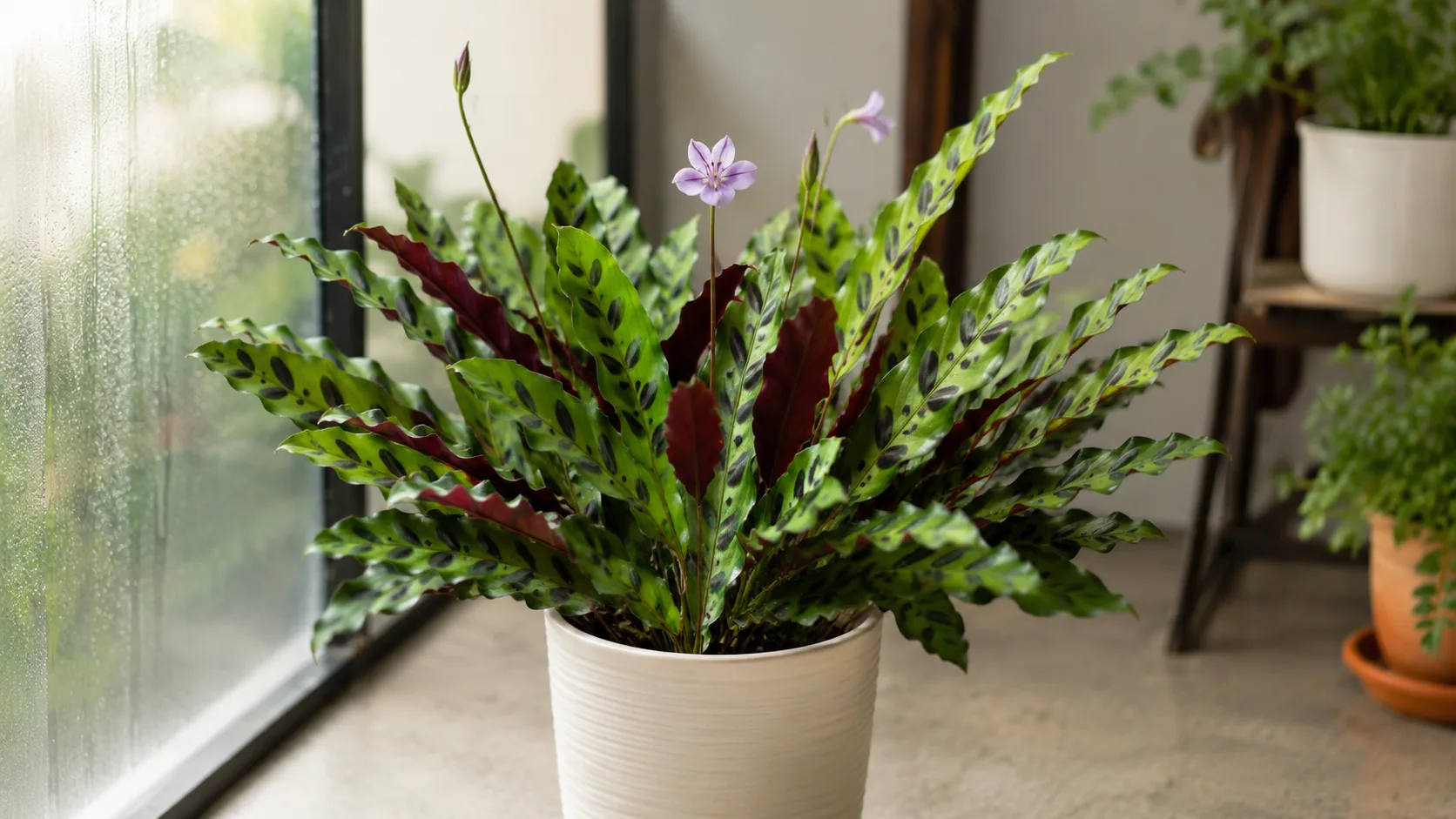
How to Prune Calathea Rattlesnake: When, Where, and What to Cut
How to Prune Calathea Rattlesnake: When, Where, and What to Cut
Quick answer
First, remove any fully yellow, brown, or collapsed outer leaf at the rhizome base - trace the long petiole to where it meets the crown and cut in one clean slice with sterilized scissors. Calathea Rattlesnake (Goeppertia insignis) grows from a rhizome clump, not branching stems, so meaningful pruning happens at the petiole base or as light edge work on otherwise green wavy blades. It does not need regular shape pruning, and cutting healthy tissue mid-stem will not make it bushier.
What pruning does for Calathea Rattlesnake
Rattlesnake calathea is the narrow-leaf prayer plant with lance-shaped blades, dark oval markings, and purple undersides that fold at night. NC State Extension describes it as a clumping, rhizomatous Marantaceae species with long slender leaves up to 18 inches and wavy margins. That shape makes each damaged leaf less visually dominant than on broad round calatheas - but the thin wavy edges still show dry air and mineral-heavy water quickly.
Pruning serves four practical jobs on Calathea Rattlesnake overview:
- Sanitation - remove finished leaves before they decay against the rhizome
- Cosmetics - trim stable edge crisping when most of the blade is still worth keeping
- Pest access - open crowded lower foliage so you can inspect for spider mites and mealybugs
- Size control - reduce an oversized clump through spring division, not repeated leaf shearing
Pruning will not restore faded pattern if light is too weak, and it will not stop wavy-edge curl if the plant sits beside a heating vent or gets tap water high in fluoride. Fix filtered light, 60%+ humidity, and filtered or rainwater before treating every blemish as a scissors problem.
What to check before cutting
Walk the clump in good light before you cut anything. Rattlesnake leaves attach to long petioles that arch sideways - give the plant room to spread rather than pressing it flat against a wall.
Inspect in this order:
- Newest rolled leaves at the center - firm rolls mean the rhizome is still active
- Outer leaves - fully yellow or brown versus partially green with reclaimable tissue
- Edge damage - stable cosmetic crisping versus advancing dieback moving inward
- Petiole bases - soft stubs, foul odor, or mush at the rhizome surface
- Recent care changes - Calathea Rattlesnake repotting guide, move, watering crisis, or draft exposure in the last two weeks
If multiple leaves yellow at once after overwatering on Calathea Rattlesnake in low light, correct moisture and placement before bulk removal. Rattlesnake shows stress dramatically - tight daytime curl often precedes yellowing - but the rhizome can recover when conditions stabilize.
The first cut to make
Remove one fully finished leaf at the rhizome base before any cosmetic edge work. Choose the outermost leaf that is entirely yellow, brown, or collapsed and no longer photosynthesizing. Follow its petiole to the soil line, support the leaf weight so you do not tear neighboring tissue, and cut cleanly where the petiole meets the rhizome crown. Do not snap petioles by hand if you feel twisting force on the crown.
This single base cut clears decay risk and tells you whether the rhizome surface underneath is firm. Only after that should you decide whether additional leaves or edge trims are worth doing in the same session.
When to prune Calathea Rattlesnake
Dead or fully yellow leaves
Remove these whenever you notice them. Lower-leaf senescence is normal as the rhizome pushes new centered growth. One yellow basal leaf every few months on an otherwise healthy clump is not alarming.
Wavy edge trimming
Trim crisped margins when damage is limited to tips or a short section of the wavy edge and the majority of the blade stays green. Narrow leaves show every trim mark - one decisive cosmetic cut beats repeated shortening that leaves a staircase of scars along the wave pattern.
When edge burn wraps more than one-quarter of the leaf or keeps advancing after you trim, remove the whole leaf at the base instead.
Division and clump reduction
When the clump exceeds the pot or outer leaves press against walls and furniture, divide at spring repotting rather than pruning leaf after leaf. RHS calathea guidance recommends dividing overcrowded prayer plants in spring, cutting the rootball into sections each with several leaves, and keeping divisions warm and humid until growth resumes.
When not to prune
Delay heavy cleanup if you repotted, moved homes, or corrected a watering crisis within the past week. Stacked stress triggers dramatic curl and drop on Marantaceae species. Also pause if you find mushy rhizome tissue or foul odor - unpot and inspect for rot before removing more foliage. Do not prune expecting bushier branching; rattlesnake calathea does not produce new shoots from mid-petiole cuts.
How to prune Calathea Rattlesnake step by step
Removing leaves at the rhizome base
Use sharp fine scissors or small bypass pruners for thick petiole bases. Sterilize blades with 70% isopropyl alcohol before starting. Trace the petiole to where it meets the rhizome at or just above soil level. Cut in one motion and remove the entire stub - rotting petiole remnants hold moisture against a genus prone to fungal issues in stagnant air.
After each removal, glance at the rhizome surface. Firm cream or white tissue is healthy. Mush, blackening, or sour smell means stop pruning and address root conditions first.
Trimming crisped wavy margins
For minor margin crisping on an otherwise healthy blade, snip dead tissue following the natural wave contour. Leave a 1–2 mm margin of brown to avoid opening a fresh wound across green cells. The trimmed edge will not turn green again, but the leaf continues photosynthesizing.
Never cut through the center of a healthy leaf expecting regrowth - rattlesnake blades do not repair from internal cuts.
Dividing an oversized clump
At spring repotting, unpot the clump and brush away excess soil to reveal rhizomes. Identify natural sections with roots and several leaves each. Separate by hand where roots release easily; use a clean knife only where rhizome connections resist gentle pulling. Repot divisions in moisture-retentive, well-draining mix and maintain high humidity while new growth resumes - typically within two to four weeks under warm, stable conditions per RHS propagation guidance.
Where to cut - and what not to cut
Cut here: at the petiole base where it joins the rhizome crown; along dead wavy margin tissue on otherwise green leaves; through rhizome connections during spring division.
Do not cut: healthy green petioles mid-stem expecting new branches; the center crown where new leaves roll up; more than one-third of healthy leaves in one session; healthy blades solely because pattern looks faded - that usually means insufficient light, not a pruning need.
Rattlesnake calathea is listed by the ASPCA as non-toxic to cats and dogs, so trimmings are less hazardous than with oxalate-heavy aroids - though pets can still knock over pots or shred delicate new rolls.
How much you can safely remove
Remove no more than one-third of healthy leaves in a single session during active growth. The rhizome needs remaining green tissue to fuel recovery rolls from the center. If half the plant has yellowed after overwatering, fix drainage and let soil dry appropriately before removing more than a few leaves at a time.
Division is the correct tool for major size reduction - not aggressive defoliation. A briefly sparse clump tolerates cleanup better than repeated shearing that leaves the rhizome with too little photosynthetic surface.
Tools and sanitation
Use sharp fine scissors for wavy edge work on narrow blades and bypass pruners for thick petiole bases. Dull blades crush fibrous Marantaceae tissue and leave ragged wounds that brown at the base.
Sterilize with alcohol before use and between houseplants sharing the same care space. Penn State Extension emphasizes clean tools and good sanitation when trimming indoor plants to limit disease spread.
Aftercare and recovery
Give medium indirect light - enough to keep pattern vivid without direct sun that dries narrow edges unevenly. Maintain 60–80% humidity and use filtered or rainwater to limit fluoride tip burn common on prayer plants. NC State Extension notes browning or curling of leaf edges and tips can result from low humidity - trimming without raising humidity produces the same damage on the next leaf.
Water when the top 2 cm of soil begins to dry during the growing season; slow down in winter. Fewer leaves mean slower water use - check soil depth, not calendar dates. Hold fertilizer briefly after removing several leaves, then resume light feeding during spring and summer active growth.
Recovery timeline
New leaves emerge from the center of the rhizome crown, not from cut petioles. Expect three to five weeks for visible new rolls after substantial cleanup if humidity, water quality, and light are stable. Division recoveries may take two to four weeks before active growth resumes.
Signs pruning worked
Healthy signs include new centered rolls unfurling with crisp pattern, stopped spread of yellowing to outer leaves, firm rhizome tissue at petiole bases, and stable daytime leaf posture without persistent tight curl. Warning signs of over-pruning or bad timing include stalled center growth for more than six weeks, repeated yellowing after each cleanup, soft rhizome tissue, or progressive edge burn on every new blade - all point back to care conditions, not more cutting.
Mistakes to avoid
Trimming wavy edges without fixing water quality - margins crisp again on every new leaf.
Tearing petioles by hand - damages rhizome connections and neighboring petioles.
Cutting for bushiness - rattlesnake calathea does not branch from cuts; only rhizome growth adds leaves.
Placing the plant flat against a wall after pruning - prevents natural arching and increases edge damage on outer leaves.
Overwatering post-prune - wet rhizomes in a depleted clump invite rot when transpiration drops.
Removing partially green leaves too early - wastes nutrients the plant is reclaiming during senescence.
Conclusion
Calathea Rattlesnake pruning respects rhizome growth: base-level removal of finished leaves, careful edge trimming on narrow wavy blades, and spring division when the clump - not individual leaves - needs management. Start with one dead leaf at the rhizome crown, keep cuts off the center rolls, and pair every trim with filtered water, 60%+ humidity, and stable indirect light so new centered rolls unfurl with crisp pattern. Scissors tidy the architecture; humidity and water quality preserve it.
When to use this page vs other Calathea Rattlesnake guides
- Calathea Rattlesnake overview - Start here for whole-plant context before deep-diving this topic.
- Calathea Rattlesnake problems hub - Jump to symptom-specific fix guides when this care topic does not resolve the issue.
- Leggy Growth on Calathea Rattlesnake - Escalate here when pruning adjustments are not enough.
- Slow Growth on Calathea Rattlesnake - Escalate here when pruning adjustments are not enough.
- Brown Tips on Calathea Rattlesnake - Escalate here when pruning adjustments are not enough.
Related Calathea Rattlesnake guides
- Calathea Rattlesnake overview
- Calathea Rattlesnake watering
- Calathea Rattlesnake light
- Calathea Rattlesnake soil
- Calathea Rattlesnake propagation
- Calathea Rattlesnake fertilizer
- Leggy Growth on Calathea Rattlesnake
- Slow Growth on Calathea Rattlesnake
- Brown Tips on Calathea Rattlesnake
- Calathea Rattlesnake problems