Fungus Gnats on Calathea Rattlesnake: Causes, Checks & Fixes
Quick answer
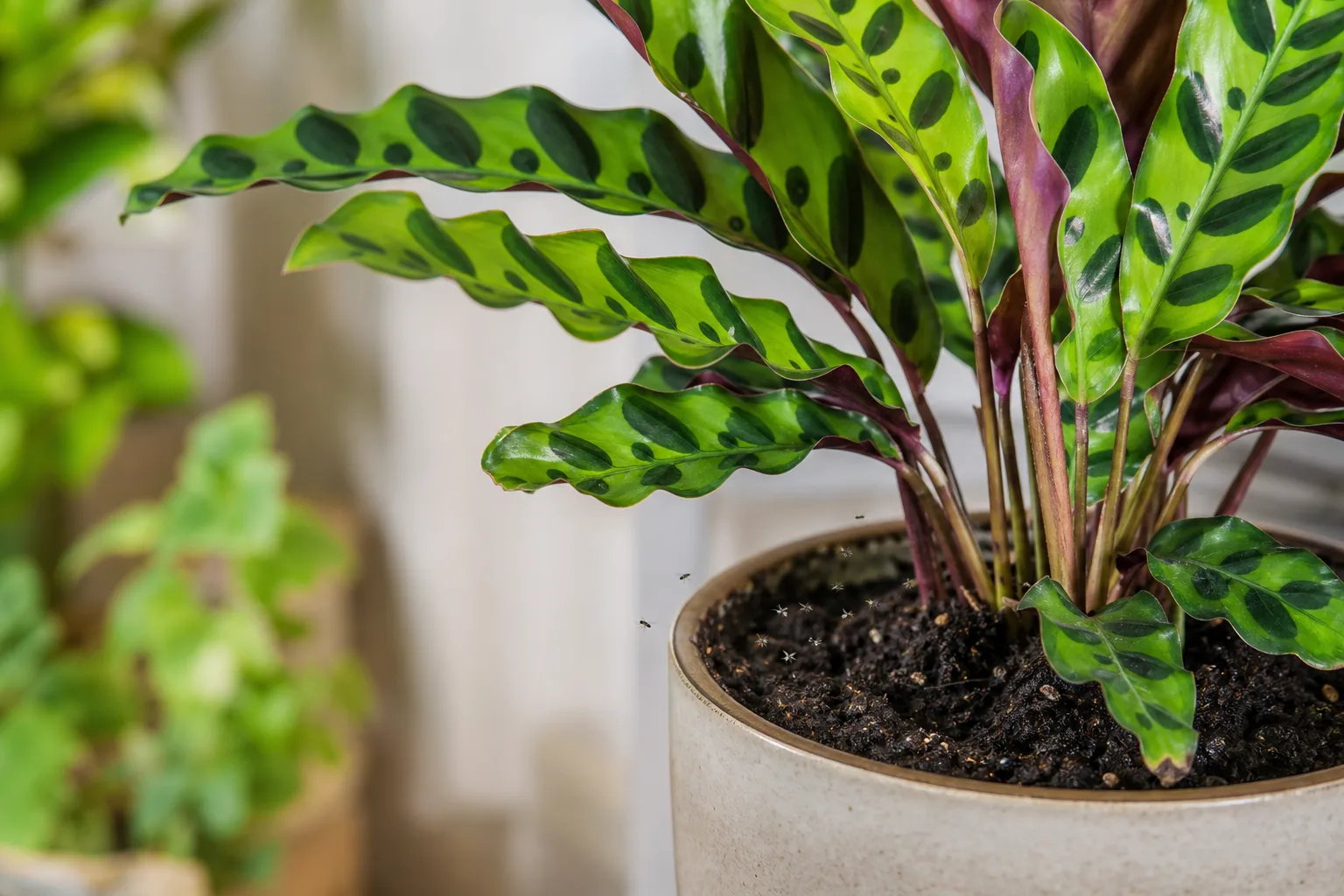
Fungus gnats on Calathea rattlesnake mean the potting mix surface stays wet too long-adults hover near the soil and larvae feed in the damp top layer. First step: let the top 2 cm of mix dry and set a yellow sticky trap at the pot rim.
Fungus Gnats on Calathea Rattlesnake: Causes, Checks & Fixes
This guide covers fungus gnats on Calathea Rattlesnake. See also the general Fungus Gnats guide, watering, and light pages for this plant.
Fungus Gnats on Calathea Rattlesnake: Causes, Checks & Fixes
Quick answer
Fungus gnats on Calathea rattlesnake (Goeppertia insignis) almost always mean the potting mix surface stays wet too long. Adults are tiny dark flies that hover near the soil when you water or walk past the pot. Their larvae live in the damp top layer, feeding on fungi and organic debris-and sometimes fine roots and rhizomes.
First step: let the top 2 cm of mix dry completely, and place a yellow sticky trap at the pot rim. Gnats are a moisture signal, not a leaf disease. Spraying the smooth wavy patterned foliage will not reach larvae in soil.
Rattlesnake plant creates a hidden trap: owners keep the surface moist out of fear of brown crispy edges, but constant top-layer wetness is exactly what fungus gnats need. For the full moisture balance, see our Rattlesnake watering guide.
Why Calathea Rattlesnake gets fungus gnats
Fungus gnats need moist organic soil to reproduce. Minnesota Extension notes adults lay eggs in cracks of growing media, especially peat-rich mixes that hold surface moisture. Larvae stay in the top 2 to 3 inches, feeding on fungi, algae, and decaying matter.
Rattlesnake plant invites gnats through species-specific care tensions:
The moisture paradox. Calathea rattlesnake needs a moist root zone but not a permanently wet surface. Small pots watered lightly from the top every few days can keep only the upper layer soggy while the owner believes they are “keeping it humid.” That surface is gnat nursery territory.
Fear-driven overwatering. Wavy patterned leaves show drought stress quickly. Many growers respond with frequent small top waterings instead of thorough drinks separated by partial dry-down-creating ideal gnat habitat without fully hydrating roots.
Cool winter rooms. Low light and cool temperatures slow evaporation. The summer watering rhythm that worked in July leaves the top layer wet for weeks in January.
Dense peat mix in small pots. Rattlesnake plants are often sold in 4–6 inch containers with standard peat blend. Without perlite and airflow, the surface stays damp long after the owner thinks the plant has “used” the water.
Cover pots and trays. Decorative outer pots without drainage hold saucer water against rhizomes. The top layer stays wet while the owner sees only the patterned leaves above.
New introductions. UMN Extension reports fungus gnats commonly arrive on newly purchased houseplants. One infested nursery pot can spread adults across a Marantaceae shelf.
Gnats rarely mean your rattlesnake leaves are infected-they have smooth, wavy, patterned foliage, not fuzzy pubescent leaves. They mean the soil environment is wrong-and on Calathea Rattlesnake overview, chronic surface wetness eventually leads to overwatering stress and rhizome decline.
What fungus gnats look like on Calathea Rattlesnake
Adult flies:
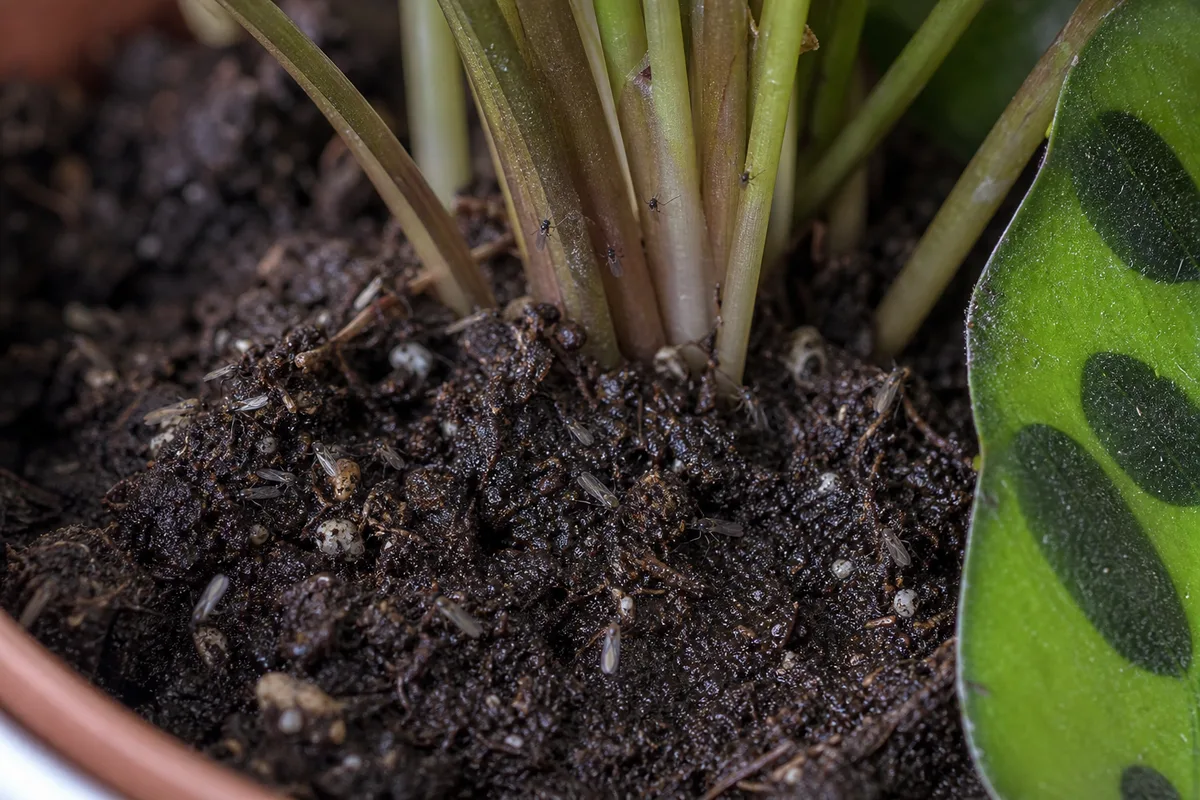
Fungus Gnats symptoms on Calathea Rattlesnake - compare with healthy tissue on the same plant.
- Tiny dark mosquito-like insects, roughly 1/8 inch long
- Rise in a cloud when you water, repot, or bump the pot
- Rest on soil surface, pot rim, or lower leaf bases
- Do not bite people or pets
Larval stage in soil:
- Translucent wormlike larvae with dark head capsules in the top inch of mix
- Visible when you scrape back wet surface soil or flip a potato test slice
- Sometimes green algae film on constantly wet soil surface
What you will not see on rattlesnake foliage:
- Webbing (spider mites)
- White fuzzy clusters (mealybugs)
- Leaf spots from gnat feeding-damage happens below soil on roots and rhizomes
Pattern dulling on wavy leaves usually traces to water quality, humidity, or pest stress-not adult gnats flying near the pot.
How to confirm fungus gnats
- Flight test - Small flies rise when you water or disturb the pot rim. Fruit flies from kitchen compost are larger and often near food, not houseplant soil exclusively.
- Surface moisture - Top 2 cm stays cool and damp for many days after watering. Pot feels heavy when you expect dry-down.
- Potato slice test - Press a raw potato slice into wet surface soil overnight. Translucent larvae on the underside confirm fungus gnat larvae, not springtails or harmless soil life.
- Stem and leaf cross-check - Firm upright rattlesnake leaves with only a few flies suggest early infestation. Limp wavy leaves on sour wet mix suggest escalate toward overwatering assessment.
- Neighbor pots - Check every plant on the same shelf; gnats spread to all moist surfaces.
Confirmed fungus gnats: flying adults at soil level plus larvae in wet top layer-not insects on leaf blades.
First fix for Calathea Rattlesnake
Let the top 2 cm of mix dry completely, and set a yellow sticky trap at the pot rim.
Stop light daily sprinkles that only wet the surface. Switch to thorough bottom watering or a full soak at the soil line only when the top 2 cm are dry-per our watering guide.
After dry-down begins:
- Place yellow sticky traps horizontally at soil level to catch adults
- Avoid letting rinse water sit in the central crown fold overnight
- Increase airflow slightly around the pot rim so the surface dries faster-without blasting leaves with dry heater air
If larvae persist after two weeks of corrected watering:
- Apply Bacillus thuringiensis israelensis (BTI) drench to the top layer per label directions
- Repeat BTI every five to seven days for two to three cycles
- Refresh sticky traps weekly
Do not spray smooth patterned leaves with pesticides for soil gnats-that misses the larvae and can spot or dull the wavy markings permanently.
Step-by-step recovery
- Week 1: Dry top 2 cm between drinks; set sticky traps; bottom water when dry
- Week 2: Count flies on traps-numbers should drop; potato test to monitor larvae
- Week 3: BTI drench if larvae remain; confirm no sour smell from soil
- Week 4+: Resume normal rattlesnake watering rhythm-moist root zone, dry surface
- Ongoing: Quarantine new plants; check surface moisture before every drink
Recovery success: fewer adults on traps, no larvae on fresh potato slices, firm upright new leaves unfurling with clear pattern.
Lookalike symptoms
| What you see | Likely cause | Key check |
|---|---|---|
| Flies at soil only | Fungus gnats | Larvae in top inch of wet mix |
| Flies near kitchen/fruit | Fruit flies | Not tied to one plant pot |
| Webbing on undersides | Spider mites | Stippling on wavy leaves |
| White cotton on stems | Mealybugs | Clusters at nodes |
| Limp leaves, sour wet soil | Overwatering | Rhizome softness, no dry-down |
Mistakes to avoid
- Misting leaves frequently instead of fixing soil moisture-spots patterned foliage and does not kill larvae
- Keeping surface wet “for humidity”-use a humidifier instead
- One sticky trap for a heavy infestation-use multiple traps and fix watering
- Calathea Rattlesnake repotting guide into even more peat without perlite-recreates the problem
- Ignoring gnats because leaves still look patterned-larvae damage roots before foliage collapses
Care cross-check during recovery
| Factor | Rattlesnake need during gnat treatment |
|---|---|
| Top soil | Dry 2 cm between waterings |
| Root zone | Moist but not anaerobic |
| Humidity | 50–60%+ via humidifier, not wet soil surface |
| Light | Bright indirect per light guide |
| Water method | Bottom water preferred to protect smooth leaves |
How to prevent fungus gnats next time
- Water when top 2 cm are dry-not on a calendar
- Bottom water routinely to avoid leaf spotting and uneven surface wetness
- Use well-draining peat-perlite mix per our soil guide
- Empty saucers within 30 minutes of every session
- Quarantine new Marantaceae for two weeks before shelf placement
- Replace degraded peat that holds surface moisture for days
When to worry
Escalate when gnats persist after four weeks of corrected dry-down, soil smells sour, leaves go limp on wet mix, or rhizomes feel soft when you unpot. Those patterns overlap with overwatering and possible rhizome rot-inspect roots and adjust repotting plan before the patterned foliage collapses entirely.
When to use this page vs other Calathea Rattlesnake guides
- Calathea Rattlesnake watering guide - Use for routine moisture checks before assuming fungus gnats is the main issue.
- Calathea Rattlesnake problems hub - Browse all 16 common issues on this species.
- Overwatering on Calathea Rattlesnake - Different entry point when symptoms overlap with fungus gnats.
- Mold on Soil on Calathea Rattlesnake - Different entry point when symptoms overlap with fungus gnats.
- Root Rot on Calathea Rattlesnake - Different entry point when symptoms overlap with fungus gnats.