Calathea Medallion Pruning: When, How, and Mistakes to Avoid
Calathea Medallion Pruning: When, How, and Mistakes to Avoid
Calathea Medallion Pruning: When, How, and Mistakes to Avoid
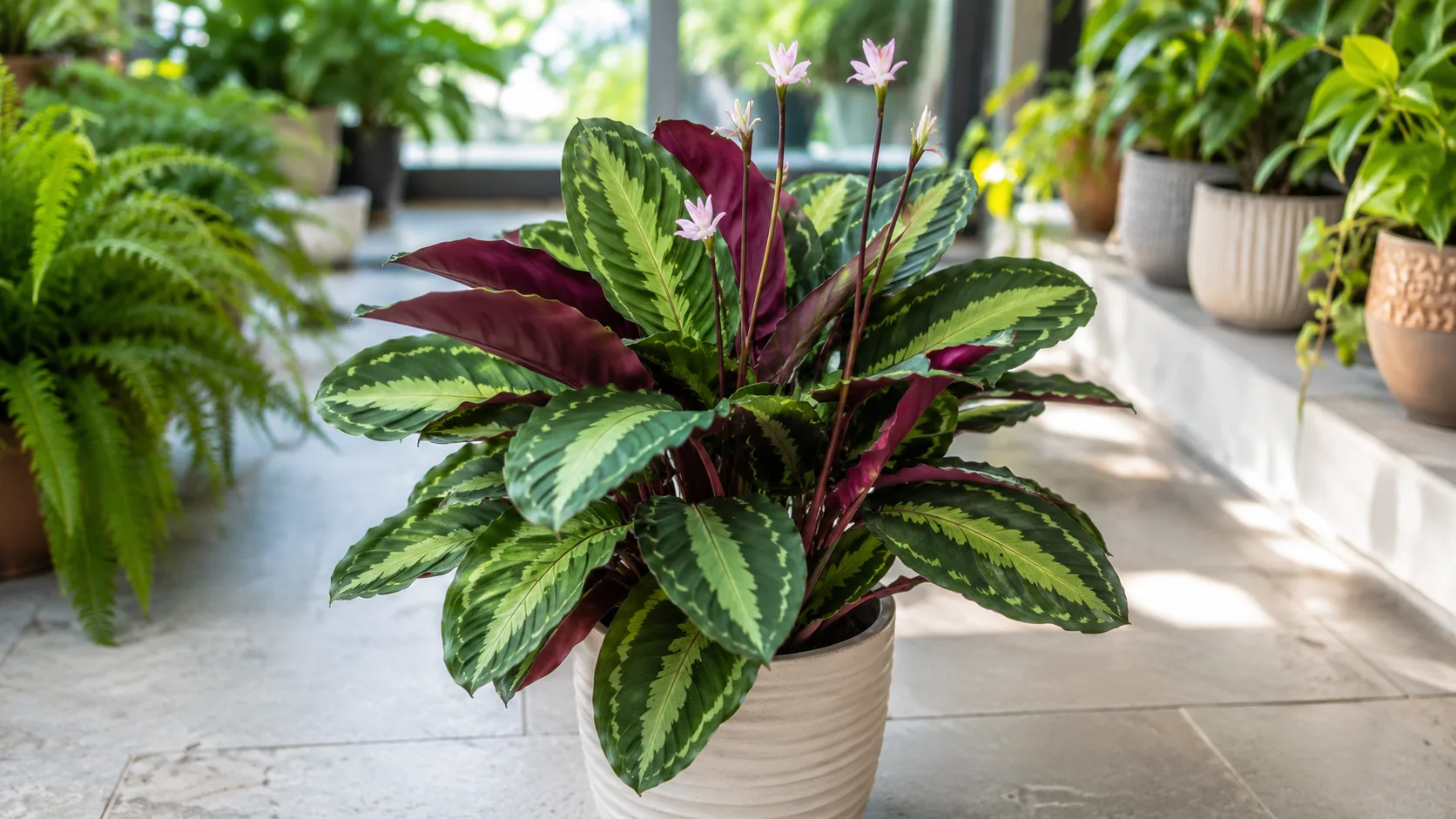
Calathea Medallion pruning is leaf grooming and crown hygiene - not the kind of shaping you would do on a vine or shrub. Goeppertia veitchiana ‘Medallion’ (still sold as Calathea veitchiana) sends up broad, round leaves with painted green patterning and deep burgundy undersides from a tight rhizome crown. NC State Extension describes it as a slow-growing, rhizomatous Marantaceae foliage plant that prefers Calathea Medallion light guide, consistently moist well-drained mix, and humidity above 60%. There are no lateral nodes along a stem to pinch for bushiness. Meaningful cuts happen at the petiole base near the crown, with optional cosmetic trimming on otherwise green blades.
Medallion’s wide, high-contrast leaves make damage impossible to hide. A single crisp rim on a newly unfurled spear reads from across the room - which pushes owners toward scissors when the real fix is filtered water, stable humidity, and even moisture. Pruning clears tissue that cannot recover; it does not replace culture. Start by inspecting the crown, then remove only leaves that are fully dead, rotting, or clearly past saving.
What Pruning Does and Cannot Do for Medallion
Pruning serves three practical jobs on this cultivar. Sanitation removes brown, yellow, collapsed, or pest-damaged leaves before they decay against the humid crown. Appearance improves the silhouette when outer blades are mostly crisped but the center still produces clean rolled spears. Access opens the rosette so you can spot spider mite stippling on burgundy undersides and soft rot at petiole bases.
Pruning does not increase humidity, remove fluoride from tap water, or correct overwatering on Calathea Medallion in dim light. If brown edges keep appearing on new leaves after you trim, the care routine - not more cutting - needs adjustment. Missouri Botanical Garden notes that calathea relatives need warm, humid, consistently moist conditions; Medallion punishes dry air and mineral-heavy water on every fresh blade.
Unlike many prayer-plant relatives, Medallion does not dramatically fold its leaves at night - but it still grows from the same rhizome architecture. NC State Extension notes Calathea Medallion overview does not fold its leaves as other plants in the genus do. Cutting a healthy leaf halfway up the petiole leaves a permanent stub; new growth emerges only from the crown, not from the cut surface.
When to Prune Calathea Medallion
Emergency removal anytime
Remove leaves that are fully brown and dry, collapsed and mushy at the base, heavily mite-stippled, or showing spreading soft rot. Pest-infested blades beyond spot treatment should come out promptly so the crown stays inspectable. Diseased tissue in a humid rosette can harbor fungal spores - sanitation cuts are never seasonal.
Planned grooming and division
Batch removal of several stressed but still-attached leaves fits late spring through early summer, when warmth and stable humidity support new spears unfurling from the center. RHS calathea growing guidance recommends dividing overcrowded calatheas in spring and emphasizes warm, humid conditions for marantaceous foliage plants; timing planned cuts to that stability reduces secondary edge burn on remaining blades.
Division - separating rhizome sections with their own roots and leaves - belongs in the same window, usually during Calathea Medallion repotting guide when the clump is overcrowded. NC State Extension lists division as the recommended propagation strategy for this species.
When to wait
Avoid removing multiple green or partly green leaves in late fall and winter, when indoor humidity drops and remaining blades crisp faster after any insult. Do not prune heavily on the same day you repot, move homes, or correct a watering crisis - Medallion stacks stress visibly through leaf curl, edge burn, and stalled unfurling.
Inspect the Crown Before You Cut
Kneel or lift the pot so you can look straight down into the center. Note these before reaching for scissors:
- Rolled central spears - stuck, torn, or brown-tipped unfurling leaves may recover if humidity rises; rot at the base is different
- Petiole bases - soft, dark tissue where the stem meets the rhizome signals crown or root trouble
- Underside stippling - fine pale dots on burgundy leaf backs often mean spider mites in dry air
- Pattern of damage - edges only on older outer leaves suggest past stress; widespread crisping on new spears points to water quality or moisture swings
If brown margins follow tap-water use, uneven drying, cold drafts, or direct sun on the round blades, fix those conditions before interpreting every mark as a pruning problem. Medallion’s grower reality is simple: judge the newest rolled leaves and root moisture before reacting to old edge damage.
The First Cut: Remove Fully Dead Leaves at the Base
First action: trace any fully brown, collapsed, or rotting leaf to where its petiole meets the crown, and cut cleanly at the base with sterilized sharp scissors. Do not start with cosmetic tip trimming or division - dead tissue comes off first because it no longer photosynthesizes, may harbor pests, and blocks your view of the crown.
Hold neighboring petioles gently while cutting. Avoid tearing fibrous stems by hand in a wet crown - ragged wounds invite rot where leaves crowd together. If a dead leaf releases with almost no resistance, you may pull it carefully while supporting the rhizome; stop if you feel twisting force on healthy neighbors.
Where to Cut on Medallion Leaves
Petiole-base removal
For any leaf past recovery - fully yellow, mostly brown, heavily spotted, or more than half damaged - follow the petiole to the soil line or crown and cut flush. Do not leave a stub above the rhizome; stubs stay wet in crowded rosettes and brown slowly. Medallion leaves do not branch from the blade; there is no “above the node” rule on individual foliage.
Cosmetic brown-edge trimming
When a leaf is mostly firm and green but the margin is dry, you may trim only the dead tissue with fine scissors, following the natural curve of the round blade. RHS calathea guidance notes you can snip faded brown leaves to improve appearance - the same principle applies to stable dry margins on otherwise green blades. Leave a thin brown margin rather than cutting deep into green pattern - every cosmetic line stays visible on Medallion’s painted surface and will not regenerate perfectly.
If damage covers more than half the blade, or edges keep spreading week after week, remove the whole leaf at the base instead of chasing the crisp line around the perimeter.
What not to cut
Never cut a still-rolled central spear unless it is clearly rotted at the base - stuck spears sometimes open cleanly if humidity rises above 60%. Do not shear multiple healthy green leaves for neatness; Medallion needs leaf area to fuel rhizome health. Do not cut through the rhizome during routine grooming - rhizome surgery is reserved for division or confirmed rot removal.
Step-by-Step Medallion Pruning
- Sterilize scissors or fine snips with 70% isopropyl alcohol
- Inspect the crown from above - spears, petiole bases, mite stippling, moisture pattern
- Remove dead leaves at the petiole base, working from outer damaged blades inward
- Decide on cosmetic edges - trim only on leaves worth keeping; skip mid-blade amputation
- Limit live-leaf removal to about one-third of foliage if taking multiple stressed blades
- Wipe dust gently from remaining leaves if needed - dust slows photosynthesis on broad blades
- Improve culture - filtered or rain water, 60%+ humidity, stable light - before expecting cleaner new growth
- Hold fertilizer briefly after major leaf removal; resume when a new spear opens without edge burn
How Much Foliage Is Safe to Remove
Remove all clearly dead or diseased leaves in one session - they are not helping the plant. For green or partly green foliage, stay near the one-third rule during active growth: taking more than about a third of living leaf area at once stresses a slow-growing rhizomatous plant that already struggles in dry winter air.
If many leaves yellow simultaneously, pause aggressive trimming and diagnose watering, light, and roots first. Stripping green blades on a stressed Medallion often triggers more crisping on the survivors because leaf area dropped while humidity did not rise.
Tools and Sterilization
Use sharp fine scissors or small bypass pruners for soft fibrous petioles. Dull blades crush tissue and leave ragged bases that brown in humid crowns. Iowa State University Extension recommends sanitizing blades with alcohol between plants and after cutting spotted or mushy tissue to limit disease spread.
ASPCA lists calathea as non-toxic to cats and dogs, which makes cleanup around pets less hazardous than with many tropical foliage plants. Sap may still irritate sensitive skin - wash hands after handling cut tissue.
Spring Division for Rejuvenation
When the clump is dense, outer leaves chronically fail, or you want multiple pots, divide during spring repotting. Unpot, tease rhizomes apart by hand at natural clumps, and use a clean knife only where roots are tangled. Each section needs several healthy leaves and its own root mass - NC State Extension identifies division as the best propagation method for this species.
Pot divisions in moisture-retentive, well-draining mix; keep them warm and humid (70%+ if possible) while they settle. Division replaces repeated defoliation on a plant that cannot branch from stem cuts. It is the primary rejuvenation tool - not tip pinching.
Aftercare and Recovery
After pruning, prioritize stable humidity and filtered water over fertilizer. A humidifier or pebble tray helps remaining blades lose less moisture through transpiration while the crown heals. Keep light bright and indirect - never direct sun on freshly exposed crown tissue.
Single dead-leaf removal needs no special recovery period. Multiple leaf removals or division may show replacement spears in four to eight weeks during active growth if humidity stays adequate. Off-season grooming may produce little visible new growth until spring - that is normal; focus on stable care rather than repeated trimming.
Signs Pruning Helped vs Hurt
Pruning worked when the crown looks cleaner, pest inspection is easier, the next rolled spear opens with less edge damage after culture improved, and remaining leaves stay firm and richly patterned.
Pruning hurt or was mistimed when remaining blades crisp aggressively within days, unfurling spears stall or tear, the crown smells sour, or outer leaves yellow in clusters after heavy green-tissue removal. Those signs point to stacked stress, rot, or care problems scissors cannot solve.
Mistakes to Avoid
Shearing green leaves for a tidy dome. Medallion needs foliage mass; stripping healthy blades weakens the rhizome without activating side shoots.
Mid-blade amputation on large round leaves. Half-leaves look permanent and still crisp at new cut edges.
Pruning without fixing water quality. Mineral burn returns on every new leaf until you switch to filtered or rain water.
Cutting stuck spears too early. Give rolled leaves time and higher humidity unless rot is obvious at the base.
Heavy pruning right after repotting. Handle one stress at a time on a plant that already reacts dramatically to change.
Bottom Line
Calathea Medallion pruning means removing dead leaves at the petiole base, trimming dry edges only when the blade is worth keeping, and using spring division for real rejuvenation - not vine-style pinching. Inspect the crown first, cut dead tissue at the base, fix filtered water and humidity, then let new patterned spears tell you whether culture - not scissors - was the answer.
When to use this page vs other Calathea Medallion guides
- Calathea Medallion overview - Start here for whole-plant context before deep-diving this topic.
- Calathea Medallion problems hub - Jump to symptom-specific fix guides when this care topic does not resolve the issue.
- Leggy Growth on Calathea Medallion - Escalate here when pruning adjustments are not enough.
- Slow Growth on Calathea Medallion - Escalate here when pruning adjustments are not enough.
- Brown Tips on Calathea Medallion - Escalate here when pruning adjustments are not enough.