Scale Insects on Bougainvillea: Thorny Cane Checks & Fixes
Quick answer
Scale insects on Bougainvillea show as flat tan, brown, or waxy bumps glued to thorny canes, leaf axils, and bract joints—often with sticky honeydew on colorful bracts and patio tiles below. First step: isolate the plant, wear gloves, and dab every visible shell with a cotton swab dipped in 70% isopropyl alcohol.
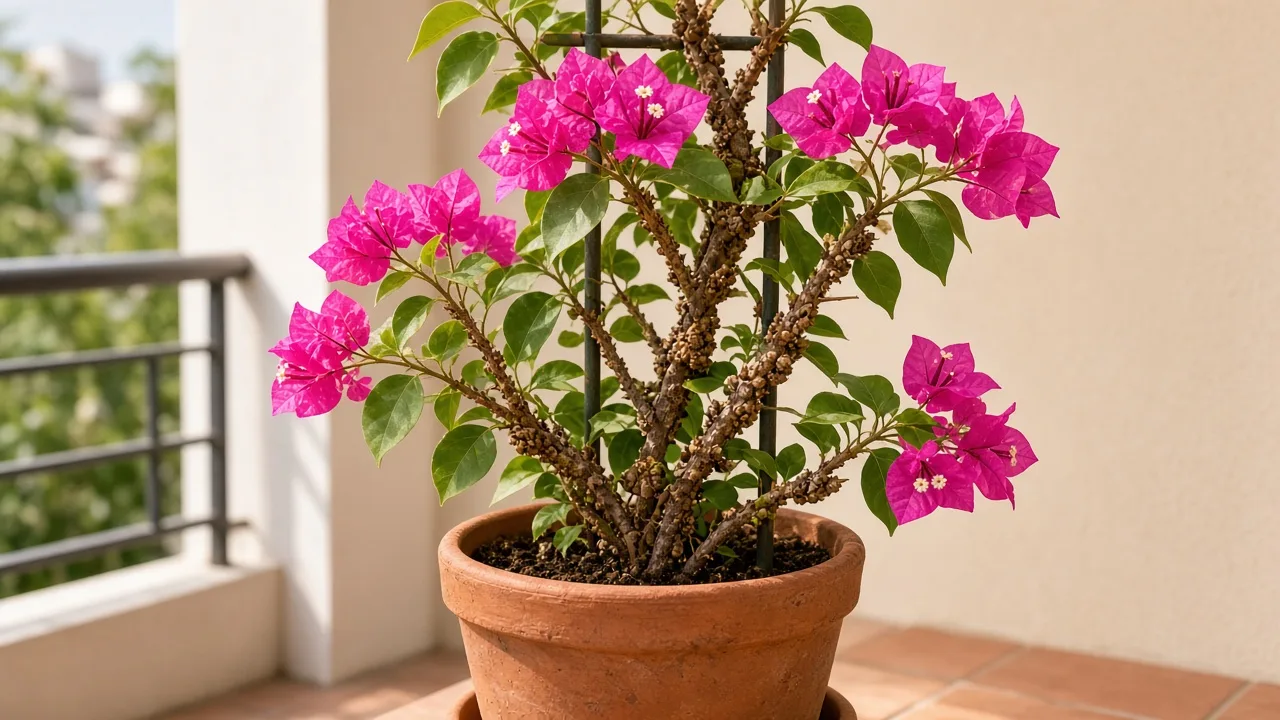
Scale Insects on Bougainvillea: Causes, Checks & Fixes
This guide covers scale insects on Bougainvillea. See also the general Scale Insects guide, watering, and light pages for this plant.
Scale Insects on Bougainvillea: Causes, Checks & Fixes
Quick answer
Scale insects on Bougainvillea show up as flat tan, brown, or waxy bumps glued to thorny canes, leaf axils, and bract joints where colorful modified leaves meet the stem. They are immobile sap feeders protected by a waxy or shell-like cover that pierce stem tissue and drain sugars from the vine you grow for bract color.
For how scale life cycles, crawler timing, and armored versus soft scale work in general, see our scale insects guide. On Bougainvillea, the practical pattern is hard disks along spiny stems and under bracts, sticky shine on magenta or orange bracts and patio tiles below a wall-trained vine, and colonies that stay hidden until you trace each thorny cane by hand.
First step: isolate the plant the same day you spot bumps. Move it away from hibiscus, jasmine, or other patio neighbors, wear heavy gloves for the sharp thorns, then dab every visible scale shell with a cotton swab dipped in 70% isopropyl alcohol, pressing directly on each bump.
Yellow bracts on constantly wet mix point to overwatering on Bougainvillea—confirm shells and honeydew before you treat pests alone.
When to use this page vs other Bougainvillea guides
This page is the pest-first entry for immobile shell-like sap feeders on thorny Bougainvillea canes.
- Bougainvillea overview — Baseline care, buying checks, and how this sun-loving vine grows in containers and on trellises.
- Mealybugs on Bougainvillea — Use for white cottony tufts in the same axils, not hard tan disks.
- Aphids on Bougainvillea — Use for soft green colonies on new cane tips with honeydew.
- Spider mites on Bougainvillea — Use for fine webbing and stippling in dry indoor air, not glued bumps.
- Bougainvillea problems hub — Browse all common issues on this species.
Why Bougainvillea attracts scale on thorny canes and bract joints
Spiny, bract-heavy architecture hides immobile pests. Bougainvillea’s thorny canes branch freely, and the showy bracts overlap at every node. Scale settles in those protected forks and stays put once the cover hardens—exactly where a casual look at the color flush misses the stem behind it.
Warm-climate vine grown indoors part of the year. Outdoors in full sun per the Bougainvillea light guide, bougainvillea often benefits from lady beetles and parasitic wasps. When pots move inside for frost protection, scale crawlers can build year-round without the natural enemies that keep numbers down on a sunny patio.
Sap loss hits bracts before you notice stem bumps. Scale infestations cause yellowing, honeydew, and sooty mold on leaves and bracts below infested canes. On a flowering vine, that damage shows up as dropped or faded bracts and sticky residue on tiles under a hanging basket—sometimes before you inspect the thorny axils.
Soft new growth from heavy feeding invites crawlers. Bougainvillea already tempts growers to push nitrogen for green leaves instead of bracts. Tender new shoots are easy crawler landing sites, while overwatered roots weaken the vine without preventing pests in sheltered foliage.
Introduction from neighbors and new stock. Scale spreads on unquarantined nursery vines, shared trellis wires, and when balcony pots touch. Skipping isolation after purchase is a common entry route—not a sudden failure of your drought-stress watering rhythm.
What scale insects look like on Bougainvillea
Early infestations concentrate on stems and bract joints, not the open bract faces you admire from across the patio. Check these patterns together:
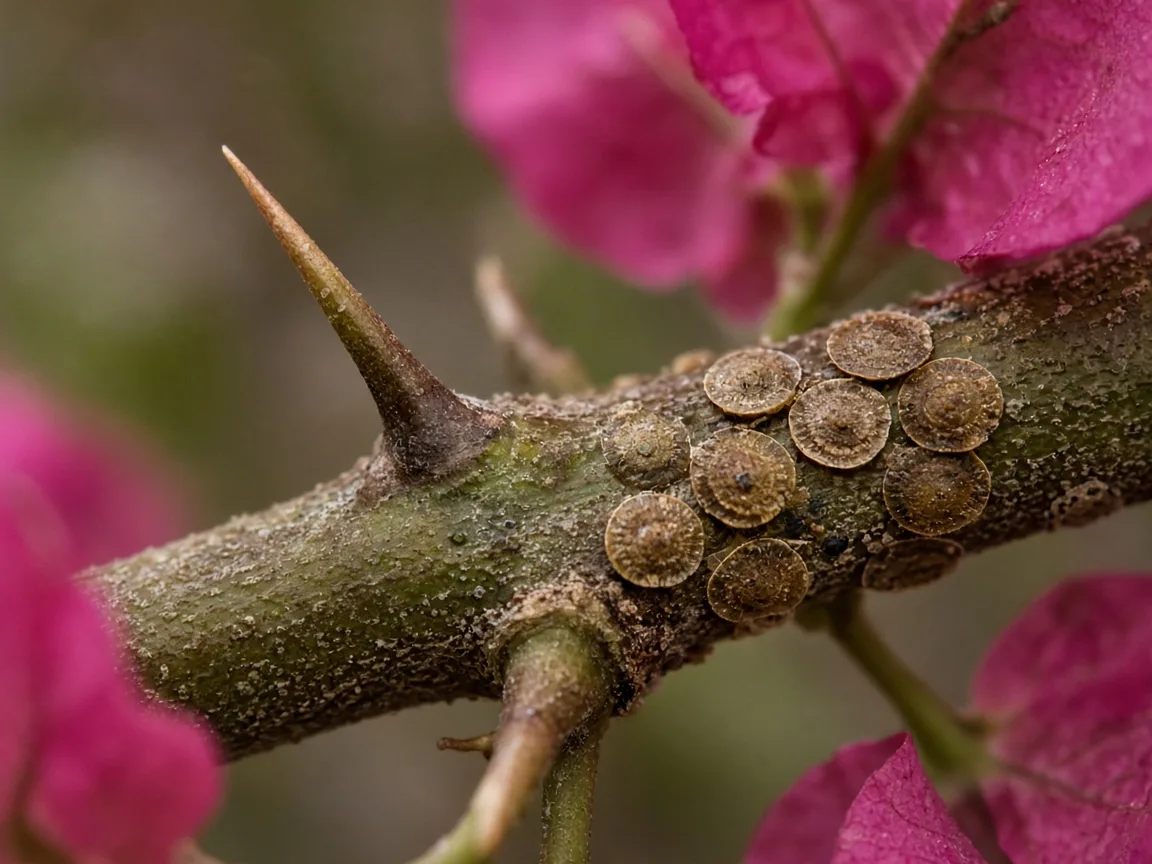
Tan scale shells along a thorny Bougainvillea cane and bract axil—compare with clean bract tissue on the same vine.
- Flat or dome-shaped tan, brown, or waxy bumps along thorny canes and woody lower stems
- Shell-like disks in leaf axils and bract joints where colorful bracts meet the cane
- Bumps on true leaf undersides near petioles, especially on soft new growth
- Sticky, shiny honeydew on bracts, true leaves, pot rims, or patio tiles below wall-trained vines
- Black sooty mold on honeydew-coated bracts in humid pockets of foliage
- Yellowing, curling, or dropped bracts when feeding is heavy on an otherwise sun-fed plant
- Ant trails on trellis wires, pot saucers, or balcony rails farming honeydew above
- Pale yellow to orangish crawlers before shells harden—tiny until they settle at the next soft axil
Do not mistake normal features for pests. Bougainvillea canes are naturally ridged and thorny; scale stress shows firm bumps at multiple axils in a row, stickiness, and stalled clean new bract clusters—not one pale bract on an otherwise bump-free vine.
Where scale hides on a thorny, bract-heavy Bougainvillea vine
Scale on Bougainvillea concentrates where spines and bracts overlap. Work through this order before treating:
- Leaf axils along thorny canes — Run bright light along every node from soil line to the leading tip, including forks hidden behind overlapping bracts.
- Bract joints — Lift or part colorful bracts gently and inspect where they attach to the cane; scale often crusts that seam while the bract face looks clean.
- Branch crotches — Every Y-shaped fork on a climbing vine is a sheltered pocket sprays glance off.
- Undersides of true leaves — Small green leaves near bracts can carry disks and honeydew the bracts hide from across the room.
- Soil line and cache pots — Lift lower stems on large containers; scale crusts where canes enter mix or sit inside decorative outer pots.
- Neighbor plants — Inspect hibiscus, jasmine, ficus, or other broad-leaf pots on the same trellis or balcony rail.
This cane-by-cane map is specific to a thorny, bract-flushing Bougainvillea—not a compact rosette houseplant checked only at leaf tips.
Confirm scale vs mealybugs, aphids, mites, and water stress
| What you see | Likely cause | Key check |
|---|---|---|
| Tan or brown immobile bumps on thorny stems | Scale insects | Shell test; honeydew on bracts below |
| White cottony tufts in axils | Mealybugs | Fluffy wax; pink smear when crushed |
| Soft green insects on new cane tips | Aphids | Colonies move when disturbed |
| Fine webbing and leaf stippling | Spider mites | Dry air; mites on undersides, not shell bumps |
| Whiteflies puffing off when canes are shaken | Whiteflies | Flying adults; not glued disks |
| Yellow leaves, wet heavy soil, soft stems | Overwatering | No scale shells; mix never dries at top 3–5 cm |
| Pale leaves in deep shade | Not enough light | Weak growth; bumps absent unless pests are also present |
Confirmed diagnosis — Immobile shells plus honeydew or ants on multiple thorny axils with firm lower canes. Suspected — One tan speck without stickiness may be callus or mineral splash; use the shell test before spraying.
Shell test on a thorny cane
Pry one bump with a toothpick while wearing gloves. Armored scale covers can be lifted separately from the body; soft scales crush with body fluid beneath a waxy dome. Dried hard-water crust on a pot rim does not lift as an insect shell and is not clustered along woody canes.
First fix: isolate and alcohol-dab every shell
Move the plant away from others, then dab each visible scale shell with 70% isopropyl alcohol on a cotton swab, pressing directly on the bump.
That single action kills adults you can reach and confirms live pests—not dust—before you commit to sprays. UW Extension recommends removing scales with a swab dipped in soapy water or alcohol for lightly infested houseplants—contact kills the insect under the cover without treating the whole vine on day one.
Work systematically:
- Start at the soil line and move upward cane by cane, opening thorny axils with tweezers or a soft brush if needed.
- Reach bract joints with a fine brush dipped in alcohol when a swab cannot fit between overlapping bracts.
- Wipe honeydew off bracts and true leaves below colonies with a damp cloth.
- Drop swabs in a sealed bag so mobile crawlers do not fall onto the bench.
Repeat weekly until you find no new bumps for two consecutive inspections. Epic Gardening stresses that missing even a few adults lets scale return—on a branching Bougainvillea, that means every axil matters, not only the worst cluster.
Do not repot, heavily prune, or fertilize a pest-hit vine on day one hoping to push new bracts—that produces tender tissue pests prefer. Test alcohol on one hidden axil first and wait 24 hours before treating sun-stressed bracts in hot midday direct light.
Pet safety note: Bougainvillea is toxic to cats and dogs if ingested and sap can irritate skin. Wear gloves for thorns and sap, keep pets away until alcohol dries, and do not leave soaked swabs within reach.
Horticultural oil and soap on Bougainvillea canes
If shells persist after two or three weekly alcohol passes, apply insecticidal soap or horticultural oil labeled for ornamental vines. UC IPM notes horticultural oil timed when crawlers are active is effective on many scale species—early morning sprays let bracts and leaves dry before peak heat on a sunny patio.
Rules for Bougainvillea:
- Patch-test one cane section and wait 24–48 hours; oils carry more burn risk on sun-exposed bracts in summer.
- Coat thorny axils, bract joints, and leaf undersides thoroughly; contact products only kill insects they touch.
- Avoid stacking alcohol dab, soap, and oil on the same day.
- Systemic insecticides are not effective against all scale types—especially armored scales—so contact removal stays the safer first choice on a vine you handle regularly.
Outdoor summer recovery for overwintered vines
When frost danger passes, moving an isolated Bougainvillea back to a sunny patio often lets natural predators reduce scale populations while you continue weekly alcohol passes on stubborn shells. Keep the vine quarantined from clean stock until two weeks pass without new bumps—predators help, but they rarely erase every hidden disk in bract joints on the first warm week.
Manage ants before they protect scale
Ants harvest honeydew and defend scale from predators. If you see ant trails on trellis wires or saucers beneath a wall-trained vine, treat axils immediately and break ant access to the pot rim before expecting sprays to work.
Recovery timeline and bract flush
Manual removal should stop new shell formation within two to four weeks of consistent weekly dabbing. Expect clean new cane tips and bract clusters within four to eight weeks during active warm-season growth under full sun. Yellowed or sooty-coated bracts from heavy feeding will not fully recover cosmetically—judge success by the next color flush without bumps.
Bract display may lag one flush after heavy sap loss. Bougainvillea can color up again once feeding stops, sun continues, and you avoid excess nitrogen that favors leaves over blooms.
Firm lower canes and steady new growth are good signs. Softening stems on sour wet mix means rot or root rot—not scale—and needs a different response immediately.
Bougainvillea care cross-check
Scale weakens Bougainvillea by stealing sap; they do not replace good culture. After treatment stabilizes:
- Light — Full sun (minimum five to six hours of direct light daily) supports recovery and tighter growth that is easier to inspect along canes.
- Water — Let the top few centimeters of mix dry between waterings per the Bougainvillea watering guide. Overwatered roots weaken the vine; a constantly wet crown plus honeydew invites sooty mold in bract clusters.
- Soil — Well-draining mix with excellent drainage keeps roots firm while you fight stem pests.
- Fertilizer — Hold feeding until new growth looks clean. High-nitrogen products push leaves, not bracts, and favor crawler settlement on soft shoots.
How to prevent scale on Bougainvillea
Quarantine every new nursery vine for two to three weeks before placing it beside established plants. Inspect thorny axils and bract joints weekly during spring and summer growth—the same rhythm you use for mealybug checks in overlapping crevices.
Choose stock without woody stems crusted in bumps. Manage ants on trellis wires before they establish scale “farms” along canes. Keep care aligned with full sun and a watering rhythm that matches how fast the pot dries—not extra water because bracts dropped.
When you bring a patio Bougainvillea indoors for cool nights, scout axils again—temperature shifts can coincide with crawler movement between plants on a crowded bench.
When to escalate
Escalate if tan bumps crust most axils on multiple canes, sooty mold covers most bracts, or the infestation spreads to neighboring pots after isolation. Chronic scale during peak growth can stall bract color and weaken canes even when roots are healthy.
For heavy recurring infestations, a local extension office can help confirm armored versus soft scale and discuss options. Scale alone rarely kills a mature Bougainvillea with firm lower canes, but it can ruin a bract flush and invite secondary stress if you respond with extra water or fertilizer instead of pest removal.
Conclusion
Scale insects on Bougainvillea succeed because this thorny, bract-heavy vine hides immobile pests where sprays glance off. Confirm hard disks in leaf axils and bract joints, isolate the plant, and dab visible shells with alcohol before anything else. Repeat weekly until crawlers stop appearing, move overwintered vines to sunny outdoor quarantine when safe, and judge success by new cane tips and bracts—not old coated foliage. Full sun, dry-between-waterings rhythm, and weekly axil checks keep the next outbreak visible while it is still small.