Black Spots on Boston Fern: Causes, Checks & Fixes
Quick answer
Black spots on Boston Fern are usually fungal or bacterial leaf spot on wet pinnae, sooty mold above fern scale, sun or cold scorch on exposed fronds, or normal sori on the underside—not every dark dot is disease. First step: stop misting and overhead watering, improve airflow around the hanging fronds, and water the soil only until you confirm the pattern.

Black Spots on Boston Fern: Causes, Checks & Fixes
This guide covers black spots on Boston Fern. See also the general Black Spots guide, watering, and light pages for this plant.
Black Spots on Boston Fern: Causes, Checks & Fixes
Quick answer
Black spots on Boston Fern (Nephrolepis exaltata) are localized dead tissue on the small pinnae (leaflets) that line each arching frond. On this humidity-loving fern, the usual split is: dark circles with yellow halos on the upper pinna face mean fungal or bacterial leaf spot after pinnae stay wet; flat dry black patches on the window-facing side often trace sun or heat scorch; black smear that wipes off points to sooty mold above fern scale or honeydew from other sap feeders; and organized dark dots in rows near the pinna margin underneath are normally sori (spores), not infection.
For general spot-disease mechanics on houseplants, see our black spots guide. On Boston Fern, the feathery frond mass in a hanging basket holds mist and splash water between pinnae longer than broad-leaf houseplants—so leaf-spot fungi get the wet surfaces they need without any mystery “fern weakness.”
First step: stop wetting pinnae, improve airflow around the basket, and water the soil only using the watering guide once you have confirmed the pattern below.
When to use this page vs other Boston Fern guides
| Your pattern | Best page |
|---|---|
| Dark spots or patches on pinnae along fronds | This page |
| Even brown tips on many pinnae, no mid-leaf circles | Brown tips / Low humidity |
| Whole fronds yellowing on heavy wet mix | Overwatering |
| Black mush at crown, sour soil smell | Root rot |
| Sticky residue, black coating that rubs off | Scale insects |
| Bronze stipple and fine webbing at frond bases | Spider mites |
| Large brown sections, not discrete spots | Brown leaves |
What black spots look like on Boston Fern
Healthy Boston fern forms a dense mound of gracefully arching fronds, each frond carrying dozens of small deltoid pinnae along a central rachis. Black-spot problems break that look in recognizable ways:
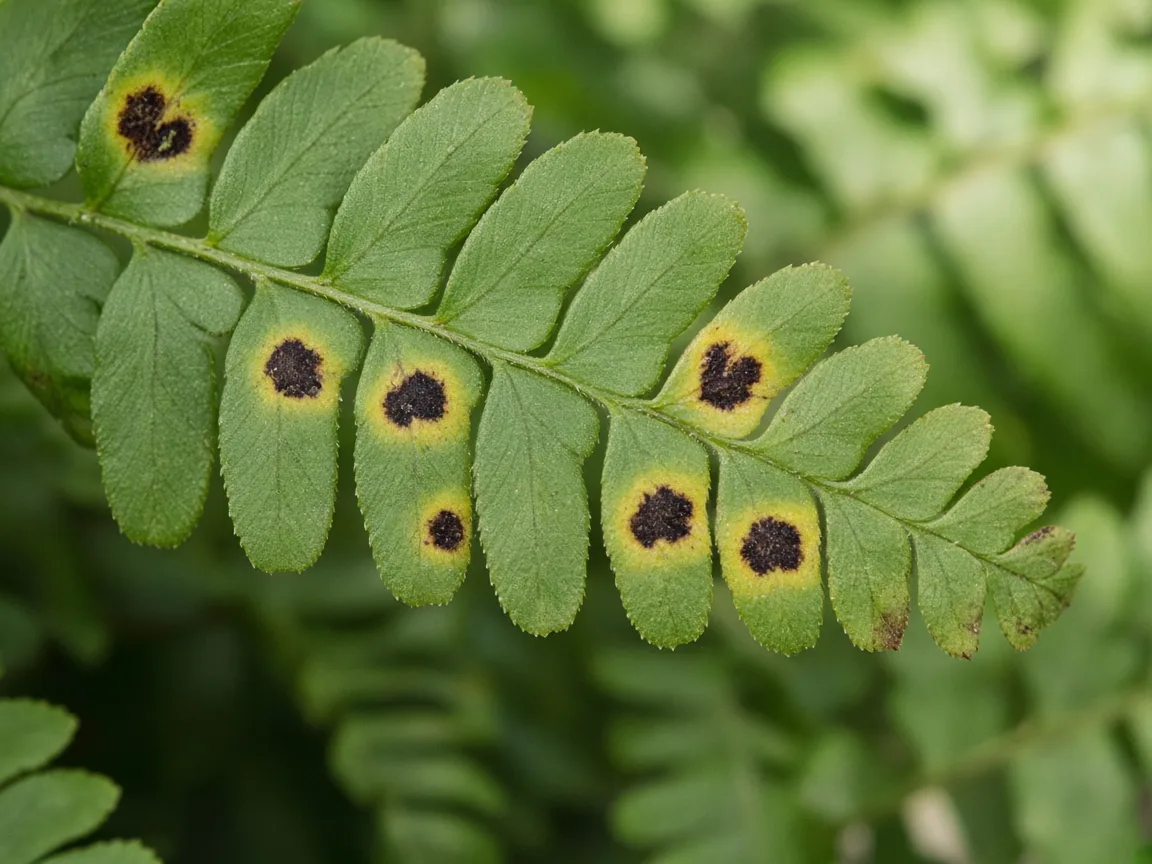
Leaf-spot lesions on Boston Fern—compare halos and spot edges with healthy pinnae on the same frond.
- Small dark brown to black circles with yellow halos on the upper pinna surface — Often start water-soaked, then crisp in the center. Matches fungal leaf spot with yellowish margins after splash, misting, or shower rinses that leave pinnae wet overnight.
- Uniform water-soaked specks that merge in stagnant humid air — Bacterial leaf spots can enlarge faster when fronds stay wet and air does not move around a crowded bathroom shelf.
- Dry black patches on the sun-facing side of fronds — Usually too much direct light or heat on a shade-tolerant indoor fern, not infection.
- Dark brown to black dots in rows near pinna margins on the underside only — Normal sori; NC State notes these spore clusters and warns not to mistake them for insects or disease.
- Black coating that wipes away — Sooty mold on honeydew from scale; treat the insect, then gently rinse fronds.
- Pale straw-colored or white rings without greasy halos — Often cold water or aerosol damage, not fungal leaf spot.
Spots on croziers still unfurling at the crown are more urgent than one dry mark on the lowest arching frond.
Sori vs disease on Boston Fern pinnae
Boston fern reproduces by spores, not flowers. On mature pinnae you will see two rows of round sori near the margins on the underside—dark brown to black, slightly raised, and fixed in place for months.
Leaf-spot disease targets the upper pinna face: expanding circles, greasy margins when wet, and new lesions on neighboring pinnae or fronds within one to two weeks. If the top stays evenly green while the underside shows only organized dots along the edges, you do not need fungicide—you need to stop confusing normal fern biology with infection.
This distinction is plant-specific: sori rows on pinnae do not apply to a peace lily or pothos black-spot page. When in doubt, photograph the same pinna top and bottom in bright light before treating.
Why hanging baskets and misting trap trouble on pinnae
N. exaltata needs high humidity and consistently moist soil—but the same culture that keeps pinnae lush also keeps them wet longer than owners realize.
Hanging baskets stack fronds in layers. Mist, shower water, and cachepot overflow run down pinnae and collect where leaflets overlap. In a still corner with no fan, those pockets stay damp overnight—exactly when fungal spores germinate on foliage.
Daily misting on pinnae is a common shortcut for humidity. It often spreads leaf-spot pathogens between fronds and can leave mineral residue that burns tips—without replacing a humidifier or pebble tray. For baseline moisture targets, use the overview and low-humidity guide instead of soaking leaflets.
Dense pinnae carpets also hide fern scale and spider mites. NC State lists scales when air is too dry; honeydew from scale can coat pinnae with superficial black sooty mold that wipes off—different from embedded necrosis inside the leaflet.
Why Boston Fern gets black spots
Fungal leaf spot (most common on wet pinnae)
Several fungi cause small brown or black spots with yellow margins on houseplant foliage. Shared watering cans, splash from infected soil, and wet pinnae after group shower rinses move spores between pots. Boston fern’s many small leaflets mean one splashed frond offers hundreds of infection sites.
Bacterial leaf spot
Bacterial infections show water-soaked lesions that may run together in warm, humid, stagnant air—especially after trimming with unsanitized scissors or when several ferns share a steamy bathroom shelf without airflow.
Sun scorch and heat stress
Boston fern wants bright indirect light. A south-facing window with hot afternoon sun or a grow light too close can produce dry black patches on exposed pinnae while shaded pinnae stay green. Cross-check placement in the light guide before assuming infection.
Sooty mold from fern scale
Missouri Botanical Garden notes scale among common pests on indoor Nephrolepis. Superficial black mold on honeydew wipes away; necrotic leaf-spot tissue does not. Route to scale insects when bumps hide along rachises.
Overwatering and crown stress
Chronically soggy mix plus waterlogged crowns produces yellowing, collapse, and dark mush at the growth point—not isolated mid-pinna circles alone. When roots are soft and mix smells sour, see overwatering and root rot.
Normal lower-frond senescence
One older arching frond may develop brown-to-black patches before the plant sheds it. No halos on new growth, firm crown, and stable moisture mean aging—not epidemic leaf spot.
How to confirm the cause
Work through these checks in order:
- Top vs bottom — Upper-surface halos = disease or scorch; underside margin rows only = likely sori.
- Wet test — Greasy, water-soaked spots suggest bacteria; dry, papery patches suggest scorch or fungal spot after drying.
- Wipe test — Black smear that rubs off = sooty mold; spot stays in the pinna = necrosis.
- Crown squeeze — Firm green crown supports culture fixes; soft black tissue with wet mix means escalate to root rot.
- Light map — Spots only on the window-facing frond face point to light stress before fungicide.
- Pest scan — Bumps along rachises (scale) or stipple plus webbing (spider mites).
- Recent culture — Misting, overhead watering, or group shower rinses in the last week strongly favor leaf spot over random stress.
The first fix to try
Stop wetting pinnae and improve airflow around the basket today. Move the fern slightly away from wall contact, run a fan on low in the room (not blasting the fronds), and switch to soil-only watering when the top 2 cm of mix begin to dry—see the watering guide.
Do not fertilize, repot, and spray fungicide the same day. Give the plant one week of dry pinna surfaces and watch whether new spots stop forming on the newest unfurling fronds.
Step-by-step recovery
Week 1 — Culture correction
- Remove the worst-spotted fronds at the base with clean, sharp scissors—dispose of infected tissue away from other pots.
- Empty saucers and cachepots within 30 minutes after watering.
- Use a humidifier or pebble tray instead of misting pinnae.
- If sooty mold is present, rinse fronds gently with lukewarm water and treat underlying scale.
Week 2–4 — Monitor new growth
Judge success by clean pinnae on newly unfurling fronds. If spots keep appearing on emerging croziers, consider a labeled copper soap or biological fungicide per product directions after removing affected tissue—test on one frond first, ventilate the room, and avoid oil-heavy products that can weigh down delicate pinnae.
When to repot or escalate
Repot only if mix never dries, roots smell sour, or the soil mix has collapsed—use a peat- or coco-based blend with perlite as in the overview. If the crown is soft and black on wet mix, salvage may be limited; focus on any firm offshoots from runners if present.
Recovery timeline
| Severity | What to expect |
|---|---|
| Mild leaf spot on one to two fronds | New spots often stop within 7–14 days after pinnae stay dry; trim old lesions for appearance |
| Several fronds spotted, firm crown | Clean unfurling fronds in 2–4 weeks; full basket may take longer to look lush again |
| Crown mush on wet mix | Poor prognosis; see root rot |
| Scorch only | Stable once light is corrected; damaged pinnae do not re-green |
Lookalike symptoms
| You see | Likely cause | Page |
|---|---|---|
| Underside margin rows, top green | Sori (normal) | This page — no treatment |
| Upper halos after misting | Fungal/bacterial leaf spot | This page |
| Wipes off, sticky elsewhere | Sooty mold | Scale insects |
| Window-side dry black patch | Sun scorch | Light |
| Bronze stipple, webbing | Spider mites | Spider mites |
| Even tip burn, no circles | Dry air | Brown tips |
Mistakes to avoid
- Misting pinnae daily while leaf spot is active—keeps spores germinating between leaflets.
- Shower-rinsing the whole basket like a mite treatment when halos suggest fungus—adds hours of wet pinnae; rinse only when pests are confirmed.
- Moving instantly into harsh sun to “dry spots”—burns shade-adapted fronds.
- Fungicide before drying foliage—chemicals do not replace dry pinnae and airflow.
- Confusing sori with infection—unnecessary stress and wasted sprays.
How to prevent black spots next time
Match culture to this species: bright indirect light, moist but aerated mix, and steady humidity without wetting pinnae. Water on a dry-down schedule from the watering guide. Quarantine new ferns, sanitize shears between plants, and inspect monthly for scale so sooty mold never coats the fronds.
Review the full Boston Fern overview and problems hub when symptoms overlap—spotting plus yellow fronds on soggy mix may need a different sibling page.
Related Boston Fern guides
- Overview — baseline light, water, and humidity targets for Nephrolepis exaltata
- Watering — soil-only watering and dry-down checks that keep pinnae dry
- Light — bright indirect placement without scorch on hanging baskets
- Overwatering — when black tissue tracks wet mix and crown collapse
- Root rot — mushy roots after chronic wet culture
- Scale insects — fern scale and sooty mold on dense fronds
Related tool
Use the Plant Problem Diagnosis Tool to narrow causes for black spots on this plant before changing multiple variables at once.