How to Prune Asparagus Fern: When, Where & What to Cut
How to Prune Asparagus Fern: When, Where & What to Cut
How to Prune Asparagus Fern: When, Where & What to Cut
Quick Answer
First, remove dead, yellow, or clearly damaged cladode sprays and their stems at the base - trace each declining spray to where it joins the crown and cut once with clean, sharp scissors. Only after that cleanup should you decide whether the plant needs shaping. For bare or overly long stems, cut the whole arch at or near the soil line, not halfway up a leafless section. Pinch soft green tips during spring and summer if you want a fuller silhouette, but fix light and watering before expecting pinching alone to fix chronic legginess.
What You Are Actually Cutting on Asparagus Fern
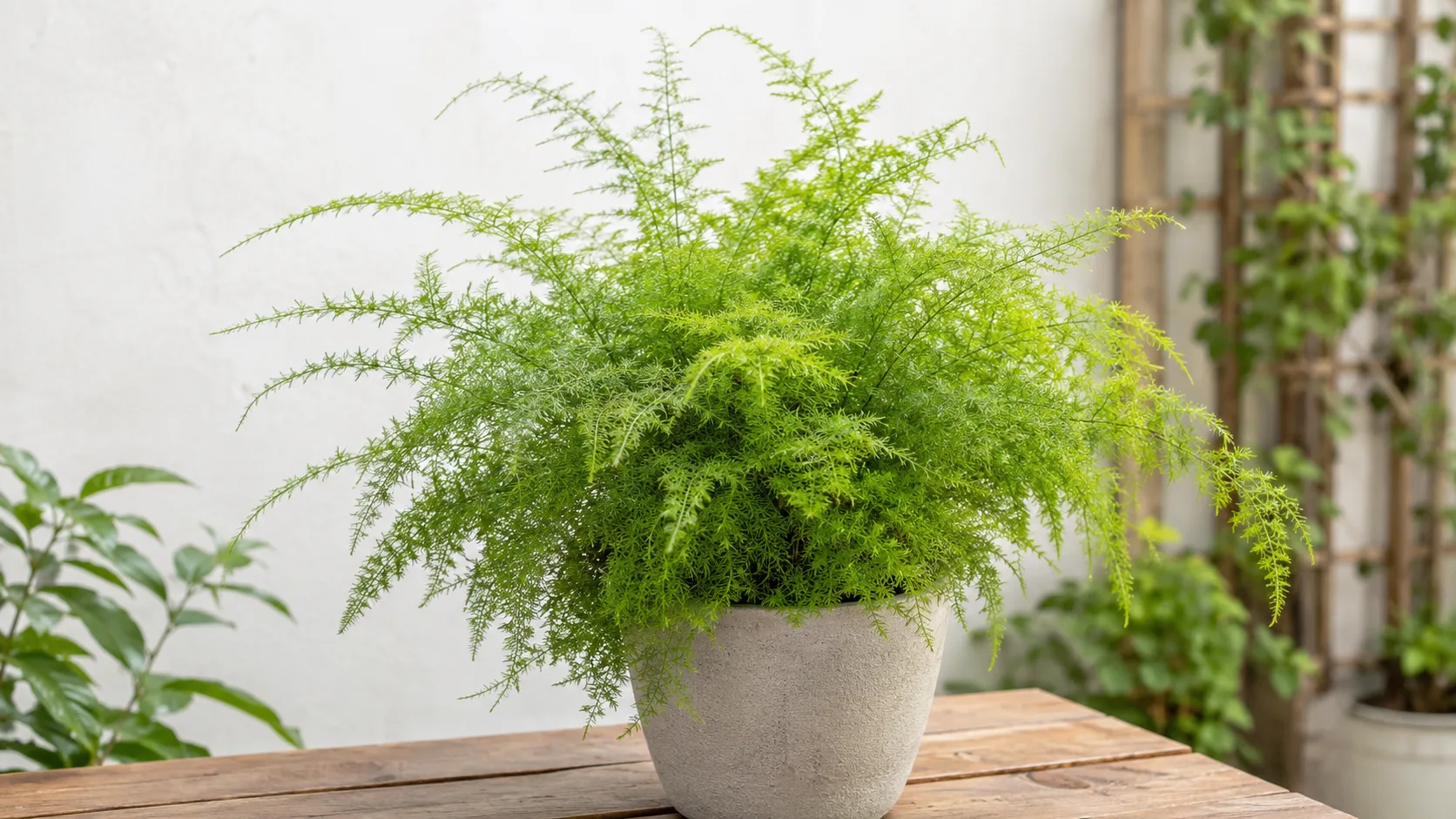
Despite the common name, asparagus fern is not a fern. Asparagus setaceus - often sold as lace fern, plumosa, or common asparagus fern - belongs to the Asparagaceae family. The feathery green “leaves” are cladodes: flattened, photosynthetic stem segments. True leaves appear only as tiny dry scales along the wiry stems. NC State Extension describes the species as a bushy evergreen with thin climbing stems and fern-like cladode sprays, noting sharp spines on older stems and sap that can irritate skin.
That anatomy changes every pruning decision. You are managing arching stems that sprout from a crown of rhizomes and tuberous roots at the soil surface, not trimming fronds that unfurl from a single fiddlehead. New shoots typically emerge from the crown and active stem tips - not reliably from random points on a bare mid-stem. Related species such as Asparagus densiflorus ‘Sprengeri’ and foxtail fern (A. densiflorus ‘Myers’) follow the same principle: remove whole underperforming stems at the base; pinch only soft, actively growing tips when the stem below still carries healthy cladodes.
What Pruning Can and Cannot Fix
Pruning helps asparagus fern in four practical ways. Sanitation clears dead, yellow, or pest-damaged cladode clusters before they hold moisture against healthy tissue. Shape control removes bare inner stems and overlong arches that throw the plant off balance. Rejuvenation thins an overgrown, pot-bound specimen in stages so light reaches the crown again. Housekeeping removes toxic berries and thorny old stems that snag hands during routine care.
Pruning cannot substitute for brighter indirect light when the plant is stretching, or for consistent moisture when cladodes yellow from drought stress. Wisconsin Horticulture Extension notes that foliage yellows and drops when soil is too dry or light is insufficient - conditions scissors will not cure. If many sprays yellow at once, inspect watering, drainage, and placement before removing large amounts of green tissue.
What to Check Before You Cut
Walk the plant in good light before touching shears. Press the crown gently - it should feel firm, not mushy or loose. Pull back outer stems and look at the soil line for odor, blackened tissue, or stems that detach with little resistance. Flip cladode sprays and check stem axils for spider mite stippling, webbing, or scale.
Note whether yellowing is isolated to one old outer stem or widespread across the plant. A single dry brown spray on an otherwise green specimen is normal senescence. Widespread yellowing with wet soil or a sour smell suggests root stress - pause on heavy pruning until you know whether the crown is healthy. If the pot dries out within a day or roots circle the drainage holes, schedule Asparagus Fern repotting guide separately rather than stacking a hard cutback and root disturbance on the same day.
When to Prune Asparagus Fern
Timing splits into two categories. Dead, brown, broken, or fully yellow stems can come off whenever you see them. There is no benefit to leaving crisp dead cladodes attached through winter; they shed little useful energy back to the plant and can collect dust and pests.
Shaping, pinching, and rejuvenation belong in the active growing season. Indoors, that usually means late winter through early summer, when pale green shoots appear at the crown and room temperatures stay consistently warm. The Missouri Botanical Garden notes vigorous growth in bright filtered light with even moisture - the same window when the plant can replace foliage you remove.
Avoid removing a large share of living foliage in late fall and winter, when lower light and dry heating air slow regrowth. Light grooming still works in slower months - one dead spray, one berry cluster - but a hard cutback on a plant in a dim, dry room often produces widespread yellowing and a long pause before new shoots appear.
Cleanup Anytime vs Shaping in Active Growth
Year-round cleanup means removing individual dead cladode sprays, snapping off dry tips that break cleanly, and cutting stems that have already detached. These low-risk cuts barely change the plant’s energy budget. Seasonal shaping means removing multiple bare stems at the base, pinching many soft tips, or thinning crowded interior growth - work best saved for when you see new crown shoots unfurling. A practical rhythm is a quick dead-material check every two weeks in spring and summer, and a single early-spring shaping session if the plant actually needs it.
The First Cut to Make
Start every session with sanitation only. Identify one dead, fully yellow, or obviously damaged cladode spray, follow its stem to the crown, and cut it cleanly at the base. Do not pinch healthy tips, thin live stems, or reshape the silhouette until all clearly declining tissue is gone. Opening sightlines this way lets you see which arches are truly bare versus which still carry green cladodes worth keeping - and it avoids stacking cosmetic cuts on top of tissue the plant was already abandoning.
How to Prune Asparagus Fern Step by Step
Removing Dead, Yellow, and Damaged Cladode Sprays
Hold the wiry stem steady and cut once with bypass shears or sharp scissors - sawing crushes thin tissue and leaves ragged edges. If only the outer tips of a cladode cluster are brown but the base is still green and firm, you may leave the spray in place while you correct humidity or watering. Remove the entire stem when most of the cluster is crisp, when the stem itself is brown and brittle, or when pests concentrate in that section. Asparagus ferns hide spider mites along stem joints; a heavily stippled, webbed spray is easier to bag and discard than to treat in isolation.
Cutting Bare or Leggy Stems at the Base
Leggy arches - long thin stems with wide gaps between cladode clusters - usually signal insufficient Asparagus Fern light guide, old age, or both. Wisconsin Horticulture Extension recommends cutting old or yellowed stems out at the base and trimming stem ends only when you need to maintain shape - not as the default for every long arch.
When a stem is bare for several inches with green cladodes only at the far tip, remove the whole stem at the crown or root rather than leaving a stick with a puff at the end. Mid-stem cuts on woody, leafless sections rarely produce the side branches beginners expect; the plant sends energy to crown shoots and soft tips instead. Step back after every few base cuts - the airy texture shows gaps immediately, and you can always remove more in a later session.
Move the pot to brighter indirect light - an east window, a few feet from a south or west window with a sheer curtain, or supplemental grow lighting - before or alongside shaping cuts. Pruning without improving light often produces another flush of long, sparse stems within weeks.
Pinching Soft Tips for Bushier Growth
Pinching is the gentlest shaping tool and works only on soft, actively growing tips. When new stems emerge, the terminal few millimetres are bright green and pliable. Nipping that tender growth removes the dominant apical bud and encourages side branching from lower nodes on the same stem - but only while the tissue is still soft. Use fingernails on very tender shoots or clean snips once the stem has firmed slightly.
Pinch every two to three weeks during spring and early summer, spreading the work across sessions on stressed plants. Combine tip pinching with base removal of bare inner stems so light reaches the crown. Do not pinch during winter slowdown or immediately after repotting, when the plant needs every photosynthetic surface to recover.
Where to Cut - and What Not to Cut
Cut here: at the crown or soil line when removing a whole underperforming stem; at the junction where a dead spray meets live tissue; at soft green tips when pinching for bushiness during active growth.
Do not cut here: halfway up a bare woody section expecting new side shoots; through individual cladodes scattered along an otherwise healthy stem; into mushy black crown tissue - that is rot, not pruning territory.
If you are unsure whether to save a stem, ask whether green cladodes run along its length. Yes - pinch an overlong tip if needed. No - trace it to the base and remove it cleanly.
How Much You Can Safely Remove
Treat one-third of living foliage per session as the upper limit for indoor plants. Asparagus fern stores energy in tuberous roots and rhizomes, which helps it survive moderate cutbacks, but removing too much green tissue at once - especially outside the active season - strips photosynthetic capacity while roots still consume reserves. Severely overgrown specimens recover best through staged rejuvenation: remove dead and bare stems first, wait three to four weeks for crown shoots, then cut another round of oldest woody stems if needed.
Outdoor clumps in frost-free climates sometimes tolerate harder cutbacks because regrowth is faster; indoors, moderation prevents the yellowing stall that follows overambitious winter pruning. Tuberous roots can often resprout a plant cut nearly to the ground if the crown is firm, drainage is good, and light is bright - but expect many weeks of bare pot and do not attempt this on a crown that smells sour or pulls up easily.
Tools, Gloves, and Sterilization
For typical houseplant sizes, bypass pruning shears, sharp household scissors, or floral snips handle most wiry stems. Fine A. setaceus stems crush easily in oversized hand pruners - match tool size to stem thickness. Keep 70% isopropyl alcohol and a cloth nearby, plus a sturdy bag for trimmings.
Iowa State University Extension recommends wiping or dipping blades in alcohol and removing visible sap and debris first so disinfectant contacts the cutting surface. Sterilize before you start, between plants, and between cuts when removing diseased tissue.
Wear puncture-resistant garden gloves on mature plants. Soft new cladodes look harmless; older woody stems on established specimens carry sharp spines and rigid needle-like tissue. NC State Extension warns that spines along stems are sharp and sap may cause skin irritation. Wash hands and forearms after pruning even if you wore gloves. Bag trimmings promptly - especially berry-bearing stems - rather than leaving debris where pets can reach it. The ASPCA lists asparagus fern as toxic to cats and dogs, with berries especially concerning if ingested.
Aftercare and Recovery Timeline
After pruning, keep bright indirect light, humidity, and watering stable - do not move from dim shade to harsh direct sun the same day, and do not repot and hard-prune simultaneously unless the mix is clearly failing. Hold fertilizer for two to three weeks after a moderate to heavy session; resume diluted feeding only when new green shoots unfurl.
Water when the top of the mix reaches your plant’s normal dry point - overwatering on Asparagus Fern after pruning is a common trigger for crown rot on a plant already running on reduced leaf area. Expect new crown shoots within two to four weeks during active growth. If nothing appears after six weeks in warm, bright conditions, inspect crown firmness and roots before cutting again. Patience usually beats another trim when the base is healthy.
Mistakes to Avoid
Mid-stem stubs on bare wood top the list - they die back slowly and rarely branch as hoped. Removing more than one-third at once, especially in winter, often causes yellowing and stalled growth. Pruning with dull tools crushes wiry stems and invites problems at the crown. Shearing the plant into a tight ball fights its natural arching habit and produces a chopped silhouette.
Pruning without fixing light creates an endless loop of legginess. Ignoring a mushy crown - if the base is black and soft, cosmetic tip pinching will not save the plant; address roots and watering first. Skipping gloves on thorny mature stems leads to preventable punctures and sap irritation. Leaving berries and trimmings within pet reach concentrates toxicity risk on floors and tables for the minutes debris sits there.
Cladode cuttings from routine pruning do not root reliably - the green sprays are photosynthetic stems, not propagation material. Division at repotting remains the practical multiplication method when you need more plants.
When Not to Prune
Delay heavy shaping when the plant is wilted from drought, recently repotted, fighting obvious root rot on Asparagus Fern, or sitting in deep winter slowdown with no new crown shoots. Delay when widespread yellowing suggests watering or light failure - diagnose the pattern before stripping more green tissue. Delay when pests are active but untreated - disturbing a heavily infested plant without a control plan can spread mites or scale to neighboring pots.
Light dead-frond removal is still fine during stress; just avoid stacked rejuvenation, mass pinching, and one-third removals until the plant stabilizes.
Conclusion
Asparagus fern pruning works when you match cuts to how the plant actually grows: remove dead and bare stems at the crown, pinch soft tips during active growth for bushiness, wear gloves against thorns and sap, and never take more than one-third of healthy foliage in one session. Time heavy shaping for late winter through early summer, inspect the crown before blaming slow recovery on technique alone, and treat trimmings as hazardous in pet-accessible homes. Done this way, grooming keeps the plant airy and manageable without the yellowing pause that follows mid-stem stubs and overambitious winter cutbacks.
When to use this page vs other Asparagus Fern guides
- Asparagus Fern overview - Start here for whole-plant context before deep-diving this topic.
- Asparagus Fern problems hub - Jump to symptom-specific fix guides when this care topic does not resolve the issue.
- Leggy Growth on Asparagus Fern - Escalate here when pruning adjustments are not enough.
- Slow Growth on Asparagus Fern - Escalate here when pruning adjustments are not enough.
- Brown Tips on Asparagus Fern - Escalate here when pruning adjustments are not enough.