Asparagus Fern Light: Best Window & Warning Signs
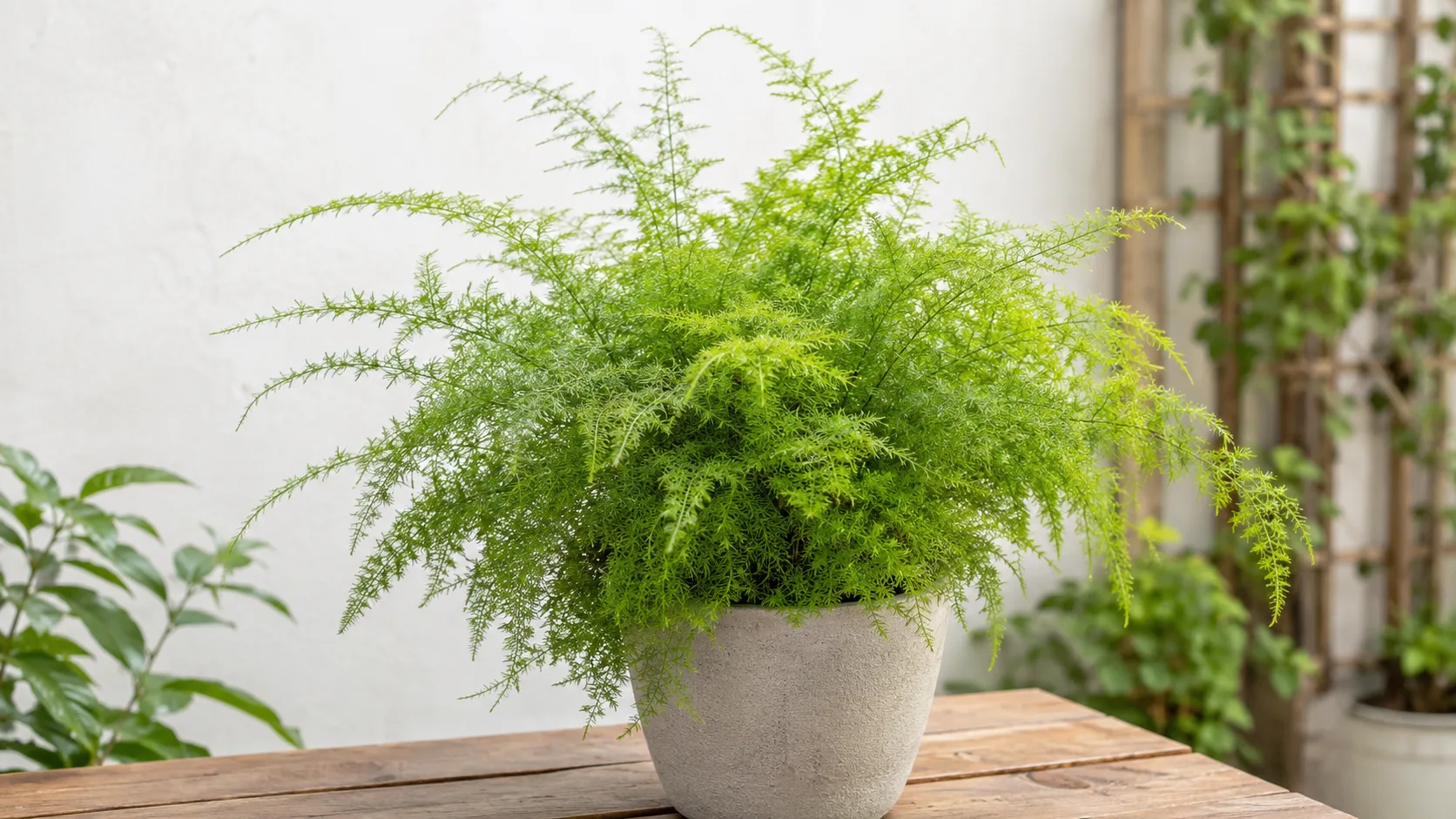
Asparagus Fern Light: Best Window & Warning Signs
Asparagus Fern Light: Best Window & Warning Signs
An asparagus fern can look lush and effortless in the right light - and ragged, yellow, and half-bald in the wrong one within a week. The frustrating part is that the plant often hangs on long enough in mediocre conditions to make you think the placement is fine. Then it drops cladodes, stretches toward the glass, or bleaches out after a sunny afternoon, and you realize light was the variable you never settled.
This guide covers the full indoor light picture for asparagus fern: how much brightness it actually needs, which window works best, how much direct sun is safe, what too much and too little light look like on the plant, when to add a grow light, and how to move the pot without triggering a dramatic shed.
The Short Answer: How Much Light an Asparagus Fern Needs
Asparagus fern grows best in bright, indirect light - the kind you get near an east or west window, or a few feet back from a filtered south window. Think dappled brightness, not dark corner shade and not hot midday sunbeams on the foliage. The North Carolina Extension Gardener Plant Toolbox lists Asparagus setaceus as needing bright indirect light and notes the plant is intolerant of high light intensity, so direct sunlight should be avoided. The Missouri Botanical Garden’s entry for Asparagus densiflorus recommends part shade with bright indirect light or filtered sun outdoors, and specifically warns against direct hot afternoon sun, which can yellow the foliage.
In practical indoor terms, aim for roughly 10,000 to 20,000 lux of filtered brightness at the plant - bright enough that you could read comfortably next to the pot without turning on a lamp, but not so intense that the sun draws a sharp shadow on the cladodes for hours at a time. If you cannot hit that naturally, a full-spectrum LED grow light on a timer for 12 to 14 hours daily is a reliable substitute. The plant’s response - firm new cladodes, even green color, bushy habit - is a better light meter than your guess about how bright the room feels.
Why Light Controls Everything About Asparagus Fern Health
Light is not a background detail for asparagus fern. It is the main driver of how fast the plant drinks, how dense the foliage stays, and how aggressively it pushes new growth from its tuberous roots. A plant in strong, appropriate light will use water quickly, dry its pot on a predictable rhythm, and replace dropped cladodes within weeks. A plant in dim light will drink slowly, stay wet longer, and often look acceptable for months while its root system quietly weakens.
That matters because asparagus fern is commonly sold as a shade-tolerant “fern,” which is only half true. It is not a true fern - it belongs to Asparagaceae and photosynthesizes through flattened stems called cladodes (sometimes called cladophylls), not through broad fern fronds. Those cladodes evolved for filtered forest light in Southern Africa, not for deep indoor shade or blazing windowsill sun. Get the light wrong and you get yellow needles, bleached tips, leggy scrambling stems, or a sudden shower of dry cladodes after a move - all symptoms that look like watering or pest problems but often start with exposure.
What the Native Habitat Tells Us About Window Placement
In its native range around the Cape of Good Hope and eastern Southern Africa, Asparagus setaceus grows as a scrambling climber in open, moist habitats with partial shade - light filtered through taller vegetation, not open desert sun or deep forest floor darkness. The CABI Compendium notes the species prefers open moist habitats from sea level to about 1,880 meters, with well-drained soils and enough ambient brightness to support vigorous climbing growth. Useful Tropical Plants describes it as preferring a moist soil in a partially shaded position.
That habitat maps cleanly to a bright indoor room with soft, filtered window light. You are not trying to recreate a dark bathroom or a cactus windowsill. You are trying to imitate the bright edge of a woodland - enough light to fuel dense cladode production, but protection from the hottest direct rays. An east window with morning sun, or a south or west window with a sheer curtain, is the closest indoor analogue most homes can offer without moving the plant outdoors.
What “Bright Indirect Light” Actually Means for Asparagus Ferns
“Bright indirect light” is accurate advice and incomplete guidance. It does not tell you how many hours the plant receives, how far it sits from the glass, whether afternoon sun hits the pot, or whether winter light is strong enough to sustain the same growth rate. Two growers can both say they have bright indirect light while one has an asparagus fern six inches from an east window and the other has a hanging basket eight feet into a north-facing living room.
For asparagus fern, the better question is: Is the plant receiving enough filtered brightness for most of the daylight hours without hot direct sun sitting on the cladodes? Intensity, duration, and direction all matter. A weaker exposure for a longer period can outperform a harsh sunbeam for two hours followed by dim interior shade. The plant does not need a spotlight; it needs steady, usable brightness across the day.
Why Your Eyes Are a Bad Light Meter
Human vision adapts to indoor dimness faster than you notice. A corner that feels comfortably bright to you at 7 p.m. may be far too dark for a plant that needs to photosynthesize all day. Asparagus fern cladodes cannot compensate the way your pupils do. If the only light reaching the pot is ambient bounce from a distant window, the plant will eventually stretch, thin out, or drop older cladodes even though the spot looks fine to you.
A simple test: hold your hand between the plant and the window around midday. If you see a sharp, dark shadow with hard edges, direct sun is hitting the plant and you should filter or move it back. If you see a soft, faint shadow, you are likely in bright indirect territory. If you see almost no shadow, the spot is probably too dim for long-term health, even if the plant survives there for a season. Watch new growth over three to four weeks - that is the most honest light reading you will get.
Best Window Placement for Asparagus Ferns Indoors
The best window for asparagus fern is one that delivers bright, cool, filtered light for most of the day without blasting the foliage with hot afternoon sun. Distance matters as much as direction. Light intensity drops sharply as you move away from the glass, so a plant on a shelf across the room is not getting the same exposure as one on the windowsill. For hanging baskets especially, keep the bottom of the pot close enough to the window that the trailing stems still receive real brightness, not just the ambient glow of the room.
Rotate the pot a quarter turn every week or two so growth stays even. Asparagus ferns lean toward their light source, and a plant that only receives light from one side will develop a lopsided, sparse silhouette even if total brightness is adequate. Wipe dust from the cladodes occasionally - a dusty plant receives less usable light than a clean one, and the fine needle-like cladodes of A. setaceus collect household dust quickly.
East and West Windows: Usually the Easiest Fit
An east-facing window is often the best default for asparagus fern indoors. Morning sun is gentler and cooler than afternoon sun, and many plants tolerate - even benefit from - an hour or two of direct early light before shifting into bright indirect brightness for the rest of the day. If your east window plant produces firm, evenly green new cladodes and maintains a full, soft appearance without bleaching, you have found a strong natural setup.
A west-facing window can work well if the afternoon sun is filtered. Unfiltered west light is hotter and more intense than east light in most climates, especially in summer, so place the plant to the side of the window or behind a sheer curtain rather than directly in the sun path. West windows are particularly useful in winter when overall daylight is weaker and the afternoon boost helps without the summer scorch risk. If cladodes on the window-facing side turn yellow or crisp while the rest of the plant looks fine, the west exposure is too strong and needs diffusion.
South and North Windows: When They Work and When They Fail
A south-facing window provides the strongest indoor light, which sounds ideal until midsummer arrives. Direct south sun through glass can exceed 25,000 to 50,000 lux at the pane - well above what asparagus fern cladodes handle without damage. South can work if the plant sits two to four feet back from the glass, or if a sheer curtain softens the beam. In winter, when sun angle is lower and intensity drops, moving the pot closer to a south window often revives sluggish growth without burn risk.
A north-facing window is the safest from scorch but often too dim for lush growth, especially in winter or in rooms blocked by trees or neighboring buildings. Asparagus fern may survive in a bright north room - the Missouri Botanical Garden notes that Asparagus densiflorus tolerates full shade, though foliage may turn a lighter green - but survival is not the same as the dense, cascading look most people want. If your north-window plant grows pale, sparse, or refuses to replace dropped cladodes, add a grow light or move it to a brighter exposure rather than accepting a permanently thin plant.
| Window direction | Typical light profile | Suitability for asparagus fern |
|---|---|---|
| East | Gentle morning direct sun, then bright indirect | Excellent default for most homes |
| West | Warm afternoon sun, often intense in summer | Good with sheer curtain or side placement |
| South | Strong direct sun most of the day | Good in winter; filter or set back in summer |
| North | Bright indirect at best, often dim | Safe but often too weak for full, bushy growth |
Can Asparagus Fern Take Direct Sun?
Asparagus fern can handle some direct sun, but only under conditions that match its native filtered-light biology. Brief, gentle direct exposure - especially morning sun from an east window - is usually fine and can produce especially lush growth. Prolonged direct sun, particularly hot afternoon rays through south or west glass, is where problems start. The NC State Extension profile is explicit: avoid direct sunlight because the plant is intolerant of high light intensity.
The distinction that saves most plants is not “direct vs. indirect” in the abstract. It is how hot and how long the direct exposure lasts. An hour of cool morning sun on cladodes that developed in bright indoor light is very different from four hours of baking afternoon sun on a plant that has never acclimated. Glass magnifies both light and heat, so a windowsill that feels manageable in March can scorch foliage in July at the same spot.
Morning Sun vs. Afternoon Sun
Morning sun is lower in the sky, cooler, and shorter in duration. Asparagus fern often responds well to it, producing denser cladode clusters and faster stem extension without the bleaching associated with midday exposure. If you have an east window, let the plant receive direct morning light and watch the newest growth for two weeks. Firm, green cladodes mean the exposure is working.
Afternoon sun - especially from west or south windows in summer - carries more heat and higher photosynthetic stress. Cladodes exposed to hot afternoon sun frequently turn yellow, develop bleached or tan patches, or dry out at the tips even when soil moisture is correct. If afternoon sun is your only strong light source, filter it with a sheer curtain, move the plant back from the glass, or shift it to the side of the window so it receives bright ambient light without sitting in the beam. Never move a plant from a dim interior spot directly into unfiltered afternoon sun; acclimate gradually over seven to ten days.
Warning Signs Your Asparagus Fern Is Getting Too Much Light
Too much light shows up on asparagus fern faster than too little, because cladode tissue scorches rather than slowly stretching. The most common signs include yellowing cladodes, especially on the side facing the window; bleached, silvery, or tan patches that feel dry or papery; brown, crispy tips on sun-exposed stems; and sudden cladode drop within days of a move to a brighter spot. You may also see curling or wilting during the brightest hours even when soil is moist, because the plant is losing water faster than its roots can replace it under heat stress.
These symptoms are easy to confuse with underwatering on Asparagus Fern, but the timing tells the story. Sun stress usually follows a placement change or a seasonal shift - a plant that looked fine in winter yellows when June sun strengthens. Underwatering stress builds more gradually and often affects the whole plant rather than only the sun-facing side. Check which side of the pot is damaged. One-sided bleaching is almost always a light problem.
How to Recover a Sun-Stressed Asparagus Fern
Move the plant immediately to a spot with bright indirect light only - no direct sunbeams on the foliage. Do not compensate by overwatering on Asparagus Fern; stressed cladodes do not recover faster in wet soil, and soggy roots add a second problem. Trim fully desiccated stems back to healthy tissue if they are brittle and brown, but leave partially damaged cladodes in place unless they are completely dry; the plant may still use them while pushing new growth from the base.
Give the plant two to three weeks in stable, softer light before judging recovery. Old yellow or bleached cladodes will not turn green again - NC State Extension notes that yellow needles damaged by improper conditions will not rejuvenate, though new growth will appear at the soil line once conditions improve. Your success metric is new cladodes: small, firm, evenly colored needles emerging from the crown or along stems. If new growth arrives within a few weeks, the light fix worked. If the plant continues dropping cladodes with no replacement, reassess for root rot on Asparagus Fern or pests, but keep it out of direct sun while you troubleshoot.
Warning Signs Your Asparagus Fern Is Not Getting Enough Light
Insufficient light is the slower, quieter failure mode. Asparagus fern can survive in dim conditions longer than it can survive scorch, which is why so many plants linger on interior shelves looking “okay” while gradually thinning out. Warning signs include long, wiry stems with wide spacing between cladode clusters; smaller, paler new cladodes compared to older growth; one-sided leaning toward the nearest window; slow or absent replacement of dropped needles; and an overall sparse, see-through appearance in hanging baskets that should look full.
Low light also changes how the plant uses water. A dim plant transpires less, so soil stays wet longer. That wetness invites root problems, and yellow cladodes from root stress can look identical to yellow cladodes from sun - except the plant will also feel soft, shed from the interior, and show no bleaching on a sun-facing side. If your asparagus fern is yellowing in a dark corner with soil that never dries, fix light first, then adjust watering to match the slower metabolism.
Leggy growth - technically etiolation - means the plant is stretching toward a light source because current brightness is below what it needs for compact growth. On Asparagus setaceus, this shows up as thin, arching stems with fewer cladodes per inch, giving the plant a scraggly rather than fluffy look. On Sprengeri-type plants, stems may trail longer with thinner needle clusters, losing the dense emerald mound that makes the variety attractive. Recovery requires more usable light, not just a different angle in the same dim room. Move the plant closer to a bright window, add a grow light, or both. Once light improves, prune back the most elongated stems to encourage bushier new growth from the base or from latent buds along the stem. Do not jump straight to the sunniest windowsill - increase brightness gradually so you fix low light without triggering sunburn on cladodes that adapted to shade.
How Light Changes Watering, Humidity, and Growth Speed
Every light change changes how fast your asparagus fern drinks. A plant in strong, appropriate light transpires actively and may need water every five to seven days in a warm room during the growing season. The same plant moved to a dim corner might need water every ten to fourteen days - or less - because it is photosynthesizing and losing moisture more slowly. Water on soil dryness and plant metabolism, not on a fixed calendar that worked last month in a different spot.
Bright light also raises the plant’s appetite for humidity. Asparagus fern prefers 40 to 60 percent relative humidity, and NC State Extension recommends a humidifier or pebble tray because dry air combined with strong light accelerates tip browning on cladodes. In winter, when furnace heat drops humidity and window light weakens, the balance shifts again: less water, but often more humidity support if the plant sits near a heating vent or dry window ledge. Light, water, and humidity move together. Changing one without adjusting the others is the most common reason an otherwise healthy plant starts dropping needles after a move.
Growth speed follows the same logic. In bright spring and summer light, asparagus fern can push new stems quickly enough to need Asparagus Fern repotting guide or pruning within a season. In low winter light, growth slows sharply - and that is normal. Do not fertilize heavily or water aggressively to “wake up” a winter plant in a dim spot; give it the best light you can, reduce water slightly, and wait for longer days to do the rest.
Grow Lights for Asparagus Ferns: Setup, Hours, and Distance
When natural light is insufficient - north rooms, basement offices, winter months, or interior shelves far from windows - a full-spectrum LED grow light is the most reliable fix. Asparagus fern does not need the intense output required for flowering tropicals or succulents, but it does need consistent daily brightness for enough hours to replace what a good east or filtered south window would provide.
Start with 12 to 14 hours of light daily on a timer. Place the fixture 12 to 18 inches (30 to 45 cm) above the top of the foliage for a standard household LED grow bulb or bar light. Closer placement increases intensity but also heat; if cladodes near the bulb look pale, tight, or slightly crisp at the tips, raise the fixture a few inches. Farther placement reduces intensity - if stems stretch toward the bulb, lower it slightly or extend the daily duration by an hour rather than cramming the plant against the heat source.
Choose a full-spectrum LED in the 4000K to 6500K range rather than a purely red-blue “blurple” panel unless that is what you already own. Asparagus fern is grown for foliage, not flowers, so balanced white-spectrum light produces the most natural-looking green cladodes. A basic timer eliminates the guesswork of turning lights on and off manually, which matters because inconsistent day length can stress the plant as much as insufficient intensity.
A working grow light setup produces new cladodes that match the color and density of older growth within three to four weeks. The plant should stop leaning sharply toward the window or bulb, and dropped needles should be replaced at a steady rate. If stems still stretch, increase duration to 14 to 16 hours or move the fixture closer by a few inches - one change at a time. If cladodes near the light bleach or yellow while lower growth looks normal, the fixture is too close or too intense; raise it and observe. Grow lights should supplement or replace natural window light, not bake the plant. Combine artificial light with the brightest natural exposure you have when possible - a plant under a grow light near an east window often looks fuller than one relying on either source alone.
How to Move an Asparagus Fern Without Mass Leaf Drop
Asparagus fern reacts badly to sudden light changes. Move a plant from a dim shelf to a sunny windowsill in one step and you may trigger mass cladode drop within days - the plant sheds foliage to reduce water loss under stress, even if the new spot is technically “correct” long term. The fix is gradual acclimation: increase brightness in small steps over seven to ten days so existing cladodes adjust before exposure peaks.
When moving to brighter light, start by placing the plant in the new room but farther from the window than your final position, or filter the window with a sheer curtain. After three to four days with no yellowing or drop, move it closer or remove one layer of filtering. Repeat until the plant sits in its target spot. When moving to dimmer light, reverse the process - pull it back from the window over several days rather than relocating to an interior room in one move.
Make one change at a time. Do not simultaneously repot, fertilize, and move to a new window. Asparagus fern already drops cladodes when stressed; stacking changes makes it impossible to know which variable caused the reaction. Wait at least two weeks after a light move before adjusting watering frequency or pot size, so you can read the plant’s response clearly.
A Simple 7–10 Day Acclimation Schedule
For a plant moving from moderate indoor light to a bright east or filtered south window, use this schedule. Adjust timing if you see yellowing - slow down rather than pushing through damage.
Days 1–3: Place the plant in the new room at double your intended final distance from the window, or behind two layers of sheer curtain. Water normally. Watch for drop or bleaching.
Days 4–6: Move halfway to the final position, or remove one curtain layer. Rotate the pot a quarter turn daily if light is directional.
Days 7–10: Move to the final placement. Keep monitoring new growth for two more weeks before treating the move as complete.
If the plant drops cladodes during acclimation, hold at the current step for several extra days rather than advancing. New growth at the soil line is the green light to continue. No new growth and ongoing drop means the target spot may still be too bright - back up one step and try again.
Common Light Mistakes, Seasonal Shifts, and Quick Fixes
The most frequent error is trusting the name “fern” and placing asparagus fern in a bathroom or hallway with no real window light. Ferns as a group vary enormously in shade tolerance; asparagus fern is on the bright shade end, not the dark end. The second common mistake is the opposite - putting a new purchase directly on a south windowsill because “plants need sun.” Indoor-grown stock from a nursery greenhouse is often adapted to bright but diffused light, not harsh glass-filtered midday rays.
A third mistake is ignoring distance from the window. A plant on a coffee table six feet from an east window is not getting east-window light; it is getting the dim remainder of that light after it spreads through the room. Move it closer or add a grow light. A fourth is changing light and watering on the same day after noticing yellow cladodes - yellow from sun stress and yellow from overwatering in low light need opposite fixes, and adjusting both at once hides the diagnosis.
Window light is not static through the year. A placement that is perfect in October may scorch in July or feel too dim in January. In summer, track afternoon sun angle - south and west windows intensify, and a plant that thrived in spring may need to move back or gain a curtain. In winter, the same plant may benefit from sitting closer to the glass or receiving supplemental grow light hours because day length and sun angle both drop. Asparagus fern does not require a dormant dark period indoors; it slows in low light but continues to grow if brightness and warmth are adequate.
Most asparagus ferns sold as houseplants fall into two groups, and light needs are similar though growth habit differs. Asparagus setaceus (plumosa, lace fern) has very fine cladodes on wiry, climbing stems and is often grown in hanging baskets where light reaches the top of the pot but trailing stems shade each other. Keep the crown bright - a basket hung too high in a dim room will thin from the top down. Asparagus densiflorus ‘Sprengeri’ and related forms have denser, needle-like cladodes on arching stems and tolerate slightly lower light before legging, but they still yellow and drop in true shade. The foxtail form (‘Myers’) is more upright and needs even light on all sides to keep its cylindrical shape. None of these is a low-light plant despite the “fern” label. If you summer the plant outdoors, treat outdoor sun like a stronger version of the acclimation schedule above - start in bright shade or dappled morning light on a porch, never in open midday sun on day one.
Quick fixes by symptom: bleached or crispy sun-facing cladodes - move back, filter, acclimate; damaged tissue will not revert. Leggy, pale, sparse growth - increase brightness gradually; prune long stems after new growth starts. Sudden drop after a move - hold light steady at the current level for a week, do not repot or fertilize. Winter slowdown in a north window - add grow light hours or move closer to the brightest available glass. Soil stays wet and plant yellows in a dark spot - improve light before watering again; roots need oxygen and a dim plant is not using the water you are giving it.
Conclusion
Asparagus fern light needs come down to one practical target: bright, filtered brightness for most of the day, with protection from hot direct afternoon sun. An east window, a filtered west or south window, or a full-spectrum grow light on a 12-to-14-hour timer will support the dense, soft foliage most growers want. Direct morning sun is often fine; harsh midday and afternoon beams through glass are not.
Read the plant, not the room. Firm, evenly green new cladodes mean the placement works. Bleaching, yellowing on the window side, and sudden drop mean too much light. Leggy stems, pale needles, and slow replacement mean too little. Change exposure gradually, adjust watering when light changes, and judge success by new growth at the crown - not by whether old damaged cladodes recover, because they usually will not. Get the window right and the rest of asparagus fern care becomes simpler; get it wrong and no amount of misting or fertilizer will hold the plant together for long.
When to use this page vs other Asparagus Fern guides
- Asparagus Fern overview - Start here for whole-plant context before deep-diving this topic.
- Asparagus Fern problems hub - Jump to symptom-specific fix guides when this care topic does not resolve the issue.
- Not Enough Light on Asparagus Fern - Escalate here when light adjustments are not enough.
- Leggy Growth on Asparagus Fern - Escalate here when light adjustments are not enough.