Not Enough Light on Asparagus Fern: Causes, Checks & Fixes
Quick answer
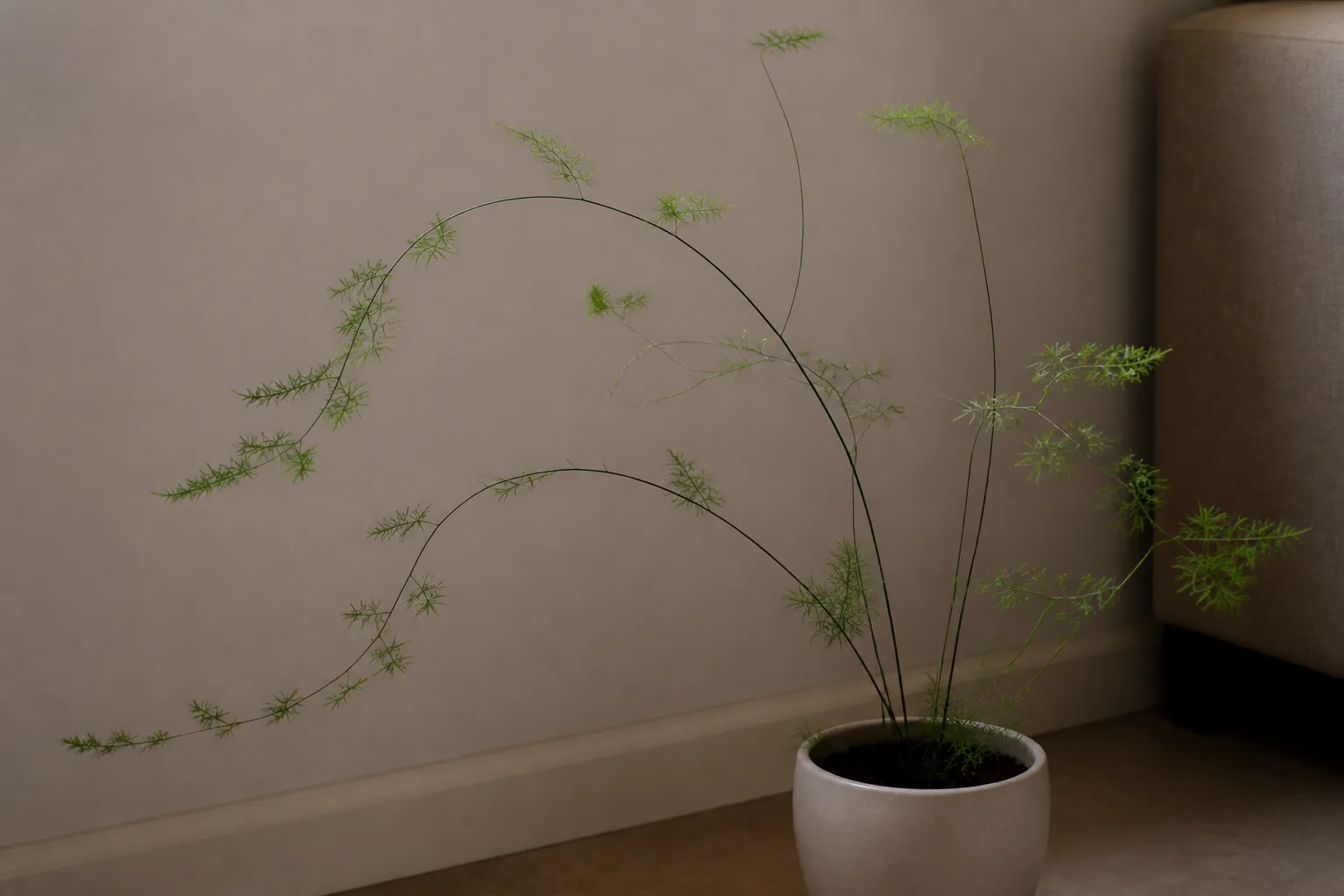
Asparagus fern needs bright indirect light-not a dark corner. Leggy wiry stems, pale sparse cladodes, and leaning toward windows mean the spot is too dim. First step: move the pot closer to your brightest filtered window and watch new growth for two weeks.
Not Enough Light on Asparagus Fern: Causes, Checks & Fixes
This guide covers not enough light on Asparagus Fern. See also the general Not Enough Light guide, watering, and light pages for this plant.
Not Enough Light on Asparagus Fern: Causes, Checks & Fixes
Quick answer
Asparagus fern is often sold as a shade-loving “fern,” but Asparagus setaceus is not a true fern-it photosynthesizes through fine cladodes (flattened stems that look like needles) and needs bright indirect light to stay full and green. In a dim hallway, north room far from glass, or hanging basket hung too high, the plant survives longer than you expect, then slowly thins into wiry bare stems.
This page is the diagnostic and recovery guide-confirm low light, fix placement, and read new growth over two to four weeks. For proactive window choice, lux targets, and grow-light setup before symptoms start, use the light guide. If stems are already visibly stretched, the leggy-growth page covers overlapping causes including overcrowding and basket self-shading.
First step: move the pot to your brightest filtered indoor spot-typically within a few feet of an east window, or a south or west window behind a sheer curtain. Do not repot, fertilize, or prune heavily on the same day. Watch new cladode growth for two weeks before making a second change.
Decision shortcut: If soil stays wet 10+ days between waterings and stems lean toward the window, fix light before you adjust the watering schedule-dim metabolism is slowing water use and yellow cladodes may trace to wet roots, not nutrients.
Why Asparagus Fern lacks sufficient light
The name “fern” sets up the wrong expectation. Asparagus fern belongs to Asparagaceae and evolved in open, moist habitats across Southern Africa with partial shade-filtered brightness through taller vegetation, not deep indoor darkness. It is closer to bright woodland edge light than bathroom-corner shade.
Indoor light also drops sharply with distance from the window. A pot on a coffee table six feet from an east window is not getting east-window light; it is receiving the dim remainder that bounced through the room. Asparagus fern on interior shelves, high hanging baskets above window height, or north-facing rooms blocked by trees often sit below the brightness it needs for dense cladode production.
Seasonal change matters too. Winter short days weaken the same placement that worked in summer. A spot that felt adequate in October can leave the plant stretching by February even though you never moved the pot.
Low light also slows how fast the plant uses water. Asparagus fern prefers evenly moist soil, but a dim plant transpires less, so the mix stays wet longer. That wetness invites root stress-and yellow dropping cladodes from root problems can look identical to light stress except the soil never dries and there is no bleaching on a sun-facing side.
Cultivar note: lace fern vs. Sprengeri vs. Myers
Most houseplant labels group several asparagus species under “asparagus fern.” A. setaceus (lace or plumosa fern) has fine arching cladodes on wiry stems. A. densiflorus ‘Sprengeri’ forms longer cascading stems; ‘Meyeri’ (foxtail) grows more upright dense plumes. Wisconsin Horticulture Extension notes that foliage yellows when light is insufficient or soil is too dry across these types-low-light fixes are the same, but Sprengeri in a high hanging basket often shows top-down thinning before you notice lean on a tabletop Myers plant.
What low light looks like on Asparagus Fern
Low light on asparagus fern is a slow thinning, not a sudden scorch. Learn the cladode-specific pattern:
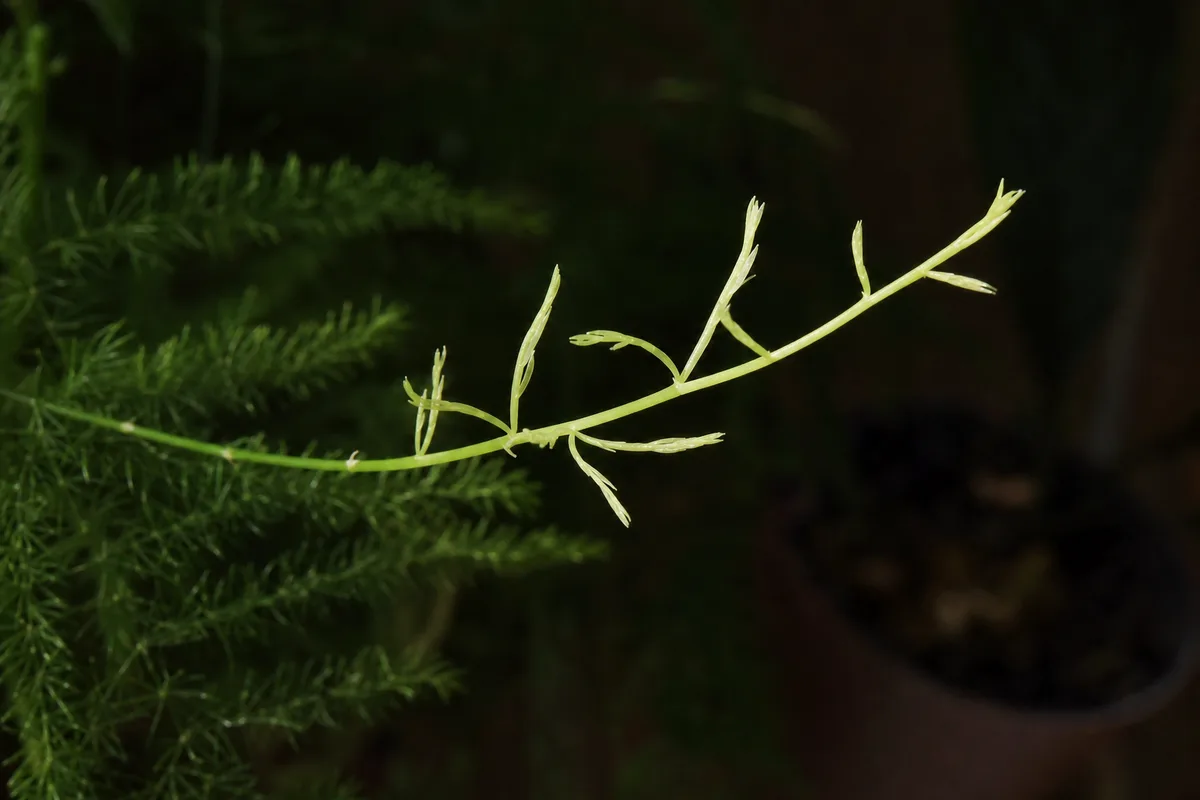
Not Enough Light symptoms on Asparagus Fern - compare with healthy tissue on the same plant.
Stem and growth habit:
- Long, wiry arching stems with wide spacing between cladode clusters-the plant looks see-through instead of soft and fluffy
- One-sided leaning toward the nearest window or lamp
- Slow or absent replacement of cladodes that naturally shed from the interior
- Hanging baskets that thin from the top down because trailing stems shade each other while the crown still reaches for light
Cladode color and size:
- Smaller, paler new cladodes compared to older growth on the same stem
- Overall loss of the dense emerald mound that makes the plant attractive
- No bleached or tan patches on one side-those suggest too much direct sun, not too little
Water and soil clues:
- Soil surface stays damp more than seven to ten days between waterings even in a warm room
- Yellowing cladodes with soft texture and interior drop, but no crispy sun-facing patches
Insufficient light and water both cause yellow needles that drop on asparagus fern. The care history separates them: low light with slow water use versus watering on a schedule built for a brighter window.
How to confirm the cause
Work through these checks before you treat yellowing as overwatering or pests:
- Distance test - Measure inches from the crown to the windowpane. More than three to four feet from the glass in most homes means the plant is likely light-limited, not window-adjacent.
- Shadow test - At midday, hold your hand between the plant and the window. A sharp dark shadow means direct sun (different problem). A soft faint shadow is bright indirect. Almost no shadow confirms the spot is too dim for long-term health.
- Lean direction - Stems arch toward the brightest source. Strong one-sided lean with sparse window-facing growth points to insufficient light where the pot sits.
- New growth comparison - Compare the newest cladodes at stem tips to older clusters lower on the same stem. Smaller, paler, more widely spaced new growth confirms the plant is stretching for energy.
- Soil dry-down rate - Stick a finger into the top 2 cm. If soil stays wet for ten-plus days in a warm room, the plant is not using moisture quickly-often because light is too low. Fix light before watering again on a bright-light schedule.
- Rule out sunburn - Yellow or tan patches only on the window-facing side after a recent move suggest too much light, not too little. Low-light yellowing is more even and paired with legginess, not bleaching.
If four or more checks point to dim placement-and pests, sour soil smell, and mushy tubers are absent-low light is the primary limiter.
First fix for Asparagus Fern
Move the pot to bright, filtered light within a few feet of your best window-without placing it in hot direct afternoon sun.
For most homes, that means an east-facing window where gentle morning sun is followed by bright indirect light the rest of the day, or a south or west window with a sheer curtain so the crown receives steady brightness without high light intensity that asparagus fern cannot tolerate.
Move the plant once, to the brightest safe spot you can offer, and leave it there for at least two weeks. Do not simultaneously repot, fertilize, or prune more than a few obvious dead stems. Asparagus fern drops cladodes when stressed; one variable at a time keeps the diagnosis readable.
If your brightest window is still too weak-common with north exposures, basement offices, or winter-set a full-spectrum LED grow light 12 to 18 inches above the foliage on a timer for 12 to 14 hours daily. Indoor plants stretch and fade when light is inadequate; artificial light replaces what the window cannot supply. Product distance and hour targets are spelled out in the light guide.
Pet-safe placement note
Asparagus fern is toxic to cats and dogs-berries and sap can irritate mouths and skin. When you move the pot to a brighter windowsill or lower a hanging basket to crown height, keep trailing stems out of reach of curious pets. This is placement context, not veterinary advice; contact your vet or poison control if ingestion is suspected.
Step-by-step recovery
After the light move, follow this sequence:
Week 1–2: Stabilize
- Hold the new placement steady. Some cladode drop after any move is normal; panic repotting makes it worse.
- Pause your old watering rhythm. A brighter plant uses water faster. Check the top 2 cm and water only when it feels barely moist, not on the calendar that worked in the dark corner-see the watering guide for tuberous-root rhythm.
- Rotate the pot a quarter turn every week so growth stays even.
- Wipe dust from cladodes with a damp cloth-dust blocks usable light on fine needles.
Week 3–4: Read new growth
- Look for small, firm, evenly green cladodes emerging at the crown or along stems. That is your proof the light fix worked.
- If stems still stretch toward the window with no new cladodes, move six inches closer to the light source or add one hour of grow-light time-one adjustment only.
After new growth is established: Prune and shape
- Cut the most elongated bare stems back to healthy tissue or soil level. NC State Extension recommends cutting stems back to the root rather than shortening mid-stem when pruning is needed.
- Do not remove every thin stem at once; prune up to one-third at a time so the plant keeps photosynthesizing while it refills.
Recovery example
A Sprengeri-type plant on a hallway shelf six feet from an east window showed long bare stems and soil that stayed damp twelve days between drinks. On March 12, the owner moved it to a filtered east windowsill, stopped calendar watering, and checked moisture at the top 2 cm instead. By April 2-three weeks later-firm green cladodes appeared at the crown. Two bare stems were cut to soil line after that flush; older wiry sections stayed long but no longer dominated the silhouette.
Recovery timeline
Expect to see the first compact new cladodes within three to four weeks after light improves, sometimes sooner on a fast-growing specimen in spring. Yellow needles damaged by poor conditions will not rejuvenate, but new growth appears at the soil line once conditions are right.
Old stretched stems will not shorten-they stay long even after light is fixed. Judge success only on new cladode density and color, not on whether bare wiry sections fill in.
If no new growth appears after four weeks in a clearly brighter spot, reassess for root rot (sour soil, mushy tubers) or spider mites on weak plants-but keep light adequate while you troubleshoot.
Lookalike symptoms
| What you see | Likely cause | How to tell apart |
|---|---|---|
| Long wiry stems, wide cladode gaps, window lean | Low light (this page) | Almost no hand shadow at crown; slow soil dry-down; even pale yellowing without one-sided bleach |
| Yellow cladodes, soft texture, wet soil for days | Overwatering in a dim corner | Sour smell, fungus gnats; may pair with low light-fix light first so the plant uses water |
| Dry crumbly soil, crispy brown tips, brittle stems | Underwatering | Soil pulls from pot edge; stems desiccate rather than lean toward light |
| Bleached or tan patches on window-facing side only | Too much light (overcorrection) | Follows recent move to unfiltered south sill; filter with sheer curtain |
| Sparse growth but strong light and firm roots | Slow growth | Not etiolation-check root-bound pot, dormancy, pests |
| Yellow lower cladodes with wet soil in dim room | Yellow leaves overlap | Often light + water together; confirm shadow test and dry-down rate |
Leggy growth as a separate label - Leggy stems are the main visible sign of insufficient light on asparagus fern. The leggy-growth guide covers multi-cause stretch; fixing light here addresses both when dim placement is the limiter.
Mistakes to avoid
Do not trust the “fern” label and leave asparagus fern in a windowless bathroom or hallway. It is on the bright shade end of houseplants, not the snake-plant end.
Do not move a dim-adapted plant directly onto a sunny south windowsill to “fix” legginess fast. Gradual brightening prevents mass cladode drop.
Do not keep watering on the schedule from the dark corner after you move to brighter light-that pattern often causes soggy soil and root stress.
Do not fertilize a stretched, weak plant to “wake it up.” Fertilizer does not replace photons; it can burn roots already stressed by wet soil in low light.
Do not judge recovery by old bare stems. Wait for new cladodes before heavy pruning or declaring the fix failed.
Asparagus Fern care cross-check
Light, water, and humidity move together on this species:
- Watering - In bright indirect light, asparagus fern may need water every five to seven days in summer. In dim light, the same pot might need ten to fourteen days-or less water volume-because metabolism is slower. Always check the top 2 cm, not the calendar.
- Humidity - Target 40–60% relative humidity. NC State recommends a humidifier or pebble tray because dry air accelerates tip browning, especially once you move the plant to stronger light where transpiration increases.
- Temperature - Comfortable room range 15–24°C (60–75°F). Cold drafts near windows in winter can slow growth independently of light; do not confuse draft damage with low light unless placement is also dim.
How to prevent low-light stress
Place asparagus fern where it receives bright filtered brightness for most daylight hours, not where the pot looks best on a distant shelf. An east window, curtained west or south exposure, or a grow light on a 12-to-14-hour timer covers most homes.
Rotate the pot every one to two weeks. Clean windows seasonally and dust cladodes monthly-both increase usable light without moving furniture.
In winter, move the pot closer to the glass or extend grow-light hours. The same summer placement may be too weak from October through February when day length and intensity both drop.
For hanging baskets, keep the crown near window height. Trailing stems that shade each other from below create a thin top even when the room feels bright.
When to worry
Low light alone is rarely fatal-asparagus fern can linger thin for months. Escalate when:
- Yellow cladodes drop weekly and soil stays wet with a sour smell or mushy tubers at the base-root rot risk in dim, overwatered conditions
- The crown collapses and feels soft while the pot never dries-likely root failure, not just stretch
- You moved to much brighter light and the plant sheds cladodes daily with bleaching-sun shock; filter the window and hold placement steady
If the plant is only sparse and pale with firm tubers and soil that eventually dries, more light and patience are enough. Missouri Botanical Garden notes that Asparagus densiflorus tolerates full shade but foliage turns lighter green-A. setaceus behaves similarly indoors; survival is not the same as the full, soft habit most growers want.
Related Asparagus Fern guides
- Asparagus Fern overview - species context and baseline care
- Light - proactive placement, lux targets, and grow-light specs
- Leggy growth - when stretch has multiple causes beyond dim windows
- Watering - dry-down rhythm after a light move
- Yellow leaves - dim-corner yellow cladodes overlap
- Overwatering - wet-soil lookalike in low light
- Root rot - mushy tubers when wet soil persists in dim corners
- Spider mites - weak-plant troubleshooting after light improves