Spider Mites on Asparagus Fern: Causes, Checks & Fixes
Quick answer
Spider mites on asparagus fern show up as pale stippling and fine webbing on needle-like cladodes, usually when winter heat dries indoor air below what this humidity-loving species wants. First step: isolate the plant and rinse every cladode spray underside with lukewarm water in a sink or shower before you spray anything.
Spider Mites on Asparagus Fern: Causes, Checks & Fixes
This guide covers spider mites on Asparagus Fern. See also the general Spider Mites guide, watering, and light pages for this plant.
Spider Mites on Asparagus Fern: Causes, Checks & Fixes
Quick answer
Spider mites on asparagus fern are almost always a dry-air pest problem, not a watering failure. Asparagus setaceus and Sprengeri-type plants need bright indirect light and high humidity indoors. Their feathery “leaves” are actually cladodes-fine, needle-like stems with a huge surface area that lose moisture fast when winter heating drops room humidity. Two-spotted spider mites multiply quickly in that warm, dry microclimate, especially on the sheltered undersides of overlapping fronds.
First step: move the plant away from neighbors and rinse every cladode spray underside with lukewarm water. Place the pot in a sink or shower, cup your hand over the soil surface so tuberous roots do not wash out, and spray undersides until water runs clear and webbing loosens. Knock down live mites before you reach for sprays-and plan on repeating weekly, because mite eggs survive a single pass.
What spider mites look like on asparagus fern cladodes
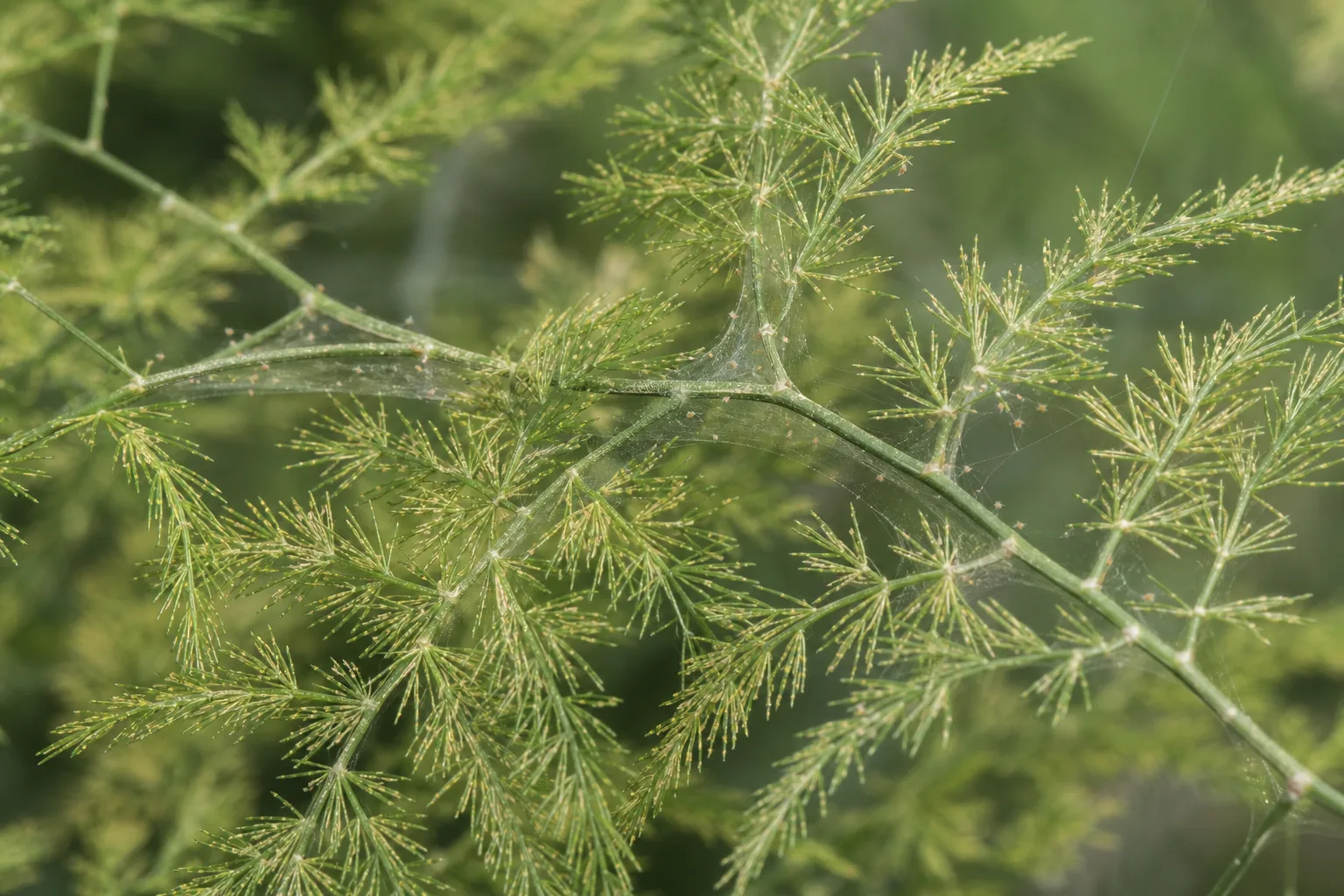
Early damage is easy to miss on airy setaceus fronds or dense Sprengeri sprays because fine green needles hide pale feeding marks until the colony is established.
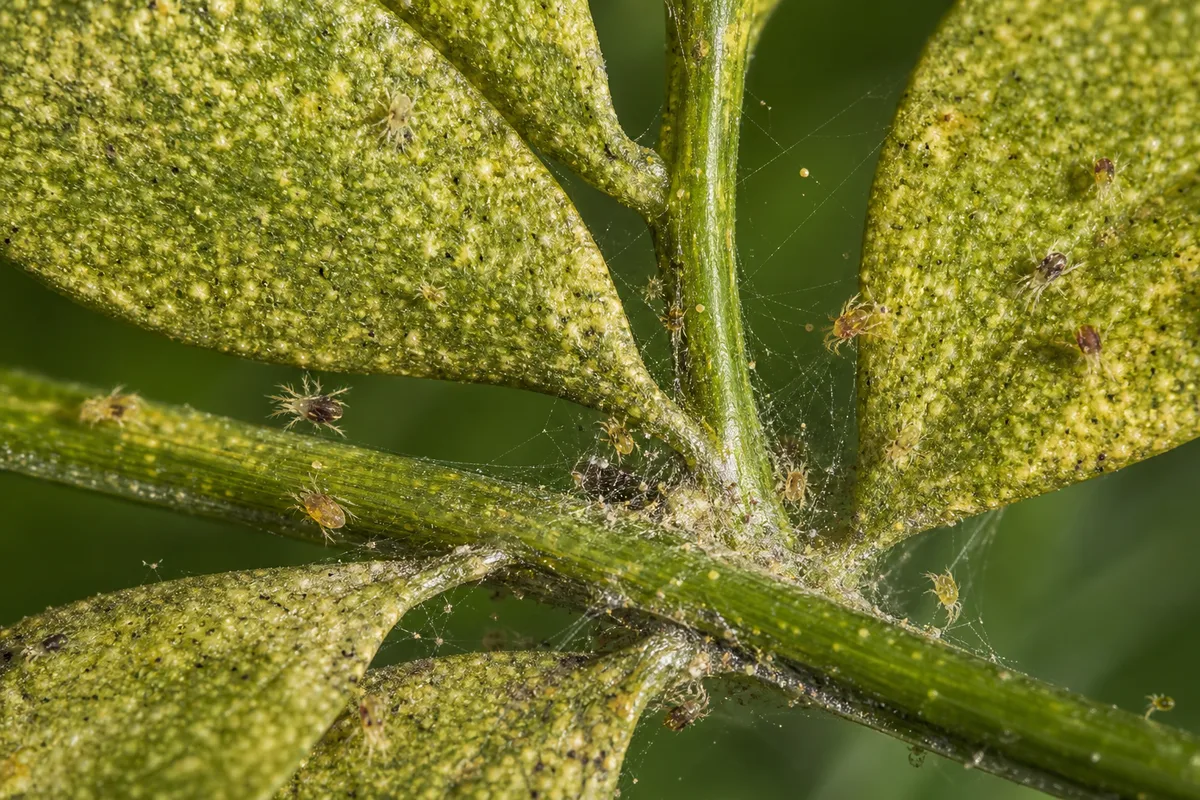
Spider Mites symptoms on Asparagus Fern - compare with healthy tissue on the same plant.
Typical signs include:
- Fine yellow or white stippling on cladode surfaces-each dot is a dead cell where mites pierced and drained sap.
- Bronzing or dull gray-green patches on heavily fed needles; severe feeding can yellow entire cladode clusters and trigger drop.
- Silk webbing between arching fronds, at stem joints near the crown, or tucked inside overlapping cladode layers-often visible only when you spread sprays apart.
- Tiny moving dots on the paper test-mites look like grains of pepper that crawl slowly, not jump.
Asparagus fern grows wiry stems with soft cladode sprays arranged in horizontal planes. Mites concentrate on undersides and inner frond layers where humidity is lowest and sap is easy to reach. Outer, oldest sprays near heating vents or sunny glass often show damage first. Dense Sprengeri baskets hide colonies longer than airy plumosa types because overlapping needles create sheltered feeding sites.
Why asparagus fern gets spider mites
Winter dry air is the main trigger. Heating season drops indoor humidity below what asparagus fern tolerates. Spider mites prefer warm, dry conditions and reproduce quickly when cladode surfaces stay dry for hours-exactly why NC State Extension lists spider mites among pests to watch on asparagus fern.
Placement magnifies the risk. Hanging baskets with crowns near ceiling heat, pots on sunny window sills, and plants above radiators lose moisture faster than the rest of the room. A humidifier turned off in January can restart outbreaks even if watering rhythm stayed steady.
Dense foliage creates hiding spots. Overlapping cladode sprays and multiple stems from one tuberous crown give mites sheltered sites that are hard to see during casual watering-inner layers stay dry while outer needles still look green briefly.
Stress lowers resistance. Chronic drought, cold drafts, or crown damage can weaken a plant, but mites often appear on otherwise healthy asparagus ferns when humidity crashes-not because you missed one watering. If soil is soggy and stippling appears anyway, treat the pest cycle first; wet mix alone does not prevent mites.
Spread from neighbors. Mites walk between touching fronds and ride on hands, tools, or draft airflow. A new plant from a shop display can introduce them before any symptom shows on your established fern.
Lookalike symptoms to rule out
Not every pale or brown mark on cladodes is a mite. Check these before treating:
| Sign | Spider mites | Low humidity | Thrips |
|---|---|---|---|
| Upper-surface pattern | Fine yellow-white stippling dots | Uniform papery brown tips, no speckles | Silvery scars, distorted new spears |
| Webbing | Fine silk at stem joints | None | None |
| Paper-tap test | Slow-moving specks | Nothing moves | Slender adults may jump |
| Soil moisture | Often normal | Normal; pot not necessarily light | Usually normal |
| Location clue | Inner dry frond layers | Vents, sunny glass, basket crown | New growth first |
- Brown cladode tips only - usually low humidity or fluoride in tap water; damage stays at margins without upper-surface stippling.
- Yellow clumps dropping on dry soil - points to underwatering, not pest feeding.
- Yellow from wet base upward - overwatering or tuber stress; no moving specks on paper.
- Mealybugs - white cottony clusters at crown axils; crush pink on a swab rather than producing pepper-like crawlers.
- Natural aging - one or two oldest outer stems fading slowly while new spears stay green is senescence, not mites.
Confirmed mites show stippling plus either moving specks or webbing-one sign alone is not enough if you cannot find live pests.
How to confirm the cause
Work through this inspection in order:
- Isolate the plant on a tray away from other houseplants before handling foliage.
- Hold white paper under a suspect frond and tap the cladode spray sharply. Slow-moving specks that streak when smeared confirm mites.
- Spread overlapping fronds apart and use a 10× magnifier on undersides-look for amber eggs, cast skins, and fine silk along wiry stems.
- Check inner layers and lowest arching sprays first-colonies often start where foliage overlaps and stays dry near the crown.
- Note the environment - heat vent within a metre, winter sun on glass, hanging basket crown drying fastest, or a room humidifier turned off recently all support a mite diagnosis.
- Inspect neighbors even if they look clean; stippling on a pothos or ivy on the same shelf means quarantine the whole group.
If you find webbing and stippling but no live mites after a thorough rinse, treat anyway-eggs hatch in cycles and colonies rebound within days in dry air.
First fix for asparagus fern
Rinse cladode undersides thoroughly with lukewarm water. Place the pot in a sink or shower, support the soil with your palm or plastic over the rim so tuberous roots do not wash out, and spray undersides of every cladode spray until water runs clear and webbing loosens. Tilt arching fronds so inner layers get direct flow-mites hide where sprays overlap.
Keep the plant isolated after rinsing. Asparagus fern sap can irritate skin; wear gloves if sensitive, and wash tools before touching other pots. Keep cats away during treatment-berries and sap are toxic to pets if ingested, and wet foliage should dry before animals return.
Make this one correction first. Do not repot, fertilize, and spray on the same day. You need to see whether knocking mites down with water slowed new stippling before adding chemicals.
If rinsing is not enough
When stippling spreads after two thorough washes, add a labeled insecticidal soap or horticultural oil spray, coating undersides until runoff. Repeat every five to seven days for at least three cycles-mite eggs survive single applications and hatch on staggered schedules.
Move treated plants out of direct sun until cladodes dry; oils and soaps can mark fine needles that sit in hot window light while wet. Avoid homemade soap mixes; commercial insecticidal soaps are formulated to reduce burn risk on foliage plants.
Raising humidity with a humidifier helps prevent new outbreaks but does not replace direct mite removal on an active infestation. Occasional misting is not a substitute for shower rinsing or consistent room RH-see the watering guide for why misting alone fails this species.
Recovery timeline
Week 1: Stippling should stop spreading after the first rinse plus one follow-up wash or soap treatment. Fresh webbing on new spears means the cycle is not broken-keep treating.
Weeks 2–3: With weekly contact sprays, live mite counts drop. Old damaged cladodes stay stippled or bronzed permanently; they will not re-green. Damaged needles will not rejuvenate on old stems.
Weeks 4–6: Clean new spears emerging from the crown mean the plant is winning. Asparagus fern can grow quickly when conditions improve, but full frond recovery may take a full growing season if outer sprays were heavily marked.
Judge success by new growth and absent webbing, not by old cladode color. Remove only sprays that are mostly bronze and crisp-keep partially stippled foliage if the plant is sparse, because asparagus fern recovers faster with some photosynthetic surface intact.
What not to do
Do not use general insecticides labeled only for aphids or beetles-mites need miticides, horticultural oils, or insecticidal soaps that contact the pest directly.
Do not spray only the top of cladode sprays. Mites feed on undersides and in inner layers; top-only treatment leaves most of the colony alive.
Do not stop after one good-looking week. A single missed egg batch restarts the outbreak when dry air returns.
Do not increase fertilizer on a mite-stressed plant hoping for faster regrowth. Feed only after new spears look healthy and you have finished the treatment cycle.
Do not soak the tuberous crown during shower rinses-keep water directed at foliage while protecting soil from washing out. Standing water at the crown invites rot on a species already sensitive to wet mix.
Do not confuse fluoride-tip burn or low-humidity brown tips with mite stippling-treat the actual cause or you will chase symptoms while colonies spread.
How to prevent spider mites on asparagus fern
Prevention targets the dry conditions mites prefer:
- Hold humidity near 40–60% in the room-not just at the pot rim. A small humidifier beats occasional misting for consistent coverage on fine cladodes.
- Quarantine new plants for two weeks and inspect undersides before placing them with your asparagus fern collection.
- Rinse cladode undersides monthly during heating season, especially on hanging baskets and window sills.
- Space pots so fronds do not touch; mites walk across contact points overnight.
- Check weekly in winter with the paper tap test on one outer spray-early colonies are cheapest to stop.
Asparagus fern is fast-growing when happy, but it is not mite-proof. Regular underside checks fit naturally into the same routine as checking whether the top inch of mix has dried-see asparagus fern overview for full species context.
When to worry
Treat as urgent when webbing covers multiple fronds, new crown spears stay pale and small, or mites appear on several plants from the same shelf. At that point, isolate the whole group and treat every pot on the same schedule.
Consider discarding a severely defoliated, low-value plant in a shared indoor collection-bag it before moving so mites do not scatter during disposal. Most healthy asparagus ferns recover with consistent washing and repeated contact sprays if tuberous roots and the crown stay firm.
If stippling persists after three weekly treatments with confirmed technique, inspect again for thrips, environmental burn, or yellow-leaf overlap before switching to stronger pesticides.
Asparagus fern care cross-check
Spider mites and watering problems can both discolor cladodes, but the patterns differ. Mites leave speckled upper surfaces and webbing while soil moisture may be normal. Overwatering yellows lower cladodes with wet, heavy mix and sometimes soft stem bases-no moving specks on paper.
Dry winter air browns tips without stippling-raise humidity per the low-humidity guide in parallel with mite treatment if both stresses are present. A firm crown with stippled foliage means pests, not root rot on Asparagus Fern. Fix the mite cycle first; only reassess watering if soil stays soggy after you stop rinsing foliage in the sink.
When to use this page vs other Asparagus Fern guides
- Asparagus Fern watering guide - Use for routine moisture checks before assuming spider mites is the main issue.
- Asparagus Fern problems hub - Browse all 16 common issues on this species.
- Low Humidity on Asparagus Fern - Different entry point when symptoms overlap with spider mites.
- Slow Growth on Asparagus Fern - Different entry point when symptoms overlap with spider mites.