Low Humidity on Asparagus Fern: Causes, Checks & Fixes
Quick answer
Low humidity on Asparagus Fern shows as brown, papery cladode tips and needle drop while soil stays appropriately moist-common near heating vents in winter. First step: move the pot away from forced-air vents and radiators, then check room RH with a hygrometer before you change watering.
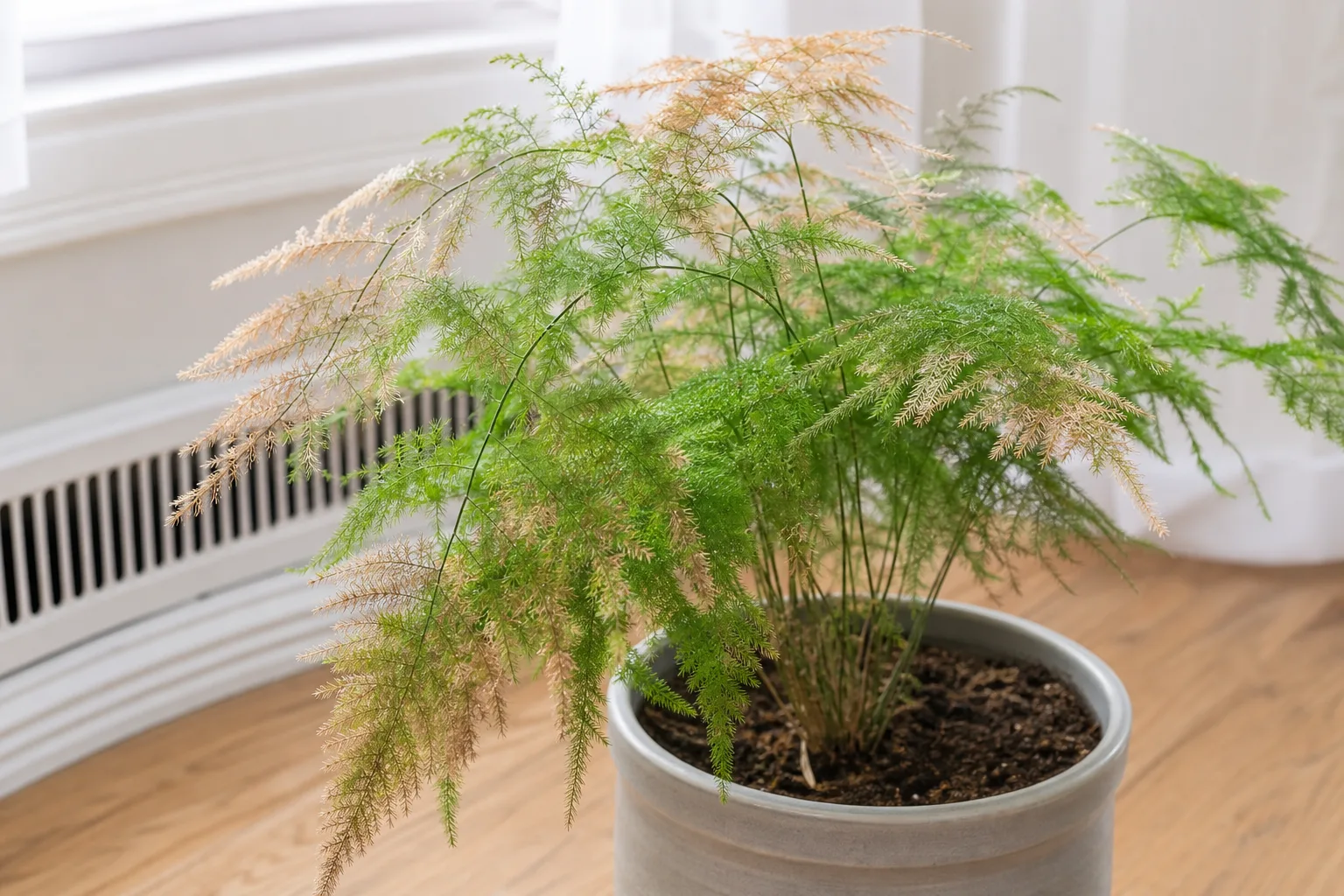
Low Humidity on Asparagus Fern: Causes, Checks & Fixes
This guide covers low humidity on Asparagus Fern. See also the general Low Humidity guide, watering, and light pages for this plant.
Low Humidity on Asparagus Fern: Causes, Checks & Fixes
Quick answer
Asparagus Fern (Asparagus setaceus) is native to humid coastal forests in southern Africa and wants bright indirect light and high humidity indoors. What looks like soft “leaves” are actually fine cladodes-flattened stems with a large surface area that lose moisture fast when winter heating drops room air to 10–30% relative humidity.
First step: move the pot away from heating vents, radiators, and cold drafty windows, then check ambient RH with a hygrometer. Dry forced-air heat is the most common trigger for papery brown cladode tips while soil moisture stays normal. Do not flood the pot to compensate for dry air-that invites tuber rot on a species already vulnerable to soggy mix.
What low humidity looks like on Asparagus Fern
Low-humidity stress on this species usually appears on the most exposed cladode sprays first-outer fronds near vents, sunny glass, or the top of a hanging basket. Typical patterns:
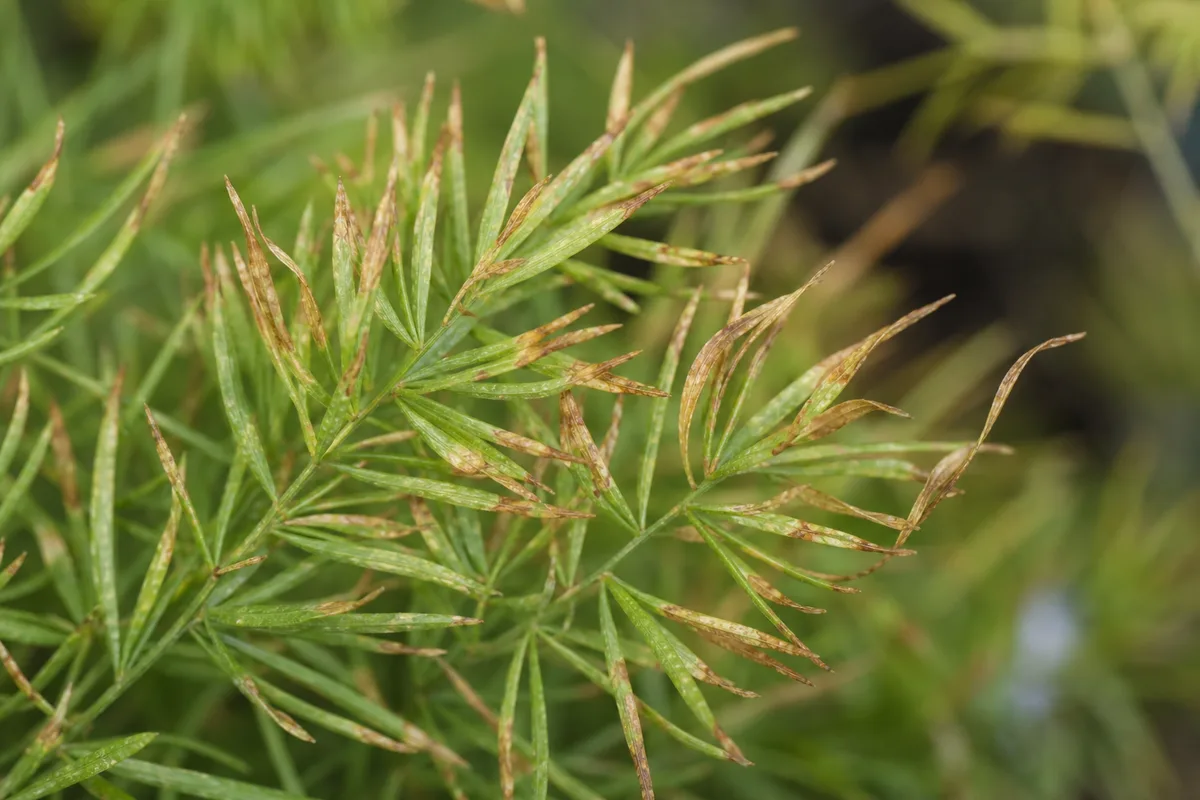
Low Humidity symptoms on Asparagus Fern - compare with healthy tissue on the same plant.
- Brown, papery cladode tips - Needle-like segments turn tan to crisp brown at the ends while the rest of the spray may still look green. If humidity is too low, browning of the leaf tips can occur on asparagus fern even when watering has been consistent.
- Progressive needle drop - Dry air pulls moisture from fine cladodes faster than tuberous roots can replace it; outer needles shed onto the saucer or floor, leaving bare wiry stems.
- Dull, dry texture - Healthy sprays feel soft and springy; humidity-stressed cladodes feel papery and fragile to the touch.
- Location-specific damage - Only the side facing a heat register or hot afternoon window browns first, while the shaded side stays greener longer.
- Winter timing - Symptoms often appear or worsen between October and March when indoor relative humidity commonly falls to 10–20% in heated homes.
- Spider mite overlap - Spider mites thrive in dry, warm conditions; stippling and fine webbing on stem joints alongside tip browning mean dry air and pests may need parallel fixes.
Crispy brown tissue on old cladodes does not re-green. Damaged yellow or brown needles will not rejuvenate on old stems-recovery shows up as fresh green spears from the crown once humidity and placement stabilize.
Why Asparagus Fern struggles in dry indoor air
Asparagus fern is not a true fern. It belongs to the Asparagaceae family, and its feathery foliage is made of cladodes-modified stems that photosynthesize like leaves. Those fine, needle-like cladodes have far less waxy protection than thick succulent leaves, so they desiccate quickly when ambient moisture is low.
Winter heating strips humidity. Furnaces and radiators warm air without adding moisture, so relative humidity often drops sharply indoors in winter even when outdoor air feels damp. Asparagus fern evolved in humid coastal understory; it tolerates average home conditions better than many tropical ferns, but sustained RH below roughly 30–40% shows on the foliage.
Forced-air vents create microclimates. A pot three feet from a floor register may sit in a stream of 15–20% RH air while the rest of the room reads higher on a wall hygrometer. Keep houseplants away from heat vents, radiators, and outside doors that promote localized dry zones.
Tuberous roots mask underwatering briefly - Large tuberous roots store water, so growers sometimes see brown tips and assume drought. In true low-humidity stress, the top inch of mix is often appropriately moist and the pot feels normal weight. Adding water without raising RH worsens the wrong problem.
Bright light compounds transpiration - Asparagus fern in a bright window loses more leaf moisture per hour. Dry air plus strong light browns outer sprays faster than the same RH in a dim corner.
Hanging baskets dry the air layer around foliage - Elevated pots sit in faster-moving room air with less buffered humidity than plants grouped on a shelf.
How to confirm the cause
Work through these checks before you change watering, fertilizer, or Asparagus Fern repotting guide:
- Room and microclimate RH - Use a digital hygrometer near the plant. Most houseplants prefer roughly 40–60% relative humidity; asparagus fern does best near 50% and shows stress when winter rooms sit near 20–30%.
- Placement audit - Note distance to heating vents, radiators, fireplaces, and cold window glass. Keep plants away from cold drafts and hot air vents before treating foliage alone.
- Soil moisture vs. air dryness - Push your finger into the top inch. Cool, slightly damp mix with papery brown tips points to low humidity. Dusty dry mix and a light pot point to underwatering instead.
- Tuber firmness - Press gently at the soil line. Firm tubers with moist soil and crisp tips fit humidity stress. Soft, mushy tubers with wet mix suggest overwatering on Asparagus Fern or rot-do not mist or humidify as the primary fix.
- Pest check - Examine stem joints and cladode undersides with a hand lens. Fine webbing, stippling, or moving specks on white paper mean spider mites-dry air favors outbreaks and needs pest treatment alongside humidity work.
- Light exposure - Bleached or yellowing cladodes on the window side may combine direct sun scorch with dry air; see brown tips for sun overlap.
- Seasonal timeline - Symptoms that appear when heat kicks on strongly support environmental dryness rather than a sudden root failure.
If soil stays wet for days, tubers soften, or yellowing spreads with sour odor, treat as overwatering-not humidity.
First fix for Asparagus Fern
Move the pot away from heating vents, radiators, and drafty window glass, then measure RH at the plant’s new location.
Even a shift of three to six feet off a floor register can stop active tip browning within days because you remove the driest microclimate. Place the hygrometer beside the foliage for 24 hours before deciding the room is “fine.” Grouping plants together raises local humidity as they transpire-use that after relocation, not instead of leaving the pot in the vent stream.
Do not respond to papery tips by watering more when the top inch is already moist. Asparagus fern can develop root rot from overwatering; flooding a humidity-stressed plant is a common mistake in dry winter rooms.
Step-by-step humidity fixes
After relocation and RH measurement, add moisture in this order-one change at a time so you can read the plant’s response:
- Pebble tray - Set the pot on a shallow tray of pebbles with water kept just below the stone tops so the container never sits in standing water. NC State Extension recommends a pebble tray or humidifier to increase humidity around asparagus fern. Trays help the immediate pot zone; they rarely fix whole-room dryness alone.
- Group with other plants - Cluster humidity-loving houseplants on one shelf so shared transpiration bumps local RH a few points. Iowa State Extension notes that water evaporating from grouped pots increases relative humidity in the vicinity.
- Cool-mist humidifier - Run a small humidifier near the plant (not spraying directly onto cladodes) until RH holds roughly 40–50% at foliage height. Portable humidifiers provide the most benefit for houseplants in dry winter months.
- Bathroom or kitchen trial - If bright enough, a bathroom with natural light often carries higher ambient moisture from showers. Move only if the plant still gets adequate indirect light for several hours daily.
- Trim fully dead tips cosmetically - Snip brittle brown cladode sections if they bother you; leave any green tissue that can still photosynthesize while new spears fill in.
- Treat spider mites if present - Rinse stem joints and apply insecticidal soap or horticultural oil labeled for mites if webbing or stippling confirms pests. Humidity alone will not clear an established colony.
Skip daily misting as your main strategy. The humidity bump is brief, wet cladodes can encourage fungal leaf issues on dense sprays, and misting does little to raise whole-room RH during furnace season.
Recovery timeline
Days 1–7: Relocating off vents often stops new tip browning quickly if RH at the new spot is meaningfully higher. Existing brown tissue stays brown.
Weeks 2–4: Fresh green spears should emerge from the crown or soil line during spring and summer active growth once RH stabilizes and watering stays appropriate. In winter, recovery may be slower but you should see halted needle drop first.
Weeks 4–8: New feathery sprays replace sparse sections if light, humidity, and watering remain steady. Old bare wiry stems may persist until you prune them back after recovery.
When to worry: Browning accelerates after humidity fixes, webbing spreads despite treatment, tubers soften while soil stays wet, or entire sprays collapse with a heavy pot-these point to pests, rot, or underwatering, not humidity alone.
Lookalike symptoms
| Pattern | Likely cause | Quick check |
|---|---|---|
| Papery brown tips, moist soil, firm tubers | Low humidity | RH below 40%; plant near vent |
| Limp sprays, light pot, dry top inch | Underwatering | Deep soak perks foliage in 12–24 h |
| Stippling + webbing on stem joints | Spider mites | Tap test on white paper |
| Bleached yellow tips on window side | Too much direct sun | Move back from hot glass |
| Brown tips, heavy pot, wet mix | Overwatering / salt buildup | Sour smell, soft tubers |
| Uniform yellow drop in dim corner | Insufficient light | Soil moisture normal; see yellow leaves |
Low humidity vs. underwatering - Both can brown cladode tips. Humidity stress keeps soil appropriately moist and tubers firm; drought pairs brown needles with dry mix and dramatic pot weight loss. Run both checks before you pour.
Low humidity vs. spider mites - Dry air invites mites on asparagus fern. Humidity alone without pest treatment fails when webbing is visible. Raise RH and rinse or treat if mites are confirmed.
What not to do
Do not overwater to compensate for dry air when the top inch is already moist-tuber rot is harder to fix than brown tips.
Do not rely on misting alone in heated winter rooms; the ambient RH drop returns within minutes.
Do not leave the plant on a window ledge touching cold glass while heat runs-temperature swings and dry drafts compound stress. Avoid letting houseplants touch cold windows.
Do not run a humidifier with zero air movement against dense cladode mats overnight-pair higher RH with normal room circulation to reduce fungal risk on wet foliage.
Do not fertilize stressed plants before humidity and watering are stable; feed only after new green spears look healthy.
Do not stack repotting, hard pruning, and pesticide on the same day as your first humidity fix-make one environmental correction, wait a week, then escalate.
Asparagus Fern care cross-check
Stable asparagus fern combines moderate humidity with even moisture and bright indirect light:
- Humidity target: Roughly 50% RH; stress often appears below 30–40% in heated homes.
- Watering: Moist, well-drained mix; water when the top inch dries-do not confuse air dryness with soil drought. See the asparagus fern watering guide.
- Light: Bright indirect; direct hot sun scorches fine cladodes and raises transpiration.
- Temperature: About 13–21°C (55–70°F) preferred indoors; cold drafts and heat blasts both damage foliage.
- Placement: Off vents, away from cold glass, with space for air to move around grouped plants.
The asparagus fern overview covers tuberous roots, species differences, and year-round humidity targets in more depth.
How to prevent low humidity next winter
- Place the humidifier before heat season starts - Do not wait until half the cladodes are crisp.
- Check RH weekly with a hygrometer at foliage height, not across the room on a wall.
- Rotate plants off window sills in deep winter; a few feet back from glass reduces cold and dry exposure.
- Group asparagus fern with other leafy plants on one shelf to buffer transpiration loss.
- Inspect weekly for early tip browning and mite stippling when furnaces run.
- Maintain consistent watering from the watering guide-humidity fixes fail if roots alternate between drought and flood.
When to worry
Escalate when brown tips spread rapidly despite RH above 40% and good placement, when fine webbing coats new growth, or when yellowing and mushy tubers appear with wet soil. Those patterns overlap wilting, root rot, and pest issues more than simple dry air.
Low urgency: gradual winter tip browning on outer sprays, firm tubers, moist appropriate soil, and damage concentrated near an obvious heat source. Relocate, humidify, and watch for two weeks before heavier intervention.
Related problems
- Brown tips on Asparagus Fern - sun scorch, salt burn, and humidity overlap on cladode edges
- Underwatering on Asparagus Fern - dry soil and light pot with limp, yellowing needles
- Spider mites on Asparagus Fern - stippling and webbing favored by dry indoor air
- Yellow leaves on Asparagus Fern - watering, light, and humidity combined stress
- Asparagus Fern care overview - full humidity, light, and watering baseline
Conclusion
Low humidity on Asparagus Fern is a real winter problem for a species built from fine, moisture-losing cladodes-not a watering mistake by default. Move the pot off heating vents, confirm RH near the foliage, then raise ambient moisture with grouping, a pebble tray, or a humidifier before you soak the roots. Brown needle tissue on old stems will not re-green; fresh green spears at the crown tell you the fix is working.
When to use this page vs other Asparagus Fern guides
- Asparagus Fern watering guide - Use for routine moisture checks before assuming low humidity is the main issue.
- Asparagus Fern problems hub - Browse all 16 common issues on this species.
- Brown Tips on Asparagus Fern - Different entry point when symptoms overlap with low humidity.