Asparagus Fern Repotting: When, How, and Mistakes to Avoid
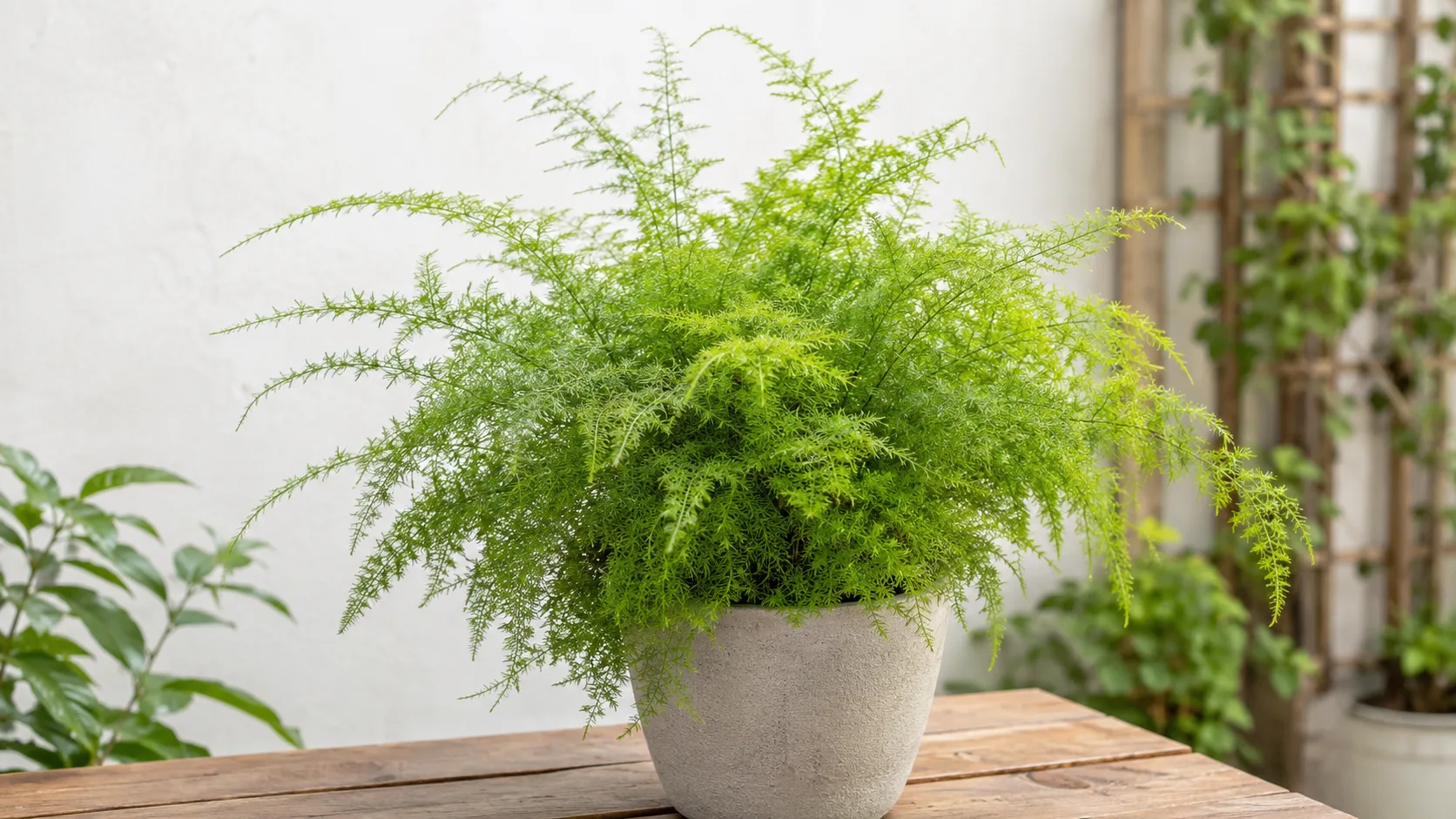
Asparagus Fern Repotting: When, How, and Mistakes to Avoid
Asparagus Fern Repotting: When, How, and Mistakes to Avoid
Why Repotting Matters for Asparagus Fern (Not Actually a Fern)
Asparagus fern repotting is not a cosmetic chore. It is root-system maintenance for a plant that grows faster and more aggressively underground than its soft, feathery foliage suggests. Despite the common name, asparagus fern is not a fern at all. It belongs to the asparagus family, Asparagaceae, and the fine green “leaves” are cladodes - flattened stem tissue that photosynthesizes while the true leaves are reduced to tiny scales along the stems. That botanical detail matters because asparagus ferns do not behave like moisture-loving true ferns with fine, fibrous root mats. They build thick, tuberous roots that store water, push against pot walls, and can crack thin plastic containers if you ignore them too long.
North Carolina State Extension notes that asparagus fern produces large tuberous roots that can become pot-bound quickly, and that the plant prefers moist, well-drained, peaty potting mix indoors with Asparagus Fern light guide and regular watering during the growing season (North Carolina Extension Gardener Plant Toolbox). The Spruce describes asparagus fern as a fast grower whose tuberous roots may break a pot and recommends planning on frequent repotting rather than treating it like a slow-changing foliage plant (The Spruce). When the root zone gets overcrowded, several problems follow in sequence: water runs straight through the pot without wetting the center of the root ball, fertilizer salts accumulate in the little soil that remains, new cladode growth stalls, and older needles yellow and drop. Repotting resets that system. Done well, it gives tubers room to spread, replaces exhausted mix, and is often the easiest moment to divide an overgrown plant into smaller sections.
There is also a safety angle worth stating plainly. Asparagus fern stems carry small thorns, and repeated handling can irritate skin. The ASPCA lists asparagus fern as toxic to cats and dogs, with berries posing a particular risk if your plant flowers and fruits indoors. Wear gloves when repotting, especially if you are dividing a large root ball or working around mature stems. The job is straightforward, but it is not a delicate, fern-like handling experience.
When to Repot Asparagus Fern
The right time to repot asparagus fern is when the root system - not the calendar - demands more space or fresher soil. Many healthy plants need attention every one to three years, but fast growers in bright light may hit the limit sooner. Two categories help: routine maintenance repotting and emergency repotting when the root zone is clearly failing.
Routine Repotting Every 1 to 3 Years
Routine repotting is for a plant that looks generally healthy but has been in the same container long enough that soil structure has declined or roots have filled most of the pot. BBC Gardeners’ World Magazine recommends repotting asparagus fern every couple of years in spring, and notes that spring division while repotting is the simplest propagation method (BBC Gardeners’ World Magazine). Even when the plant is not dramatically root-bound, old peat-based mix compacts, loses air spaces, and holds water unevenly. A routine repot refreshes that environment before yellow needles and watering headaches appear.
You do not always need a larger pot during routine repotting. If the plant still fits its container by leaf spread but the mix is tired, you can return it to the same pot after gently loosening the outer root layer and replacing most of the soil. That is closer to a full refresh than a true upsize. Routine repotting should feel boring: same plant, clean pot, fresh airy mix, stable placement afterward. The goal is prevention, not rescue.
Emergency Signs That Cannot Wait
Emergency repotting means the root zone is actively limiting the plant’s health or safety. Repot soon - ideally in the next viable growth window - if you see multiple signs below:
- Roots emerging from drainage holes or circling tightly around the soil surface
- The plant rising slightly out of the pot as tubers push upward
- Water racing through the pot in seconds while the center of the root ball stays dry
- Soil that smells sour or stays wet for days despite careful watering
- Stunted new cladode growth despite adequate light and regular feeding during the growing season
- A plastic pot bulging, cracking, or splitting from internal root pressure
One sign alone may not require immediate action. Roots peeking through one drainage hole on an otherwise healthy plant can wait until spring. Water channeling plus stalled growth plus a sour smell is a different story. That combination often means the mix has broken down and oxygen around the tubers is poor. Emergency repotting should also include root inspection. Trim mushy, brown sections with sterilized scissors and repot into fresh, well-draining mix rather than simply moving a rotting root ball into a bigger pot.
Best Season and Timing for Repotting
Spring is the best season to repot asparagus fern in most homes. As daylight lengthens and temperatures stabilize, the plant enters active growth and can rebuild fine feeder roots quickly in fresh mix. Early spring through early summer is the main window. BBC Gardeners’ World and multiple horticultural guides align on spring repotting and spring division for Asparagus Fern overview (BBC Gardeners’ World Magazine).
Fall can work in mild climates or warm indoor environments, but it is a second-choice season. As growth slows, the plant has less capacity to repair root disturbance before winter conditions arrive. Low winter light and dry heated air already stress many asparagus ferns, so adding repot shock on top is rarely ideal. Winter repotting should be reserved for emergencies such as severe root rot on Asparagus Fern, a cracked pot, or a plant so root-bound that normal watering is impossible. If you must repot in winter, keep expectations modest: stable bright indirect light, slightly warmer room temperatures, and no fertilizer until you see new growth in spring.
Timing within the day matters less than plant hydration and room stability. Repot when the plant is neither bone dry nor soaking wet. A lightly moist root ball holds together and reduces tearing of fine roots. Avoid repotting on the same day you moved the plant to a new window, turned on aggressive heating, or treated it for pests. Stack one stress at a time. Asparagus fern recovers faster when the environment stays consistent for two to three weeks after the move.
Choosing the Right Pot Size and Material
Pot choice is where many repotting jobs succeed or fail. Asparagus fern tolerates being somewhat snug, but it does not tolerate swimming in a large volume of wet soil. The container must match the current root mass and leave only modest room for new tuber growth.
The One-Pot-Size-Up Rule
Move up only one pot size - roughly 1 to 2 inches (2 to 5 cm) wider in diameter than the current pot. That guideline appears consistently in houseplant repotting guidance because oversized pots hold excess mix that stays damp around a small root system, increasing root rot risk. For asparagus fern, the risk is amplified by tuberous roots that may not quickly colonize a large new soil volume. The plant sits in wet mix, growth stalls, and growers often respond by watering more because the top looks dry while the center remains soggy.
Depth matters too. Asparagus fern roots are vigorous but do not need a tall column of heavy soil. A pot slightly wider than deep often suits the spreading tuber habit better than a narrow, deep container that keeps the lower layer anaerobic. If your plant is in a decorative cachepot, keep the actual growing pot smaller with a drainage hole and lift it out to empty excess water after each watering.
Drainage Holes and Pot Material
Drainage holes are non-negotiable for long-term indoor culture. A hole-free decorative pot turns every watering into a gamble the plant cannot consistently survive. If you love a cachepot, use it as an outer sleeve only. Terracotta dries faster and can help prevent soggy mix in humid rooms or for growers who tend to water heavily. Plastic retains moisture longer, which can be helpful in bright, dry conditions but requires a lighter mix and careful watering after repotting. Either material works if drainage is real and pot size is restrained.
Because asparagus fern roots can crack thin plastic, choose a sturdy nursery pot or thicker-walled container when you know the plant is a fast grower. Gardener’s Path specifically warns that the vigorous root system can burst through thin plastic and recommends sturdy pots sized for mature width (Gardener’s Path). For a plant that has already deformed its old pot, step up to a container with stronger walls rather than repeating the same flimsy format.
Best Soil Mix for Asparagus Fern Repotting
The best soil for asparagus fern repotting is moist, well-drained, and organically rich - not heavy garden soil and not straight cactus mix. North Carolina Extension recommends moist, well-drained, peaty potting mix for houseplant culture (North Carolina Extension Gardener Plant Toolbox). The Spruce advises loose, well-drained potting soil for container growing (The Spruce). In practice, that means a peat- or coco-coir-based indoor mix amended for aeration.
A reliable DIY blend for repotting:
- 2 parts quality indoor potting mix
- 1 part perlite or coarse horticultural sand
- Optional: 1 part fine orchid bark or pine bark fines for extra chunk in humid homes
The mix should hold moisture evenly without staying waterlogged. When you squeeze a handful, it should feel spongy and crumble apart - not form a tight, wet ball. Asparagus fern likes consistent moisture during active growth, but tubers still need oxygen. Dense, degraded mix is a common hidden reason growers think they are “overwatering on Asparagus Fern” when the real problem is poor soil structure.
Do not reuse old mix from a plant with root rot or sour smell. Discard it, wash the pot, and start fresh. If the previous mix was acceptable but exhausted, you may compost it if no disease was present. For repotting after division, use the same blend in each new pot so all sections face identical conditions.
Tools and Supplies Before You Start
Gather everything before you disturb the root ball. Asparagus fern recovers better when repotting is quick and the plant is not left bare on the counter while you hunt for soil.
You will need:
- A new pot one size larger, or the same size if refreshing soil only
- Fresh potting mix prepared and slightly dampened
- Clean scissors or pruners for dead or mushy roots
- Gloves to protect against thorns and skin irritation
- A chopstick or pencil for settling mix around tubers
- Newspaper or a tarp for mess control
- Optional: a clean knife or saw for dividing large, woody root masses
Sterilize cutting tools with rubbing alcohol if you are trimming rot or dividing multiple plants. Have a watering can ready for the first light watering after repotting, but do not pre-load fertilizer. The first month after repotting is for root establishment, not feeding.
Step-by-Step: How to Repot Asparagus Fern
Repotting asparagus fern is methodical rather than delicate. The plant is tougher than it looks, but the tuberous roots and cladode stems still suffer if you yank, bare-root aggressively, or bury the crown too deep.
Pre-Watering, Removal, and Root Inspection
Water the plant lightly one day before repotting so the root ball holds together. Do not soak it to mud; the goal is workable moisture, not saturation. To remove the plant, tip the pot on its side and slide the root ball out with gentle pressure on the base. If it resists, run a knife around the inside rim to loosen roots clinging to the pot wall. Never pull the plant by its cladodes; stems break easily and the torn tissue browns.
Once out, inspect the roots in good light. Healthy tubers and feeder roots are firm and pale, often white to light tan. Mushy, dark, or hollow sections indicate rot and should be trimmed back to solid tissue. Tease circling outer roots lightly with your fingers so they point outward into the new mix. You do not need to destroy the entire root ball or remove every old soil particle. Aggressive bare-rooting strips fine feeder roots and extends recovery time by weeks.
If the plant is only slightly root-bound, loosen the bottom and sides and proceed. If roots form a dense mat, score the bottom quarter-inch lightly or make a few shallow vertical cuts to interrupt circling. For severely bound plants, division may be easier than forcing one oversized root ball into a marginally larger pot.
Planting at the Correct Depth
Add a small layer of fresh mix to the pot bottom - enough to raise the root ball so the plant sits at the same depth it occupied before. Planting too deep can bury crown tissue and encourage stem rot. Planting too shallow exposes tubers to rapid drying and instability. Center the plant, then fill around the sides with fresh mix, working it in gently with a chopstick to remove large air voids without compacting the soil into concrete.
Leave about half an inch to an inch of headspace below the rim for watering. Firm the mix lightly with your fingers, not heavy palm pressure. When finished, the plant should feel stable and upright without wobbling. If it leans, adjust depth and support with mix around the base rather than pushing the stems downward.
Water lightly after repotting until a small amount drains from the bottom. This first watering settles the mix around roots. Empty the saucer or cachepot so the plant is not sitting in runoff.
Dividing Asparagus Fern at Repot Time
Division is one of the best reasons to repot asparagus fern in spring. BBC Gardeners’ World describes dividing the root ball into two or more sections, each with roots attached, as the simplest propagation method during repotting (BBC Gardeners’ World Magazine). The Spruce similarly recommends digging up or removing the plant, dividing the tuberous root clump with a knife or trowel, and replanting sections with crown shoots intact (The Spruce).
Choose division when the plant is too large for your space, when the root ball is too dense to fit a reasonably larger pot, or when you want backup plants without buying new stock. Each division should include multiple stems and a fair share of tubers - not a single frond with one small tuber unless you are experimenting. Two to four stem clusters per division is a practical minimum for fast recovery.
Separate natural weak points in the root mass with your hands when possible. Use a clean knife for tough centers. Pot each division into its own container one size appropriate to that section’s root size, not the size of the original whole plant. Water lightly and keep divisions in bright indirect light with stable humidity. Expect some yellowing on older cladodes; new growth at the base is the success signal.
This applies across the common indoor species sold as asparagus fern, including Asparagus setaceus (lace or plumosa type) and Asparagus densiflorus cultivars such as Sprengeri and Myers foxtail. Division logic is the same even though stem texture and growth habit differ slightly.
Aftercare: Watering, Light, and Fertilizer After Repotting
Aftercare is where repotting success is won or lost. For the first two to three weeks, protect the plant from harsh change. Keep it in bright indirect light, not direct sun. North Carolina Extension warns that asparagus fern is intolerant of high light intensity and that direct sun damages foliage. After repotting, even less sun tolerance applies because root uptake is temporarily reduced.
Water lightly when the top inch of mix feels dry. Do not keep the soil soggy “to help it settle.” Wet, disturbed roots are prone to rot. Do not let the plant crash to bone dryness either; dehydrated tubers plus damaged feeder roots can cause heavy needle drop. The balanced approach is even, moderate moisture with good drainage.
Hold fertilizer for at least four weeks, or until you see new cladode growth. Fresh mix usually contains some nutrient reserve, and feeding too early can burn roots recovering from disturbance. Resume normal feeding at half strength once active growth is obvious, then return to your usual schedule if the plant responds well.
Humidity helps. Asparagus fern prefers higher humidity than many common houseplants. A pebble tray, grouped plants, or a humidifier reduces post-repot desiccation, especially in winter heating. Avoid misting as a substitute for humidity if your air is genuinely dry; surface moisture evaporates quickly and can encourage foliar issues without fixing the underlying environment.
Recovery Timeline and What Normal Stress Looks Like
Some transplant stress is normal. Mild wilting, slight yellowing of older cladodes, or a brief pause in growth for one to two weeks often resolves without intervention if light, moisture, and temperature stay stable. Full root re-establishment typically takes four to six weeks in spring and summer. New cladodes emerging from the base or along stems are the clearest recovery sign.
Damaged yellow needles do not green up again. Do not interpret persistent old yellow tissue as proof the repot failed. Watch for fresh growth. If new cladodes appear firm and green while only older tissue declines, the plant is likely recovering on schedule.
Recovery is slower after winter repotting, emergency rot surgery, or aggressive division. Large plants divided into many small sections may need six to eight weeks before they look full again. That is not failure; it is math. Smaller root systems support fewer stems until tubers rebuild.
Common Asparagus Fern Repotting Mistakes
Most repotting failures trace back to a short list of repeatable errors. Knowing them in advance is cheaper than rehabbing a declining plant later.
The most common mistakes:
- Choosing a pot far too large, creating a wet soil reservoir the roots cannot use
- Bare-rooting or tearing the root ball aggressively, removing feeder roots the plant needs immediately
- Repotting into heavy garden soil or unamended cheap mix that compacts and suffocates tubers
- Fertilizing or overwatering in the first week after repotting
- Placing the plant in direct sun while roots are impaired
- Ignoring mushy roots and simply repotting into a bigger container
- Handling without gloves and sustaining thorn irritation that makes future care inconsistent
Each mistake produces a recognizable pattern. Oversized pot plus overwatering leads to sour smell and soft stems. Bare-rooting plus dry air leads to massive needle drop within days. Direct sun after repot leads to browned, desiccated cladodes even when soil moisture looks fine.
The most damaging single error is jumping to an oversized pot. Growers often assume a fast top grower wants a dramatically larger home. In reality, a fast top grower with tuberous roots still needs oxygen at the root zone. A pot 4 inches wider than the last one may stay wet in the center for weeks, especially in plastic containers and peat-heavy mix. The plant stops growing, needles yellow, and the owner waters more because the surface looks dry. The fix is counterintuitive but effective: if you already overshot pot size, slip the plant back into a smaller appropriate pot with very airy mix, trim any rot, and wait. Prevention is simpler: one size up, always. If the root ball is huge, divide instead of upsizing one container dramatically.
Troubleshooting Problems After Repotting
If the plant declines more than mildly after repotting, diagnose in this order: soil moisture, light intensity, root health, then pot size.
Heavy needle drop with dry mix: underwatering on Asparagus Fern after root disturbance, or water running down the sides of a new mix without wetting the root ball. Water slowly in several small passes, or bottom-water briefly until the surface darkens evenly.
Wilting with wet mix: Rot or oversize pot. Remove the plant, inspect tubers, trim rot, and repot into a smaller pot with fresh airy mix if needed.
Brown, crispy cladodes in bright window: Sun stress. Move to bright indirect light and remove the worst damaged stems later if they do not recover.
No new growth after six weeks in spring: Pot too large, mix too dense, or division sections too small. Adjust the weakest link rather than fertilizing harder.
Skin redness or itching after handling: Contact irritation from foliage or thorns. Wear gloves next time and wash arms after repotting. Keep the plant away from curious pets because of toxicity concerns noted by the ASPCA (ASPCA).
When troubleshooting, change one variable at a time. Asparagus fern often looks worse before it looks better, but persistent decline past three weeks in spring usually means a concrete cultural problem, not patience alone.
Conclusion
Asparagus fern repotting works best when you respect what the plant actually is: a tuberous-rooted asparagus relative, not a delicate true fern. Repot every one to three years in spring when roots crowd the pot, water channels through too fast, or growth stalls. Move up only one pot size, use moist well-drained peaty mix with added perlite, and inspect tubers for rot before replanting. Spring division is optional but practical for oversized plants, and aftercare should emphasize bright indirect light, moderate even watering, and a fertilizer pause until new cladodes appear.
Most failures come from oversized pots, soggy recovery conditions, and rough handling of the root ball - all avoidable once you know the pattern. If your plant looks stressed after repotting, check moisture and light first, then root health and pot size. New green growth at the base is the signal that matters. Get that, and the older yellow needles become history rather than a verdict.
When to use this page vs other Asparagus Fern guides
- Asparagus Fern overview - Start here for whole-plant context before deep-diving this topic.
- Asparagus Fern problems hub - Jump to symptom-specific fix guides when this care topic does not resolve the issue.
- Root Rot on Asparagus Fern - Escalate here when repotting adjustments are not enough.
Related Asparagus Fern guides
- Asparagus Fern overview
- Asparagus Fern watering
- Asparagus Fern light
- Asparagus Fern soil
- Asparagus Fern propagation
- Asparagus Fern fertilizer
- Root Rot on Asparagus Fern
- Asparagus Fern problems
Related tool
Try the Pot Size Calculator with asparagus-fern pre-selected to estimate needs for your setup.