Brown Tips on Asparagus Fern: Causes, Checks & Fixes
Quick answer
Brown tips on Asparagus Fern usually trace to direct sun scorch, low humidity, or inconsistent watering-not a single generic cause. First step: check recent placement changes and soil moisture at the top inch before you mist or water more.
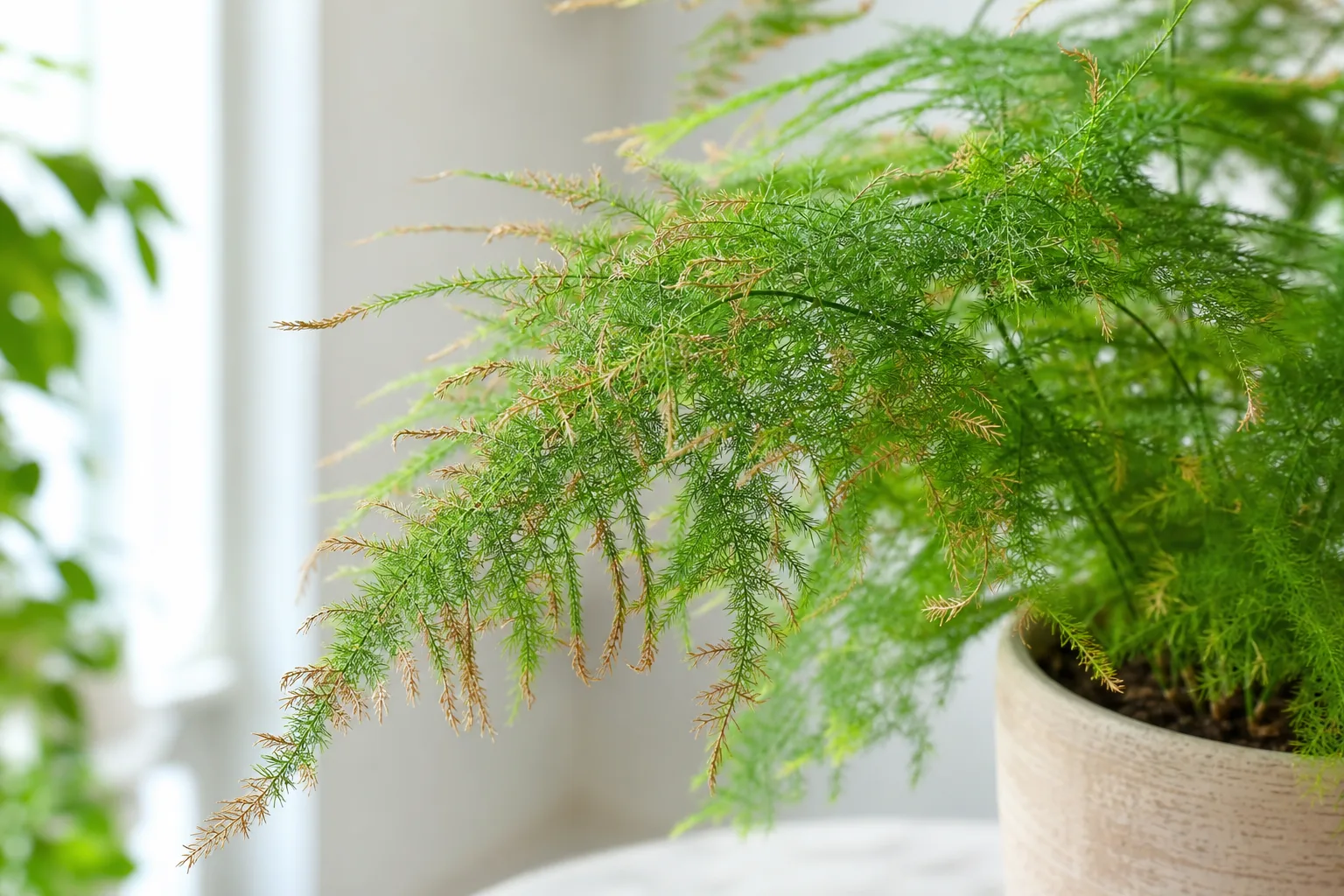
Brown Tips on Asparagus Fern: Causes, Checks & Fixes
This guide covers brown tips on Asparagus Fern. See also the general Brown Tips guide, watering, and light pages for this plant.
Brown Tips on Asparagus Fern: Causes, Checks & Fixes
Quick answer
Brown tips on Asparagus Fern (Asparagus setaceus) are a pattern on fine cladodes-flattened stems that look like soft needles-not a diagnosis by themselves. The same crispy edge can come from direct sun scorch, low winter humidity, underwatering, or salt buildup from hard tap water and fertilizer.
First step: note any recent move toward brighter glass, then check the top inch of soil moisture and room placement relative to heating vents. Sun damage often hits the window-facing side within 48 hours of a placement change; dry-air browning often appears on outer sprays while soil stays appropriately moist near a register. Do not mist as your opening fix-misting does not hydrate tuberous roots and barely raises whole-room humidity during furnace season.
What brown tips look like on Asparagus Fern
Asparagus fern is not a true fern. Its feathery foliage is made of cladodes-modified stems with a large surface area that lose moisture quickly. Brown tips show up differently depending on the cause:
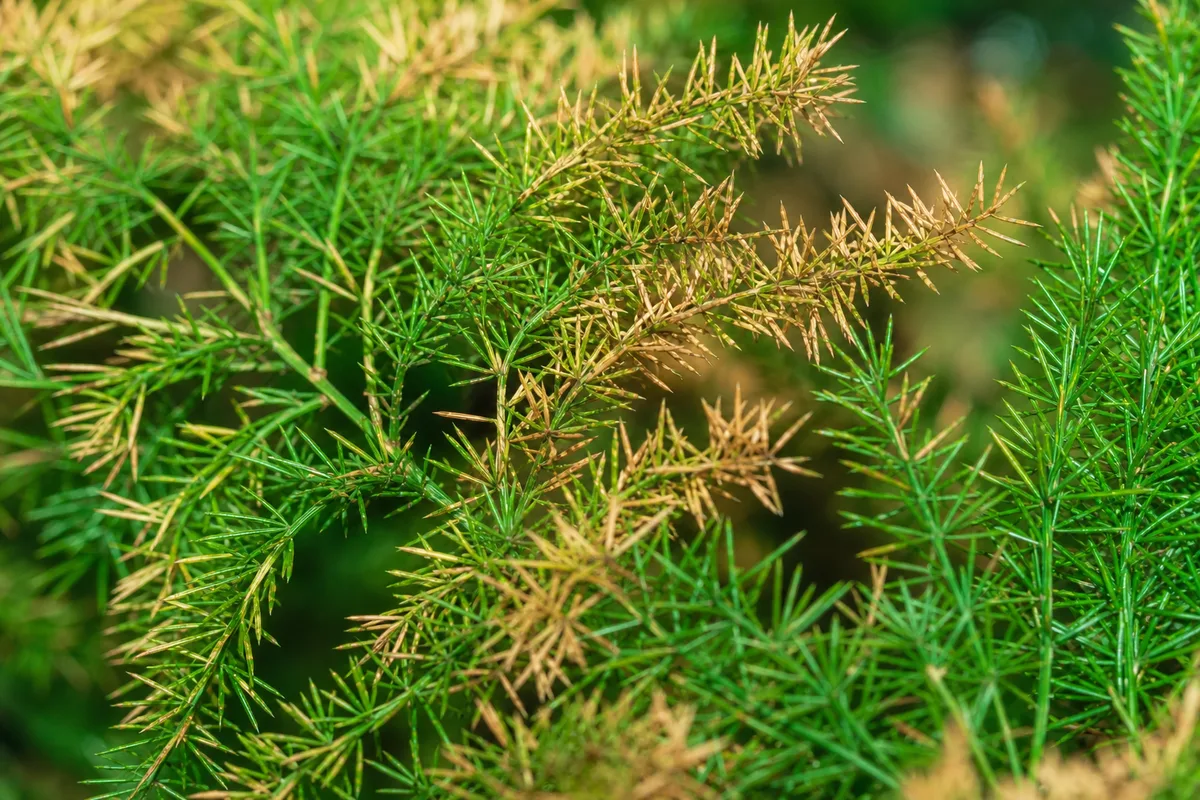
Brown Tips symptoms on Asparagus Fern - compare with healthy tissue on the same plant.
- Sun scorch - Tan to dark brown, crispy tips and bleached patches concentrated on the side facing the window, especially after a move to a south or west sill. Asparagus setaceus is intolerant of high light intensity and direct sunlight should be avoided.
- Low humidity - Papery brown needle ends on outer sprays, often near heating vents or hot afternoon glass, while the top inch of mix still feels cool and slightly damp. If humidity is too low, browning of the leaf tips can occur even with consistent watering.
- Underwatering - Brown tips paired with limp, dull sprays, a light pot, and dusty dry mix when you push a finger in an inch deep. Tuberous roots buffer short drought, but chronic dryness still browns tips before mass needle drop.
- Salt or fluoride edge burn - Even brown margins on many cladodes, sometimes with a thin crust on the soil surface, after months of hard tap water or heavy feeding without flushing. White crust on pots or soil can signal salt buildup that causes brown leaf tips; some houseplants are sensitive to fluoride or chlorine in tap water. Tips may recur despite good humidity and light.
- Fertilizer burn - Sudden tip browning on a previously healthy plant within a week of feeding; flush the mix if salts are suspected.
Crispy brown tissue on old cladodes does not re-green. Damaged yellow or brown needles will not rejuvenate on old stems; recovery shows up as fresh green spears from the crown or soil line once conditions stabilize.
Why Asparagus Fern gets brown tips
Several stressors converge on the same symptom because fine cladodes transpire fast and show damage before thicker houseplant leaves would.
Direct sun through glass - Hot afternoon rays on south or west windows can exceed what cladodes evolved for in filtered Southern African understory. Missouri Botanical Garden notes that direct hot afternoon sun may cause leaves to yellow on asparagus fern; indoors that often appears as bleached, crispy tips on the sun-exposed side first.
Dry indoor air - Winter heating drops relative humidity to 10–20% in many homes during winter. Fine cladodes desiccate at the tips faster than tuberous roots can replace moisture. This overlaps heavily with the dedicated low humidity problem page but often appears alongside other triggers on the same plant.
Watering imbalance - Both drought and soggy soil stress roots. Underwatering dries tips from the root zone up; overwatering rots tubers and can yellow or brown foliage while soil stays wet. See underwatering and overwatering for those distinct patterns.
Tuberous roots mask drought briefly - Large tuberous roots store water, so growers sometimes see brown tips and add more water when the real issue is sun or dry air. Check soil and placement before you react to foliage alone.
Salt and minerals in tap water - Repeated watering with hard tap water or excess fertilizer without periodic flushing can burn leaf tips and margins from salt accumulation. Switching to filtered or distilled water for several weeks helps when humidity and light are already correct.
Lookalike symptoms to rule out
| Pattern | Likely cause | Quick check |
|---|---|---|
| Crispy brown tips on window-facing sprays only | Sun scorch | Recent move to brighter spot; one-sided damage |
| Papery brown tips, moist soil, firm tubers | Low humidity | RH below 40%; plant near vent |
| Brown tips + light pot + dry top inch | Underwatering | Deep soak perks foliage in 12–24 h |
| Stippling + fine webbing on stem joints | Spider mites | Tap test on white paper; see spider mites |
| Brown tips, heavy wet pot, soft tubers | Overwatering / root stress | Sour smell; yellowing spreads |
| Even brown margins, white crust on soil | Salt / fluoride burn | Hard tap water or recent heavy feed |
Brown tips vs. low humidity alone - Humidity stress keeps soil appropriately moist and tubers firm. If those checks pass but tips brown near a heat source, raise ambient RH before you change watering.
Brown tips vs. sun scorch - Sun damage is directional and follows placement changes. Humidity browning is often symmetrical on exposed outer sprays in dry rooms. The asparagus fern light guide covers acclimation and window placement in depth.
How to confirm the cause
Work through this checklist before you stack treatments:
- Placement history - Did the plant move closer to south or west glass in the last two weeks? Did summer sun angle intensify on the same sill? One-sided crispy tips strongly suggest sun scorch.
- Sun-facing side pattern - Compare the window side to the shaded side. Bleached yellow-brown on one face fits excess light; even tip browning on all outer sprays fits dry air.
- Room and microclimate RH - Hold a hygrometer beside the foliage. Many houseplants prefer 40 to 50 percent relative humidity, while most houseplants prefer roughly 40–60% relative humidity in heated homes; asparagus fern needs high humidity and shows stress when winter rooms sit near 20–30%.
- Soil dry-down - Push a finger or skewer into the top inch. Cool, slightly damp mix with papery tips points to humidity. Dusty dry mix and a light pot point to underwatering. Wet mix for days with soft tubers points to overwatering-not a humidity fix.
- Water quality and feeding - Note whether you use hard tap water, recent fertilizer, or visible salt crust. Even edge burn with good RH and light implicates minerals.
- Pest check - Examine stem joints with a hand lens. Stippling and webbing mean spider mites, which thrive in dry, warm indoor conditions and need treatment alongside humidity work.
- Seasonal timing - Tip browning that starts when heat kicks on supports dry air; sudden scorch after a spring windowsill move supports light.
Make one care correction at a time so you can read the plant’s response over the next week.
First fix for Asparagus Fern (by confirmed cause)
If you have not yet diagnosed the cause, start with placement and soil checks-not misting and not an extra watering.
Sun scorch confirmed
Move the pot to bright indirect light away from hot direct afternoon sun. Filter a strong south or west window with a sheer curtain, or set the plant two to four feet back from the glass. Avoid direct sunlight because the plant is intolerant of high light intensity. Acclimate gradually over seven to ten days if you must increase light later-see the light guide for the full acclimation routine.
Do not increase watering when tips browned from sun; wet soil on heat-stressed roots worsens decline.
Low humidity confirmed
Move the pot off heating vents and radiators, then raise ambient moisture with a pebble tray or cool-mist humidifier-not misting alone. NC State Extension recommends a humidifier or pebble tray to increase humidity around asparagus fern. The watering guide explains why misting does not replace proper soil moisture or sustained RH.
Underwatering confirmed
Water thoroughly until runoff drains freely, empty the saucer, and resume checking when the top inch of mix dries. Tuberous roots recover from short drought if rot has not started.
Salt or fluoride burn suspected
Flush the pot with room-temperature water until it runs clear from the drainage holes, allow full drainage, and switch to filtered or distilled water for several weeks. Hold fertilizer until new growth looks healthy.
Recovery timeline
Days 1–7: Correcting placement off a hot window or away from a vent often stops new tip browning quickly. Existing brown tissue stays brown.
Weeks 2–4: Firm new green cladode spears should emerge from the crown during spring and summer active growth once light, humidity, and watering align. Winter recovery may be slower; halted needle drop is the first positive sign.
Weeks 4–8: New feathery sprays fill in sparse sections if care stays steady. Old bare wiry stems may persist until you prune them after recovery.
Judge progress by new growth, not old needle color. Once proper conditions are met, new growth will appear at the soil line even though damaged cladodes on old stems stay brown.
When to worry: Browning accelerates despite fixes, webbing spreads on new growth, tubers soften while soil stays wet, or entire sprays collapse-these point to root rot, pests, or severe overwatering, not simple tip burn.
What not to do
Do not mist as your primary fix when brown tips come from dry winter air. Misting is not an effective way to raise relative humidity because foliage dries within minutes; wet cladodes can encourage fungal issues on dense sprays, and misting does not hydrate tuberous roots.
Do not overwater to compensate for brown tips when the top inch is already moist-tuber rot is harder to fix than crispy edges.
Do not leave the plant in direct hot afternoon sun hoping it will acclimate without gradual exposure.
Do not fertilize a stressed plant before light, humidity, and watering are stable.
Do not stack Asparagus Fern repotting guide, hard pruning, and pesticide on the same day as your first environmental fix-change one variable, wait a week, then escalate.
Do not trim green tissue just to remove minor brown tips; snip only fully dry, crispy sections.
How to prevent brown tips next time
- Match light to biology - Bright indirect exposure; filter south and west glass in summer. Site houseplants in bright indirect light or filtered sun, not hot direct afternoon beams.
- Target ~50% RH in heated months - Run a humidifier or use grouping and pebble trays before outer cladodes crisp. Keep houseplants away from heat vents and radiators that create dry microclimates.
- Water on soil evidence - Check when the top inch dries per the watering guide; do not pour because tips look dry while mix is damp.
- Flush salts periodically - If you fertilize regularly, leach the soil periodically to flush excess salts and prevent edge burn on fine cladodes.
- Inspect weekly in winter - Catch early tip browning, vent placement issues, and mite stippling while problems are still small.
- Acclimate before bright moves - Shift toward stronger light over seven to ten days rather than one jump to a sunny sill.
When to worry
Escalate when brown tips spread rapidly despite RH above 40% and good placement, when fine webbing coats new growth, or when yellowing and mushy tubers appear with wet soil. Low urgency fits gradual winter tip browning on outer sprays with firm tubers and damage concentrated near an obvious heat source or recent sunny move.
Related problems
- Low humidity on Asparagus Fern - dry-air tip browning, vent placement, and humidifier fixes
- Asparagus Fern light guide - sun scorch, window placement, and acclimation
- Watering Asparagus Fern - soil checks, anti-misting FAQ, and tuberous-root rhythm
- Underwatering on Asparagus Fern - dry mix and light pot with limp needles
- Overwatering on Asparagus Fern - wet soil, soft tubers, and root stress
- Spider mites on Asparagus Fern - stippling favored by dry indoor air
- Asparagus Fern care overview - species baseline for light, humidity, and watering
Conclusion
Brown tips on Asparagus Fern reward a short diagnostic pass before you treat foliage. Check whether a recent bright move scorched window-facing cladodes, whether dry winter air crisped tips while soil stayed moist, or whether drought and salt deserve the blame. Move off hot direct sun or raise humidity with a pebble tray or humidifier-not misting-then align watering with the top-inch dry-down test. Brown needle tissue on old stems will not turn green again; fresh firm spears from the crown tell you the fix is working.
When to use this page vs other Asparagus Fern guides
- Asparagus Fern watering guide - Use for routine moisture checks before assuming brown tips is the main issue.
- Asparagus Fern problems hub - Browse all 16 common issues on this species.
- Low Humidity on Asparagus Fern - Different entry point when symptoms overlap with brown tips.
- Underwatering on Asparagus Fern - Different entry point when symptoms overlap with brown tips.
- Overwatering on Asparagus Fern - Different entry point when symptoms overlap with brown tips.