Overwatering on Anubias: Causes, Checks & Fixes
Quick answer
Anubias cannot be overwatered like a houseplant-it lives fully submerged. Aquarium 'overwatering' means a buried rhizome in anaerobic substrate, stagnant flow trapping detritus, or poor water quality from skipped changes or cycling ammonia. First step: lift the plant and confirm the rhizome is firm, green, and fully exposed above gravel or sand.
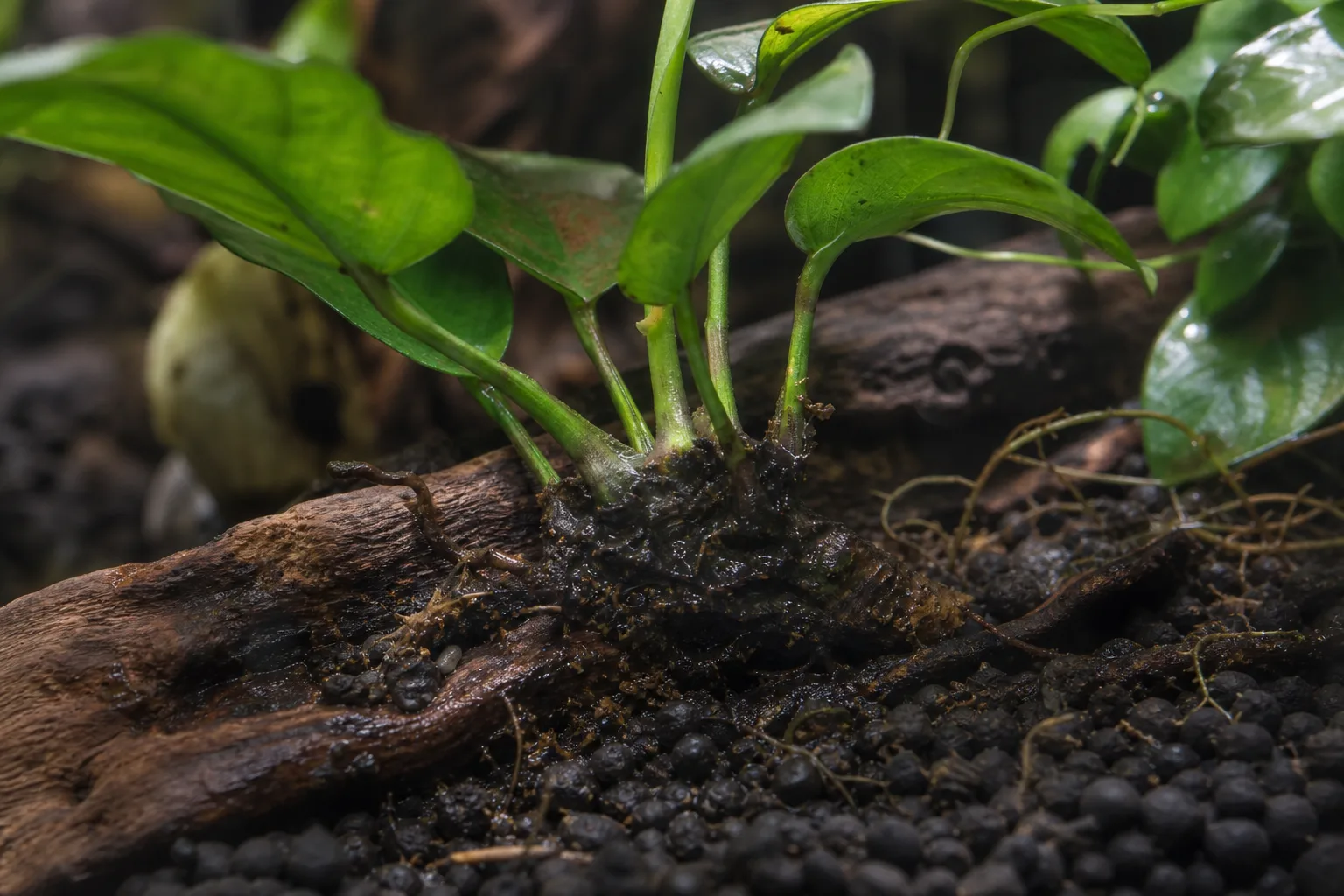
Overwatering on Anubias: Causes, Checks & Fixes
This guide covers overwatering on Anubias. See also the general Overwatering guide, watering, and light pages for this plant.
Overwatering on Anubias: Causes, Checks & Fixes
Quick answer
Anubias always sits underwater-so overwatering does not mean watering too often. In aquarium culture, wet-stress on Anubias barteri and its cultivars almost always means a buried rhizome suffocating in anaerobic substrate, stagnant flow trapping mulm against the stem, or neglected tank hygiene that lets ammonia, nitrite, or dissolved organics build up. The tank can look crystal clear while the rhizome rots in a gravel pocket behind driftwood.
First step: gently lift the plant and inspect the full length of the rhizome. The thick horizontal stem where leaves and roots emerge must stay firm, green, and fully exposed-never buried in gravel, sand, or aquasoil. Tropica warns that if planted on the bottom, the rhizome must not be covered because it tends to rot. Only after placement checks out should you test water parameters or change light.
For everyday water management, see our Anubias watering guide. For advanced mushy-rhizome surgery, see rhizome rot on Anubias.
Why “overwatering” means something different for aquarium Anubias
Houseplant advice trains us to think in soil moisture and drainage holes. Anubias breaks that model completely. It is a creeping epiphyte in the Araceae family/27805) that evolved clinging to rocks and fallen wood in shaded, fast-flowing West African streams. In your tank, the rhizome is the plant’s crown-it must breathe oxygenated water across its surface the way a tree trunk sits above ground.
| Houseplant “overwatering” | Aquarium Anubias wet-stress |
|---|---|
| Soil stays wet too long | Rhizome buried in substrate or choked by decaying detritus |
| Pot too large, poor drainage | Dead-flow zone behind stacked hardscape |
| Watering on a calendar | Skipped partial water changes; rising nitrate and organics |
| Fungus gnats in soggy mix | Ammonia or nitrite during tank cycling or overstocking |
| Let top inch of soil dry | Keep ammonia and nitrite at 0 ppm; refresh water weekly |
Anubias grows slowly-often one new leaf every two to four weeks-so damage accumulates quietly. By the time leaves yellow or detach, the rhizome may already be compromised. That is why firmness checks matter more than leaf color alone. Our Anubias overview covers rhizome anatomy and why a firm stem can survive losing every leaf.
What wet-stress looks like on Anubias
Symptoms overlap with yellow leaves, wilting, and rhizome rot-but wet-stress from burial or poor water quality has a recognizable pattern:
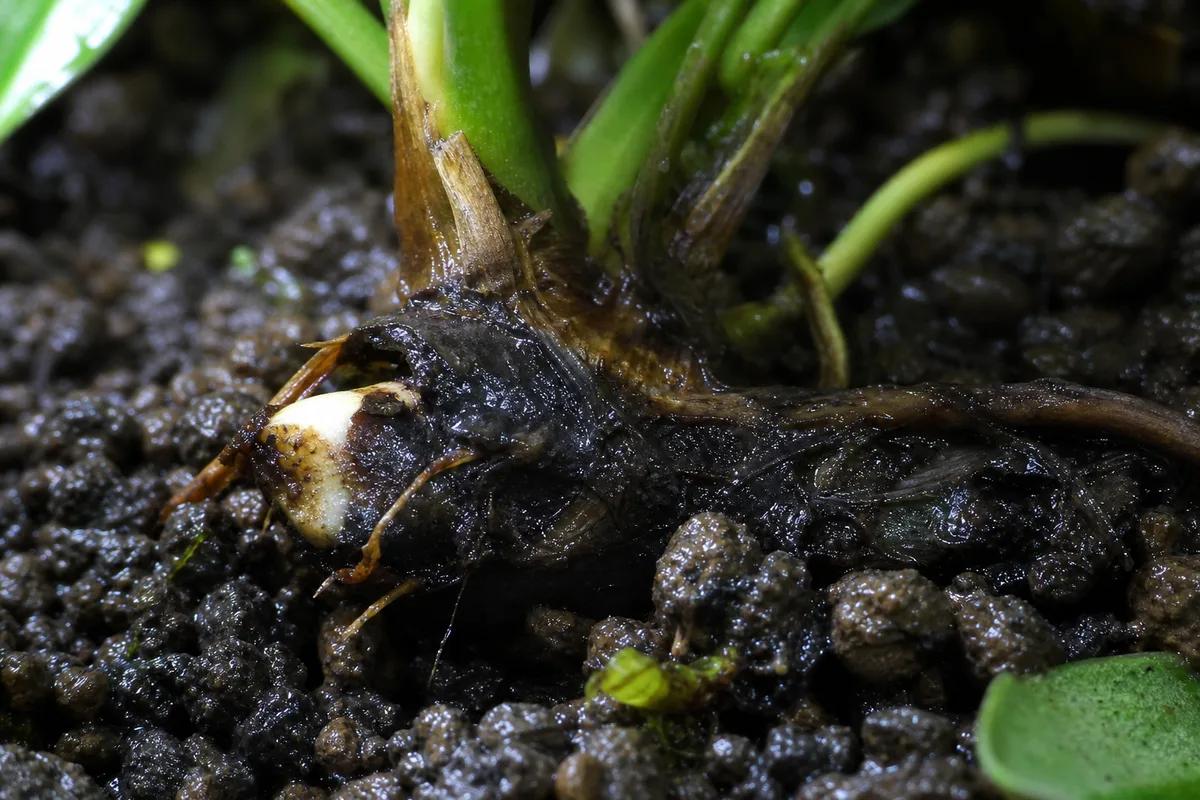
Overwatering symptoms on Anubias - compare with healthy tissue on the same plant.
- Limp or drooping petioles while surrounding tank water looks fine-unlike underwatering on Anubias in emersed culture, submerged Anubias rarely “dries out”
- Yellowing or translucent older leaves detaching at the rhizome, sometimes with clear gel at the base when rot is active
- Soft, brown, or black patches on the rhizome where it touches substrate, thread tied too tight, or accumulated mulm
- Foul smell on the stem itself-not just old leaf debris in the tank
- Detritus and biofilm coating the rhizome in a back corner while the open center of the tank stays clean after feeding
- Fish gasping or elevated ammonia in a new or overstocked tank-plant stress may be the first visible sign before fish crash
Normal emersed-to-submersed melt is the main lookalike. Nursery Anubias is often grown emersed before sale; old leaves thin and dissolve over four to eight weeks while the rhizome stays firm and green-distinct from rhizome rot by stem texture. Melt is gradual and cosmetic until proven otherwise; wet-stress rot advances along the rhizome and smells bad.
How to confirm the cause
Work through these checks in order before stacking treatments:
Rhizome firmness and burial check
- Turn off flow briefly and lift the plant from hardscape or substrate.
- Trace the rhizome along its full length. Any section under gravel, sand, or soil is a primary wet-stress trigger-only the thin roots may sit in substrate.
- Press the rhizome gently. Firm, slightly springy green-brown tissue supports melt or light stress-not advanced rot.
- Smell the stem. Sour or rotten odor on the rhizome confirms decay; tank odor alone does not.
Flow and dead-zone audit
- Feed the tank and watch where flakes settle. If debris collects on your Anubias while open water clears within minutes, the mount sits in a stagnant pocket.
- Check attachment. Thread or gel glue crushing the rhizome blocks gas exchange the same way burial does.
- Compare placement to mid-current zones-not direct filter blast, not the shadowed corner where nothing moves. Wild Anubias depends on current to deliver oxygen and nutrients to exposed rhizome tissue.
Tank chemistry check
- Test ammonia and nitrite. Both must read 0 ppm in any long-term Anubias tank. Anubias cannot absorb ammonia quickly enough/27805) during a cycle spike to protect itself the way fast stem plants can.
- Read nitrate. Target 5–20 ppm in planted tanks; chronic readings above 40 ppm with skipped water changes stress slow epiphytes and fuel algae on leaves that renew monthly, not daily.
- Review maintenance history. Weeks without partial water changes let dissolved organics accumulate-even when water looks clear.
Melt vs. wet-stress decision table
| What you see | Most likely cause | Key differentiator |
|---|---|---|
| Several old leaves yellow or melt after new purchase | Emersed acclimation | 4–8 week timeline; rhizome firm throughout |
| Mushy rhizome; foul smell; goo at leaf bases | Buried rhizome or rot | Soft tissue spreading along stem |
| Decline in back corner; detritus on plant | Stagnant flow / mulm trap | Open tank clears faster than plant zone |
| Tank-wide decline; fish stress; ammonia > 0 | Cycling or bioload failure | Test kit confirms nitrogen spike |
| Yellow leaves + firm rhizome + high nitrate | Neglected water changes | Parameters drift over weeks |
First fix for Anubias
Expose and reattach the rhizome so the full horizontal stem sits above substrate on driftwood, rock, or the gravel line-with only fine roots trailing down if needed.
If the plant was planted like a sword with the rhizome under gravel, gently lift it, brush away buried substrate, and tie or glue the rhizome to hardscape using cotton thread, fishing line, or a thin bead of cyanoacrylate gel on roots or rhizome ends-not wrapped across the entire stem. Tropica recommends attaching to stone or wood until roots grip. Do not rebury the rhizome to “anchor” it while troubleshooting.
This single step stops the most common anaerobic trigger. Wait one week and reassess before changing light, fertilizer, or CO₂.
Secondary steps if parameters or flow are off
- Partial water change (20–30%, temperature-matched, dechlorinated) if ammonia, nitrite, or nitrate are elevated-see weekly change guidance in our watering guide
- Reposition the mount into gentle mid-current flow; add a small circulation pump on low in large tanks with dead zones behind hardscape
- Vacuum mulm around the attachment point without knocking the rhizome loose
- Trim melting leaves at the rhizome with clean scissors so decaying tissue does not invite bacteria onto healthy stem
If any rhizome section is already mushy, cut back to firm green tissue before reattaching-full protocol in rhizome rot on Anubias.
Recovery timeline
Anubias replaces tissue slowly. Expect two to six weeks before the first new submersed leaf after you expose a firm rhizome and stabilize water quality. Old yellow or melting leaves will not re-green-judge recovery by:
- Rhizome stays firm when pressed weekly
- No spread of soft or discolored tissue along the stem
- New leaves emerge from the rhizome tip or lateral shoots-smaller and thinner than emersed foliage at first
- Detritus stops accumulating on the plant after flow improves
If the rhizome softens further or smell returns within two weeks, rot is still active-trim again or discard sections with no firm core left. A plant with a firm rhizome and zero new growth after eight weeks may need light or nutrient review, not more “drying out.”
What not to do
- Do not plant the rhizome deeper to stabilize a melting plant-that converts recoverable melt into rot
- Do not stop water changes because leaves are dying; stale water worsens organics buildup
- Do not dose fertilizer into a tank with measurable ammonia or a mushy rhizome-fix placement and chemistry first
- Do not assume a filter alone replaces water changes; clear water can still carry high nitrate or organics
- Do not confuse paludarium emersed culture with submerged rules-in fully submerged tanks, the rhizome still must stay exposed; emersed leaves in a humid grow-out follow different moisture rules covered in our overview
How to prevent rhizome wet-stress next time
Treat Anubias as an aquarium epiphyte from day one:
- Mount on hardscape with thread or gel glue; let roots find substrate on their own if you want anchoring
- Keep ammonia and nitrite at zero-cycle new tanks before adding slow varieties like Anubias nana petite, or use established filter media
- Maintain gentle flow across the rhizome; eliminate dead zones behind wood stacks
- Perform regular partial water changes matched to stocking-typically 20–30% weekly in community tanks
- Inspect rhizome firmness at purchase and after rescapes; shipping damage can start rot before you ever bury the plant
Stable maintenance beats perfect test-kit numbers that only exist on setup day. Pair low light demand with consistent water hygiene rather than heavy intervention when something looks off.
When to use this page vs other Anubias guides
- Anubias watering guide - Use for routine moisture checks before assuming overwatering is the main issue.
- Anubias problems hub - Browse all 16 common issues on this species.
- Root Rot on Anubias - Different entry point when symptoms overlap with overwatering.
- Yellow Leaves on Anubias - Different entry point when symptoms overlap with overwatering.
- Wilting on Anubias - Different entry point when symptoms overlap with overwatering.