Drooping Leaves on Anubias: Causes, Checks & Fixes
Quick answer
Drooping on Anubias is often normal horizontal growth, post-purchase emersed melt, or a buried rhizome-not underwatering. First step: gently squeeze the rhizome; if it is firm and green, check attachment and flow before trimming leaves.
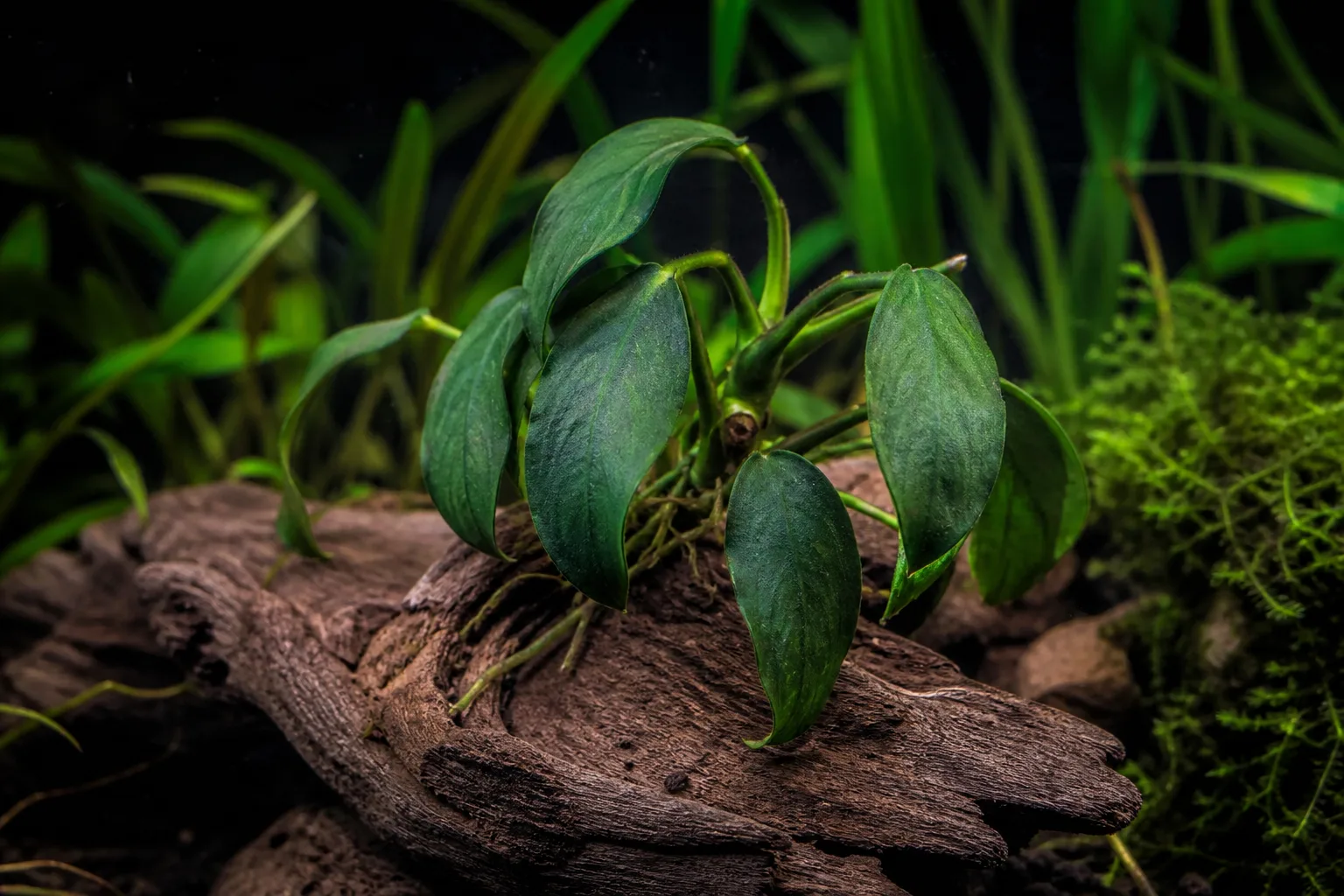
Drooping Leaves on Anubias: Causes, Checks & Fixes
This guide covers drooping leaves on Anubias. See also the general Drooping Leaves guide, watering, and light pages for this plant.
Drooping Leaves on Anubias: Causes, Checks & Fixes
Quick answer
Drooping leaves on Anubias in an aquarium are usually not a watering-calendar problem. This genus is a slow-growing epiphyte that anchors to rock and wood in flowing water; leaves often grow at a horizontal angle by habit, and old emersed-grown foliage commonly softens after planting.
First step: remove the plant gently and squeeze the rhizome between thumb and finger. A healthy rhizome feels firm and green-brown, like a fresh green bean. If it is firm, re-check that the rhizome sits fully above substrate-not buried-and that filter flow reaches the attachment point. Only after the rhizome passes that test should you trim melting leaves or adjust light and nutrients.
Is drooping normal on Anubias?
Often, yes. Wild Anubias grows along shaded forest river margins in tropical Africa, with thick petioles emerging from a creeping rhizome. In tanks, many varieties hold leaves parallel to the substrate or angled slightly downward while tissue stays dark green and leathery. That posture is growth habit, not collapse.
Droop becomes a problem when petioles lose stiffness, leaves turn translucent or yellow, or the rhizome softens. The line between normal horizontal growth and stress droop is tissue firmness plus rhizome health, not leaf angle alone.
What drooping looks like on Anubias
Normal horizontal posture: Dark green blades on firm petioles, rhizome exposed and rigid, slow but steady new leaf points every two to four weeks. Leaves may point sideways or slightly down without feeling limp.
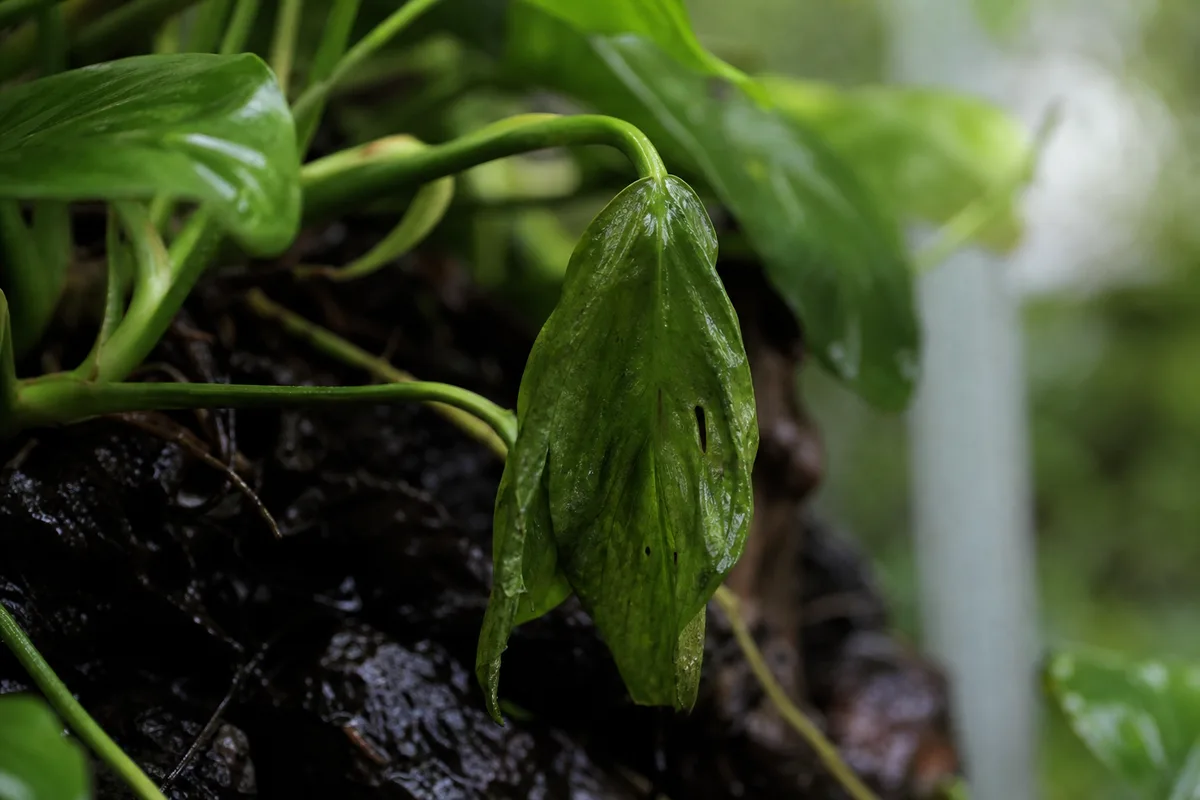
Drooping Leaves symptoms on Anubias - compare with healthy tissue on the same plant.
Emersed melt droop: Common within days to weeks after purchase. Older greenhouse leaves soften, hang, then yellow or dissolve while the rhizome stays firm. New submersed leaves emerge smaller and more suited to underwater life. Timeline is often four to eight weeks.
Buried-rhizome collapse: Gradual sagging that worsens over weeks. Leaves detach at the petiole base with soggy tissue; rhizome sections under gravel feel mushy. Burying the rhizome is the most common planting mistake and restricts oxygen to tissue that evolved to stay exposed.
Algae-weight droop: Firm green leaves that gradually angle down because green spot or beard algae loads the blade surface. The petiole stays stiff; the leaf blade tips toward gravity. Common under intense light on slow growers.
Nutrient-stress limpness: Soft, pale, or thin new leaves on an otherwise firm rhizome-often with slow overall growth. May follow a lean low-tech tank or very high pH limiting iron uptake. Differs from melt because older firm leaves may remain while new growth looks weak.
Why Anubias gets drooping leaves
Emersed-to-submersed transition
Commercial Anubias is usually grown emersed in humid greenhouses because it is faster for nurseries. Submerging the plant forces a rebuild: old leaves with an air-adapted cuticle are reabsorbed while the plant invests in submersed foliage. Melting does not always happen with Anubias because growth is slow, but drooping old leaves after planting are a classic sign.
Buried or damaged rhizome
The rhizome must stay exposed. Only roots may enter substrate; covering the horizontal stem creates anaerobic conditions that lead to rot. Tight thread, glue smothering the rhizome, or wedging into a crevice that traps detritus can produce similar stress without full burial.
Poor flow around the attachment
Anubias evolved in current. Stagnant pockets let detritus and biofilm accumulate, encourage bacterial stress on the rhizome, and allow algae to dominate leaf surfaces. A plant tucked behind stacked rock with no water movement droops from combined algae load and weakened tissue-not from “underwatering on Anubias” in a filled tank.
Algae on slow leaves
Anubias replaces a leaf every two to four weeks, so each blade persists for months. Long photoperiods and high PAR give algae time to colonize and weigh down petioles. This overlaps with not enough light only when growth is extremely pale; more often the issue is too much light duration on a shaded-stream plant.
Nutrient deficiency
Nitrogen, potassium, or iron shortage can produce soft, pale new growth while the rhizome remains firm. High carbonate hardness and pH above 8.0 can limit iron uptake even when fertilizer is dosed. This is a secondary cause-confirm rhizome health and planting first.
How to confirm the cause
Work through these checks in order:
- Rhizome squeeze test - Firm and green-brown = proceed. Mushy, jelly-like, or foul-smelling = rhizome rot; cut back to healthy tissue before other fixes.
- Attachment audit - Is the full rhizome visible above gravel? Are roots the only part in substrate? Is the plant tied or glued without smothering the stem?
- Purchase timeline - Drooping within the first month on a firm rhizome strongly suggests emersed melt, especially if leaves are the original greenhouse foliage.
- Leaf tissue feel - Limp translucent blades melting away differ from firm horizontal leaves. Yellowing with firm angle may overlap yellow leaves melt patterns.
- Algae scan - Spot or beard algae coating the blade points to light and flow imbalance, not root failure.
- Flow check - Leaves should move slightly in current. Dead zones behind wood stacks are a common hidden cause.
- New growth quality - A firm rhizome putting out small new leaves confirms recovery from melt. No new growth for months with softening rhizome signals rot.
Symptom lookalike table
| Pattern | Rhizome feel | Most likely cause | First branch |
|---|---|---|---|
| Horizontal firm green leaves | Firm | Normal growth habit | None needed if new leaves appear |
| Soft old leaves, firm rhizome, recent purchase | Firm | Emersed melt | Wait; trim only dead tissue |
| Worsening sag, goo at petiole base | Softening | Buried rhizome or rot | Expose and trim; reattach |
| Firm leaves tipping from blade weight | Firm | Algae load | Shade, shorten photoperiod, clean leaves |
| Pale soft new leaves, firm rhizome | Firm | Nutrient stress | Balanced liquid fertilizer after ruling out rot |
| Sudden limp collapse tank-wide | Firm or soft | Water parameter shock | Test ammonia, nitrite, temperature |
First fix for Anubias
Expose and reattach the rhizome so the full horizontal stem sits above substrate with gentle flow across it.
Lift the plant, brush substrate off any buried rhizome section, and secure it to driftwood or rock with thread, fishing line, or a thin bead of cyanoacrylate gel on the underside-never bury the rhizome to “support” drooping leaves. Position the attachment where filter output creates slight leaf movement. If the rhizome is already firm and fully exposed, skip reattachment and move to flow and algae checks instead.
This single step addresses the highest-risk cause-buried rhizome rot-and matches how epiphyte aquarium plants must be mounted.
Step-by-step recovery
After the rhizome is exposed and flowing:
- Trim only failing leaves - Cut translucent, yellow, or gooey petioles at the rhizome with sharp scissors. Leave firm green horizontal leaves in place.
- Shorten photoperiod - Drop to six to seven hours for two weeks if algae loads blades or leaves sit in the brightest zone. See the Anubias light guide for PAR targets.
- Clean algae-coated blades - Soft toothbrush or careful spot treatment on affected areas; add safe grazers if appropriate for your stock.
- Stabilize parameters - Avoid large temperature or pH swings during melt. New tanks with ammonia spikes often trigger extra leaf loss.
- Dose fertilizer only after rot is ruled out - A comprehensive aquarium fertilizer helps pale new growth on a firm rhizome; do not fertilize into a rotting stem.
- Wait for submersed regrowth - Judge progress by new leaf points on a firm rhizome, not by old emersed leaves re-firming.
Do not stack glue removal, heavy pruning, medication, and large water chemistry changes on the same day.
Recovery timeline
Emersed melt: Old leaves may continue drooping and detaching for four to eight weeks while submersed replacements emerge. A firm rhizome producing a new leaf every two to four weeks is on track.
Buried rhizome caught early: After re-exposure and trimming soft tissue, expect two to six weeks before consistent new growth if remaining rhizome is healthy.
Algae-weight droop: Photoperiod reduction and cleaning often show less blade sag within two weeks; full algae control may take longer on slow leaves.
Advanced rhizome rot: Widespread mushy tissue rarely recovers. Salvage only firm sections cut back to green, rigid rhizome.
Damaged emersed leaves do not re-stiffen underwater-they are replaced, not repaired.
What not to do
Do not bury the rhizome deeper to prop up drooping foliage-that accelerates rot. Do not treat a submerged Anubias like a potted houseplant by checking “soil moisture”; water column and rhizome oxygen matter instead.
Do not trim every drooping leaf during healthy melt on a firm rhizome-you remove photosynthetic tissue the plant is still using. Do not assume drought in a full aquarium; confirm rhizome firmness and flow first.
Do not increase light to “perk up” sagging leaves-excess PAR worsens algae weight on slow Anubias growth. Avoid stacking Anubias repotting guide-like disturbances (moving hardscape, heavy medication, aggressive algae chemicals) while the plant acclimates.
How to prevent drooping next time
Mount Anubias correctly at purchase: rhizome on hardscape, roots optional in substrate below. Buy plants with firm rhizomes and avoid specimens already soft at the crown.
Keep steady low to medium light and six to eight hour photoperiods, shade intense fixtures with floating plants or hardscape, and aim filter flow so leaves flutter slightly. Stable water parameters reduce melt shock.
Review the Anubias overview for melt, algae, and rhizome rules before adding new specimens. Cross-check persistent limp collapse with wilting and yellowing melt on yellow leaves so you do not chase the wrong slug.
When to worry
Escalate when the rhizome turns mushy, leaf stalks detach with soggy bases and ooze, or droop spreads to newly formed leaves while the stem softens-that is rot, not melt. Remove affected plants before rot spreads to neighboring Anubias on shared wood.
Low urgency: firm rhizome, horizontal green leaves, recent planting, and occasional new leaf points-that is normal acclimation. Re-check weekly rather than intervening daily.
Conclusion
Anubias drooping is usually acclimation melt, a planting error, algae weight, or simply horizontal growth-not thirst in a submerged tank. Squeeze the rhizome first, expose it to flow, trim only dead tissue, and wait for submersed leaves on a firm stem. The plant’s slow pace rewards patience more than aggressive intervention.
When to use this page vs other Anubias guides
- Anubias watering guide - Use for routine moisture checks before assuming drooping leaves is the main issue.
- Anubias problems hub - Browse all 16 common issues on this species.
- Underwatering on Anubias - Different entry point when symptoms overlap with drooping leaves.
- Overwatering on Anubias - Different entry point when symptoms overlap with drooping leaves.
- Root Rot on Anubias - Different entry point when symptoms overlap with drooping leaves.