Yellow Leaves on Anubias: Causes, Checks & Fixes
Quick answer
Yellow leaves on Anubias are usually acclimation melt, nutrient stress, or old-leaf turnover-not underwatering. First step: squeeze the rhizome; if it stays firm and green, trim yellow tissue and wait for new submersed leaves before changing fertilizer or light.
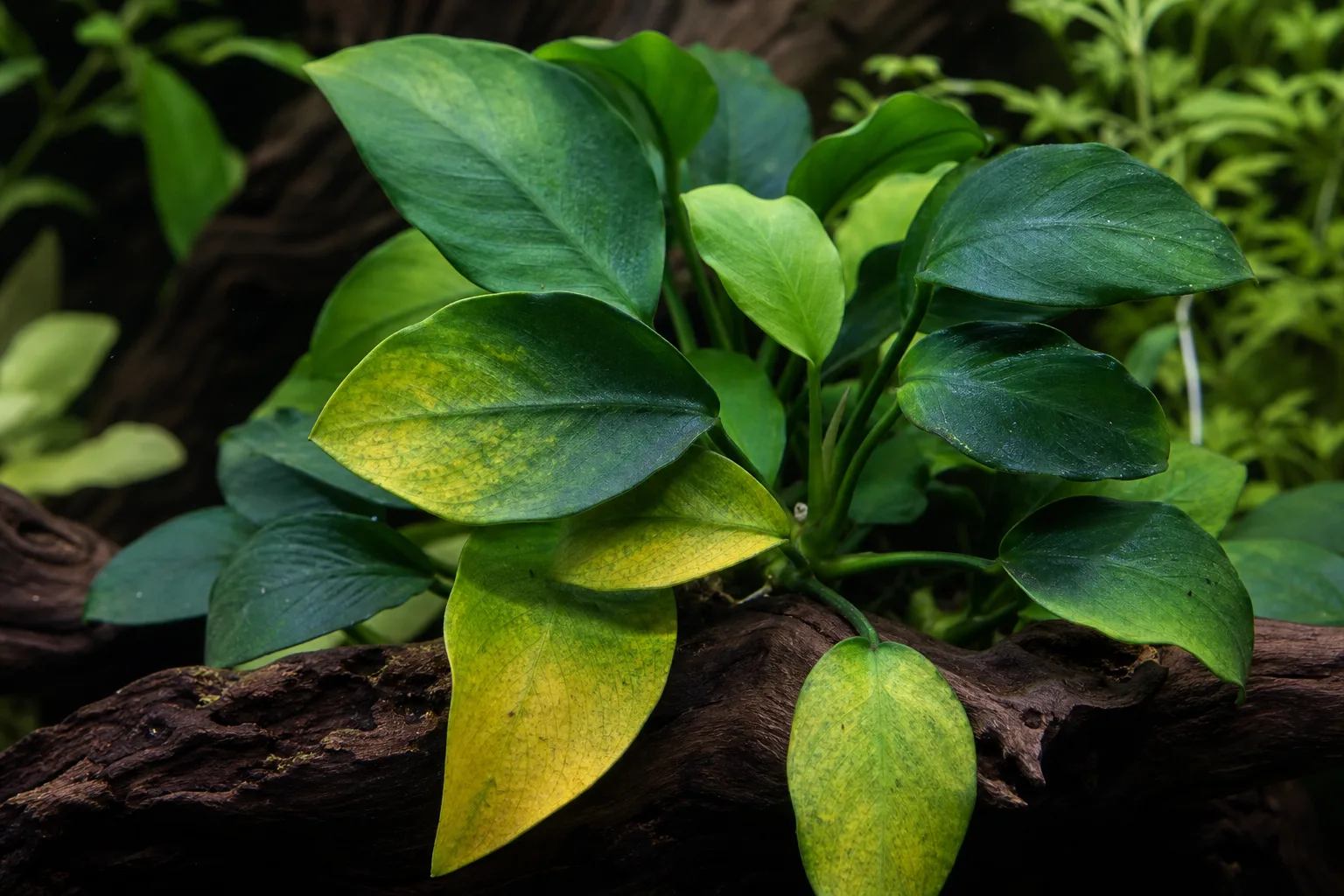
Yellow Leaves on Anubias: Causes, Checks & Fixes
This guide covers yellow leaves on Anubias. See also the general Yellow Leaves guide, watering, and light pages for this plant.
Yellow Leaves on Anubias: Causes, Checks & Fixes
Quick answer
Yellow leaves on Anubias (Anubias barteri and cultivars such as nana and coffeefolia) are a symptom, not a single disease. In aquariums, the same yellow blade can mean emersed-to-submersed melt after purchase, rhizome rot from a buried stem, nitrate or iron stress, skipped water changes, or simply slow aging on a creeping rhizome that produces only one new leaf every two to four weeks.
First step: squeeze the rhizome where leaves attach. Firm, green rhizome tissue with yellowing older leaves usually means melt or normal turnover-the plant can recover without a rescue overhaul. Mushy, jelly-like, or foul-smelling rhizome tissue means rot; treat that before fertilizer or light changes. For everyday mounting rules, see our Anubias overview.
What yellow leaves look like on Anubias
Anubias is a horizontal rhizome epiphyte, not a rosette houseplant. Leaves emerge from the thick green stem in a line; the oldest leaf on a section often yellows first while the growing tip stays quiet for weeks. Pattern matters more than a single yellow blade.
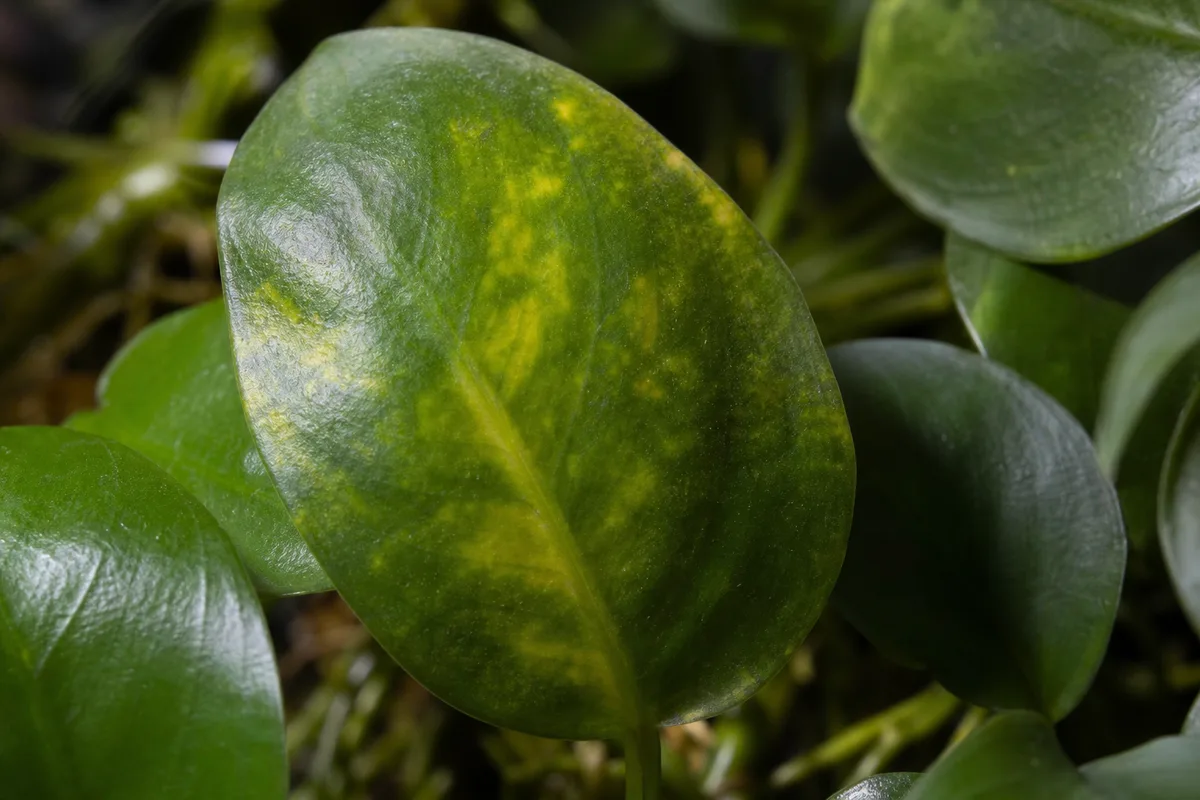
Yellow Leaves symptoms on Anubias - compare with healthy tissue on the same plant.
Patterns that fit melt or normal stress:
- Translucent yellow-brown on nursery-grown leaves within the first four to eight weeks after planting-classic emersed-to-submersed transition
- One or two old leaves fading slowly on an otherwise firm rhizome with no smell-often harmless senescence on a slow species
- Gradual yellowing on shaded leaves while a brighter section of the same rhizome stays dark green-light plus nutrient stress combined
Patterns that fit rot or urgent problems:
- Leaf stalks detach with soggy bases or clear goo where the petiole met the rhizome-unlike melt, which thins leaves gradually
- Yellow then black tissue spreading along the rhizome with a rotting smell
- Sudden widespread yellowing in a new or restocked tank with ammonia or nitrite above zero-chemical stress on a slow grower
Patterns that fit nutrient deficiency:
- Bright yellow new leaves with dark green veins in a zone that receives decent aquarium light-often iron chlorosis
- Older leaves yellowing from the edges inward while nitrates read very low-nitrogen starvation in a mature low-tech tank
What is not true yellowing:
- Green, brown, or hair algae coating a dark green blade-the leaf may look dull but is not nutrient-melting; see our not enough light on Anubias guide for algae-on-slow-leaves context
Because Anubias renews leaves slowly, a yellow blade can sit for months before it drops. That is normal pacing on this genus, not proof of crisis.
Why Anubias leaves turn yellow
Native to stream margins in West and Central Africa, Anubias evolved as a shade-tolerant epiphyte on rock and wood-not a potted terrestrial with crown leaves. Yellowing in home tanks usually traces to aquarium placement, water chemistry, or leaf turnover-not soil moisture.
Emersed-to-submersed acclimation melt
Most store Anubias is grown emersed at farms, then sold for fully submersed tanks. Emersed leaves carry a waxy cuticle that does not function underwater; the plant reabsorbs them to build smaller aquatic leaves. During that shift, older foliage often yellows, thins, and melts over four to eight weeks while the rhizome stays firm. Aquarium Co-Op notes that melt does not always appear on slow Anubias, but post-purchase yellowing is still the leading beginner explanation-as our overview melt FAQ describes.
Rhizome rot and burial damage
The rhizome must stay exposed to oxygenated water. Burying the stem in gravel or sand creates anaerobic decay; leaves yellow as stalks fail, often with goo at the base. Physical damage from tight thread, shipping cuts, or ammonia spikes in uncycled tanks can trigger the same cascade-see rhizome rot on Anubias for the full rot workflow.
Low light and nutrient stress
Anubias tolerates dim tanks but still needs some light reaching the rhizome to photosynthesize. Months in a shaded bottom corner can yellow older leaves while new growth stalls. Because Anubias feeds primarily from the water column, pale or yellow foliage in a lit zone often pairs with low nitrates or iron deficiency-not a dry root ball. Cross-check placement in our not enough light and Anubias fertilizer guides before stacking doses.
Normal aging on a slow rhizome
A healthy Anubias may produce one new leaf every two to three weeks in good conditions-sometimes slower. The oldest leaf on a rhizome segment yellows naturally as energy shifts to the growing tip. One fading blade on a firm rhizome with occasional new growth is often expected turnover, not emergency care.
Dirty water and skipped maintenance
Anubias forgives missed water changes longer than stem plants, but accumulated organics, rising nitrates above hobby comfort, or stagnant flow behind hardscape can stress leaves into yellow-brown edges. Light intensity also drops with depth and dirty glass-a shaded, neglected corner yellows faster than a rinsed, well-flowed mount.
How to confirm the cause
Work through these checks in order before buying new hardware or doubling fertilizer.
Rhizome firmness check
Remove the plant gently from hardscape if needed. Press the rhizome along its length:
- Firm and green → melt, nutrients, light, or aging are more likely than active rot
- Soft, jelly-like, brown, black, or foul-smelling → rot; stop yellow-leaf troubleshooting and trim to healthy tissue per root rot on Anubias
Which leaves are yellowing
| Pattern | Likely cause |
|---|---|
| Oldest leaves only, firm rhizome, new plant | Emersed melt or normal aging |
| Newest leaves pale yellow with dark veins, good light | Iron deficiency |
| Older leaves yellowing, nitrates near zero | Nitrogen starvation |
| Stalks detach with goo, rhizome soft | Rhizome rot |
| All leaves dull under algae film, strong fixture | Too much light / algae, not classic yellow melt |
Tank history checklist
Note:
- Days since purchase - under eight weeks favors melt if the rhizome is firm
- Recent large water change or parameter swing - shock can yellow edges temporarily
- Rhizome buried or glued under substrate - rot risk regardless of leaf color
- Ammonia or nitrite in cycling tanks - test before blaming fertilizer
- Photoperiod and placement - is the growing tip shaded under wood or floaters?
- Last partial water change - mulm and film steal usable light and oxygen at the rhizome
Confirmed benign yellowing: firm rhizome, no rot smell, predictable pattern (oldest leaves or post-purchase melt), and new submersed leaf or bud within two to four weeks after stable care.
First fix for Anubias
Verify rhizome firmness, expose any buried stem, and trim yellow leaves at the rhizome-then wait one leaf cycle before changing fertilizer or light.
Unbury or reattach the rhizome so the horizontal stem sits above substrate on rock or wood, following our Anubias watering guide. Snip fully yellow or translucent blades at the petiole base with sharp scissors. If the plant is new within eight weeks and the rhizome is firm, hold steady on regular partial water changes and a six- to eight-hour photoperiod-melt often resolves without extra inputs.
Do not bury the rhizome deeper to stabilize a yellow plant. Do not dose heavy liquid fertilizer in a dark tank or uncycled setup-unused nutrients feed algae on slow leaves.
Step-by-step recovery
After the first rhizome-and-trim fix, continue in this order:
- Confirm exposure - Rhizome fully visible; only thin roots may trail into substrate.
- Stabilize water - Partial water change if nitrates are extreme or organics built up; keep ammonia and nitrite at zero.
- Audit light - Ensure aquarium light reaches the growing tip; reposition mid-height if the plant sat in a shaded pit (details in not enough light on Anubias).
- Wait two to four weeks - Realistic first response window for this slow species after melt or a care correction.
- Test and dose only if needed - If new leaves emerge pale in a lit zone, test nitrates and consider aquarium liquid fertilizer at label rates per our fertilizer guide.
- Treat rot if texture changes - Any softening rhizome tissue overrides yellow-leaf patience; trim and reattach immediately.
Hold CO₂, copper algae treatments, and major light upgrades until the rhizome is firm and you know whether new submersed growth is appearing.
Recovery timeline
Two to four weeks after a firm rhizome and corrected placement, watch for a new leaf bud at the growing tip-that is the primary success marker.
Four to eight weeks is normal for post-purchase melt to finish on slow Anubias. Older yellow leaves drop; they do not re-green.
Old blades never repair once fully yellow. Judge recovery by the color and size of the next leaf, not by saving every existing frond.
Worsening signs during the wait: rhizome softening, spreading black tissue, foul odor, or every leaf yellowing within days while chemistry tests fail-escalate to rot or water-quality emergency, not more waiting.
Lookalike symptoms
Emersed melt - Translucent yellow-brown on older nursery leaves; firm rhizome; occasional new submersed leaf within weeks of planting.
Rhizome rot - Mushy stem, goo at stalk bases, foul smell; often from buried rhizome or ammonia-see root rot on Anubias.
Not enough light - No new leaves for months, gradual fade on shaded sections, firm rhizome-fix placement before fertilizer (dedicated guide).
Iron or nitrogen deficiency - Patterned yellowing on new or old leaves respectively in a lit tank with testable low nutrients.
Algae-coated leaves - Surface fuzz on otherwise green tissue; reduce photoperiod and rebalance nutrients rather than treating as classic melt.
Normal aging - One old leaf yellowing every few months on a creeping rhizome with steady if slow new growth.
What not to do
Do not check soil moisture or dry pots-submerged Anubias does not use that care model.
Do not bury the rhizome to stop yellow leaves from drooping-that invites rot.
Do not assume every yellow leaf needs iron-confirm firm rhizome, light, and nitrate readings first.
Do not remove the plant from the tank during normal melt if the rhizome stays firm; patience and trimming beat repeated rescapes.
Do not stack fertilizer, CO₂, and brighter lights on day one-fix rhizome exposure and water stability, then adjust one variable at a time.
Do not tear yellow leaves mid-blade-cut at the rhizome so the plant can redirect energy cleanly.
How to prevent yellow leaves
- Mount on hardscape with rhizome exposed; follow Anubias watering mounting rules
- Run aquarium lights six to eight hours on a timer with the growing tip in usable brightness
- Perform regular partial water changes to keep organics and extreme nitrates in check
- Quarantine new plants under moderate light during the melt window so emersed leaves transition without burial mistakes
- Trim spent leaves promptly so detritus does not collect on slow foliage
- Dose fertilizer conservatively in low-tech tanks-see Anubias fertilizer for balanced liquid feeding
Stable clean water, an exposed rhizome, and realistic expectations for slow growth prevent most repeat yellow-leaf scares.
When to worry
Escalate beyond watchful waiting when:
- The rhizome turns soft, smells rotten, or shows spreading jelly-like discoloration
- Ammonia or nitrite stays above zero while leaves yellow rapidly in a new tank
- Every leaf yellows within weeks despite firm rhizome, good light, and tested nutrients-reinspect for hidden buried sections or chronic cold water slowing metabolism
- No new submersed leaf after six to eight weeks post-melt with confirmed good placement-cross-check for rot, light, and starvation
For a firm rhizome with yellow nursery leaves in the first two months, trimming and stable care is enough urgency-Anubias overview recovers slowly but reliably when the stem stays healthy.
Conclusion
Yellow leaves on Anubias are usually melt, aging, or correctable stress-not a death sentence. Squeeze the rhizome first, separate firm stem from mushy rot, trim spent blades at the base, and judge success by the next leaf from the growing tip, not by re-greening old tissue. Link melt timelines, nutrient tests, and Anubias light guide to this slow epiphyte’s real biology, and yellow foliage becomes a manageable signal instead of a panic search for houseplant watering advice.
When to use this page vs other Anubias guides
- Anubias watering guide - Use for routine moisture checks before assuming yellow leaves is the main issue.
- Anubias problems hub - Browse all 16 common issues on this species.
- Overwatering on Anubias - Different entry point when symptoms overlap with yellow leaves.
- Underwatering on Anubias - Different entry point when symptoms overlap with yellow leaves.
- Not Enough Light on Anubias - Different entry point when symptoms overlap with yellow leaves.