Rhizome Rot on Anubias: Causes, Checks & Fixes
Quick answer
Rhizome rot on Anubias is decay of the exposed horizontal stem-not soggy potting soil. First step: gently remove the plant and press the rhizome; if any section is mushy, cut back to firm green tissue and reattach above substrate before changing fertilizer or light.
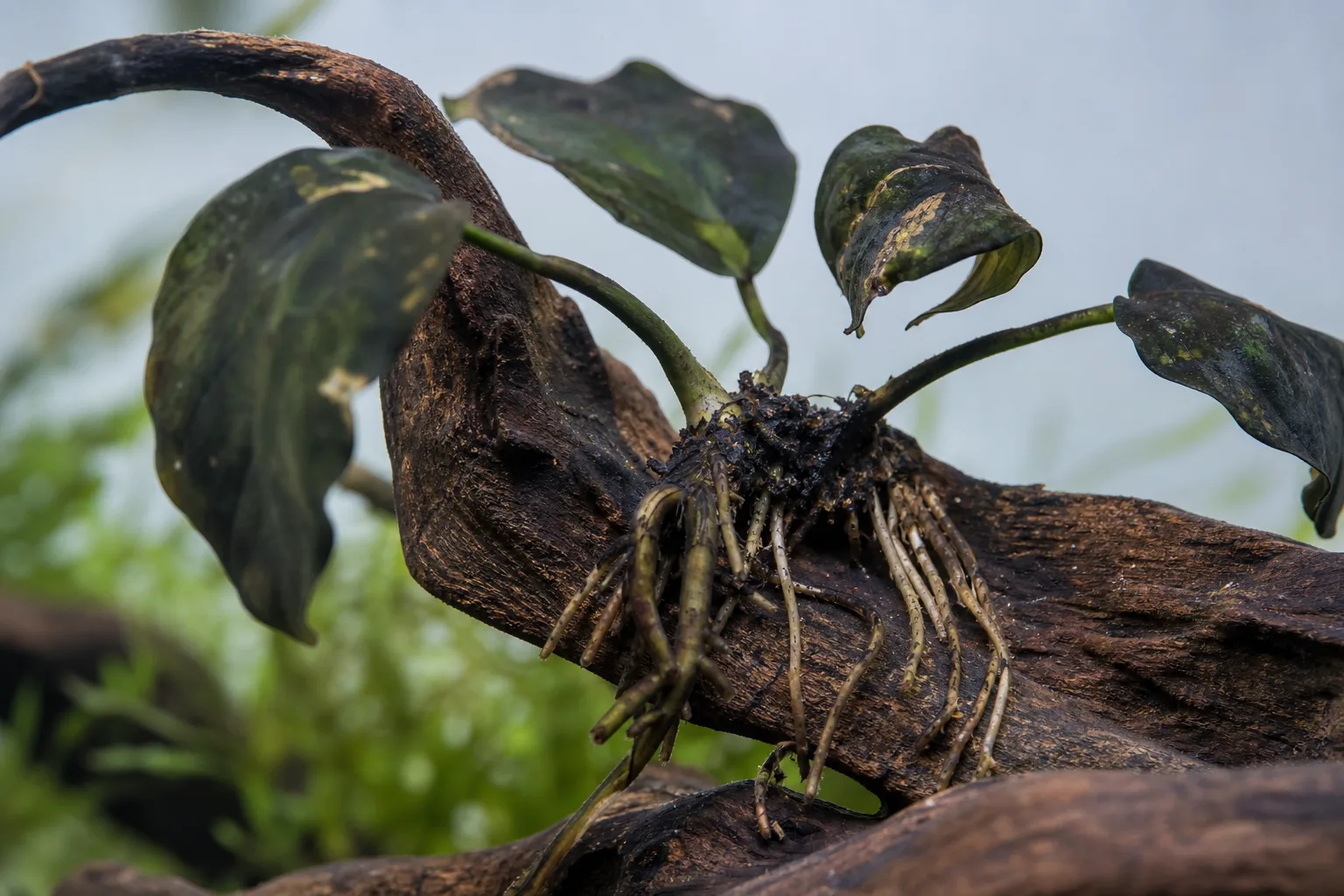
Rhizome Rot on Anubias: Causes, Checks & Fixes
This guide covers root rot on Anubias. See also the general Root Rot guide, watering, and light pages for this plant.
Rhizome Rot on Anubias: Causes, Checks & Fixes
Quick answer
When aquarists search “root rot on Anubias,” they almost always mean rhizome rot-bacterial breakdown of the thick horizontal stem where leaves and roots meet-not houseplant-style root-ball decay in potting soil. Anubias barteri and its cultivars are aquarium epiphytes that evolved on rocks and wood in West African stream margins. The rhizome must stay exposed to oxygenated tank water; bury it in gravel, sand, or soil and anaerobic bacteria attack suffocated tissue within days.
First step: remove the plant and test rhizome firmness with clean fingers. If any section feels mushy, cut back to firm green tissue with sterilized scissors, then reattach the healthy portion to hardscape with the rhizome above substrate. Do not dose fertilizer, raise light, or “stop watering”-Anubias lives fully submerged and needs stable water chemistry instead.
Rhizome rot vs. houseplant root rot
Terrestrial root rot happens when potting mix stays waterlogged and fine roots suffocate. Anubias does not grow that way in aquarium culture. Its “roots” are thin holdfasts that grip rock or wood; the rhizome is the storage stem that must breathe in the water column, like the trunk of a tree sitting above ground.
| What you might expect (houseplants) | What Anubias actually needs |
|---|---|
| Dry soil surface before watering | Continuous submersion in clean tank water |
| Drainage holes and saucers | Zero ammonia/nitrite and gentle flow around the rhizome |
| Unpot and shake off wet mix | Lift from hardscape; trim mushy rhizome; never rebury |
| Repot into fresh airy soil | Reattach to rock or wood with rhizome exposed |
If advice mentions pots, saucers, or letting soil dry, it does not apply to submerged Anubias. For everyday water management, see our Anubias watering guide.
What rhizome rot looks like on Anubias
Rot on this slow aroid shows at the rhizome and leaf stalk bases, not as a soggy root ball underground.
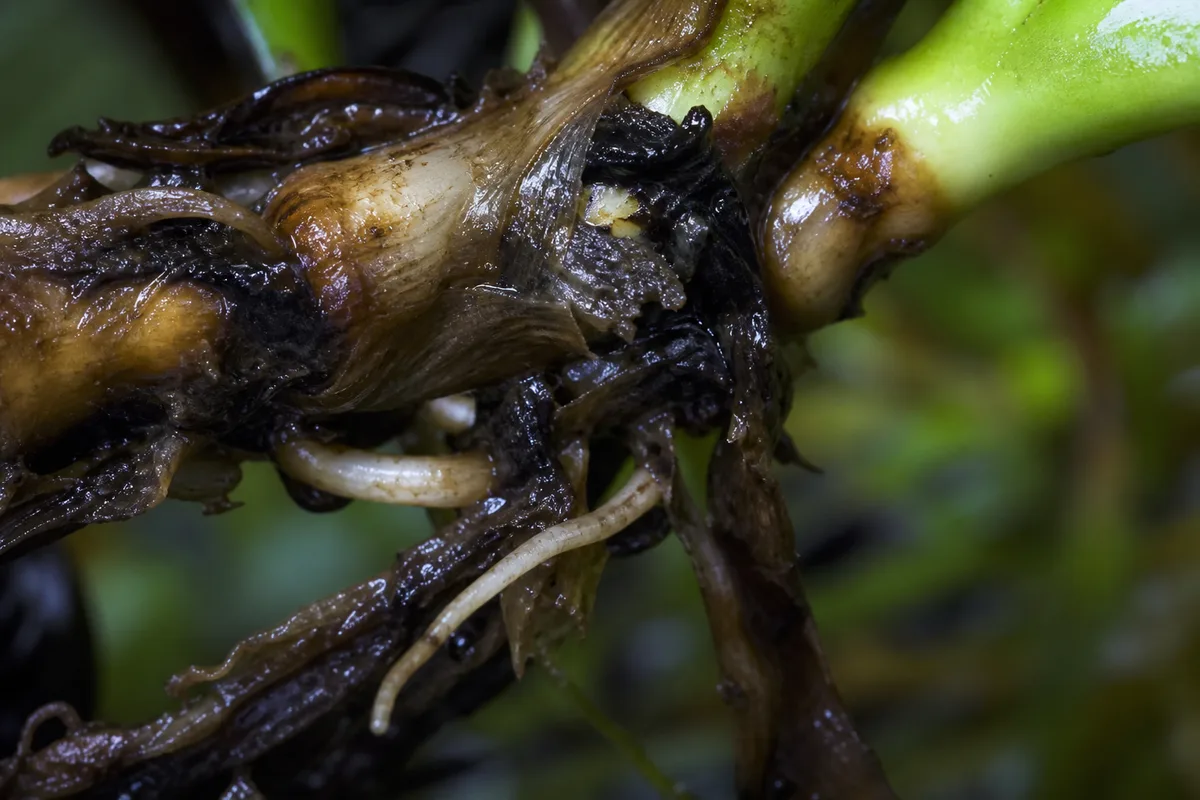
Root Rot symptoms on Anubias - compare with healthy tissue on the same plant.
Early signs:
- Leaf stalks detach at the rhizome with soggy bases or clear goo-unlike acclimation melt, where older emersed leaves thin and dissolve gradually
- Discolored patches on the rhizome: jelly-like clear areas, white, yellow, brown, or black zones on tissue that should be firm and green
- Soft or squishy rhizome when you press it gently between thumb and finger
- Foul, rotting smell on the stem itself, not just old leaf debris in the tank
- Roots near the affected zone turning brown and disintegrating while the rot advances along the rhizome
Advanced cases show black mushy rhizome tissue spreading toward healthy leaves, total leaf loss, and sections that fall apart when handled. A firm green rhizome with yellowing old leaves after a new purchase is usually emersed-to-submersed melt, not rot-Aquarium Co-Op distinguishes melt from rot by rhizome texture.
Why Anubias rhizomes rot
Anubias is a creeping epiphyte in the Araceae family/27805). In nature it clings to stones and fallen wood in shaded, fast-flowing rivers across Cameroon and neighboring regions. That habitat explains why rot in tanks is almost always placement or water-quality stress, not “overwatering on Anubias” in the houseplant sense.
Buried rhizome (most common cause)
Tropica’s planting guide is explicit: when planting rhizome plants like Anubias, do not cover the rhizome or the plant will rot. Only the thin roots may sit in substrate; the thick green stem must stay exposed. Pet-store pots, aquascape rescapes, and well-meaning “plant it like a sword” advice bury the rhizome and trigger anaerobic decay.
Ammonia and nitrite in uncycled tanks
Anubias grows slowly and cannot absorb ammonia quickly enough/27805) to protect itself during a nitrogen-cycle spike the way fast stem plants can. Lab-cultivated Anubias nana petite is especially vulnerable in new tanks where ammonia reads above zero. Soft rhizome tissue plus measurable ammonia is rot until proven otherwise-not normal melt.
Stagnant flow behind hardscape
Wild Anubias depends on current to deliver oxygen and nutrients to exposed rhizome tissue. A plant wedged in a dead zone behind stacked driftwood can decay even when tank-wide parameters look fine. Epiphytes lose the algae and rot race when water stops moving around the stem.
Physical damage and tight attachment
Shipping knicks, scissors cuts into the rhizome, or thread tied so tightly it crushes the stem all create entry points for bacteria. Aquarium Co-Op notes that rot may start from farm or transit damage before the plant ever reaches your tank-another reason firmness checks matter at purchase.
Confusion with melt after purchase
Nursery Anubias is often grown emersed at plant farms before submersed culture in your tank. Submersed leaves rebuild slowly, and old emersed foliage may yellow or drop over weeks while the rhizome stays firm. Treating melt like rot by burying the stem deeper is a common mistake that converts a recoverable plant into a rotting one.
How to confirm the cause
Work through these checks in order before stacking treatments:
Rhizome firmness and smell check
- Turn off flow briefly and gently lift the plant from hardscape or substrate.
- Press the full length of the rhizome. Firm and green supports melt, light stall, or nutrient stress-not advanced rot.
- Smell the stem. A sour or rotten odor on the rhizome itself confirms decay; tank odor alone does not.
- Inspect leaf stalk bases. Goo or jelly where petioles meet the rhizome means rot is active at the crown.
Burial and flow inspection
- Trace the rhizome against substrate. Any gravel, sand, or soil covering the horizontal stem is a rot trigger-only roots should be buried.
- Watch debris after feeding. If detritus collects on the plant while open water clears quickly, reposition for mid-current flow.
- Review glue and thread. Cyanoacrylate gel on the rhizome itself-not just roots-can block gas exchange; thread wrapped too tight crushes tissue.
Tank chemistry check
- Test ammonia and nitrite. Both should read 0 ppm in a mature tank. Any positive reading in a tank younger than six weeks raises rot risk for slow epiphytes.
- Note nitrate and change history. Neglected water changes above 40 ppm nitrate stress slow growers and fuel bacterial problems; see Anubias watering parameters for targets.
- Log recent events. New tank setup, filter crash, overfeeding spike, or medication that harmed nitrifying bacteria?
Lookalike differentiation
| Symptom pattern | Likely cause | Key differentiator |
|---|---|---|
| Old leaves melt; rhizome firm and green | Emersed acclimation | Happens weeks after purchase; new submersed leaves may appear |
| Crisp leaf edges; rhizome dull but firm | Underwatering / air exposure | Tissue dried on rim or basking platform-not mushy |
| No new leaves for months; firm rhizome | Not enough light | Zero growth in shaded zone; no goo at stalk bases |
| Pale new leaves; firm rhizome; infrequent changes | Nutrient stress | Test nitrates; improve water changes before trimming |
| Mushy rhizome; foul smell; stalk goo | Rhizome rot | Soft tissue spreading along stem-act on burial or water quality |
First fix for Anubias rhizome rot
Cut away every soft or discolored section of rhizome until only firm, healthy green tissue remains.
Use a sharp, sterilized razor or scissors. Aquarium Co-Op’s recommended remedy is surgical removal of infected tissue-not hydrogen peroxide baths or antibiotic dips, which hobby tests show rarely stop established rot. Cut 1–2 mm into firm tissue past the visible damage so no invisible rot edge remains.
After trimming:
- Rinse gently in a cup of tank water-not tap water with chlorine shock
- Reattach immediately to rock or driftwood with aquarium-safe gel glue or loose thread-rhizome fully exposed, roots may trail into crevices
- Place in gentle to moderate flow, not a stagnant back corner
- Hold fertilizer and light changes until the rhizome stays firm for at least one week
If ammonia or nitrite is elevated, address cycling and perform a 25–30% temperature-matched water change before returning the plant. Chemical rot treatments are secondary; exposure and clean water come first.
Recovery timeline
Anubias replaces leaves slowly even in ideal conditions-roughly one new leaf every two to three weeks in many home tanks.
| Severity | What you see | Typical recovery |
|---|---|---|
| Early (small soft patch trimmed) | Few leaves lost; majority of rhizome firm | Stabilizes in 1–2 weeks; first new leaf in 2–4 weeks |
| Moderate (major trim, half rhizome saved) | Large leaf loss; short salvaged section | 4–8 weeks before confident new growth |
| Advanced (only a finger-length firm piece) | Total defoliation on saved section | Possible if tissue stays firm; 2–3 months to judge |
| Total rhizome mushy | No firm core when cut | Discard; protect tank mates from shared decay |
Damaged leaves do not re-green. Judge success by firm rhizome tissue and new submersed leaves, not by old blades recovering. A salvaged Anubias with zero leaves but a hard green rhizome can still regrow-counter-intuitive but normal for this genus.
Worsening signs during recovery: soft tissue reappearing at a fresh cut edge, spreading black zones, or stalk goo returning after a week of stability. Trim again or discard if no firm tissue remains.
What not to do
- Do not bury the rhizome deeper to stabilize a wobbly plant-burial causes rot, it does not fix it
- Do not “stop watering” or let soil dry-Anubias needs continuous submersion and regular partial water changes
- Do not repot into terrestrial potting mix-this is an aquarium epiphyte, not a potted houseplant
- Do not assume wilted leaves mean add more water to substrate when the rhizome is already buried and suffocating
- Do not discard a firm rhizome that is only shedding emersed leaves-wait two to three weeks for submersed replacement leaves
- Do not stack peroxide, bleach, and fertilizer on day one; trim, expose, stabilize water, then wait
- Do not confuse cycling ammonia damage with drought-test NH₃/NH₄⁺ and NO₂⁻ before treating as underwatering
How to prevent rhizome rot next time
- Attach at purchase: Glue or tie the rhizome horizontally to hardscape; let roots find crevices on their own (Tropica rhizome planting rule)
- Keep ammonia and nitrite at zero before adding slow epiphytes to a new tank; use fast floaters or stem plants to buffer cycles if needed
- Maintain gentle flow around the rhizome-enough that debris does not settle on the stem for days
- Perform 20–30% weekly water changes in stocked tanks to hold nitrate in the planted-tank range
- Inspect after rescapes: Substrate drift, turtle digging, and filter splash often rebury exposed rhizomes over time
- Quarantine new plants under moderate light for two weeks; confirm rhizome firmness before tucking into a dark corner
- Cross-check everyday care on our Anubias overview-rhizome exposure is the single rule that prevents most rot cases
When to worry
Treat rhizome rot as urgent when:
- More than half the rhizome feels mushy or smells rotten on first inspection
- Soft tissue spreads toward healthy leaves within a few days despite trimming
- Ammonia or nitrite stays above zero in a tank with only slow plants and no cycle support
- Multiple Anubias clumps fail at once-test water quality before assuming a contagious “disease”; shared bad chemistry is the usual cause
You can often salvage part of a clump by cutting back to firm green rhizome and reattaching each healthy division separately. If every cut surface still shows mushy tissue, discard the plant and review burial and cycle history before replacing stock.
Conclusion
Root rot on Anubias is rhizome rot in aquarium terms: decay of the exposed horizontal stem from burial, stagnant flow, ammonia stress, or physical damage-not soggy potting soil. Confirm with a firmness and smell check, trim to healthy tissue, reattach above substrate, and stabilize tank water before changing light or fertilizer. Old leaves will not heal, but a hard green rhizome and slow new submersed growth mean the plant is recovering. Keep the stem exposed, the water clean, and the current gentle-that is how Anubias survives for years on a single piece of driftwood.
When to use this page vs other Anubias guides
- Anubias watering guide - Use for routine moisture checks before assuming root rot is the main issue.
- Anubias problems hub - Browse all 16 common issues on this species.
- Overwatering on Anubias - Different entry point when symptoms overlap with root rot.
- Yellow Leaves on Anubias - Different entry point when symptoms overlap with root rot.
- Wilting on Anubias - Different entry point when symptoms overlap with root rot.