Not Enough Light on Anubias: Causes, Checks & Fixes
Quick answer
Anubias survives dim tanks but still needs light reaching the rhizome to grow. First step: move the plant to a brighter zone in the tank-or add a modest LED-and confirm your aquarium light runs on a timer before changing fertilizer.
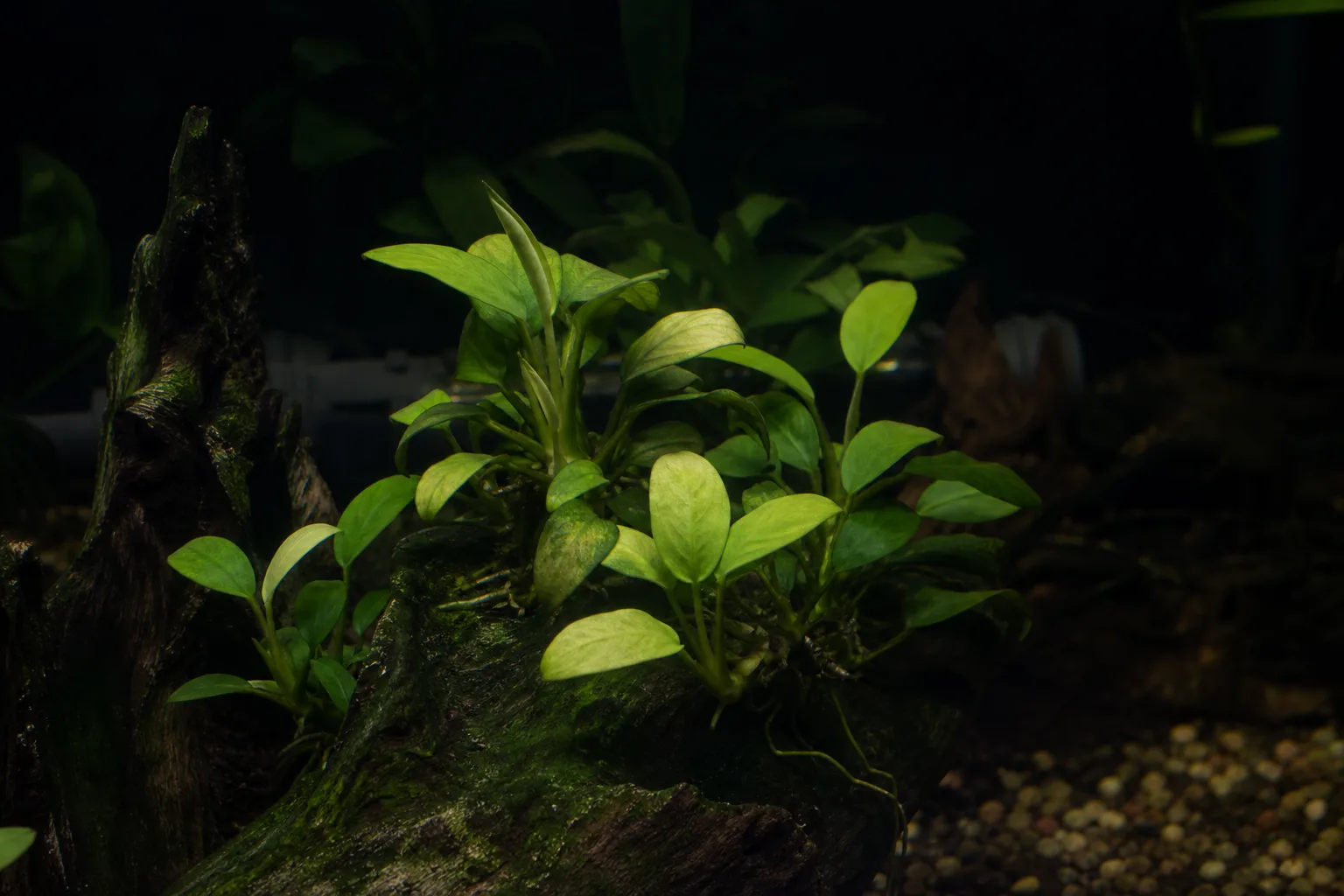
Not Enough Light on Anubias: Causes, Checks & Fixes
This guide covers not enough light on Anubias. See also the general Not Enough Light guide, watering, and light pages for this plant.
Not Enough Light on Anubias: Causes, Checks & Fixes
Quick answer
Anubias (Anubias barteri and cultivars such as Anubias barteri var. nana) is marketed as a low-light aquarium plant, and that is mostly true-but low light is not zero light. In turtle tanks, deep aquaria with weak hood LEDs, corners buried under floating plants, or setups where the display light never runs, the rhizome can sit below usable brightness for months. The plant survives but stops producing new leaves, and older foliage may fade or yellow from combined light and nutrient stress.
At the rhizome tip, aim for roughly 20–40 µmol/m²/s PAR for steady growth-below about 15 µmol, many setups see months between new leaves. See our Anubias light requirements guide for fixture tuning and PAR measurement tips.
First step: verify that aquarium light actually reaches the rhizome where new leaves emerge. Reposition the mount higher on hardscape, trim back floaters shading the plant, and confirm the tank light runs 6–8 hours daily on a timer. Watch for a new leaf within two to four weeks before adding liquid fertilizer, CO₂, or a brighter lamp stack.
What not enough light looks like on Anubias
Anubias grows slowly even in good conditions-roughly one new leaf every two to three weeks on barteri, and sometimes three to four weeks on compact nana in low-tech tanks. Low-light stress pushes that timeline much further.
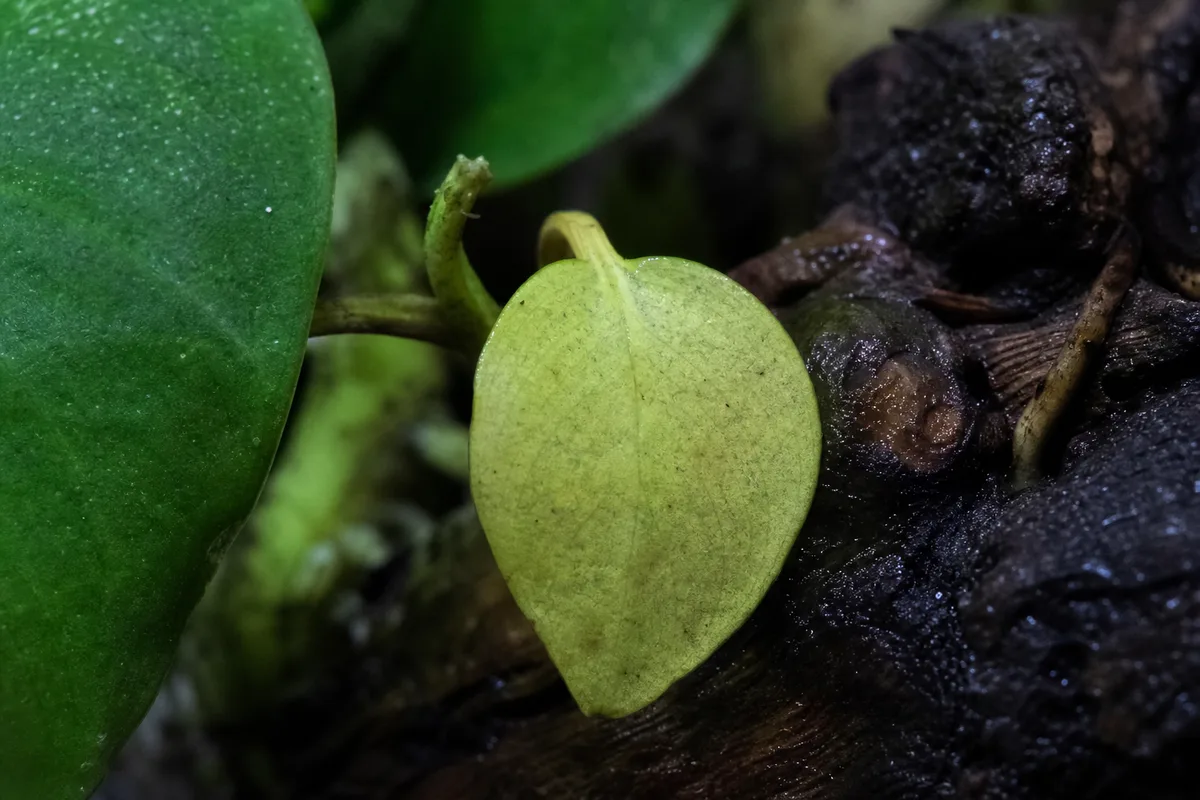
Not Enough Light symptoms on Anubias - compare with healthy tissue on the same plant.
Watch for these patterns on the rhizome and newest leaves, not just overall tank algae:
- No new leaves for two to three months while the rhizome stays firm and attached
- New leaves smaller and paler than older submersed leaves on the same rhizome
- Flat rhizome with no extension-the plant looks frozen in place season after season
- Gradual yellowing on older leaves without mushy petiole bases (nutrient stress worsened by low photosynthesis-cross-check yellow leaves on Anubias if color change dominates)
- Strong contrast within the same tank-Anubias under a bright LED grows while a shaded clone on the bottom does nothing
What does not usually mean low light on Anubias:
- Green, brown, or hair algae coating the leaf blade-slow Anubias leaves in too much light often collect algae before they stretch
- Translucent melt on emersed-grown leaves right after purchase-acclimation, not chronic darkness
- Soft rhizome with goo at leaf stalk bases-rhizome rot, not light alone
- Stretching toward a window-that is terrestrial houseplant behavior; submerged Anubias does not lean toward room light meaningfully
Because Anubias is an epiphyte with a horizontal rhizome, symptoms show at the growing tip and newest petioles. A dark old leaf on the back of the rhizome may age out normally while the front tip fails to sprout-that localized stall is a light-placement clue.
Symptom lookalike quick reference
| Pattern | Firm rhizome? | New leaves? | Most likely cause |
|---|---|---|---|
| Months of zero growth in a shaded corner | Yes | None | Low light at rhizome |
| One leaf every 2–4 weeks, steady color | Yes | Slow but regular | Normal growth - see slow growth on Anubias |
| Translucent brown drop after purchase | Yes | Occasional small leaf | Emersed melt - wait 4–8 weeks |
| Pale new leaves, dark veins, bright zone | Yes | Small, chlorotic | Nutrient deficiency |
| Mushy rhizome, stalk goo, foul smell | No | None or dropping | Rhizome rot |
| Algae film, short leaves, bright lamp overhead | Yes | Stunted | Too much light |
Why Anubias lacks sufficient light
Native to stream margins and wet forest shade in West and Central Africa/27805), Anubias evolved for filtered, moderate light-not sun-baked open water and not perpetual shadow. In aquariums, insufficient usable light usually comes from setup geometry, not from choosing the wrong species.
Common causes in turtle and community tanks:
- Weak stock hood LEDs on tall tanks - light intensity drops sharply with depth; a rhizome on the bottom of an 18-inch tank may receive a fraction of the PAR at the surface
- Hardscape and floating-plant shade - duckweed, frogbit, or a tall driftwood arch can block the only light path to a rhizome tied underneath
- Photoperiod too short or inconsistent - room ambient light does not replace a dedicated aquarium lamp; lights left off for days stall slow growers first
- Dirty glass, lids, or condensation film - cuts PAR more than owners notice
- Turtle basking lamps that never reach submerged plants - heat bulbs over a dock do not substitute for aquarium plant lighting on the opposite end
- Deep substrate planting mistakes - burying the rhizome causes rot, but even correctly mounted plants on the lowest inch of gravel in a dark corner stay shaded
- Winter room changes - tanks moved away from a supplemental window glow lose the small boost they had
- Aged or dimming LEDs - diode output falls over years; a tank that once grew Anubias mid-water may no longer deliver usable PAR at the rhizome
Anubias absorbs nutrients primarily through the water column and rhizome, not heavy root feeding. Without enough light to drive photosynthesis, pale leaves persist even when nitrates are present-a pattern that looks like fertilizer deficiency but starts with photons not reaching chlorophyll.
How to confirm the cause
Work through these checks before buying expensive gear:
- Rhizome placement - Is the growing tip in the lower third of a deep tank, under wood, or directly beneath floating plants? Shade here is the leading fixable cause.
- Night-tank look - Turn off room lights. If the Anubias zone is nearly black while the surface under the fixture glows, light is not reaching the plant.
- Same-tank comparison - If another Anubias section higher on the same driftwood produces leaves and the lower section does not, placement-not species-limits growth.
- Rhizome firmness - Press the rhizome. Firm and green supports light stress or normal slowness; mushy, jelly-like, or foul-smelling tissue means rot or burial damage-different emergency. Route to root rot on Anubias if rot signs appear.
- Photoperiod audit - Log how many hours the aquarium light runs. Occasional long days do not replace weeks of 6–8 hour consistency.
- Recent tank history - New plants may melt emersed leaves without growing submersed replacements for several weeks; wait until melt stabilizes before blaming chronic low light.
- Nutrient cross-check - If light looks adequate on placement but new leaves stay bright yellow with dark veins, test nitrates and consider liquid fertilizer after light is confirmed-not before.
- PAR estimate - If you have a meter or app, measure at the rhizome. Readings consistently below 15 µmol/m²/s explain stalled growth; 20–40 µmol is the comfortable target band from our light requirements guide.
Confirmed low light: firm rhizome, no rot smell, no melt goo at stalk bases, zero new leaves for months in a visibly shaded zone, improvement beginning within two to four weeks after repositioning or adding modest light.
First fix for Anubias
Move the rhizome to the brightest usable zone in the tank without jumping straight to high PAR.
Unwind thread or gently lift super-glue mounts if needed, then reattach mid-height on rock or driftwood where the fixture still illuminates the growing tip. Trim floating plants blocking the path. Set or confirm a timer at 6–8 hours of aquarium light daily.
Do not bury the rhizome deeper to hold the plant while troubleshooting. Do not crank a high-output planted-tank LED to maximum on day one-Anubias in sudden intense light often grows algae on existing leaves faster than it grows new ones.
Only if repositioning plus a stable photoperiod produces no new leaf after four weeks should you upgrade to a moderate planted-aquarium LED with adjustable intensity-see the fixture section in our Anubias light guide for PAR targets at leaf height.
Step-by-step recovery
After the first placement fix, continue in this order:
- Clean the light path - Wipe aquarium glass, lid panels, and fixture lenses. Remove floating mats above the rhizome.
- Hold photoperiod steady - Start around 6–8 hours on a timer. Longer runs in a dim tank fuel algae more than they rescue Anubias.
- Wait one full Anubias leaf cycle - Two to four weeks is a realistic first response window for barteri; nana may need an extra week in very low-tech setups.
- Add liquid fertilizer only after new growth - If fresh leaves emerge but stay pale, dose an aquarium-safe liquid fertilizer at label rates. Feeding a dark tank without fixing light invites algae.
- Trim spent tissue - Remove yellow or algae-coated old leaves with sharp scissors without cutting into the rhizome. Hygiene helps you see new buds clearly.
- Upgrade light if needed - Choose a fixture that delivers low to moderate PAR at the rhizome depth, not blinding surface brightness alone.
- Rebalance the aquascape - Pair Anubias with other low-light epiphytes (Java fern, moss) rather than high-light carpets that force you to over-light the whole tank.
Hold CO₂ injection and copper-based algae treatments unless you already run a planned high-tech system-neither fixes a shaded rhizome in a low-tech turtle tank.
Recovery timeline
Two to four weeks after usable light reaches the rhizome, watch for a new leaf bud at the growing tip. That is the primary success marker.
Six to eight weeks of consistent light may be needed on severely shaded plants or after acclimation melt finishes. Anubias rarely bounces back overnight.
Old leaves do not re-darken or enlarge once formed. A small pale leaf from a dark period stays small-judge recovery by the size and color of the next leaf, not by repairing every existing blade.
Worsening signs during the wait: rhizome softening, leaf stalks detaching with soggy bases, or foul odor-stop light troubleshooting and treat as rhizome rot instead.
Lookalike symptoms
Normal slow growth - One new leaf every two to three weeks with a firm rhizome and steady, if unexciting, color is healthy Anubias-not a crisis. Our slow growth guide covers when patience is appropriate versus when to intervene.
Emersed-to-submersed melt - Older nursery leaves translucent-brown and drop after setup; rhizome firm; occasional new leaf within two to three weeks of planting points to acclimation.
Nutrient deficiency - Pale new growth with dark veins while the plant sits in a well-lit zone; fix fertilizer and water changes, not placement.
Rhizome rot - Mushy rhizome, jelly discoloration, stalks pulling away with goo; often from buried rhizome or physical damage-not from dim light alone.
Too much light - Algae film on Anubias blades while stems stay short; common when a slow grower sits directly under a high-PAR lamp without shade from taller plants.
What not to do
Do not assume Anubias needs no aquarium light because it is “low light tolerant.” Survival without growth still means insufficient energy for new leaves.
Do not blast high-intensity planted-tank lighting immediately to fix months of shade-algae on slow leaves arrives before useful new growth.
Do not bury the rhizome in gravel to anchor the plant while moving it-burial rot mimics and worsens a stalled plant.
Do not dose heavy fertilizer or iron in a dark tank to “wake up” Anubias-without photosynthesis, nutrients feed algae instead.
Do not judge turtle-tank plants by basking-lamp brightness on the dock; submerged rhizomes need aquarium photons.
Do not stack fixes on day one-reposition, set the timer, wait one leaf cycle, then adjust fertilizer or hardware.
How to prevent low-light stress
- Mount mid-height on rock or driftwood in low-tech and turtle tanks so the rhizome sits in the middle light field, not the substrate shadow
- Run aquarium lights on a timer at a consistent 6–8 hour photoperiod for low-energy setups
- Clean glass and lids monthly so PAR is not stolen by film and hard-water scale
- Trim floating plants before they form a solid canopy over Anubias
- Match species to tank depth - for tall tanks, use moderate LEDs or keep epiphytes elevated rather than only low-growing carpet plants at the bottom
- Quarantine new plants under moderate light so submersed leaves establish before you tuck them into a decorative dark corner
Stable clean water, an exposed rhizome, and predictable light keep Anubias resilient. This species forgives many beginner mistakes-but it cannot manufacture new leaves in a zone that never sees the fixture.
When to worry
Low light alone rarely kills a firm Anubias rhizome; it stalls growth until conditions improve. Escalate when:
- The rhizome turns soft, discolored, or smells rotten-treat rot immediately, not light
- Every leaf yellows within weeks while nitrates read zero and light is already strong-suspect starvation or water-quality collapse
- Algae coats all Anubias leaves under long photoperiods-reduce light duration and rebalance nutrients rather than adding more hours
- No new growth after four to six weeks of confirmed good placement and upgraded moderate lighting-reinspect for buried rhizome sections, hidden rot, or chronic cold water slowing metabolism
For a firm rhizome with no new leaves in a shaded corner, repositioning and a timer fix is enough urgency-patience matters on this slow species.
Anubias care cross-check
| Topic | Where to read next |
|---|---|
| PAR targets, photoperiod, algae control | Anubias light requirements |
| Rhizome decay and mushy tissue | Root rot on Anubias |
| Pale or yellow foliage patterns | Yellow leaves on Anubias |
| When slowness is normal vs. stalled | Slow growth on Anubias |
| Species traits and general care | Anubias care overview |
Conclusion
Not enough light on Anubias is usually a placement and photoperiod problem at the rhizome tip-not a mystery disease. Move the plant to usable brightness, set a 6–8 hour timer, and wait one leaf cycle before fertilizing or buying high-output gear. For PAR numbers and fixture upgrades, continue with our Anubias light requirements guide.
When to use this page vs other Anubias guides
- Anubias watering guide - Use for routine moisture checks before assuming not enough light is the main issue.
- Anubias problems hub - Browse all 16 common issues on this species.
- Leggy Growth on Anubias - Different entry point when symptoms overlap with not enough light.
- Slow Growth on Anubias - Different entry point when symptoms overlap with not enough light.
- Yellow Leaves on Anubias - Different entry point when symptoms overlap with not enough light.