Slow Growth on Anubias: Causes, Checks & Fixes
Quick answer
Anubias is naturally slow-often one new leaf every two to four weeks in good conditions. First step: confirm the rhizome is firm and exposed, check that tank water stays near 72–82°F, and verify aquarium light reaches the growing tip before adding fertilizer.
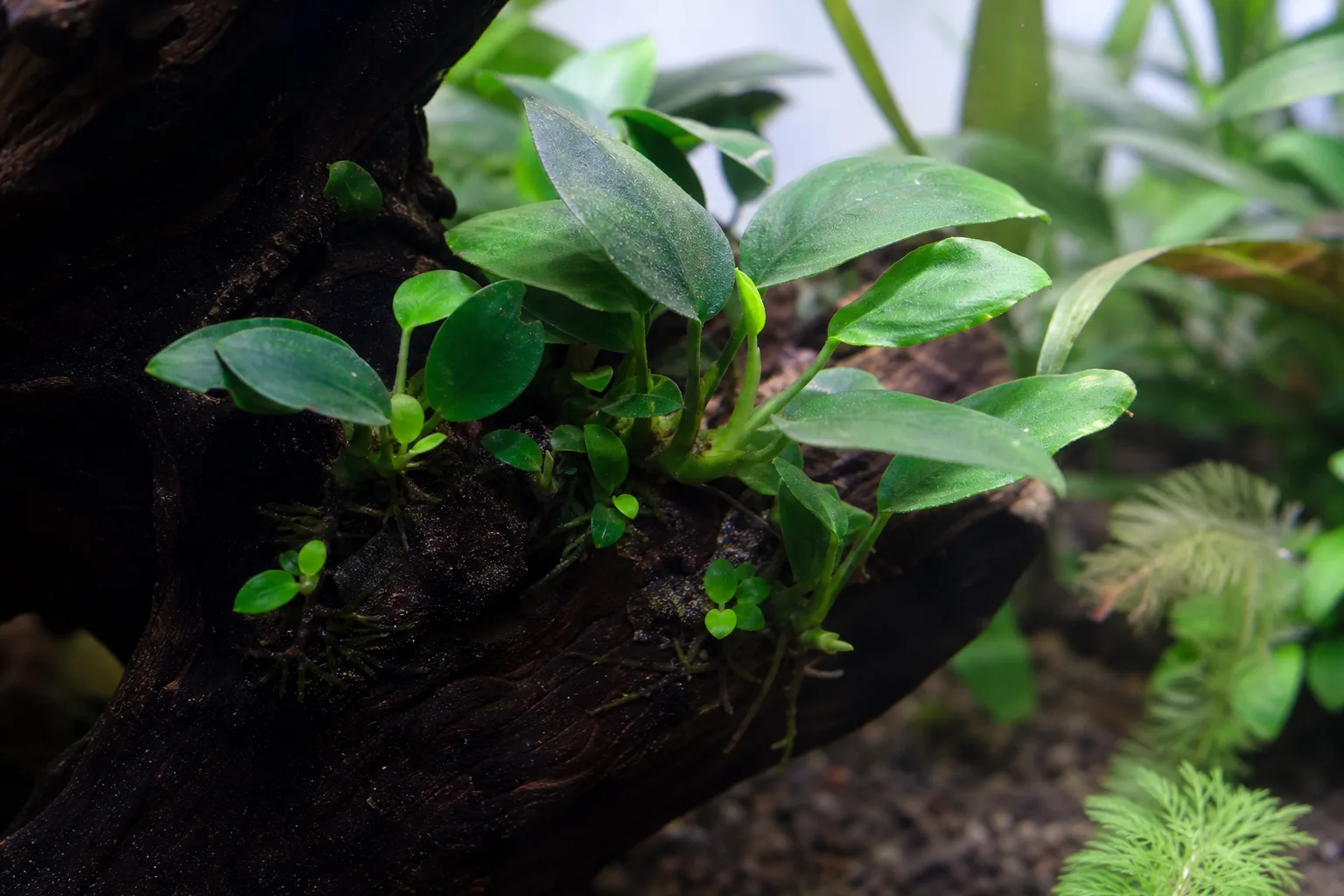
Slow Growth on Anubias: Causes, Checks & Fixes
This guide covers slow growth on Anubias. See also the general Slow Growth guide, watering, and light pages for this plant.
Slow Growth on Anubias: Causes, Checks & Fixes
Quick answer
Most “slow growth” searches on Anubias are half diagnosis and half expectation reset. Anubias barteri and its cultivars are notoriously slow aquarium epiphytes-in many home tanks a healthy rhizome produces one new leaf every two to four weeks, and low-tech setups may wait longer. That pace is normal, not a crisis.
First step: confirm the rhizome is firm, green, and fully exposed on rock or wood-not buried in gravel. Check that tank water sits near 72–82°F (22–28°C) and that aquarium light actually reaches the growing tip where leaves emerge. Only after those three checks should you adjust fertilizer or hardware. If the rhizome turns soft or smells foul, treat rhizome rot instead of chasing growth speed.
Is slow growth normal for Anubias?
Yes-and more often than owners admit. Anubias evolved as a rheophyte on West and Central African stream margins, clinging to rock and wood in filtered shade. The genus stores energy in a thick horizontal rhizome and replaces leaves slowly because each blade may sit on the plant for months. Hobby references consistently list Anubias among the slowest common aquarium plants.
Healthy baseline signs:
- One new leaf every two to four weeks in moderate light and stable tropical water
- Rhizome slowly extending along hardscape-even if individual leaves look unchanged
- Dark green older leaves with no mush at petiole bases
- Occasional small white flower on a mature rhizome (optional; not required for “health”)
Cultivar matters for perceived speed. Anubias barteri var. nana stays compact; larger barteri, congensis, and frazeri forms push fewer, bigger leaves per year. Comparing your nana to a friend’s tall congensis timeline will mislead you.
If you see steady-if unexciting-new leaves on a firm rhizome, the plant is doing what Anubias does. The rest of this guide covers when that slowness crosses into a real stall.
When stalled growth is actually a problem
Treat growth as abnormally stalled when all of the following apply:
- No new leaf for two to three months after acclimation melt finishes
- Rhizome stops extending-flat, frozen profile season after season
- New leaves emerge smaller and paler than older submersed leaves on the same rhizome
- Tank mates of the same species grow faster in a brighter zone of the same aquarium
Separate acclimation pause from chronic stall. Nursery Anubias is often grown emersed (in humid air). After submersing, old leaves melt over four to eight weeks while the rhizome rebuilds aquatic foliage. A firm rhizome with melting edges during that window is normal-do not stack light, fertilizer, and CO₂ on day one.
Escalate immediately when:
- The rhizome feels mushy, jelly-like, or smells rotten → rhizome rot
- Every leaf yellows within weeks while ammonia reads above zero → water-quality emergency
- Soft tissue spreads toward healthy leaves after a buried-rhizome mistake
What slow growth looks like on Anubias
On this epiphyte, “slow” shows at the rhizome tip and newest petioles, not as a shrinking root ball in soil.
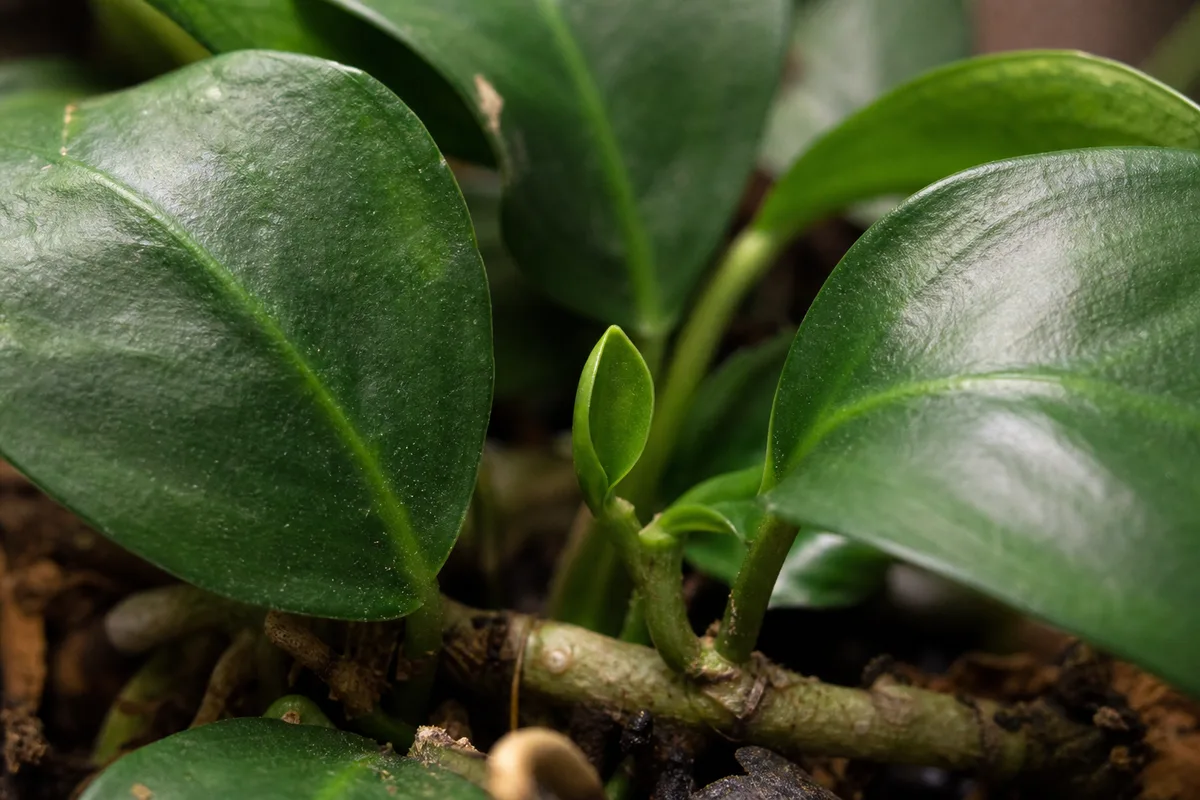
Slow Growth symptoms on Anubias - compare with healthy tissue on the same plant.
Normal slow growth (healthy):
- Firm rhizome with a visible bud or one leaf every few weeks
- Older leaves aging out yellow-brown while new ones look proportionate
- Plant unchanged for weeks, then a single new blade overnight
Abnormal stall patterns:
- Zero buds for months in a shaded bottom corner or under floating-plant mat
- Pale, small new leaves while older leaves stay dark-light or nutrient stress
- Rhizome firm but frozen in water chronically below 72°F
- Algae coating every leaf in a bright zone-often excess light on a slow grower, not pure darkness
- Post-melt silence-melt finished, rhizome firm, but no submersed replacement for eight-plus weeks
Anubias does not stretch toward room windows like a houseplant. Submerged specimens do not “leggy” toward a desk lamp-if you see leaning, check whether the mount slipped or flow is pushing the rhizome.
How to confirm the cause
Work through this numbered workflow before buying gear. Change one variable at a time so you can read the plant’s response.
1. Rhizome health and mount check
Press the rhizome with clean fingers along its full length.
- Firm, slightly springy, green to brown-green → healthy tissue; continue checks below
- Mushy, black, or foul-smelling → rot or burial damage; stop growth troubleshooting and trim to firm tissue per root rot on Anubias
Confirm the rhizome stays above substrate-only fine holdfast roots may trail into gravel. Burying the stem suffocates tissue and can stall growth weeks before visible rot. Reattach with thread or gel glue if needed; never bury deeper to “anchor” while troubleshooting.
2. Light reaching the rhizome
Turn off room lights and look at the tank. Does the aquarium fixture illuminate the growing tip, or is the rhizome in shadow under wood, duckweed, or the bottom third of a tall tank?
Cross-check against our dedicated not enough light on Anubias guide if:
- No new leaf for two to three months in a visibly dark zone
- Another section of the same rhizome in brighter water grows faster
- Photoperiod runs inconsistently or under six hours daily
Target low to moderate PAR at the leaf-roughly 20–40 µmol/m²/s in most low-tech tanks per our Anubias light guide. Anubias survives deeper shade but stalls there.
3. Water temperature check
Measure with a reliable thermometer at rhizome depth-not just at the surface near a heater.
| Reading | Typical effect on Anubias |
|---|---|
| 72–82°F (22–28°C) | Normal metabolic range; baseline growth rates apply |
| 65–71°F (18–21°C) | Metabolism slows; one leaf may take months |
| Below 65°F (18°C) | Growth often pauses; cold stress compounds with low light |
| Above 86°F (30°C) | Uncommon stall; watch oxygen and algae instead |
If your tank runs cool, raise temperature gradually into the ideal band and wait one full leaf cycle before the next change.
4. Nutrients in low-tech vs. high-tech tanks
Anubias is a light feeder that absorbs nutrients from the water column and rhizome-not from buried root tabs. In a stocked community tank, fish waste often supplies enough nitrogen and phosphorus without bottled products.
Suspect nutrient-linked stall when:
- New leaves stay bright yellow with dark veins in a well-lit zone
- Tank is shrimp-only or lightly stocked with zero dosing
- Fast stem plants thrive while epiphytes on the same hardscape pale
Do not dose heavy liquid fertilizer in a dark or cold tank-unused nutrients feed algae on leaves that take weeks to replace. See our Anubias fertilizer guide for conservative dosing after light and temperature are confirmed.
5. Symptom lookalike table
| What you see | Likely cause | First check |
|---|---|---|
| One leaf every 2–4 weeks, firm rhizome | Normal Anubias pace | None needed-track dates monthly |
| No leaf for 3+ months, dark bottom corner | Insufficient light | Reposition rhizome; confirm 6–8 hr photoperiod |
| No leaf for months, water at 68°F | Cold metabolism stall | Heat to 72–82°F; wait 4–6 weeks |
| Pale small new leaves, good placement | Nutrient deficiency | Test nitrates; half-strength liquid after light OK |
| Translucent melt first 4–8 weeks after purchase | Emersed-to-submersed acclimation | Trim melt; wait-firm rhizome is key |
| Mushy rhizome, goo at stalk bases | Rhizome rot | Trim and reattach; never bury |
| Algae on every leaf under bright LED | Excess light on slow grower | Shade rhizome; shorten photoperiod |
First fix for slow growth on Anubias
Stabilize temperature and confirm light reaches the rhizome before adding fertilizer or CO₂.
In order:
- Verify rhizome exposure - Lift any buried section; reattach to rock or wood with the stem in the water column.
- Measure tank temperature - Target 72–82°F; adjust heater if chronically cool.
- Reposition to usable light - Move the growing tip to mid-height where the aquarium fixture still shines; trim floaters blocking the path.
- Set a 6–8 hour photoperiod on a timer-consistent aquarium light, not room ambient alone.
- Wait one full leaf cycle (two to four weeks, longer if recovering from melt or cold) before the next intervention.
Only if a new leaf emerges but stays pale should you add half-strength aquarium liquid fertilizer at label rates. Only if no bud after four to six weeks of confirmed good placement and temperature should you upgrade to a moderate planted-tank LED-not a blinding high-PAR blast on day one.
Recovery timeline
Two to four weeks after usable light and stable temperature reach the rhizome, watch for a new bud at the growing tip. That single leaf is the primary success marker.
Four to eight weeks may be needed after:
- Severe shade correction
- Cold-water recovery
- Post-melt acclimation from emersed nursery stock
Old leaves do not enlarge once formed. A small pale leaf from a dark period stays small-judge recovery by the size and color of the next leaf, not by repairing every existing blade.
Worsening during the wait: rhizome softening, spreading black tissue, or foul odor → abandon growth tuning and treat rot. No improvement after six weeks with confirmed light, temperature, and firm rhizome → reinspect for hidden buried sections, chronic zero nitrates in a low-bioload tank, or overlapping yellow leaves from water-quality stress.
What not to do
Do not bury the rhizome in gravel to hold the plant while “fixing” slow growth-burial rot mimics and worsens stall.
Do not dose heavy fertilizer or iron in a dark or cold tank to “wake up” Anubias-without photosynthesis, nutrients feed algae.
Do not crank high-PAR lighting immediately after months of shade-algae colonizes slow leaves before useful new growth appears.
Do not compare Anubias to stem-plant growth rates-Ludwigia or Hygrophila timelines do not apply to this genus.
Do not stack Anubias repotting guide, pruning, algae treatments, and fertilizer on the same day-make one change, wait one leaf cycle.
Do not apply houseplant advice (soil moisture, pot drainage, bright indirect window light)-Anubias lives fully submerged on hardscape. For everyday water and flow management, see the Anubias overview.
How to prevent false slow-growth alarms
- Track new-leaf dates on a calendar-normal slowness feels like failure without data
- Mount mid-height on driftwood or rock so the rhizome sits in the middle light field, not substrate shadow
- Run aquarium lights on a timer at 6–8 hours for low-tech tanks
- Keep water near 72–82°F with a reliable heater in temperate rooms
- Expose the rhizome always-attach with thread or gel glue; roots may trail, stem may not bury
- Budget four to eight weeks after buying emersed stock before judging submersed growth
- Pair expectations to cultivar-nana stays compact; larger barteri forms produce fewer big leaves per year
- Cross-check light and nutrients using our light and fertilizer guides before assuming the plant is “broken”
Stable clean water, exposed rhizome, predictable light, and tropical temperature keep Anubias resilient. Anubias overview forgives many beginner mistakes-but it cannot manufacture leaves faster than its biology allows, and it cannot grow in a zone that never sees the fixture.
Conclusion
Slow growth on Anubias usually means normal genus pace, not emergency failure. Confirm a firm exposed rhizome, 72–82°F water, and aquarium light on the growing tip before fertilizing or upgrading hardware. Separate healthy two-to-four-week leaf turnover from months of zero buds, acclimation melt, cold stall, light shade, and rot. Recovery shows up as the next leaf-give the plant two to six weeks after your first fix, treat soft rhizome tissue as rot, and use sibling guides on low light, fertilizer, and rhizome rot when symptoms point there instead.
When to use this page vs other Anubias guides
- Anubias watering guide - Use for routine moisture checks before assuming slow growth is the main issue.
- Anubias problems hub - Browse all 16 common issues on this species.
- Not Enough Light on Anubias - Different entry point when symptoms overlap with slow growth.
- Leggy Growth on Anubias - Different entry point when symptoms overlap with slow growth.
- Yellow Leaves on Anubias - Different entry point when symptoms overlap with slow growth.