Leggy Anubias? Why Aquarium Plants Don't Stretch & What
Quick answer
Submerged Anubias does not classic 'leg' toward light; sparse tanks usually mean low PAR stunting, not stem stretch. First step: decide emersed vs submerged culture, then reposition the rhizome mount or windowsill exposure before changing fertilizer.
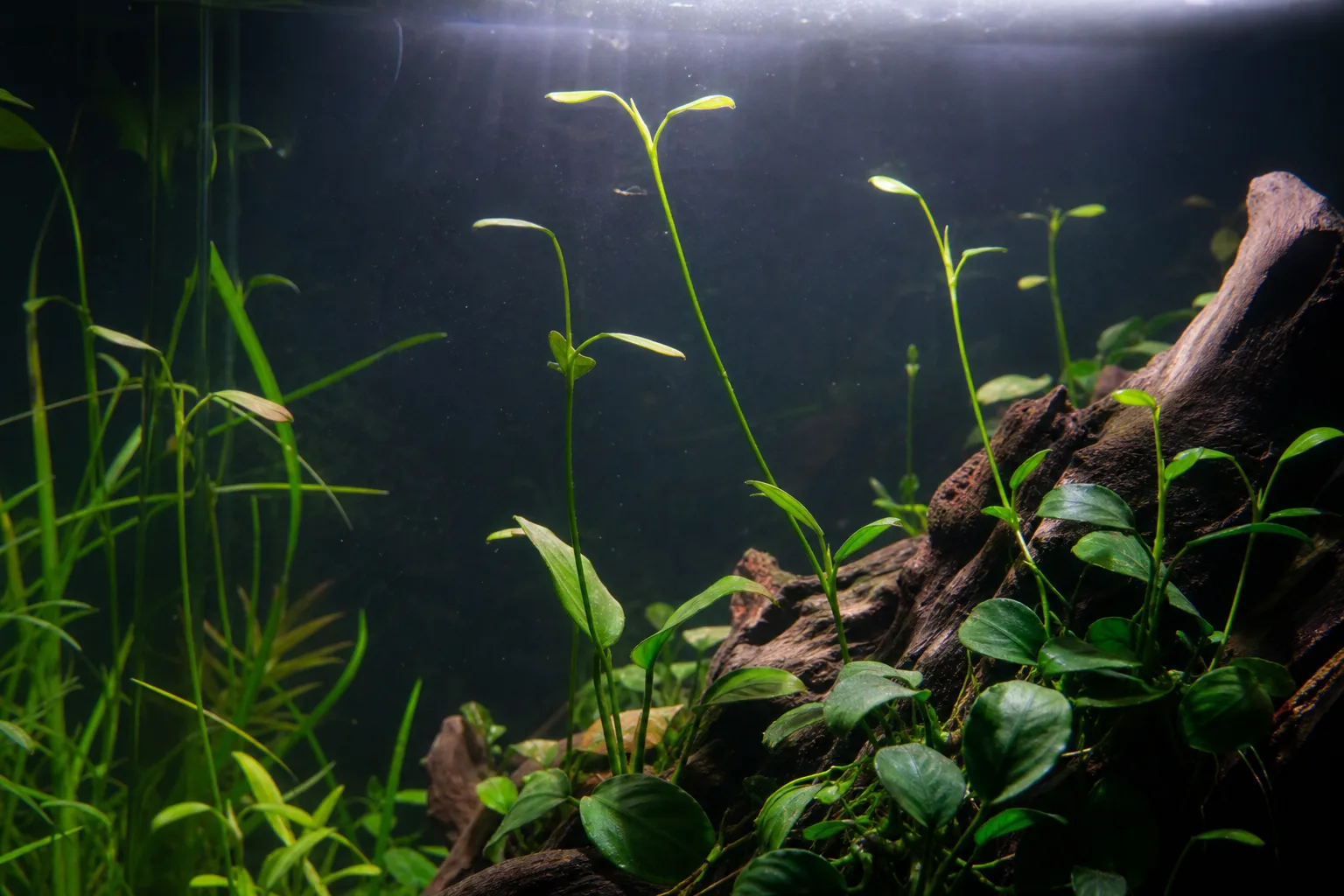
Leggy Growth on Anubias: Causes, Checks & Fixes
This guide covers leggy growth on Anubias. See also the general Leggy Growth guide, watering, and light pages for this plant.
Leggy Growth on Anubias: Causes, Checks & Fixes
Quick answer
Searchers often ask about leggy Anubias using houseplant vocabulary-long internodes, bare stems, lean toward a window. That frame fits pothos, not a submerged aquarium epiphyte. Anubias barteri and its dwarf forms grow from a creeping horizontal rhizome with slow leaf production-typically one new leaf every two to three weeks in healthy tanks-and does not stretch toward room light when fully underwater.
When Anubias looks “leggy,” “sparse,” or “stretched,” the real patterns are usually:
- Submerged tank: months with no new leaves, smaller pale new blades, or a flat frozen rhizome in a shaded bottom corner-low PAR stunting covered on our not enough light on Anubias guide
- Emersed windowsill or paludarium: longer petioles and one-sided lean toward brighter light-classic shade-seeking on an aroid grown in air
- Misread normal slowness: a compact rhizome with steady but unexciting growth mistaken for a problem
First step: decide emersed vs submerged culture. Aquarium owners should verify that light reaches the rhizome tip before any fertilizer change-then follow the not enough light on Anubias workflow if the rhizome sits in shade. Emersed growers should rotate toward bright indirect light and compare petiole length on both sides. Do not check soil moisture, repot into gravel, or bury the rhizome on a hardscape mount.
Why submerged Anubias does not get leggy
Leggy growth on mint, jasmine, or rubber plants is etiolation: internodes lengthen, leaves shrink, and stems bend toward the brightest window when photons are too few. Anubias underwater does not follow that script.
The plant is a rhizome epiphyte native to shaded forest stream margins in West and Central Africa. Leaves and roots emerge from a thick horizontal stem that creeps along rock or wood. There are no elongating internodes between aerial stem sections like a vining houseplant. Growth adds new leaves at the rhizome tip on short petioles, not vertical stretch toward a fixture.
Under low PAR in an aquarium, Anubias stalls rather than reaches. You see zero new leaves for months, smaller submersed replacements, and a plant that looks sparse because metabolism is slow-not because it is climbing toward photons. That behavior matches the not-enough-light symptom set and differs sharply from pothos etiolation.
Emersed culture changes the picture. Anubias can grow emersed-leaves in air, roots wet-and in that form longer petioles and directional lean toward a window are plausible. Paludarium tops and nursery emersed pots behave more like semi-terrestrial aroids than like submerged hardscape mounts.
What “leggy Anubias” usually means
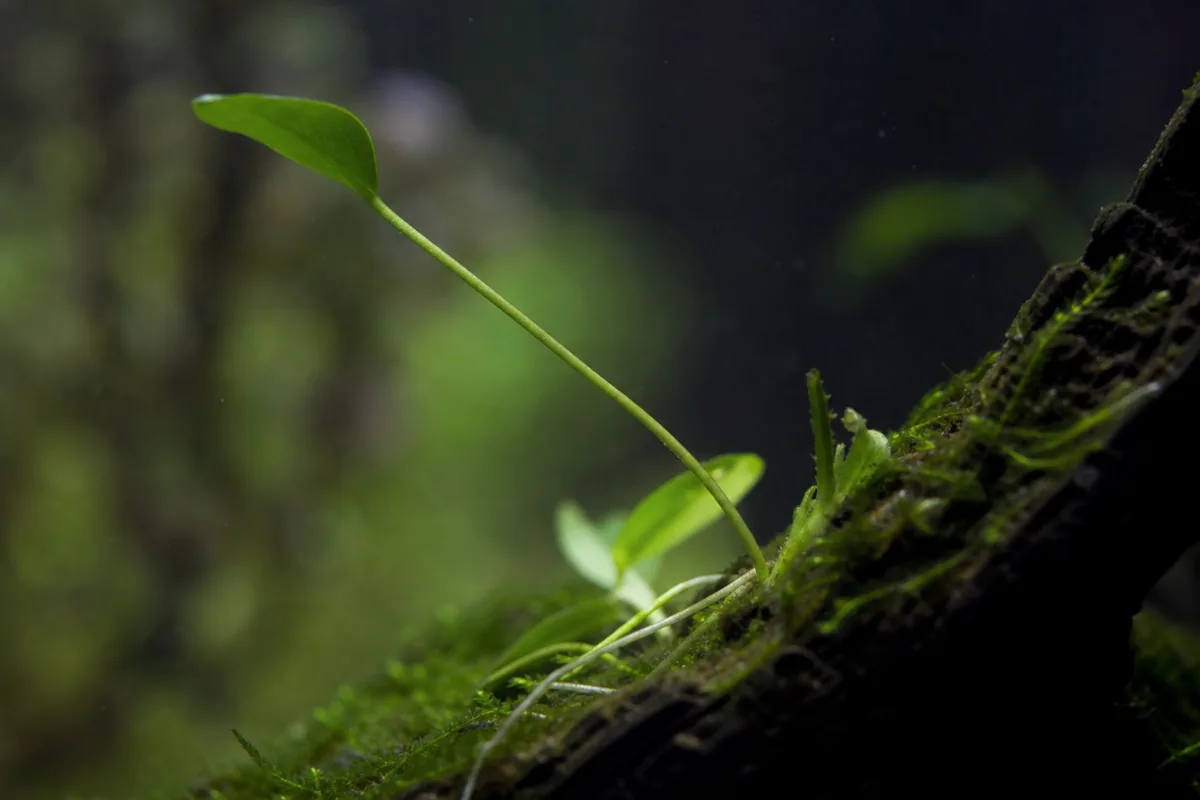
Leggy Growth symptoms on Anubias - compare with healthy tissue on the same plant.
Growers import stretch language from terrestrial plants. Map common phrases to Anubias-specific signs:
| What you might say | What you are probably seeing on Anubias |
|---|---|
| ”Leggy” or “etiolated” | Wrong frame for submerged mounts-check low PAR stunting instead |
| ”Sparse” or “not filling in” | Slow rhizome with few leaves; months without new growth in a shaded zone |
| ”Long stems” | Emersed petioles lengthening toward a window, or tall varieties like A. congensis-not underwater internode stretch |
| ”Reaching for light” | One-sided lean on emersed plants; submerged plants do not lean toward room windows |
| ”Tall and thin” | Normal slow submersed growth mistaken for stretch, or paludarium/emersed elongation |
| ”Stretched leaves” | Smaller pale new submersed leaves under low light-not old leaves growing longer |
Healthy submerged Anubias under adequate PAR produces dark green, leathery leaves on a firm rhizome with occasional new blades at the tip. A plant that survives but never sprouts in the lowest third of a tall tank is usually light-starved, not leggy-and belongs on the not enough light diagnostic path.
How to confirm sparse or elongated growth
Work through this confirmation path before fertilizer stacks, rhizome burial, or high-output LED upgrades:
- Culture type - Fully submerged on hardscape, or emersed/paludarium with leaves in air? Submerged sparse growth → light placement first. Emersed one-sided lean → window exposure and rotation.
- Rhizome firmness - Press the rhizome. Firm and green supports light stress or normal slowness; mushy, jelly-like, or foul-smelling tissue means rhizome rot-a different emergency.
- Newest leaf at the tip - Any bud in the last two to three months? Zero new leaves in a shaded bottom corner with firm rhizome strongly suggests insufficient PAR at the mount.
- Night-tank look - Turn off room lights. If the Anubias zone is nearly black while the surface under the fixture glows, light intensity drops sharply with depth and your mount may sit below usable PAR.
- Same-tank comparison - Another section of rhizome higher on the same driftwood producing leaves while the lower section stalls confirms placement-not species failure.
- Emersed petiole symmetry - On windowsill culture, compare stalk length on the window side vs the back. Uneven elongation confirms directional light hunger.
- Recent purchase melt - Emersed-grown leaves may melt after submerging without immediate replacements; wait until melt stabilizes before blaming chronic low light.
Rule out lookalikes before treating:
- Low PAR stunting (primary aquarium overlap) - firm rhizome, no new leaves for months in shade; full workflow on not enough light on Anubias
- Normal slow growth - one new leaf every two to three weeks with steady color; see slow growth on Anubias when pace feels wrong but light placement looks adequate
- Rhizome rot - soft rhizome, goo at petiole bases; often from buried rhizome or damage-not dim light alone
- Too much light - algae coating slow leaves while stems stay short; common under high PAR without shade
- Nutrient deficiency - pale new growth with dark veins in a well-lit zone; fix fertilizer after light is confirmed
- Tall species genetics - Anubias congensis and large A. barteri forms naturally carry longer petioles; not etiolation
For photoperiod tables, PAR repositioning steps, and turtle-tank hood checks, use the not enough light on Anubias guide after you map symptoms here.
First fix for sparse or elongated Anubias
Aquarium (submerged): move the rhizome to the brightest usable zone mid-height on hardscape and confirm a 6–8 hour aquarium photoperiod on a timer-then wait one leaf cycle before other changes.
Unwind thread or gently lift glue mounts if needed. Reattach where the fixture still illuminates the growing tip, not the substrate shadow in a tall tank. Trim floating plants blocking the path. Do not bury the rhizome deeper to hold the plant while troubleshooting-that invites rot, not fuller growth.
Emersed (windowsill or paludarium): rotate the container for even bright indirect light and shorten the weakest-side exposure gap with a supplemental grow lamp if one side keeps producing longer petioles.
Hold CO₂, copper treatments, and heavy fertilizer until you see how the plant responds. Anubias absorbs nutrients primarily through the water column; feeding a dark tank without fixing photons feeds algae instead.
Only after four weeks of corrected placement with no new leaf should you upgrade to a moderate planted-aquarium LED or review PAR targets on the Anubias light guide.
Recovery timeline
Submerged: expect a new leaf bud at the rhizome tip within two to four weeks after usable PAR reaches the mount. That single new blade is the primary success marker-not shorter old petioles.
Emersed: petiole elongation on the window side should stop lengthening disproportionately within two to three weeks after even light or rotation. New leaves may emerge at a more balanced size.
Old tissue does not revert. A small pale submersed leaf from a dark period stays small. A long emersed petiole does not shrink. Judge recovery by the next leaf, not by repairing every existing blade.
Six to eight weeks may be needed on severely shaded rhizomes or after acclimation melt finishes. Anubias rarely responds overnight.
Worsening signs during the wait: rhizome softening, stalks detaching with soggy bases, or foul odor-stop light troubleshooting and treat as rhizome rot on the root rot page instead.
Lookalike symptoms
- Not enough light (primary aquarium overlap) - sparse frozen rhizome in shade; this leggy-growth page translates search language, while not enough light on Anubias carries the full diagnostic and recovery workflow
- Slow growth from cold or nutrients - see slow growth on Anubias when the rhizome produces occasional leaves but pace feels abnormally stalled despite mid-tank placement
- Emersed-to-submersed melt - translucent older leaves dropping after purchase; firm rhizome; occasional new submersed leaf within two to three weeks
- Rhizome rot - mushy stem, jelly discoloration; see root rot on Anubias
- Too much light - green spot or hair algae on blades while growth stays compact; reduce intensity per Anubias light requirements
- Species size - large A. barteri or A. congensis naturally taller; compare to cultivar expectations on the Anubias overview
What not to do
Do not apply houseplant legginess logic to submerged Anubias-there is no pot to rotate, no soil moisture to check, and no stem internodes lengthening underwater toward a window.
Do not bury the rhizome in gravel to make the mount look fuller. Burial rot mimics and worsens a stalled plant.
Do not blast high-intensity planted-tank lighting immediately to fix months of shade-slow leaves collect algae before useful new growth appears.
Do not dose heavy fertilizer in a dark tank to “wake up” Anubias. Without photosynthesis, nutrients fuel algae on static leaves.
Do not trim healthy rhizome chasing compact shape before fixing light-remove only yellow, melted, or algae-coated leaves without cutting into the rhizome.
Do not stack Anubias repotting guide, glue remounts, fertilizer, and algae treatments on the same day. Change placement and photoperiod first; read the plant for one leaf cycle.
How this page relates to other Anubias guides
This URL exists because people search “leggy Anubias” using terrestrial plant vocabulary. The biology answer: submerged Anubias does not etiolate toward room light; it stalls or grows slowly under low PAR, while emersed culture can show longer petioles toward a window. That makes this page a symptom-language bridge, not a duplicate of the light-fix encyclopedia.
| Topic | Best page |
|---|---|
| PAR placement, photoperiod, step-by-step light recovery in tanks | Not enough light on Anubias |
| PAR targets, photoperiod length, algae-on-leaves fixes | Anubias light requirements |
| Rhizome mounting, species sizes, emersed vs submerged basics | Anubias care overview |
| Cold water or nutrient stall without shaded placement | Slow growth on Anubias |
| Soft rhizome, mushy petiole bases | Root rot on Anubias |
If your submerged Anubias simply looks sparse in a dim corner, either page helps-but start here when you arrived asking about legginess, then follow the not-enough-light guide for the full fix sequence.
Conclusion
Leggy growth on Anubias is mostly a search-language mismatch for aquarium keepers. Submerged Anubias rhizomes do not stretch long bare stems toward windows; sparse, tall-looking tanks usually mean low PAR stunting, normal slow epiphyte growth, or emersed-to-submersed acclimation-not houseplant etiolation. Emersed windowsill and paludarium plants can show longer petioles on the bright side. Confirm culture type, check rhizome firmness, compare bright vs shaded zones in the same tank, and reposition the mount or even window exposure as the first fix. Recovery shows on the next leaf from the rhizome tip, not on old blades. For photoperiod depth, turtle-tank hood checks, and full aquarium recovery steps, continue to not enough light on Anubias after mapping your symptoms here.
When to use this page vs other Anubias guides
- Anubias watering guide - Use for routine moisture checks before assuming leggy growth is the main issue.
- Anubias problems hub - Browse all 16 common issues on this species.
- Not Enough Light on Anubias - Different entry point when symptoms overlap with leggy growth.
- Slow Growth on Anubias - Different entry point when symptoms overlap with leggy growth.
- Yellow Leaves on Anubias - Different entry point when symptoms overlap with leggy growth.