Underwatering on Anubias: Causes, Checks & Fixes
Quick answer
Underwatering on Anubias means the rhizome or leaves dried out-not dry potting soil. First step: return the plant to clean, fully submerged water (or remist an emersed setup) and secure the rhizome above substrate before any fertilizer or pruning.
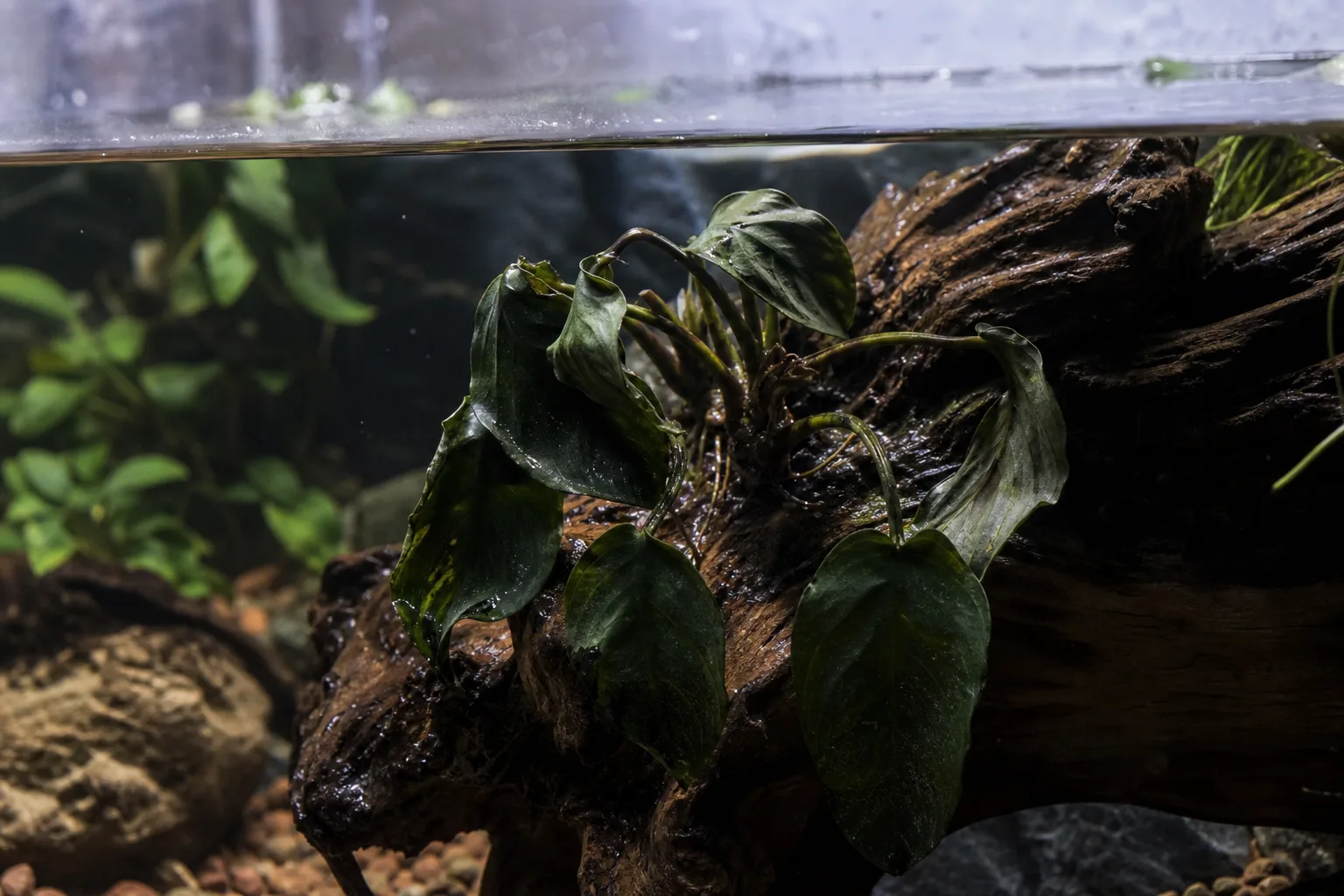
Underwatering on Anubias: Causes, Checks & Fixes
This guide covers underwatering on Anubias. See also the general Underwatering guide, watering, and light pages for this plant.
Underwatering on Anubias: Causes, Checks & Fixes
Quick answer
Anubias is a slow-growing aquatic aroid that normally lives submerged or in very humid conditions along African stream margins. On Anubias overview, underwatering does not mean forgetting to water a pot-it means the rhizome, roots, or floating leaves lost access to moisture long enough to dehydrate.
First step: get every living section back under clean tank or pond water today. If you grow Anubias emersed in a paludarium, remist and raise enclosure humidity until leaves stop crisping. Do not bury the rhizome to “water” it-that causes rot. Do not dose fertilizer until tissue is fully moist again and the rhizome feels firm.
What underwatering looks like on Anubias
Dehydration on Anubias shows up differently than on terrestrial houseplants. Watch for these patterns:
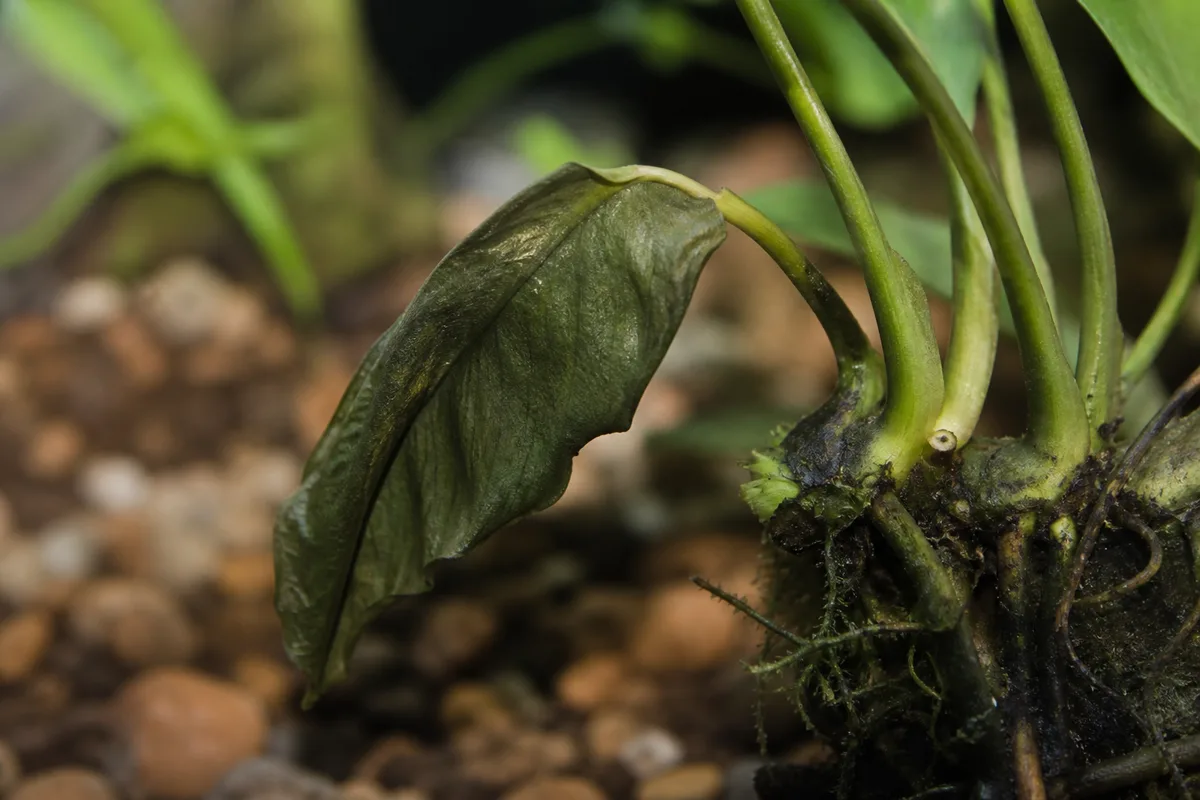
Underwatering symptoms on Anubias - compare with healthy tissue on the same plant.
- Crispy or papery leaf edges, especially on leaves that sat above the water line or on a dry tank rim
- Dry, lightweight floating mats that shrivel instead of staying plump in the water column
- Shrinking overall size as old leaves desiccate and the plant sheds tissue to conserve moisture
- Sections breaking apart when a neglected rhizome dries and weakens at division points
- Drooping or dull leaves that feel thin, not the firm waxy texture of a healthy plant-wilting often signals a plant kept too dry
The rhizome-the thick horizontal stem where leaves and roots meet-tells the real story. In drought stress it stays firm but may look dull, wrinkled, or pale green. If it turns soft, black, or foul-smelling, you are dealing with rhizome rot from burial or decay, not simple underwatering.
Why Anubias gets underwatered
Anubias barteri evolved in wet tropical West and Central Africa, often attached to rocks and wood along watercourses in emersed, semi-submersed, or submerged states. The plant expects constant moisture at the rhizome and roots. When that moisture disappears, tissue dries fast-especially on slow growers with thick leaves that cannot replace water quickly.
Common triggers in home aquariums and turtle tanks:
Physical drying (most common)
- Plant knocked off driftwood during tank maintenance, turtle climbing, or filter splash
- Floating Anubias stranded on glass rims, hood edges, or basking platforms above the water line
- Water level drop from evaporation in open-top tanks, vacation top-offs skipped, or pond draw-down
- Shipping or store display with rhizomes out of water too long before planting
- Emersed or paludarium culture without enough humidity for leaves above the waterline
Water-quality drought (often confused with underwatering)
- Infrequent water changes in stocked tanks let organics build up and starve slow epiphytes of usable nutrients
- Dirty or stagnant water limits light penetration and stresses plants that depend on the water column
- Cold water below the species’ active range slows uptake, so the same change schedule feels like chronic thirst
Anubias pulls nutrients from the water through its roots and rhizome rather than from buried potting soil-rhizome plants like Anubias are tied to hardscape, not buried like rosettes. Skipping water changes for weeks can produce pale, stalled growth that looks like drought even when the tank is full.
How to confirm the cause
Work through these checks before changing fertilizer, light, or attachment method:
- Rhizome moisture - Gently touch the stem. Papery, shriveled, or cracking tissue confirms drying. Firm and green points away from advanced drought.
- Water line - Are all roots submerged? Is any floating portion resting on dry surfaces?
- Attachment - Is thread, glue, or wedge placement still holding? Loose plants often drift into filter outflow or dry zones.
- Recent events - Tank cleaning, turtle rearrangement, power outage air exposure, or a plant left on the counter during rescape?
- Rhizome burial - If substrate covers the horizontal stem, rot-not drought-may explain collapse. Do not cover the rhizome when planting; buried stems suffocate and decay.
- Water-change history - Less than 10–25% monthly in a stocked planted tank suggests nutrient drought. Regular partial changes help establish balance.
- New plant melt - Fresh submersed Anubias often sheds emersed-grown leaves after purchase. If the rhizome stayed submerged and firm, yellowing old leaves may be normal acclimation-not underwatering.
If the rhizome is firm, fully underwater, and only lower leaves are fading over weeks, look at light and nutrients before assuming dehydration.
First fix for Anubias
Return the entire plant to clean, oxygenated water at your tank’s normal level.
For submerged culture:
- Lift any dry sections off rims or decor and submerge the rhizome and roots completely
- If the plant detached, reattach it to rock or wood with aquarium-safe gel glue or thread-rhizome exposed, never buried
- Trim only leaves that are fully brown and crispy; leave any green tissue that can still photosynthesize
- Perform a 25–30% water change with temperature-matched dechlorinated water if the tank has been neglected
For emersed or paludarium setups:
- Mist leaves and rhizome until water beads on surfaces, then close the enclosure or raise humidity
- Keep roots in water or saturated substrate while leaves stay in humid air-the pattern Anubias uses in nature along stream edges
Hold fertilizer and CO2 tweaks until the plant has stayed moist for at least one week and the rhizome feels firm again.
Step-by-step recovery
After the first resubmersion:
- Secure attachment - Glue or tie the rhizome horizontally on hardscape. Roots may grow into crevices; the stem itself stays in open water.
- Stabilize temperature - Keep water in the 18–28 °C (64–82 °F) range your tank or pond normally runs; cold shock slows recovery.
- Resume weekly partial water changes - Replace 25–30% of the volume to refresh nutrients and remove waste that fouls turtle tanks especially quickly.
- Remove only dead tissue - Cut fully desiccated leaves at the base with clean scissors. Do not strip the plant bare if green leaves remain.
- Watch new growth - One new leaf every two to four weeks is normal for healthy Anubias. That pace is your recovery benchmark, not instant greening of old crispy edges.
Recovery timeline
| Severity | What you see | Typical recovery |
|---|---|---|
| Mild (hours dry) | Slightly crisp leaf tips, firm rhizome | Stabilizes in 3–7 days once resubmerged; new leaves normal within 2–4 weeks |
| Moderate (1–2 days dry) | Multiple curled or brown leaves, dull rhizome | 2–6 weeks for first new leaf if rhizome stayed firm throughout |
| Severe (rhizome shriveled) | Sections desiccated or splitting | Partial salvage possible by cutting to firm tissue and reattaching; some divisions may not return |
Brown crispy leaf tissue does not revert to green. Judge success by turgid new leaves and a firm rhizome, not by old damage clearing up.
Lookalike symptoms
Rhizome rot from buried substrate - Soft, mushy, dark stem with sour smell. Fix by cutting rot away and exposing the rhizome-not by adding more water around buried tissue.
Acclimation melt on new plants - Old emersed leaves yellow and dissolve while the rhizome stays firm underwater. Trim melting leaves; keep conditions stable.
Nutrient deficiency - Pale or yellow new growth with firm submerged rhizome and infrequent water changes. Address with consistent partial changes and light aquarium fertilizer-not emergency soaking.
Low light stall - Very dark tanks produce little new growth without crisp drought texture. Increase to moderate aquarium lighting gradually.
overwatering on Anubias / crown rot - Melting stems, foul water, and yellowing in dirty stagnant tanks. Improve filtration and water changes rather than submerging further.
Mistakes to avoid
- Burying the rhizome to keep the plant wet-this triggers rot faster than brief drying
- Misting leaves only while the rhizome sits dry on a shelf
- Drenching with fertilizer on the first day back in water; stressed tissue absorbs salts poorly
- Assuming drooping always means too much water without touching the rhizome first
- Leaving floating plants on open tank rims during multi-day maintenance
- Confusing turtle-nipped leaves with drought-check whether tissue dried because it left the water
Anubias care cross-check
Match everyday care to how this species actually grows:
- Rhizome attached to hardscape, not planted like a rosette sword
- Always submerged or floating in clean water in aquarium and pond culture
- Moderate aquarium light-enough for slow steady growth without burning leaves
- Regular partial water changes rather than calendar “watering” of soil
- In turtle tanks: secure plants firmly so climbing and digging do not strand them above the water line
How to prevent underwatering
- Glue or tie new plants at purchase so turtles and current cannot easily dislodge them
- Top off evaporation weekly in open-top aquariums; do not let the water line sink below attached rhizomes
- Keep floating mats inside the tank; remove them from rims when cleaning glass
- Schedule 25–30% water changes on a consistent rhythm in stocked tanks
- For emersed culture, maintain high humidity and never let the rhizome dry between misting
- After rescapes or shipping, float or submerge rhizomes immediately-do not leave plants on dry counters while arranging hardscape
When to worry
Treat dehydration as urgent when:
- The rhizome looks gray, cracked, or shriveled after more than 24 hours dry
- Large sections snap apart at the rhizome with no firm core inside
- Leaves go fully brown and the stem softens-not just crisp edges on an otherwise firm plant
You can often salvage part of a clump by cutting back to firm green rhizome and reattaching. If the entire rhizome is mushy or smells rotten, discard affected tissue and protect neighboring plants from decay spreading in shared water.
Conclusion
Underwatering on Anubias is a moisture-access problem, not a forgotten watering can. The fix starts with getting the rhizome and roots back into clean water, securing the plant to hardscape, and resuming steady water changes. Old crispy leaves will not heal, but a firm rhizome and new slow leaves mean you are on the right track-keep conditions stable and let this hardy epiphyte rebuild at its own pace.
When to use this page vs other Anubias guides
- Anubias watering guide - Use for routine moisture checks before assuming underwatering is the main issue.
- Anubias problems hub - Browse all 16 common issues on this species.
- Wilting on Anubias - Different entry point when symptoms overlap with underwatering.
- Brown Tips on Anubias - Different entry point when symptoms overlap with underwatering.
- Yellow Leaves on Anubias - Different entry point when symptoms overlap with underwatering.