Underwatering on Aglaonema Red Valentine: Causes, Checks &
Quick answer
Underwatering on Aglaonema Red Valentine makes the pot feel light, leaves go limp or crisp at rose-pink edges, and the mix is dry well below the surface. First step: soak the root ball thoroughly until water drains freely-one deep drink beats repeated shallow sips.
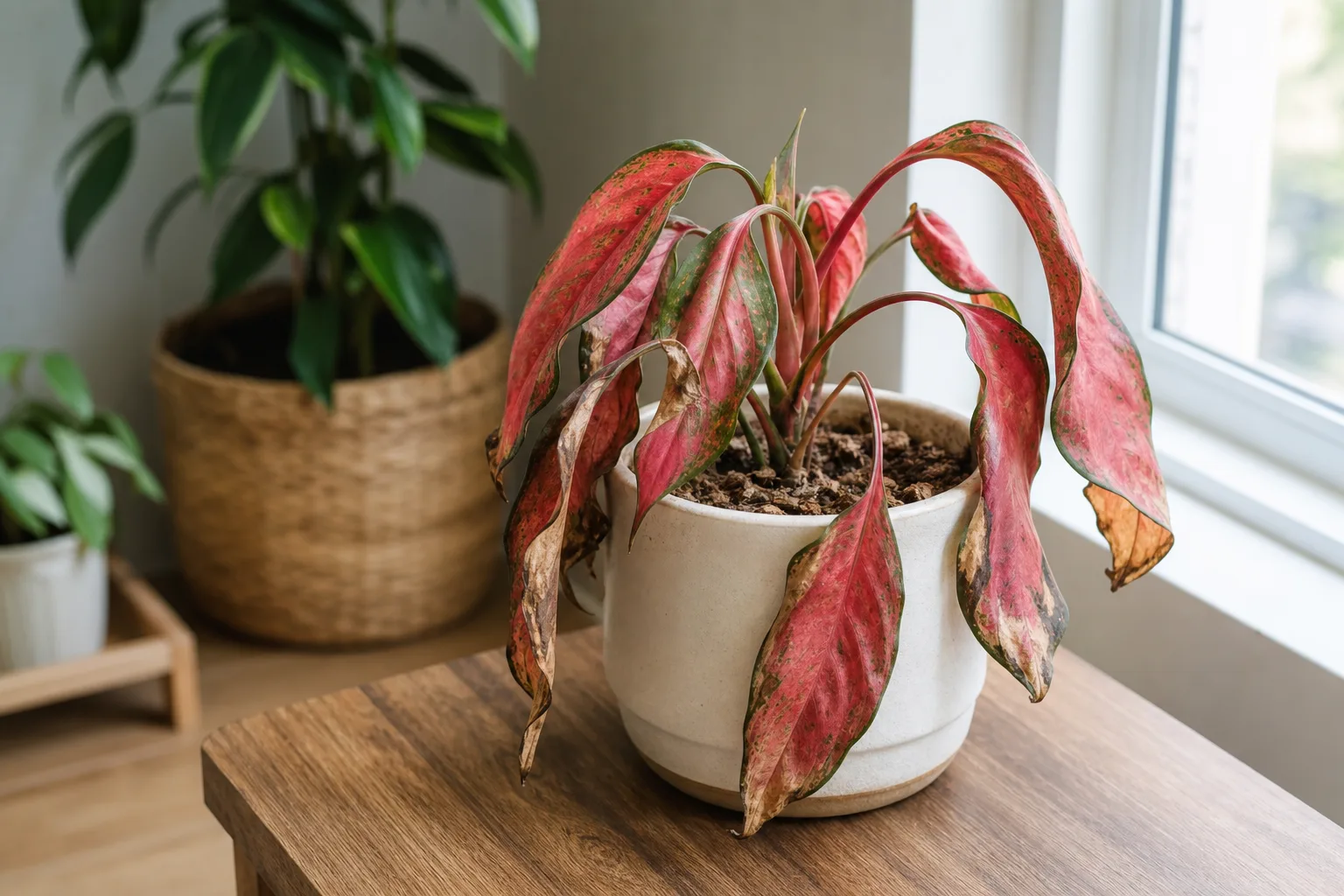
Underwatering on Aglaonema Red Valentine: Causes, Checks & Fixes
This guide covers underwatering on Aglaonema Red Valentine. See also the general Underwatering guide, watering, and light pages for this plant.
Underwatering on Aglaonema Red Valentine: Causes, Checks & Fixes
Quick answer
Underwatering on Aglaonema Red Valentine (Aglaonema commutatum ‘Red Valentine’) means the root zone has gone too dry for too long. On this pink-and-red Chinese evergreen with broad, glossy leaves, drought shows up as a lightweight pot, limp or papery foliage, and mix that is dry well below the surface-sometimes with soil pulled away from the pot edge and crisp brown margins on rose-pink leaf tissue.
Red Valentine is marketed as drought-tolerant, and the genus tolerates drought better than many tropical houseplants-but variegated types need low to moderate light and dry faster in bright filtered windows than solid-green Aglaonemas in dim corners. Long vacations, fear of rot after past overwatering, hydrophobic retail peat, or a root-bound pot in warm light can still leave Red Valentine chronically thirsty.
First step: give one thorough soak until water runs freely from the drainage holes, then empty the saucer. Do not sprinkle the surface or mist the smooth, waxy leaves-that does not rehydrate dry roots.
What underwatering looks like on Aglaonema Red Valentine
Red Valentine’s lance-shaped leaves normally feel firm with rose-pink, red, and green splashes on short upright stems. When underwatered, the pattern is distinct from the yellow-leaf overwatering look:
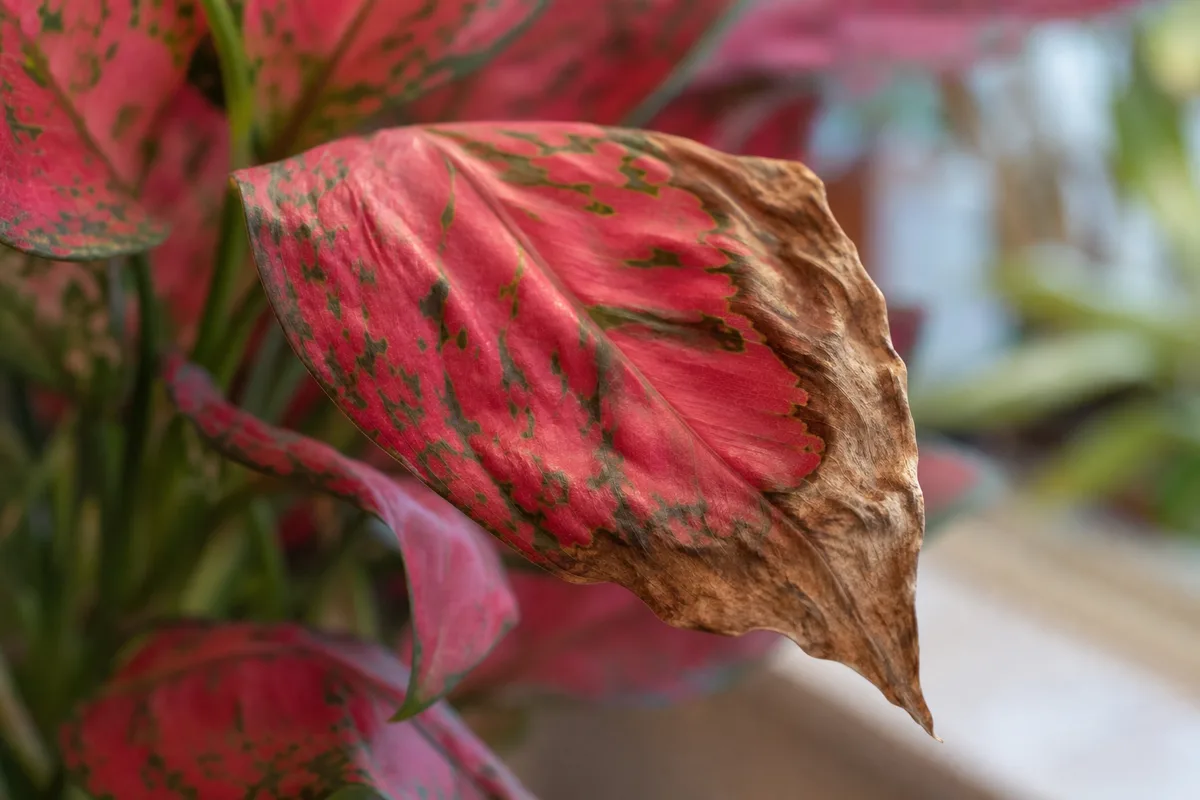
Underwatering symptoms on Aglaonema Red Valentine - compare with healthy tissue on the same plant.
Limp leaves and lightweight pot
Blades lose turgor and hang down even though you have not recently watered. Lower leaves often droop first. Lifting the nursery pot feels noticeably lighter than after a full drink-the fastest field check on any container Chinese evergreen.
Crisp brown edges on rose-pink variegated foliage
On Red Valentine, pale pink-red tissue on variegated blades often shows crisp brown margins before green sections on repeated dry cycles. The high-color patches make edge damage more visible than on solid-green cultivars such as Maria. Fully yellow lower leaves can follow if drought repeats.
Soil shrink gap along pot wall
Chronic dryness shrinks peat-heavy retail mix away from the pot sides, leaving a gap water can run down without soaking the root ball center. The surface may look briefly damp while deep roots stay dry-a classic underwatering trap.
Papery leaf feel vs. rot softness
Underwatered tissue feels less turgid than healthy Red Valentine foliage but stems at the soil line stay firm. Soft, mushy stems with wet soil point to rot, not thirst. For that branch, see overwatering on Red Valentine and root rot.
Worry when the entire crown wilts, soil is dust-dry through the root ball, and the plant sits in hot direct sun or near a heating vent-that combination can damage fine roots quickly.
Why Aglaonema Red Valentine gets underwatered
Drought-tolerant genus-owners wait too long
Aglaonema species tolerate drought better than many tropical houseplants, which is why retail tags call Chinese evergreens forgiving. Owners who corrected past overwatering sometimes swing too far and let Red Valentine stay bone-dry for weeks. Brief dryness is survivable; repeated long dry cycles stress fine roots and crisp leaf margins on pink-red tissue.
Calendar watering in the wrong season
Red Valentine grows more actively in bright filtered light during warm months and uses far less water in cool, dim winter than in a sunny east window. Calendar reminders that do not account for season, travel, or a new bright placement cause summer underwatering and winter overwatering alike. Water when the mix actually dries-see the Red Valentine watering guide for check rhythm.
Hydrophobic, aged potting mix
Old peat-heavy mix that has dried completely can repel water. You pour from the top, water runs straight through the gap along the pot wall, and the center of the root ball stays dry. This is especially common in dense nursery peat from greenhouse production.
Root-bound pots in bright, warm spots
Red Valentine needs more light than generic “low-light Aglaonema” labels suggest to keep pink-red color vivid. In a bright filtered window, near a radiator, or in porous terracotta, a crowded root ball in a small nursery pot may need water every week in summer while the same plant in a dim office corner goes two to three weeks. Pot size, light, and airflow change drying speed more than the plant tag’s generic advice. Brighter placement detail lives on the light guide.
Fear of overwatering after past rot
Red Valentine rots easily when soil stays wet too long-that is its main weakness. After losing leaves to overwatering, owners often undercorrect and stop watering until the plant wilts. Limp leaves with wet soil mean damaged roots, not thirst. Limp leaves with dry soil through the top 1 to 2 inches mean underwatering.
Heat and low humidity speeding water loss
Red Valentine tolerates average household humidity, but heat near vents and direct sun increase transpiration. A plant pushed into direct rays for faster pink color loses water faster than one in bright indirect light-the correct ceiling for this high-color cultivar.
Lookalike symptoms to rule out
Before soaking, rule out these common misreads:
| What you see | Likely cause | Quick check |
|---|---|---|
| Limp leaves, light pot, dry top 1–2 in | Underwatering | Soak once; perk within 24–48 h |
| Limp leaves, heavy wet pot, sour smell | Overwatering / root rot | Stop watering; inspect roots |
| Crisp brown tips only, soil moist | Fluoride / low humidity | Tap-water salts; see brown tips |
| Yellow lower leaf, firm crown, normal moisture | Normal senescence | One old leaf; rest of plant firm |
| Wilt after cold night near window | Cold damage | Soil moisture normal; move away from glass |
| Drooping with mixed dry/wet signals | Overlapping issues | See wilting and drooping leaves |
If the top 1 to 2 inches of mix are dry, the pot is light, and leaves are limp or papery with crisp rose-pink edges, treat underwatering first.
How to confirm the cause
Work through this seven-step inspection in order:
- Moisture through the top 1 to 2 inches - Insert a finger or wooden skewer. Bone-dry through that zone with a lightweight pot confirms drought. Cool damp mix at mid-depth rules underwatering out.
- Pot weight - Lift before and after a known full watering to learn the difference. A very light pot with limp leaves supports underwatering.
- Water penetration test - Pour a small amount on the surface. If it runs down the side gap without darkening the center, mix may be hydrophobic.
- Leaf pattern - Crisp edges on pink-red tissue with dry soil fit drought. Uniform yellow lower leaves with wet soil fit overwatering.
- Recent care context - Travel, skipped checks, new bright placement, or repotting into a smaller pot all increase underwatering risk on Red Valentine.
- Crown firmness - Press the base gently. Firm tissue with dry soil supports a soak. Soft crown with wet soil needs a rot workup instead.
- Root spot-check (if repeated dry cycles) - Slide the plant partway out. Firm pale roots support a soak-and-adjust fix. Crisp, shriveled fine roots suggest prolonged drought damage.
Confirmed underwatering needs at least two signs: dry mix through the top 1 to 2 inches, lightweight pot, and limp or crisp foliage.
First fix for Aglaonema Red Valentine
Soak the entire root ball once until water drains freely from the bottom, then empty the saucer within 30 minutes.
That single deep drink is the correct first response-not daily splashes, not fertilizer, and not an immediate repot unless mix is hydrophobic or roots are severely damaged.
How to soak effectively:
- Top water slowly - Use room-temperature water and pour in stages so the mix absorbs instead of channeling out the sides. Stop when excess runs from drainage holes. Filtered or overnight-settled tap water reduces fluoride tip burn on this cultivar during recovery.
- Bottom water if mix repels water - Set the drainage pot in a tray of shallow water for 20 to 45 minutes until the surface moistens, then remove and let it drain fully.
- Repeat once if needed - If water ran through too fast the first time, let the pot drain, then soak again the same day.
After soaking, place Red Valentine back in bright indirect light-never direct sun while the plant is stressed. Move it away from heating vents if that is where it dried out fastest.
Wait until the top 1 to 2 inches of mix dry before the next full watering. That may take 7 to 10 days in active growth in bright light or longer in cool winter months.
Step-by-step recovery
Match follow-up steps to what you confirmed:
Mild underwatering (firm roots, first wilt):
- Complete one thorough soak as above.
- Remove fully crisp or brown leaves at the base if they are mostly dead tissue.
- Resume checking the top 1 to 2 inches every few days.
- Watch for leaves regaining firmness within 24 to 48 hours.
Hydrophobic mix (water runs through, center stays dry):
- Bottom-water until the root ball re-wets, then top-water slowly to flush the center.
- Consider repotting into fresh well-draining mix at the next check if hydrophobia returns within two weeks-see soil and repotting guides.
- Do not let the plant sit in standing water overnight.
Repeated dry cycles (multiple crisp pink-red edges, shriveled fine roots):
- Soak thoroughly, then adjust schedule so the top 1 to 2 inches never stay bone-dry for weeks during growth.
- Trim fully dead roots if any are brittle and brown; keep firm pale roots.
- Hold fertilizer until new center leaves stay firm for two consecutive weeks.
Do not confuse with rot:
If soil is wet and stems are soft, stop soaking and switch to the overwatering dry-down path instead.
Recovery timeline
Crisp brown edges on rose-pink tissue do not turn green again. Fully yellow drought-stressed leaves usually drop or can be trimmed. Judge recovery by new growth from the center:
- Mild dehydration - Leaves often regain turgor within hours to two days after a proper soak. Pink-red blush on new leaves should look stable within one to two weeks.
- Repeated dry stress - Edge damage remains on old leaves; expect two to three weeks of firm new crown growth before calling the plant stable.
- Severe root damage from long drought - Recovery is slower and may be partial. If the crown stays limp after two thorough soaks a week apart, inspect roots for extensive dieback.
Signs of improvement: pot weight returns to a normal wet-dry cycle, new leaves emerge firm with strong pink-red color, and wilting does not return between appropriate waterings. Signs of worsening: increasing crispness climbing toward new center growth, collapsed crown despite rehydration, or sour smell developing after overcompensating with daily water. Post-drought yellowing on lower leaves may overlap with yellow leaves from senescence-check whether new crown growth is firm.
What not to do
Do not mist leaves instead of soaking roots. Surface humidity does not replace soil moisture for a drought-stressed Red Valentine with smooth, waxy blades.
Do not water a little every day after one dry spell. Shallow sips keep the surface damp while deep roots stay dry-and the wet-dry swing invites rot on a plant already prone to overwatering damage.
Do not fertilize a dry, stressed plant. Rehydrate first; feeding drought-stressed roots can burn tissue.
Do not assume all drooping means underwatering. Always check soil moisture through the top 1 to 2 inches before adding water.
Do not move Red Valentine into direct sun to “help it recover.” Bright indirect light is the ceiling for this high-color cultivar.
Do not repot into a much larger pot on day one unless mix has failed. An oversized pot holds water too long and increases rot risk after drought recovery.
How to prevent underwatering on Aglaonema Red Valentine
Prevention is about reading the pot, not the calendar:
- Check the top 1 to 2 inches of mix every few days until you learn Red Valentine’s rhythm in your home.
- Water when that zone has dried-often every 7 to 10 days in warm active growth in bright filtered light, and longer in cool winter low light.
- Soak thoroughly each time until runoff exits drainage holes, then empty saucers promptly.
- Refresh hydrophobic mix that repeatedly repels water after drying out.
- Size pots appropriately-very small root-bound pots in bright spots may need more frequent checks.
- Account for travel - Use a trusted sitter or bottom-water deeply before extended absence; Red Valentine can skip a week in dim cool conditions but not three weeks in a hot window.
- Use better water when tips crisp - Filtered or settled tap water reduces fluoride brown tips that can mask drought damage; details on the overview and watering pages.
When to worry
Treat underwatering as urgent when:
- The entire plant is collapsed with dust-dry soil through the root ball.
- Crisp damage is climbing toward new center growth, not just old lower leaves.
- Two thorough soaks a week apart fail to restore leaf firmness-roots may be extensively damaged.
- You cannot tell drought from rot because soil smells sour or stems feel soft-inspect roots the same week.
A slightly limp Red Valentine with dry top 1 to 2 inches and firm crown tissue is routine drought. Widespread collapse with shriveled roots after weeks without water needs immediate rehydration and a schedule reset.
Pet note: Red Valentine contains calcium oxalate crystals like other Chinese evergreens and is toxic to cats and dogs if chewed. Keep the plant and any trimmed leaves away from pets when soaking at the sink.
Aglaonema Red Valentine care cross-check
If underwatering keeps returning, compare your routine to what this cultivar needs:
| Checkpoint | Healthy target | Underwatering risk when wrong |
|---|---|---|
| Soil moisture | Top 1–2 in dry before watering | Bone-dry for weeks; only surface checked |
| Watering method | One thorough soak per cycle | Shallow splashes or misting only |
| Light | Bright filtered indirect | Hot direct sun drying the pot too fast |
| Season | More frequent checks in warm growth | Same long winter interval in summer |
| Mix and pot | Absorbent, draining mix; open holes | Hydrophobic old peat; water runs through |
| Root space | Appropriate pot size | Severely root-bound small pot in bright heat |
Fix the failing checkpoint before adding fertilizer, upsizing pots, or treating for pests you have not confirmed.
Conclusion
Underwatering on Aglaonema Red Valentine is less common than overwatering on this drought-tolerant cultivar, but it still happens when checks are skipped, mix turns hydrophobic, or a root-bound pot dries fast in bright filtered light. The diagnostic split is simple: dry top 1 to 2 inches plus light pot plus limp or crisp rose-pink leaves means soak thoroughly once; wet soil plus limp leaves means stop watering and inspect roots instead. Recovery lives in new firm leaves with strong pink-red blush from the center-not in old crispy edges. Check the mix, water deeply when it dries, and Red Valentine will stay colorful in bright indirect light.
Related Red Valentine problems
- Overview - cultivar identity, toxicity, and pink color requirements
- Watering - prevention rhythm and moisture checks
- Overwatering - wet-pot lookalike
- Root rot - damaged roots after misread wilt
- Wilting and drooping leaves - overlapping symptom intent
- Yellow leaves - post-drought senescence
- Brown tips - fluoride vs. drought overlap
When to use this page vs other Aglaonema Red Valentine guides
- Aglaonema Red Valentine watering guide - Use for routine moisture checks before assuming underwatering is the main issue.
- Aglaonema Red Valentine problems hub - Browse all 16 common issues on this species.
- Wilting on Aglaonema Red Valentine - Different entry point when symptoms overlap with underwatering.
- Brown Tips on Aglaonema Red Valentine - Different entry point when symptoms overlap with underwatering.
- Yellow Leaves on Aglaonema Red Valentine - Different entry point when symptoms overlap with underwatering.
Related Aglaonema Red Valentine guides
- Aglaonema Red Valentine overview
- Aglaonema Red Valentine watering
- Aglaonema Red Valentine light
- Aglaonema Red Valentine soil
- Wilting on Aglaonema Red Valentine
- Brown Tips on Aglaonema Red Valentine
- Yellow Leaves on Aglaonema Red Valentine
- Overwatering on Aglaonema Red Valentine
- Drooping Leaves on Aglaonema Red Valentine
- Aglaonema Red Valentine problems