How to Propagate Aglaonema Red Valentine
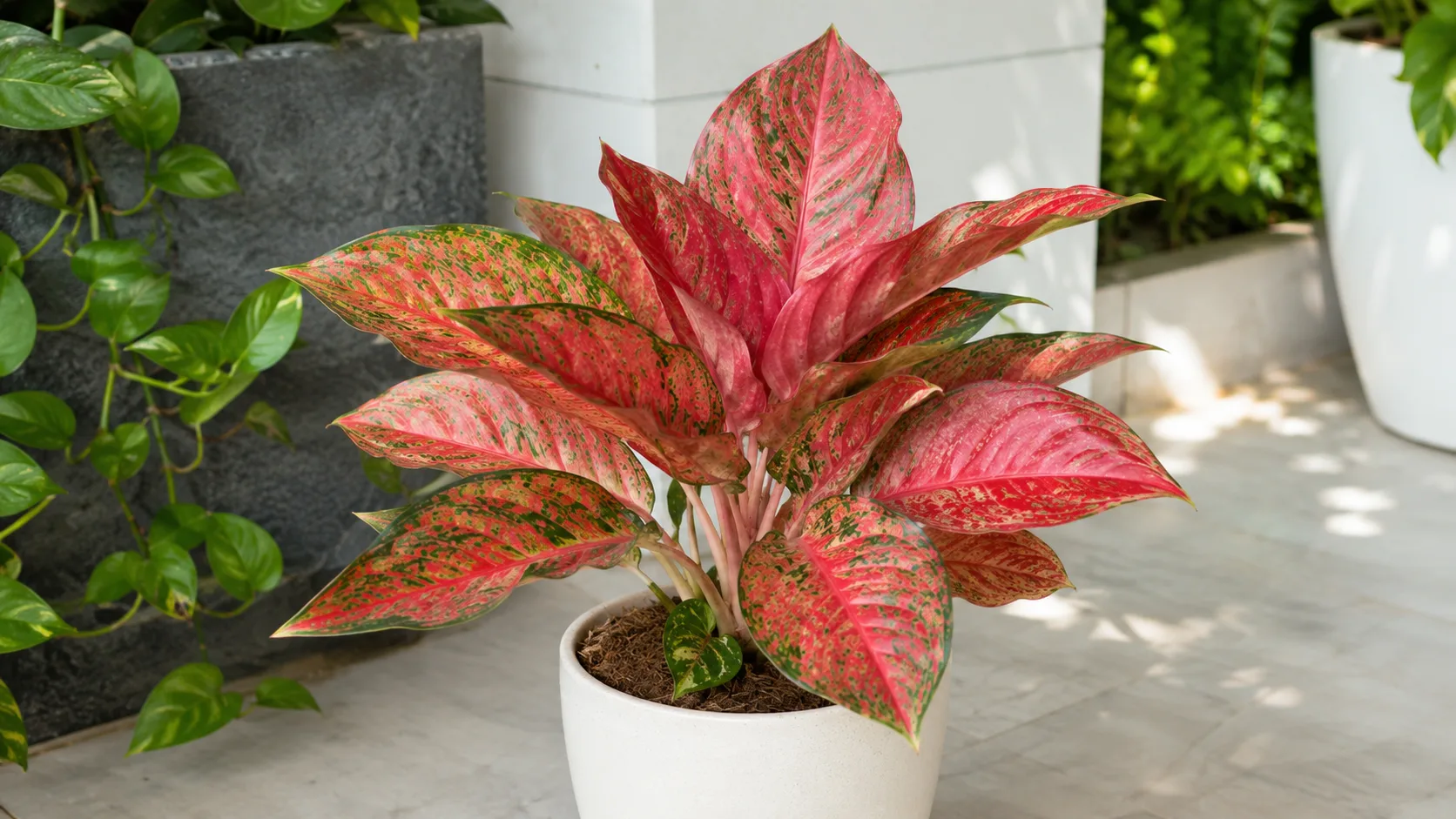
How to Propagate Aglaonema Red Valentine
How to Propagate Aglaonema Red Valentine
If your Aglaonema Red Valentine has multiple rooted crowns, divide it at repotting before you reach for a knife and a jar of water. That is usually the cleanest home propagation path because each section already has roots to support the leaves. Stem cuttings work too, but they ask for more patience and much better moisture control.
By Sai Ananth
Red Valentine is not hard to multiply for the same reason pothos is easy. It is slower, more color-dependent, and less forgiving of cold, soggy rooting conditions. The goal is not just to make a new plant. The goal is to make a new plant that roots cleanly and still looks like Red Valentine when the next leaves open.
What actually works with Red Valentine
UF/IFAS EP160 identifies division of basal shoots and rooting cuttings as standard Aglaonema propagation methods. Those are still the two methods worth prioritizing at home.
For Red Valentine, think of them this way:
- Division is best when the mother plant already has multiple stems with attached roots.
- Stem cuttings are best when the plant has a leggy cane or a healthy top you want to restart.
What does not work is a single detached leaf with no node. Aglaonema needs a node because that is where new roots and shoots can form. A leaf alone may stay green for a while, but it does not become a new plant.
The first decision: divide or cut?
Before cutting anything, tip the plant slightly and look at the structure.
Choose division when:
- more than one stem is emerging from the pot
- the stems already have their own roots
- the plant is due for repotting anyway
Choose stem cuttings when:
- the plant has one or two tall canes
- the top is healthy but the base is sparse
- you want more than one new plant from a longer stem
Division is lower risk because the new section is already a functioning plant. Cuttings are useful, but they are a recovery project first and a display plant second.
Propagate only from a healthy mother plant
This matters more on Red Valentine than on sturdier green Aglaonemas. If the mother plant is already dealing with wet roots, weak light, or pests, the cuttings start behind.
Propagate only when the source plant has:
- firm stems
- healthy recent leaves
- no active root rot
- no serious mealybugs or spider mites
If the plant is stretched, check leggy growth and light first. If the pot is staying wet and the lower leaves are yellowing, solve overwatering before you try to multiply the plant.
Best time to propagate
Clemson HGIC and UF/IFAS EP160 both place Aglaonema most comfortably in warm active-growth conditions. For home growers, that makes spring through early summer the safest window for planned propagation.
Why that timing works better:
- the plant is actively growing
- indoor temperatures are steadier
- callusing and root initiation happen faster
- the cutting has a better chance of pushing new growth before winter slowdown
Emergency propagation can happen outside that window, but the odds improve when warmth and light are already on your side.
Color expectations: propagation does not guarantee identical pink
Red Valentine is grown for red-pink variegation, but no home method guarantees that every new leaf will match the mother plant leaf for leaf. New growth color still depends on:
- the stem section you chose
- how healthy the mother plant was
- how much light the new plant receives after rooting
That is why a propagated piece can be perfectly healthy and still open slightly greener leaves at first. Do not judge the cutting by the first day it is potted up. Judge it by the quality of the next few leaves once it has roots and stable light.
Bright indirect light matters here. If the cutting roots in a dim room, you may keep the plant alive but lose the stronger pink character that made you propagate it in the first place. Use the Red Valentine light guide as part of propagation aftercare, not as a separate topic.
How to divide Aglaonema Red Valentine
Division is usually the highest-confidence option for a mature clump.
When division is the right move
Use division when the pot contains clearly separate shoots or crowns. The ideal division has:
- a few leaves of its own
- roots of its own
- a natural separation point near the base
If everything is fused into one root mass with no clear split, forcing it apart creates damage with little benefit.
Step-by-step division
- Water the plant the day before so the root ball is easier to handle.
- Slide the plant out of the pot and gently loosen soil around the root mass.
- Identify stems with their own roots.
- Separate by hand where possible.
- Use a clean blade only where roots or crowns are still connected.
- Pot each division into a container only slightly larger than its root system.
- Water once to settle the mix, then let the upper part of the medium dry before watering again.
Do not fertilize immediately after division. Let the roots re-establish first, then resume the normal watering and fertilizer rhythm once you see steady growth.
How to take Red Valentine stem cuttings
Stem cuttings are the better option when the plant is tall, sparse, or ready for a reset.
Where to cut
Virginia Cooperative Extension describes cane and stem cuttings as node-based propagation methods. On Red Valentine, that means each cutting needs at least one healthy node and ideally one or more leaves above it.
Good source material looks like:
- firm stem tissue
- a visible node ring or leaf scar
- healthy leaves without active yellowing or collapse
Bad source material:
- mushy or foul-smelling stem sections
- pest-heavy growth
- exhausted, leafless, rotting base tissue
Step-by-step stem cutting method
- Sterilize your blade.
- Cut a healthy stem section with at least one node.
- If the cutting carries multiple leaves, remove the lowest leaf if it would sit in the rooting medium.
- Let the fresh cut dry briefly so the wound is not going straight into a soggy medium.
- Root the cutting either in water or in an airy potting mix.
The point of the pause before rooting is simple: less open-wound rot risk. You do not need to overcomplicate it with a lab setup.
Water rooting vs potting mix rooting
Both methods can work. The better choice depends on what kind of failure you are most likely to make.
Water rooting
Water is easier if you want visual feedback. You can see whether the node is staying clean and whether roots are forming. But there are tradeoffs:
- stagnant water rots cuttings quickly
- submerged leaves foul the container
- water roots still have to transition to potting mix later
If you use water:
- submerge the node, not the leaves
- refresh the water regularly
- keep the jar in bright indirect light, not direct sun
- move the cutting to mix once roots are present and beginning to branch
Rooting in potting mix
An airy mix is usually the steadier method once you are comfortable with moisture control. The benefit is that the cutting does not have to relearn life in soil later.
Use:
- a small pot
- a loose mix with extra perlite or similar aeration
- just enough moisture to stay lightly damp, never swampy
The main risk here is impatience. Growers often keep adding water because they cannot see roots. That is how a healthy cutting turns into a rotted one.
Cane cuttings for longer stems
If you have a longer bare or semi-bare stem, you can also cut it into shorter node sections rather than rooting only the top. Virginia Cooperative Extension covers cane-cutting logic for houseplants: each piece still needs a viable node, and orientation matters.
That approach is useful when:
- the plant has become leggy
- the top is healthy but the stem below is still firm
- you want to salvage more than one plant from one cane
It is slower and less visually satisfying than dividing a rooted clump, so do not choose it unless the plant structure actually calls for it.
Aftercare is where most losses happen
Once the cutting or division is potted, the care goal changes from “make roots” to “avoid setbacks while roots establish.”
The essentials:
- warm room temperatures
- bright indirect light
- airy mix
- moderate moisture, not saturation
- no heavy feeding
What to avoid:
- direct sun on an unrooted cutting
- a large pot full of wet mix
- fertilizer before active new growth
- constant disturbance to check for roots
A rooted cutting is still a juvenile plant. Give it the same steady environment you would use for any recovering Aglaonema, and use the soil and repotting pages if the medium or container becomes the next issue.
Common mistakes
Propagating from a weak plant
This is the fastest way to multiply a problem instead of a plant.
Using oversized pots
Too much wet mix around too few roots is a classic rot setup.
Leaving cuttings in poor light
The cutting may survive, but slow rooting plus greener new growth is a common outcome.
Watering mix-rooted cuttings too often
Because roots are hidden, growers often mistake silence for thirst.
Expecting the first new leaf to prove everything
Red Valentine needs time to settle. Look for firm growth over several weeks, not instant perfect color.
Related Red Valentine guides
- Aglaonema Red Valentine overview
- Aglaonema Red Valentine light
- Aglaonema Red Valentine watering
- Aglaonema Red Valentine soil
- Aglaonema Red Valentine repotting
- Aglaonema Red Valentine pruning
- Leggy growth on Aglaonema Red Valentine
Conclusion
For most home growers, Red Valentine propagation is easiest to get right when you stay conservative. Divide rooted crowns first when the plant gives you that option. Use stem cuttings only from firm, healthy canes. Keep the rooting setup warm, bright, and airy rather than wet and clever. The best result is not the fastest root. It is a stable new plant that still grows like Red Valentine when the next leaves arrive.