How to Prune Aglaonema Red Valentine
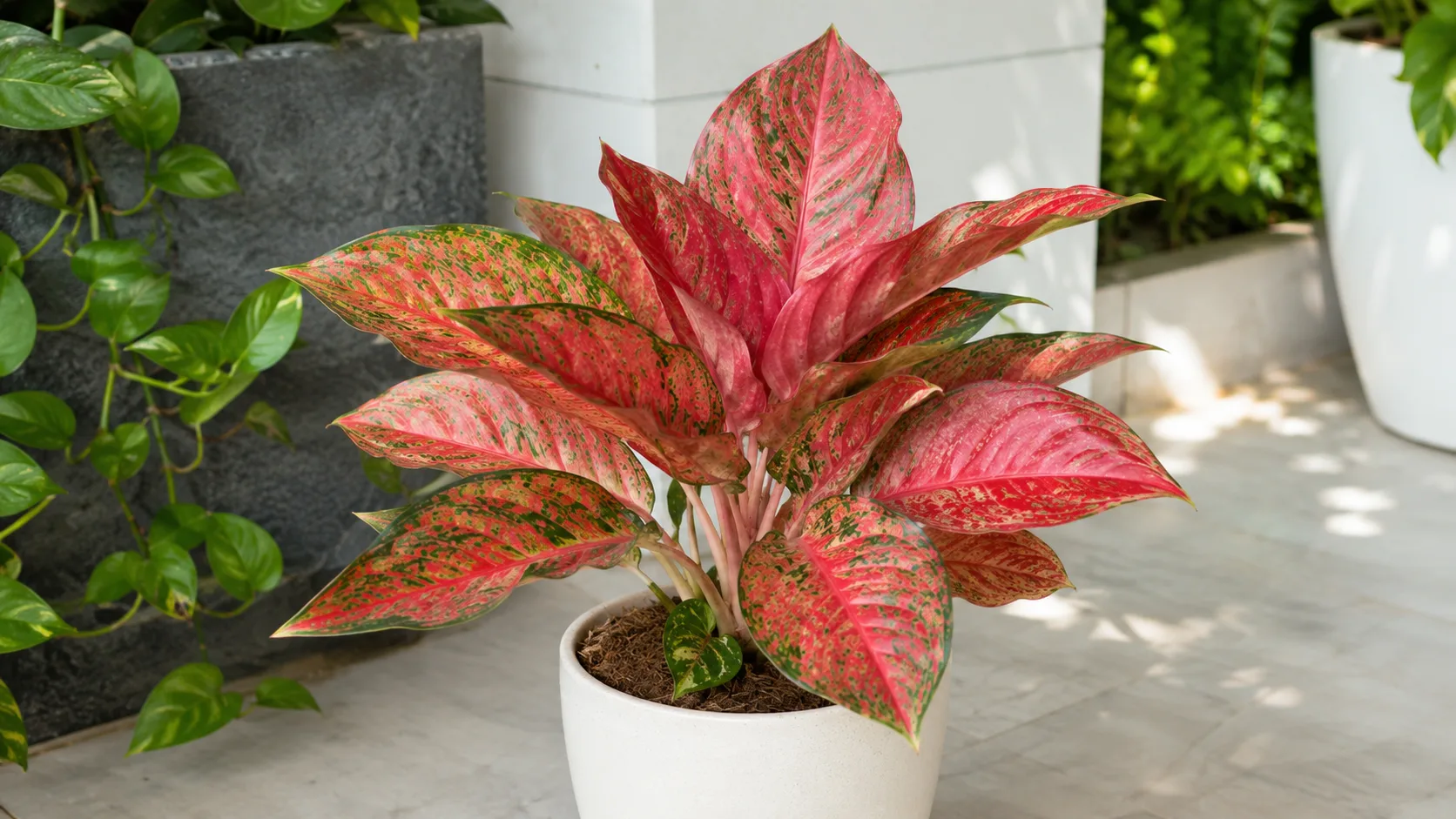
How to Prune Aglaonema Red Valentine
How to Prune Aglaonema Red Valentine
First, remove only fully dead, collapsed, or heavily damaged leaves. Do not start by topping the plant, trimming every faded leaf, or trying to fix weak light with scissors. On Aglaonema Red Valentine, the first cut should be a cleanup cut, not a makeover.
By Sai Ananth
Red Valentine is slower and more color-dependent than older green Chinese evergreens. That changes pruning judgment. Every healthy leaf you remove costs the plant energy, and every unnecessary structural cut takes longer to grow back than it would on a faster green cultivar.
Quick answer
Prune Red Valentine for cleanup, shape correction, or propagation, not because you think the plant should be cut on a schedule. Remove dead leaves any time. Save height reduction or leggy-cane shortening for active growth, then cut just above a healthy node on firm stem tissue. If the plant is yellowing from wet soil or stretching from poor light, fix watering or light first and prune second.
What pruning can and cannot do
Pruning can help when:
- a lower leaf has fully yellowed
- a cane has gone bare and awkward
- the plant is top-heavy
- you want to take a healthy top cutting for propagation
Pruning cannot fix:
- chronic low light
- overwatering
- root rot
- poor pink coloration caused by the environment
That last point matters on Red Valentine. Pale or greener new growth usually points to light conditions, not a need to strip leaves off the plant. If the color is fading, visit not enough light or leggy growth before you remove healthy foliage.
What to check before you cut
Walk around the plant and answer four questions:
- Are the stems firm at the base?
- Are the leaves actually dead, or just cosmetically imperfect?
- Is one cane leggy because of age, or because the plant is stretching toward light?
- Is the pot staying too wet?
If the stem base is soft or the mix smells sour, go to root rot or overwatering first. Pruning a plant in root trouble often removes the leaves it still needs for recovery.
If the issue is long internodes and small new leaves, go to light or leggy growth before making a major structural cut.
The first cut to make
Remove fully yellow, mushy, broken, or pest-damaged leaves at the petiole base. Trace the leaf stalk down to where it joins the cane and snip there cleanly. Do not tear leaves off by hand.
Why start here:
- you remove tissue that is no longer helping the plant
- you can see the real stem structure underneath
- you reduce the chance of pruning too much in the wrong place
Many Red Valentines need nothing more than this first pass.
When Red Valentine actually needs structural pruning
Structural pruning makes sense when the plant has one of these patterns:
- one cane is much taller and barer than the others
- the plant leans heavily and looks unstable
- the top is healthy but the lower stem is sparse
- you want to restart the top as a cutting and let the base resprout
NC State Extension notes that Aglaonema becomes leggy with age, so a bare lower section is not automatically a care failure. The question is whether the plant still looks balanced enough to keep as is.
If you are cutting only because older leaves look less pink than new ones, stop. That is usually not a pruning problem.
Where to cut a leggy cane
On Red Valentine, make structural cuts just above a healthy node on firm green or tan stem tissue. A node is the ring or slight swelling where a leaf attached or a bud can break.
That placement matters because new growth can emerge from the node below the cut. A long stub above the node is wasted tissue and often dries back. Cutting through soft, dark, or foul-smelling tissue is worse, because that usually means the stem was already compromised.
Use this logic:
- healthy top cluster plus bare lower cane: cut above a lower healthy node and decide whether to root the top
- one overlong side stem: shorten that stem above a node instead of cutting the whole plant down
- multiple tall stems: stage the cuts instead of reducing every cane in one session
Virginia Cooperative Extension covers cane-cutting logic for houseplants, which is useful here because the same node-based structure is what makes both pruning and propagation work.
Best season for major cuts
For cleanup, timing is flexible. For real shaping or rejuvenation, active growth is safer.
Clemson HGIC and UF/IFAS EP160 place Aglaonema in warm, steady indoor conditions and use active-growth timing for related maintenance tasks. In practice, that makes spring through early summer the best window for structural pruning at home.
Why this timing helps:
- recovery is faster
- buds below the cut wake more readily
- the plant has more light and warmth to rebuild
Winter emergency cuts are still fine when rot or breakage forces the issue. Just do not expect quick regrowth from a cold, dim setup.
How much is safe to remove
Be conservative with live foliage. Red Valentine is a slow variegated cultivar, and each healthy leaf does real work for the plant.
That means:
- remove dead tissue freely
- stage major shortening over more than one session when possible
- avoid cutting most of the healthy canopy off in a single day
If several stems are leggy, shorten the worst one first, improve light, then reassess after you see how the plant responds. A staged approach is almost always safer than a hard reset.
Tools, sanitation, and sap safety
Use clean, sharp scissors or bypass pruners. Dull blades crush tissue instead of slicing it.
Iowa State University Extension recommends sanitizing pruning tools, especially when disease is in the picture. Wipe the blades before you start and again if you cut questionable tissue.
Red Valentine also carries the usual Chinese evergreen sap risk. ASPCA lists the plant as toxic to pets because of insoluble calcium oxalate crystals. That means:
- keep trimmings off the floor
- wash hands after handling cut tissue
- keep pets away while you work
The safety issue here is not abstract. A pile of fresh cut leaves on the floor is an avoidable problem.
Aftercare: do less, not more
After pruning, the best Red Valentine aftercare is restraint.
What to do:
- return the plant to bright indirect light
- keep watering based on soil drying, not habit
- watch the cut area and nearby nodes for firm regrowth
What not to do:
- fertilize immediately
- repot on the same day unless the roots are failing
- move the plant repeatedly trying to force faster recovery
A pruned plant often uses water more slowly for a while because it has less foliage. If you keep watering on the old schedule, you can turn a successful cut into an overwatering problem. Use watering and yellow leaves if the response after pruning looks off.
What successful recovery looks like
Red Valentine recovers slowly enough that impatience creates bad decisions. The signs to look for are:
- the cut stem stays firm
- no new softness spreads from the base
- dormant buds near the cut begin to swell
- new leaves emerge compact and better colored once light is corrected
What should make you stop cutting and reassess:
- weekly yellowing that continues after cleanup
- new softness at the stem base
- persistent stretch in new growth
- a plant that stays wet for too long after pruning
Those patterns usually point back to root rot, overwatering, or not enough light, not to a problem with cut angle.
Common pruning mistakes on Red Valentine
Cutting faded leaves instead of fixing light
This removes energy without solving the cause.
Hard-pruning a stressed plant
If the roots are already compromised, heavy pruning makes recovery harder.
Leaving long dead stubs above nodes
They rarely help and often dry back.
Cutting every tall cane at once
The plant looks tidier for a day and emptier for weeks.
Treating minor brown tips like a full-leaf problem
Cosmetic damage is not the same as a leaf that needs removal. Check brown tips first.
Related Red Valentine guides
- Aglaonema Red Valentine overview
- Aglaonema Red Valentine light
- Aglaonema Red Valentine watering
- Aglaonema Red Valentine propagation
- Leggy growth on Aglaonema Red Valentine
- Yellow leaves on Aglaonema Red Valentine
- Root rot on Aglaonema Red Valentine
Conclusion
Pruning Red Valentine is mostly about judgment, not technique. Start with dead or clearly failing tissue. Confirm that light or roots are not the real problem. Then, if a cane truly needs shortening, cut above a healthy node and let the plant rebuild at its own pace. On a slow variegated Aglaonema, the best pruning job is usually the smallest one that solves the actual problem.