Not Enough Light on Aglaonema Red Valentine: Causes, Checks
Quick answer
Aglaonema Red Valentine fades and stretches in dim rooms because colorful cultivars need brighter indirect light than solid-green Chinese evergreens. First step: move it within a few feet of an east or filtered west window and watch the next leaf.
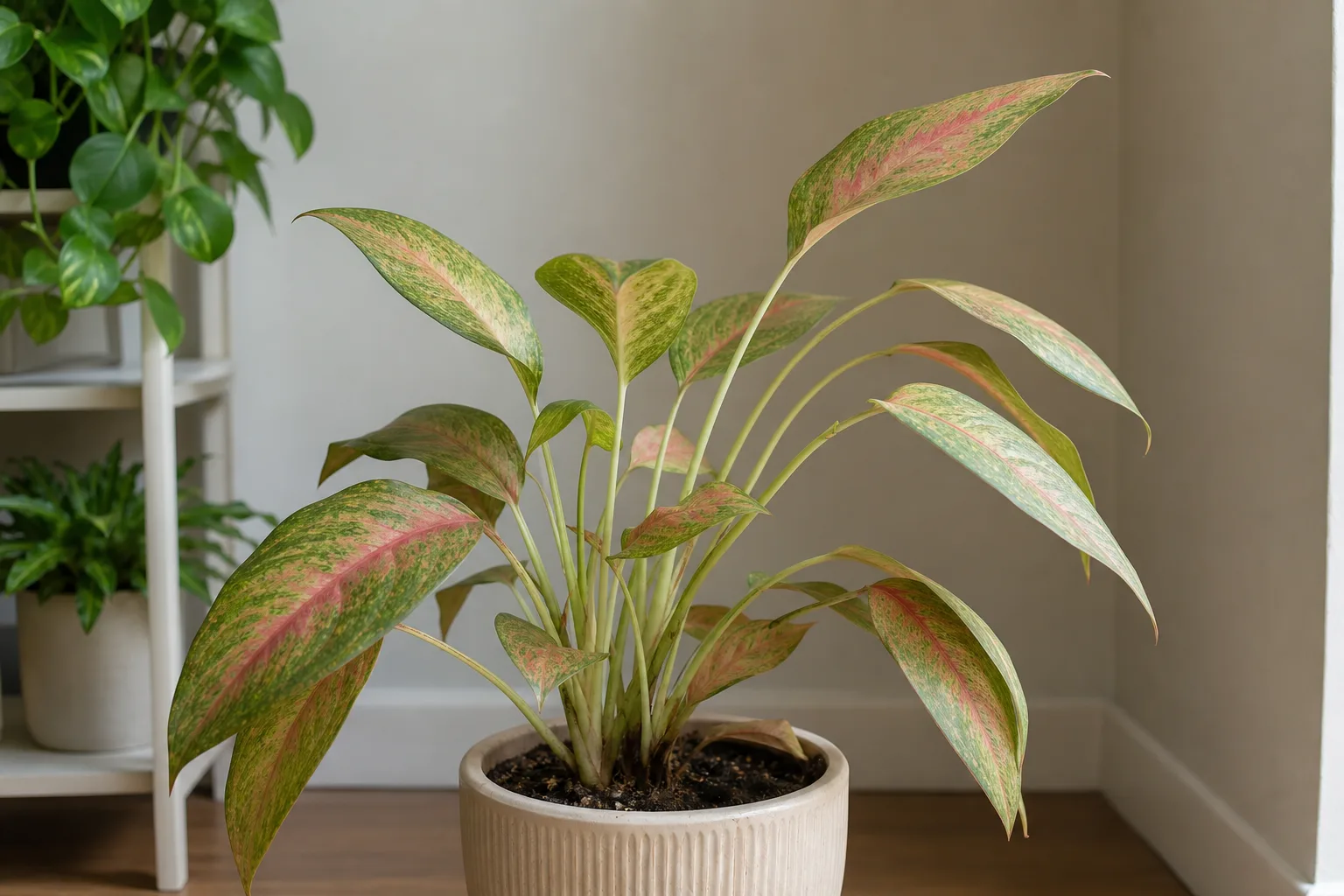
Not Enough Light on Aglaonema Red Valentine: Causes, Checks & Fixes
This guide covers not enough light on Aglaonema Red Valentine. See also the general Not Enough Light guide, watering, and light pages for this plant.
Not Enough Light on Aglaonema Red Valentine: Causes, Checks & Fixes
Quick answer
Aglaonema Red Valentine (Aglaonema commutatum ‘Red Valentine’) is sold as an easy houseplant, but the pink-red foliage needs more light than solid-green Chinese evergreens to stay compact and colorful. In a dim hallway, interior shelf, or north-facing room far from glass, it will often survive while slowly stretching toward the brightest direction and losing the red wash that makes this cultivar worth keeping.
First step: move the pot to medium or Aglaonema Red Valentine light guide-typically within about 1–3 feet (30–90 cm) of an east-facing window or a west/south window filtered by sheer curtain or a tree outside. Do not jump to direct midday sun; the pale pink tissue on Red Valentine scorches easily. Give the plant two weeks in the brighter spot before changing fertilizer, Aglaonema Red Valentine repotting guide, or pruning hard.
What not enough light looks like on Aglaonema Red Valentine
Low light on this cultivar shows up in the growth pattern and color, not as a single random blemish.
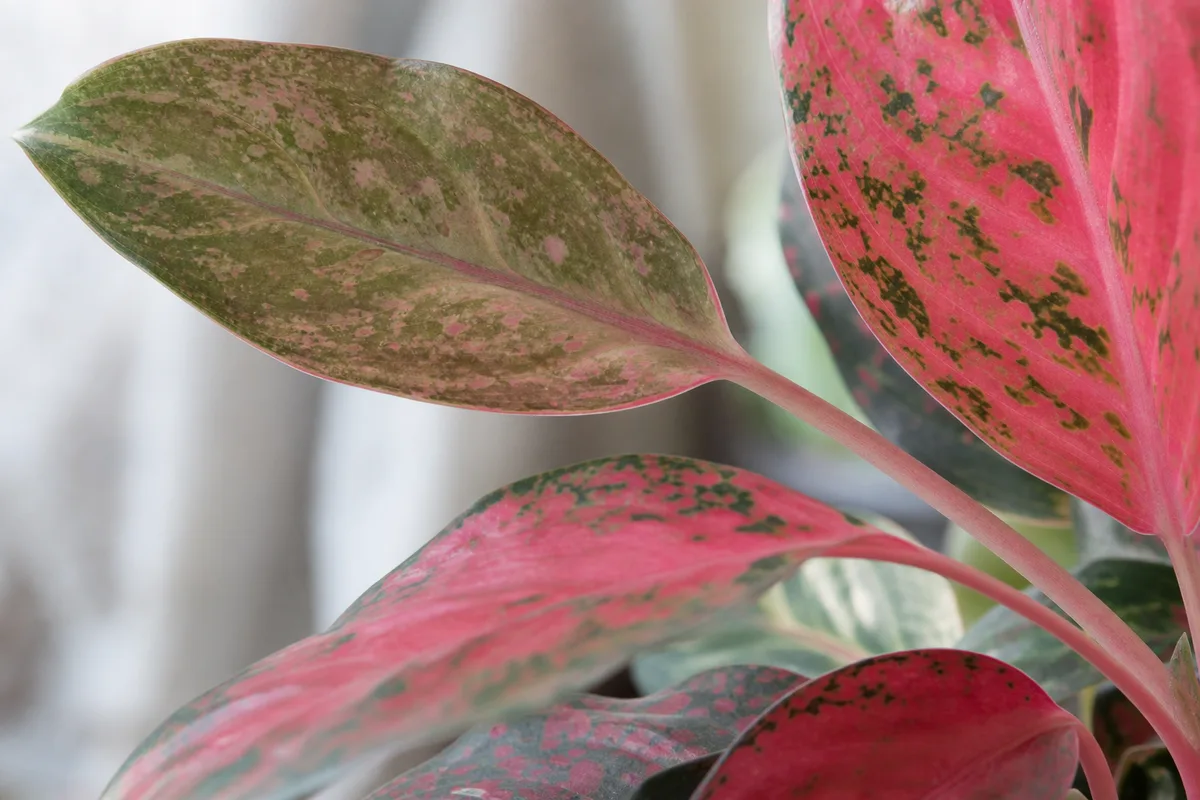
Elongated petioles and dull, green-shifted pink variegation on new Red Valentine growth - classic etiolation from insufficient light.
Watch for these patterns together:
- Elongated petioles (leaf stalks) with smaller new blades compared with leaves produced in brighter months
- Fading variegation-pink-red sections turn dull green or muddy rose while the plant still looks alive
- One-sided lean or stems arching toward a window, lamp, or doorway
- Slow or stalled new leaves from the crown, especially in winter when daylight is already short
- Wide spacing between leaves on upright stems, giving a sparse, top-heavy silhouette
- Lower leaves dropping over time as the plant rebalances energy-often mistaken for overwatering on Aglaonema Red Valentine when light is the real driver
Red Valentine is not a low-light specialty plant the way dark-leaved Aglaonema modestum types can be. Clemson Extension notes that variegated and multicolor Aglaonema cultivars need low to moderate indirect light, while solid green forms tolerate deeper shade. A red-pink cultivar sits firmly in the variegated group: it can hang on in dim corners, but color and structure suffer first.
Healthy Red Valentine leaves feel firm and waxy. Low-light stress rarely causes crispy brown tips by itself-that pattern more often pairs with dry air, fluoride-heavy tap water, or sunburn. If leaves are pale and floppy with wet soil, inspect roots before assuming the fix is only more light.
Why Aglaonema Red Valentine runs out of light indoors
Chinese evergreens evolved under tropical forest canopy-bright overall days, but filtered, not direct, sun on the leaves. Indoors, usable light drops fast with every foot you move away from glass. What feels “bright enough” to you at a desk across the room may be too weak for a colorful Aglaonema to photosynthesize at full pace.
Red Valentine adds a cultivar-specific wrinkle: anthocyanin-rich pink tissue costs energy to maintain. Without adequate light, the plant prioritizes survival over showy pigment. New growth often comes out greener, shorter on color and longer on stem-the classic etiolation (stretching) response houseplants use to reach photons.
Common placement mistakes for Aglaonema Red Valentine overview:
- Decor-first spots-hall tables, bathroom corners without windows, bookshelves across large living rooms
- Winter static placement-same shelf while daylight hours shrink 30% or more
- Dirty or obstructed glass-sheers, tint, overhangs, and neighboring buildings cut intensity sharply
- Competing with a window plant collection-the middle of a crowded sill gets shaded by taller neighbors
- Artificial room lighting mistaken for grow light-ceiling LEDs for humans do not replace plant-usable spectrum or duration
Low light also slows water use. Red Valentine is watered when the top half of the mix dries; in a dark spot the pot can stay wet for days. That sets up yellow lower leaves and fungus gnat pressure that look like watering errors when light was the upstream cause.
How to confirm the cause
Work through these checks before buying grow gear or pruning heavily:
- Shadow test at midday - Hold a sheet of white paper where the leaf tips sit. A sharp, dark shadow means enough brightness for most foliage plants; a faint or absent shadow means Red Valentine is likely starved.
- Direction and distance - Note which window is nearest and how many feet or meters away the pot sits. More than 6 feet (1.8 m) from the only window in a room is usually low light for a variegated Aglaonema.
- Newest leaf size and color - Compare the smallest unfolding leaf to one from last summer or from a brighter windowsill. Smaller, greener new growth strongly implicates light.
- Lean direction - Stems pointing toward one light source confirm the plant is actively seeking brightness.
- Soil dry-down speed - If the top half stays wet for a week or more without winter dormancy, pair a light increase with a watering audit.
- Rule out lookalikes - Mealybugs and scale can cause pale, weak growth, but you should see white cottony patches or brown bumps on stems. Nitrogen deficiency yellows older leaves evenly while new leaves stay small; it is uncommon if you have not over-fertilized or leached the pot.
Confirmation test: Move the plant to the brightest indirect location you can offer (see first fix below). If the next leaf emerges on a shorter stalk with stronger pink, low light was the main problem. No change after four weeks in a genuinely brighter spot suggests another stressor-roots, temperature below about 55°F (13°C), or pests-deserves inspection.
First fix for Aglaonema Red Valentine
Move the pot to medium or bright indirect light today-not tomorrow.
Practical targets that work in most homes:
- East window: 1–3 feet (30–90 cm) to the side of the glass, where morning sun is gentle
- West window: Behind sheer curtain or 2–4 feet back from hot afternoon rays
- South window: Only with a filter (sheer, blinds angled up, or placement to the side)-never expose pink sections to direct midday sun
- North window: Acceptable only if the view is open sky; add a grow light if new growth still looks stretched after two weeks
Increase light gradually over 7–10 days if the plant lived in very deep shade. Shift it closer to the window every few days so leaves do not shock. Watch for bleached or brown papery patches on pink zones-that means too much direct sun, not too little.
If no window qualifies, add a full-spectrum LED grow light 6–12 inches (15–30 cm) above the foliage for 12–14 hours daily. Timer consistency matters more than all-day random room lamps.
Do not fertilize, repot, or drench the soil as part of this first step. Brighter light increases photosynthesis; the plant will use water faster-recheck the top half of the mix before the next drink.
Step-by-step recovery
Once light is corrected, support recovery in this order:
- Wait for one new leaf before major pruning. It is your proof the environment works.
- Adjust watering to the new dry-down rhythm-often slightly more frequent in brighter indirect light, but always confirm with your finger in the top half of the mix.
- Rotate the pot a quarter turn weekly so the crown grows evenly instead of leaning again.
- Trim leggy stems only after you see compact replacement growth. Cut just above a node; wear gloves if sap irritates skin.
- Hold fertilizer until new leaves look normal for two to three weeks, then feed lightly during active spring and summer growth if that matches your normal routine.
Old stretched internodes will not compress. A bushy look returns through new basal shoots and shorter future leaves, not by old stems shrinking-judge recovery on new growth instead.
Recovery timeline
Expect visible direction change within 10–14 days-the plant stops leaning as aggressively, and the crown may push a new leaf. Color improvement shows on the next one to two leaves, not on foliage already expanded in shade. Full reshaping of a badly etiolated plant can take one full growing season, especially if you wait to prune until new basal growth appears.
Signs you are on track:
- New petioles noticeably shorter than the previous two leaves
- Pink-red blush returning on young leaves or along leaf edges
- Soil drying on a predictable schedule again
- Firm, upright new growth from the center
Signs the problem is worsening or misdiagnosed:
- Continued stretch with bleached patches (too much direct sun-pull back)
- Yellowing spread with sour-smelling wet soil (root issue-inspect before adding more light)
- No new leaves after six weeks in a verified brighter spot (check roots, cold drafts, and pests)
Lookalike symptoms
| What you see | Often confused with | How to tell apart |
|---|---|---|
| Long stems, faded pink, lean toward window | Leggy growth from over-fertilizer | No lean pattern; salt crust on soil rim; flush history |
| Pale upper leaves, long stalks | Nitrogen deficiency | Lower leaves yellow first; fertilizer history fits |
| Yellow lower leaves, wet soil in dim room | Overwatering alone | Wet soil plus dark placement-fix both light and watering |
| Brown crispy patches on pink zones | Low light | Patches on sun-exposed side after a sudden window move |
| Slow winter growth only | Normal dormancy | Acceptable if stems stay firm and color stable; stretch means still too dim |
Mistakes to avoid
- Placing Red Valentine in direct south glass to “fix” low light quickly-pink tissue burns before it re-colors.
- Assuming all Aglaonemas share the same light appetite-solid green types tolerate deeper shade; red cultivars do not keep color there.
- Watering on the old calendar after a big light upgrade-roots wake up and need a new rhythm.
- Over-fertilizing for color-extra nitrogen pushes weak stretch in insufficient light; pigment needs photons, not salts.
- Ignoring winter-the same shelf that worked in June may fail in January without a grow light or a closer window position.
How to prevent low-light stress next time
Match placement to how Red Valentine actually grows, not where the pot photographs well. Keep medium to bright indirect light as the default, rotate weekly, and wipe dust off leaves monthly so available light reaches the chlorophyll.
Before autumn, reassess every windowsill-moving the plant a foot closer or adding a small LED prevents the slow fade-and-stretch cycle many owners blame on “bad luck.” When you increase light, decrease watering assumptions until you relearn how fast the pot dries.
If you must keep the plant in a lower-light room for design reasons, choose a dark-leaved Aglaonema for that spot and display Red Valentine where the pink can stay vivid.
When to use this page vs other Aglaonema Red Valentine guides
- Aglaonema Red Valentine watering guide - Use for routine moisture checks before assuming not enough light is the main issue.
- Aglaonema Red Valentine problems hub - Browse all 16 common issues on this species.
- Leggy Growth on Aglaonema Red Valentine - Different entry point when symptoms overlap with not enough light.
- Slow Growth on Aglaonema Red Valentine - Different entry point when symptoms overlap with not enough light.
- Yellow Leaves on Aglaonema Red Valentine - Different entry point when symptoms overlap with not enough light.