Yellow Leaves on Aglaonema Red Valentine: Causes, Checks &
Quick answer
Yellow leaves on Aglaonema Red Valentine most often mean the root zone stayed wet too long. First step: stick your finger halfway into the mix-if it is damp, pause watering until the top half dries.
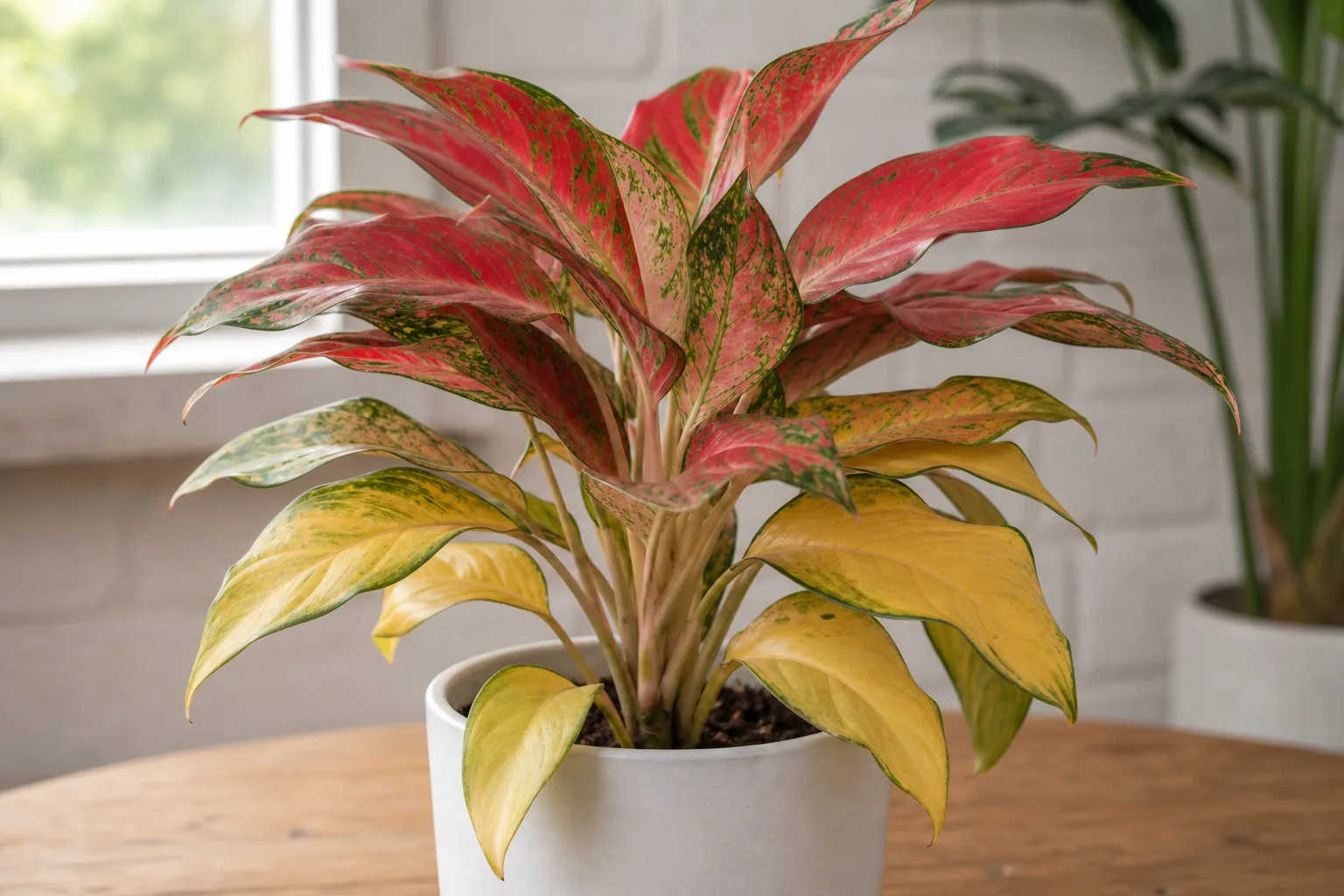
Yellow Leaves on Aglaonema Red Valentine: Causes, Checks & Fixes
This guide covers yellow leaves on Aglaonema Red Valentine. See also the general Yellow Leaves guide, watering, and light pages for this plant.
Yellow Leaves on Aglaonema Red Valentine: Causes, Checks & Fixes
Quick answer
Yellow leaves on Aglaonema Red Valentine (Aglaonema commutatum ‘Red Valentine’) are a stress signal, not a single disease. On this cultivar, the most common trigger is overwatering on Aglaonema Red Valentine-roots sitting in wet mix too long lose oxygen and stop feeding the foliage, so lower leaves yellow first and may feel limp even when soil is damp.
First step: check moisture halfway down the pot. Red Valentine should be watered when the top half of the mix dries. If your finger hits cool, damp soil at that depth, do not water today. Let the mix dry through before the next drink, then reassess leaf color and pot weight over the next week.
One or two yellow bottom leaves on an otherwise firm plant are often normal aging, especially on slow-growing variegated Aglaonemas. Worry when yellowing spreads quickly, pairs with wet soil, or reaches new crown leaves.
What yellow leaves look like on Aglaonema Red Valentine
Red Valentine carries large pink-red leaf sections, so yellowing stands out sharply against the variegation. The pattern tells you a lot:
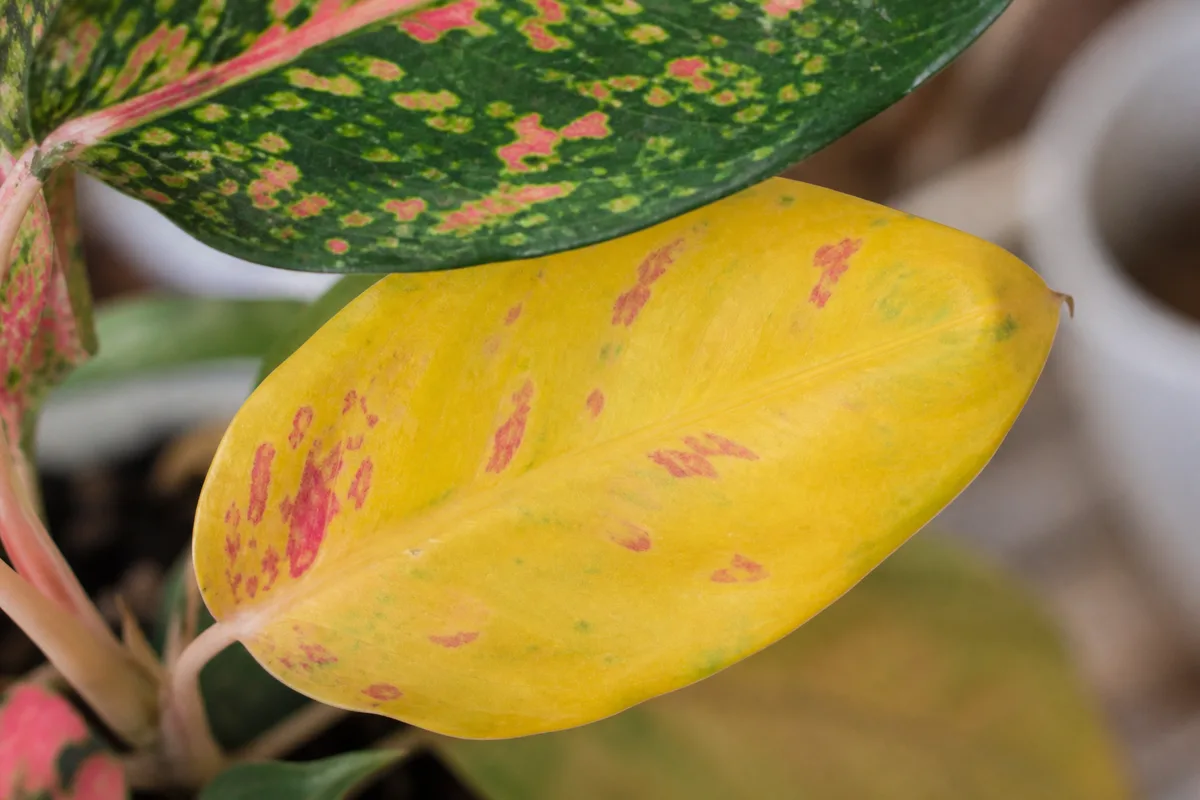
A lower leaf turning uniform yellow while pink-red variegation fades - common overwatering pattern on Red Valentine.
Overwatering / root stress - Lower and middle leaves turn uniform yellow or pale green, sometimes with brown edges. Leaves feel soft or limp while the mix stays dark and cool at the surface. You may see fungus gnats, mold on soil, or a sour smell. Yellowing often climbs from the bottom toward the center over days to weeks.
Low light compounding wet soil - Upper leaves look pale or washed out, stems stretch, and pink-red color fades toward green. Soil dries slowly because the plant uses little water. Yellowing may look like a nutrition problem but trace back to roots in stale moisture.
underwatering on Aglaonema Red Valentine - Leaves yellow from the tips inward or wilt before turning yellow. The pot feels light, mix pulls away from the sides, and soil is dry well below the surface. Stems stay firm; recovery after a thorough soak is usually fast.
Normal senescence - The oldest bottom leaf yellows alone over weeks or months as a new leaf opens from the crown. Stems are firm, soil moisture is normal, and only one leaf at a time is affected.
Pest-related yellowing - Stippling, webbing, sticky residue, or deformed new growth point to spider mites, mealybugs, or aphids rather than watering alone. Check leaf undersides and leaf axils before assuming root trouble.
Why Aglaonema Red Valentine gets yellow leaves
Chinese evergreens evolved in the humid tropical understory of Southeast Asia with brief dry cycles between rains-not constant soggy peat. Red Valentine shares that biology: it wants steady moisture with air around the roots, not a wet sponge.
Overwatering is the leading cause on Aglaonema Red Valentine overview-yellowing is most often caused by overwatering on houseplants generally. Calendar watering, saucers left full, heavy peat mix, or decorative cache pots trap moisture. When roots suffocate, they cannot move water upward-leaves may wilt or yellow even though the mix feels damp. The plant sheds older leaves first because they are the least essential-classic lower-leaf yellowing with wet soil.
Low light slows water use. Red Valentine tolerates dim corners but drinks less there. The same weekly watering that worked near a bright window leaves the root zone wet for days in shade. Cool room temperatures in winter make that worse-overwatering in winter commonly leads to root rot when cold plus wet soil stalls dry-down.
Underwatering damages fine feeder roots after repeated dry cycles. The plant then yellows and drops leaves to reduce water demand. This is less common on Red Valentine than overwatering but shows up when owners fear root rot and underwater for weeks.
Natural aging happens on all Aglaonemas. Variegated cultivars like Red Valentine grow slowly, so one bottom leaf may linger for months before yellowing. That turnover is healthy if the crown keeps producing firm new leaves.
Nutrient issues are secondary suspects. Old, exhausted mix can cause generalized pale yellowing, but fertilizing a waterlogged plant often makes yellowing worse through salt stress. Fix moisture and light before feeding.
How to confirm the cause
Work through these checks in order-each step narrows the diagnosis:
- Which leaves? Bottom only, one at a time → likely aging. Multiple leaves at once, climbing upward → stress. New crown leaves yellowing → urgent.
- Soil at half depth - Insert a finger or dry skewer to the middle of the pot; allow the top 1–2 inches to dry before watering again on Aglaonema. Damp with limp yellow leaves → overwatering. Dry throughout with light pot → underwatering. Moderate moisture with one fading bottom leaf → aging.
- Pot weight - Lift before and after watering. A heavy pot days after watering means slow dry-down; reduce frequency or improve light.
- Light level - Red Valentine needs medium to Aglaonema Red Valentine light guide for stable color and predictable water use. Deep shade plus wet soil is a common indoor combo.
- Stem base - Press near the soil line. Firm is reassuring; soft or collapsing tissue with wet mix suggests rot.
- Smell and surface - Sour odor, white mold on soil, or persistent gnats confirm chronic wet conditions.
- Pest scan - Magnify leaf undersides. Webbing, cottony clusters, or sticky shine mean pests are contributing.
If soil is wet and multiple leaves are yellowing, unpot and inspect roots before changing fertilizer or Aglaonema Red Valentine repotting guide into fresh mix. Healthy Aglaonema roots are firm and pale; rotting roots are brown, mushy, and smell bad.
First fix for Aglaonema Red Valentine
Pause watering until the top half of the mix dries completely.
That single action stops further root damage if overwatering is the cause-which it usually is on Red Valentine. Do not pour off excess water and immediately replace it with a “corrective” drink. Do not fertilize, mist heavily, or repot on day one unless roots are clearly mushy on inspection.
After the mix dries:
- Empty any saucer or cache pot so the bottom never sits in runoff.
- Move the plant to brighter indirect light if it has been in deep shade-better light helps the pot dry and supports recovery without scorching the pale pink tissue.
- Snip fully yellow leaves at the base with clean scissors. Leave partially green leaves; they still photosynthesize.
If the pot was wet for weeks and stems are soft, proceed to root inspection and repotting only after confirming decay-see recovery steps below.
Step-by-step recovery
Once you know the cause, follow the matching path:
Overwatering / early root stress
- Let mix dry to half depth; maintain that dry-down rule going forward.
- Improve airflow around the pot and increase indirect light slightly if the plant was in shade.
- Remove fully yellow leaves and any mushy petioles.
- If yellowing continues after two dry cycles (often two to three weeks), unpot, rinse roots, trim brown mushy tissue with sterilized scissors, and repot into fresh well-draining mix with perlite in the same size or slightly smaller pot.
- Wait until the top half dries again before the first post-repot water.
Underwatering
- Water thoroughly until excess runs from drainage holes, then empty the saucer.
- Resume the half-dry rule-do not switch to daily sips.
- Trim leaves that are fully yellow; partially yellow leaves may recover if roots rehydrate quickly.
Low light
- Move to medium to bright indirect light-east or north-facing window, or several feet from a south window behind sheer curtain.
- Adjust watering downward to match slower use in the new spot; recheck weight weekly until the rhythm is clear.
- Expect faded pink-red sections to deepen in color over several weeks as light improves.
Normal aging
- Remove the spent yellow leaf when it is fully dry or pulls away easily.
- No care overhaul needed if the crown keeps producing firm new growth.
Pests
- Isolate the plant.
- Rinse leaf undersides and treat confirmed pests before adjusting watering or feed.
- Yellow leaves from pest damage are trimmed after the infestation is under control.
Hold fertilizer until new growth looks healthy for two weeks. Stressed Red Valentine roots absorb salts poorly.
Recovery timeline
Stabilization usually takes one to two weeks once soil moisture matches what the roots can handle-yellowing should stop spreading, and stems should feel firm.
New crown leaves are the best success marker. Expect firm, partially unfurled leaves with stable variegation within two to four weeks after the fix. Variegated Aglaonemas grow slowly, so patience is normal.
Old yellow leaves will not green up-they drop or you trim them. Judge recovery by new growth, not by bottom-leaf color.
Worsening signs: rapid yellowing despite dry soil, soft stems, sour smell returning, or no new growth by mid-spring after corrections-those warrant root inspection or accepting that tissue may not recover.
Lookalike symptoms
- Brown tips without full yellowing - Often low humidity or salt buildup; soil moisture may be fine. See brown-tip care before overwatering a dry pot.
- Drooping with dry soil - Underwatering or heat stress, not rot. Weight the pot before adding water.
- Leggy pale growth - Insufficient light; may mimic nutrient deficiency. Brighten placement first.
- Root rot on Aglaonema Red Valentine - Yellow leaves plus wet soil and mushy roots; requires trim and repot, not just a dry-down week.
- Cold draft damage - Yellow or translucent patches after exposure below about 18°C (65°F); keep away from AC vents and cold windows.
What not to do
Do not water more because leaves look limp while soil is already damp-that deepens root damage. Avoid heavy fertilizer on yellow, stressed foliage; salt burn adds yellow edges on top of the original problem.
Do not repot into a larger pot to “help drying”-extra wet soil volume slows dry-down. Do not remove every yellow leaf at once if some are still partially green; they support recovery.
Do not place Red Valentine in direct sun to fix yellowing-the pale pink sections scorch easily. Bright indirect light is the target.
Skip automatic weekly watering without checking half-depth moisture; seasonal light changes make calendars unreliable indoors.
How to prevent yellow leaves
Match watering to actual dry-down: top half dry before each drink, saucers emptied after watering so the plant never stands in standing water, and no water trapped in outer pots.
Keep medium to bright indirect light so the plant uses water steadily and holds pink-red color. Pair with well-draining mix with perlite and a pot with open drainage holes.
Reduce watering frequency in cooler, darker months when growth slows. Remove spent lower leaves promptly so pests do not hide in dying tissue.
Quarantine new plants for two weeks and check soil moisture before adopting a shop’s Aglaonema Red Valentine watering guide-nursery mix often dries faster than home conditions.
When to worry
Escalate if new crown leaves yellow while soil is wet, stems soften at the base, or more than a third of foliage turns yellow within ten days. Unpot and inspect roots immediately.
A single bottom leaf yellowing slowly on a firm plant with normal soil moisture is low urgency-trim and monitor.
If root inspection shows mostly mushy roots and a soft stem, survival depends on how much firm tissue remains. Take stem cuttings from healthy upper growth as backup before the crown collapses.
Conclusion
Yellow leaves on Aglaonema Red Valentine usually trace to roots in wet soil too long, often worsened by low light or winter slow-down. Check moisture at half depth, pause watering if damp, brighten indirect light if needed, and trim spent leaves. Judge recovery by firm new crown growth, not old yellow foliage-and save repotting and fertilizer for cases where dry-down alone does not stop the spread.
When to use this page vs other Aglaonema Red Valentine guides
- Aglaonema Red Valentine watering guide - Use for routine moisture checks before assuming yellow leaves is the main issue.
- Aglaonema Red Valentine problems hub - Browse all 16 common issues on this species.
- Overwatering on Aglaonema Red Valentine - Different entry point when symptoms overlap with yellow leaves.
- Underwatering on Aglaonema Red Valentine - Different entry point when symptoms overlap with yellow leaves.
- Not Enough Light on Aglaonema Red Valentine - Different entry point when symptoms overlap with yellow leaves.
Related Aglaonema Red Valentine guides
- Aglaonema Red Valentine overview
- Aglaonema Red Valentine watering
- Aglaonema Red Valentine light
- Aglaonema Red Valentine soil
- Overwatering on Aglaonema Red Valentine
- Underwatering on Aglaonema Red Valentine
- Not Enough Light on Aglaonema Red Valentine
- Root Rot on Aglaonema Red Valentine
- Aglaonema Red Valentine problems