Drooping Leaves on Aglaonema Red Valentine: Causes, Checks
Quick answer
Drooping leaves on Aglaonema Red Valentine mean petioles are losing turgor because water is not reaching the foliage. Lift the pot and feel the top inch of mix first-a heavy wet pot with limp lower leaves needs drying and root checks; a light dry pot with slightly curled firm leaves needs measured watering.
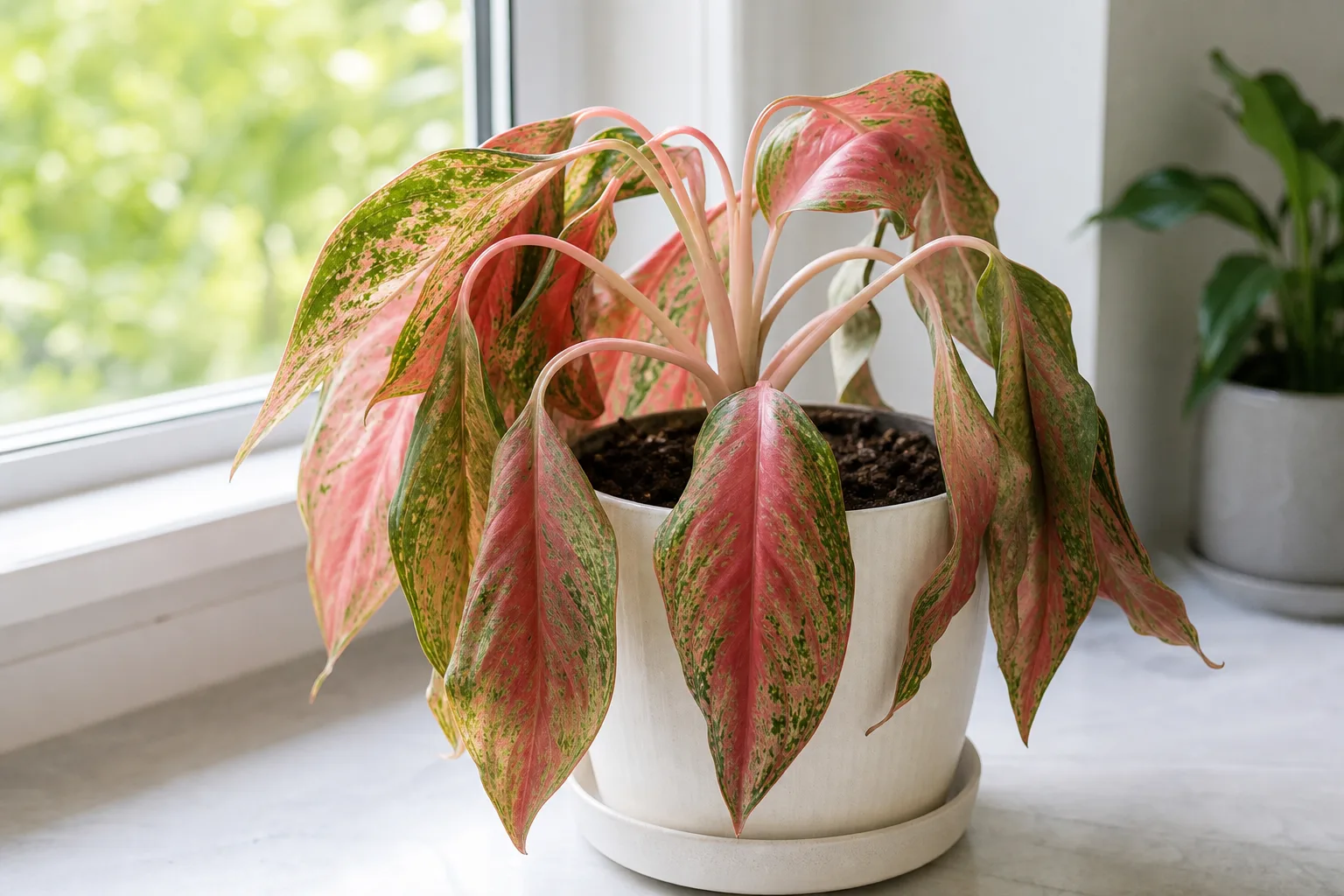
Drooping Leaves on Aglaonema Red Valentine: Causes, Checks & Fixes
This guide covers drooping leaves on Aglaonema Red Valentine. See also the general Drooping Leaves guide, watering, and light pages for this plant.
Drooping Leaves on Aglaonema Red Valentine: Causes, Checks & Fixes
Quick answer
Drooping leaves on Aglaonema Red Valentine mean petioles are hanging because water is not moving from roots to foliage. That failure almost always starts below the soil line-not because the plant automatically needs a drink. A wilted plant with moist soil often has damaged roots that cannot absorb water First step: lift the pot and push your finger into the top inch of mix. A light, dry pot with limp leaves calls for measured watering. A heavy, wet pot with drooping lower leaves means root stress or rot-stop watering and check crown firmness before you add more water.
What drooping leaves look like on Aglaonema Red Valentine
On a healthy Red Valentine, pink-and-green leaves sit upright on short petioles with vivid red-pink variegation along the margins and midribs. Drooping changes that profile-and the pattern tells you which branch to follow.
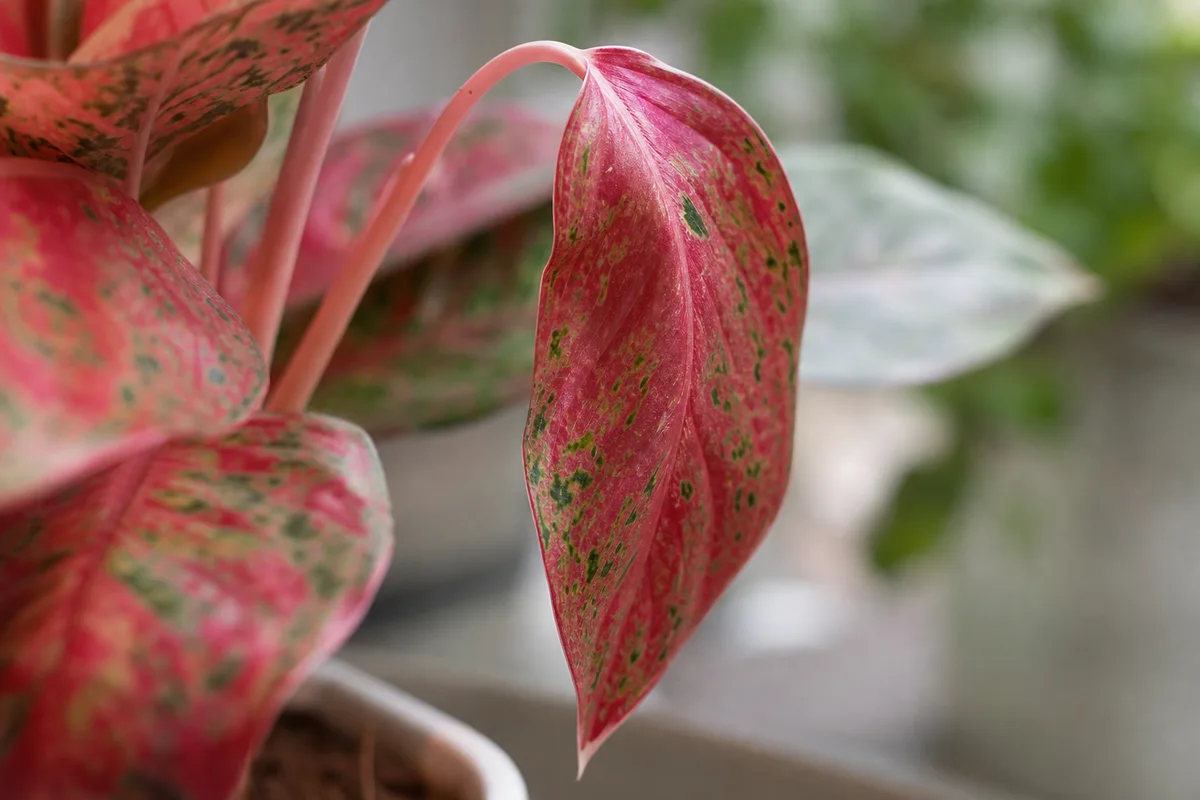
Drooping Leaves symptoms on Aglaonema Red Valentine - compare with healthy tissue on the same plant.
Wet-soil droop is the most common misread on this cultivar. Lower leaves hang limp while the mix stays dark, cool, and heavy. Yellowing often starts on the bottom leaves first. Pink-red variegation may fade to dull green or gray as chronic stress builds. You may see fungus gnats near the soil surface or a faint sour smell from the drain holes. The crown-the tight cluster where new leaves emerge-may feel soft if rot is advancing.
Dry-soil droop shows limp or slightly curled leaves on a lightweight pot. The surface mix is pale and crumbly. Leaves feel thinner but still firm-not mushy. On Red Valentine, the pink-red coloration can look washed out before the whole leaf droops. This pattern often follows a missed watering, a bright window that dried the pot fast, or winter heat that pulled moisture from small nursery pots.
Gradual lower-leaf sag over weeks on an otherwise moist pot in a dim room can reflect insufficient light weakening the stems on a variegated cultivar. Red Valentine needs brighter indirect light than dark-leaf Maria types to hold firm foliage-see the lookalike section below before you increase water.
Sudden whole-plant flop within a day or two usually points to cold draft, repot shock, or rapid root failure-not gradual thirst. A desk plant drooping after an AC vent blew on it overnight is a classic cold-stress pattern. Droop that appears right after Aglaonema Red Valentine repotting guide often follows root disturbance rather than a calendar watering mistake.
Drooping is easy to confuse with wilting. Both mean failed water delivery, but drooping often describes a slower sag-especially on lower, older leaves-while severe wilt makes the entire plant collapse quickly. See the wilting guide if the whole rosette has lost turgor fast.
Why Aglaonema Red Valentine gets drooping leaves
Chinese evergreens store some moisture in their stems and rhizomes, but they still need working roots to move water to leaves. Red Valentine’s compact, variegated habit makes stress visible early-pink-red sections dull before solid-green types would show obvious damage.
Overwatering and root rot
This is the leading cause on Red Valentine. Root rot usually results from mix that drains too slowly or from overwatering Saturated soil drives out oxygen; decaying roots cannot absorb water even when the pot is full. Owners often see limp lower leaves and pour more water, which accelerates crown failure. Heavy nursery peat, oversized pots, cachepots without drainage, and calendar watering in cool rooms all keep roots wet too long.
Underwatering
Dry soil causes wilting because roots cannot supply water fast enough Small plastic pots in Aglaonema Red Valentine light guide can go from moist to dry in a few days, especially when furnace heat runs in winter. Without fine root hairs, even a later deep watering cannot restore turgor instantly.
Insufficient light for a variegated cultivar
Variegated Chinese evergreens need low to moderate indirect light-not the dim corners where dark cultivars survive. Stems stretch, leaves soften, and the plant looks droopy even when soil moisture is adequate. Red Valentine’s pink-red variegation fades toward green-gray in chronic low light before petioles fully collapse.
Cold drafts and chilling
Chinese evergreens prefer 68 to 80 °F and are sensitive below 55 °F A night near an AC vent or a cold windowpane can droop an otherwise healthy specimen overnight without any root disease.
Repot shock
Repotting disturbs fine roots. Even with good technique, leaves may droop for days while the plant re-establishes. This is temporary if the crown stays firm and you keep humidity steady without soaking the mix.
Pest-related droop
Mealybugs or scale on stems can weaken vascular flow. Inspect leaf axils and stem bases if droop persists despite correct moisture and light.
Lookalike symptoms to rule out
Wilting vs. drooping - Wilting is a faster, whole-plant loss of turgor. Drooping describes the early sag-often lower leaves first-before total collapse. If the entire plant flopped within hours, start with the wilting page.
Leggy stretch vs. true droop - Long, thin petioles reaching toward a window with faded pink-red variegation are etiolation from low light, not necessarily drought. Move to brighter indirect light before you increase water.
Natural lower-leaf aging - A few bottom leaves naturally hang while the crown stays firm. If only the oldest leaves droop and soil moisture is normal, you may be seeing senescence, not a crisis.
Brown tips without droop - Dry air or fertilizer burn can crisp leaf edges on an otherwise upright plant. Pair limp foliage with your moisture check before diagnosing water stress.
How to confirm the cause
Work through these checks in order so you do not water a rotting plant or repot one that only needs a drink.
- Top-inch moisture - Insert a finger to the first knuckle. Dry confirms underwatering; damp or wet with limp leaves suggests root failure. Allow the top 1–2 inches to dry before watering Chinese evergreen again
- Pot weight - Lift the pot. Light weight plus droop equals dry. Heavy, cool pot plus droop equals oversaturated mix or dead roots.
- Leaf pattern - Yellowing from the bottom up on wet mix strongly suggests root rot. Even droop across all leaves on dry mix points to drought.
- Crown feel - Press the base of the stem cluster gently. Firm crown with drooping outer leaves is more recoverable. Soft, dark, or collapsing crown means rot may have reached the growing point-see root rot.
- Smell and drainage - Sour odor, water sitting in a cachepot for days, or mix that stays wet a week after watering confirms chronic overwatering habitat.
- Variegation color - Washed-out pink-red on a dim shelf with soft stems may need brighter indirect light, not more water.
- Recent history - Repotting within the past two weeks, a vacation dry spell, a cold draft, or a switch to a much larger pot narrows the cause quickly.
- Root inspection - If wet droop persists after stopping water for several days, slide the plant from the pot. Healthy Aglaonema roots are firm and pale; rotted roots are brown, translucent, or slimy.
| Signal | Wet-soil droop | Dry-soil droop |
|---|---|---|
| Pot weight | Heavy, cool | Light, hollow |
| Top inch of mix | Damp or wet for days | Dry, pale, crumbly |
| Leaf texture | Soft, limp, may yellow | Curled but firm, not mushy |
| Crown | May soften if rot advances | Usually firm |
| Variegation | Dulls to green-gray on chronic stress | Pink-red fades before full collapse |
| Smell | Sour or stale from drain holes | None |
Confirmed dry droop: dry surface, light pot, firm roots at the edge of the root ball. Confirmed wet droop: moist mix, yellow lower leaves, mushy roots, or sour smell. Suspected shock: droop started right after repotting with mostly intact pale roots.
First fix for Aglaonema Red Valentine
Lift the pot and check top-inch soil moisture before any other action. That single test separates opposite fixes.
If the mix is dry and the pot is light, water thoroughly until a small amount drains from the holes, then empty the saucer or cachepot within 30 minutes. Water when the top 1–2 inches of mix are dry-not on a fixed calendar. Do not flood a severely dry plant repeatedly in one hour; one good drink, then wait 24 hours and reassess turgor.
If the mix is wet and lower leaves are drooping, stop watering immediately. Plants in waterlogged soil may die because roots cannot absorb oxygen Set the pot on folded paper towels to wick excess moisture from the drain holes. Move to brighter indirect light if the plant sits in deep shade-slow evaporation worsens wet soil. Inspect roots and crown if leaves keep declining after the mix dries. Full wet-soil protocol is on the overwatering page.
Make one correction, then wait several days before stacking repotting, fertilizing, and heavy pruning together.
Step-by-step recovery by cause
Dry droop path
- Water until a small amount drains; discard all runoff from saucers and cachepots.
- If the plant was severely dry, repeat a moderate drink after 24 hours only if the top inch is dry again-not sopping wet throughout.
- Keep the plant in bright indirect light-not hot direct sun-while roots rehydrate. Red Valentine’s pale variegation burns in harsh direct sun.
- Resume normal rhythm only when the top inch of mix feels dry.
Wet droop / root stress path
- Stop all watering. Wick excess moisture with paper towels under the pot.
- If roots are mushy when you inspect, trim decayed tissue, repot into fresh well-drained mix in a pot sized to the remaining roots, and keep the mix barely moist-not wet-while the plant stabilizes.
- Remove soft lower leaves that will not recover; they drain energy and harbor rot.
- Wait for firm new growth from the crown before fertilizing.
Light-stress droop
Move Red Valentine to brighter indirect light-an east window or a few feet from a south or west window filtered by a sheer curtain. Variegated types need more light than solid-green cultivars Hold watering steady; do not compensate for dim rooms by watering more often.
Cold-draft droop
Move the plant away from AC vents, cold windows, and outside doors. Keep temperatures in the 68 to 80 °F range and avoid chilling below 55 °F. Leaves often firm within a day once warmth returns if roots were healthy.
Repot-shock droop
If droop followed repotting and roots look mostly healthy, skip the rot protocol. Keep mix barely moist, maintain stable humidity, and wait one to three weeks for new root function. Do not fertilize until new center growth appears.
Recovery timeline
| Cause | What improvement looks like | Typical timeframe |
|---|---|---|
| Mild dry droop | Leaves firm within hours to a day after proper watering | Same day to 48 hours |
| Root stress on wet soil | Lower droop stops spreading; new center leaves stay firm | 1–2 weeks after drying and trim |
| Light-stress droop | Stems strengthen; pink-red variegation returns | 2–4 weeks after brighter placement |
| Repot shock | Gradual firming without crown softening | 1–3 weeks under stable conditions |
| Severe crown rot | Little to no new firm growth from center | Often not recoverable |
Old drooping leaves may never return to a perfect upright angle even after the plant stabilizes. That is normal-track recovery by new growth, not by forcing every outer leaf upright.
What not to do
Do not pour more water onto a drooping Red Valentine when the mix is already wet-that is the most common way owners turn reversible stress into crown rot. Do not move a drooping plant into harsh direct sun to perk it up; pale variegated leaves burn easily. Do not fertilize a stressed plant before you know whether roots are healthy. Do not repot on day one unless root rot, failed mix, or severe compaction is confirmed. Do not stack repotting, pruning, and pesticide on the same day.
How to prevent drooping leaves on Aglaonema Red Valentine
Water when the top 1–2 inches of mix are dry-use your finger or pot weight, not a calendar. Give Red Valentine brighter indirect light than you would a dark Maria-type Chinese evergreen so stems stay firm and pink-red variegation stays vivid. Use well-drained commercial mix with extra humus in a pot with drain holes sized to the root mass-not an oversized decorative cachepot holding standing water. Keep the plant in stable 68 to 80 °F temperatures away from AC vents. Empty saucers within 30 minutes of every drink. After travel or a missed watering, rehydrate with one thorough session rather than drowning the plant in repeated floods.
When to worry
Act immediately if the crown softens, the mix stays wet while droop spreads upward, or roots are brown and mushy on inspection-those signs mean rot is reaching the heart of the plant and simple drying may not be enough. Sudden whole-plant collapse on wet soil within a few days is urgent even if leaves still look green at the tips.
You can wait and observe if only outer leaves are limp, the crown is firm, and you have already corrected a clear dry-droop or draft mistake. Improvement shows as new leaves opening upright within one to two weeks.
Aglaonema Red Valentine care cross-check
| Check | Healthy baseline | Drooping red flag |
|---|---|---|
| Top inch of mix | Dry before next drink | Wet for 7+ days while leaves limp |
| Pot weight | Light when dry, moderate after watering | Stays heavy and cool between waterings |
| Crown | Firm at the stem base | Soft, dark, or collapsing |
| Lower leaves | Occasional natural aging | Yellow on wet soil, spreading upward |
| Light | Bright indirect; pink-red variegation vivid | Dim shelf with faded color and soft stems |
| Temperature | 68–80 °F, no cold drafts | Below 55 °F or direct AC blast |
Related Red Valentine problems
- Overwatering - primary overlap when soil is wet and leaves are limp
- Underwatering - dry mix, light pot, curled firm leaves
- Root rot - soft crown, sour smell, mushy roots
- Wilting - faster whole-plant collapse
- Red Valentine overview - full care hub
When to use this page vs other Aglaonema Red Valentine guides
- Aglaonema Red Valentine watering guide - Use for routine moisture checks before assuming drooping leaves is the main issue.
- Aglaonema Red Valentine problems hub - Browse all 16 common issues on this species.
- Underwatering on Aglaonema Red Valentine - Different entry point when symptoms overlap with drooping leaves.
- Overwatering on Aglaonema Red Valentine - Different entry point when symptoms overlap with drooping leaves.
- Root Rot on Aglaonema Red Valentine - Different entry point when symptoms overlap with drooping leaves.
Related Aglaonema Red Valentine guides
- Aglaonema Red Valentine overview
- Aglaonema Red Valentine watering
- Aglaonema Red Valentine light
- Aglaonema Red Valentine soil
- Underwatering on Aglaonema Red Valentine
- Overwatering on Aglaonema Red Valentine
- Root Rot on Aglaonema Red Valentine
- Wilting on Aglaonema Red Valentine
- Aglaonema Red Valentine problems