Wilting on Aglaonema Red Valentine: Causes, Checks & Fixes
Quick answer
Wilting on Aglaonema Red Valentine means leaves lost turgor because water is not reaching them. Lift the pot and probe the top inch of mix first-heavy wet soil with limp leaves means stop watering; a light dry pot with slightly curled firm leaves needs a thorough drink.
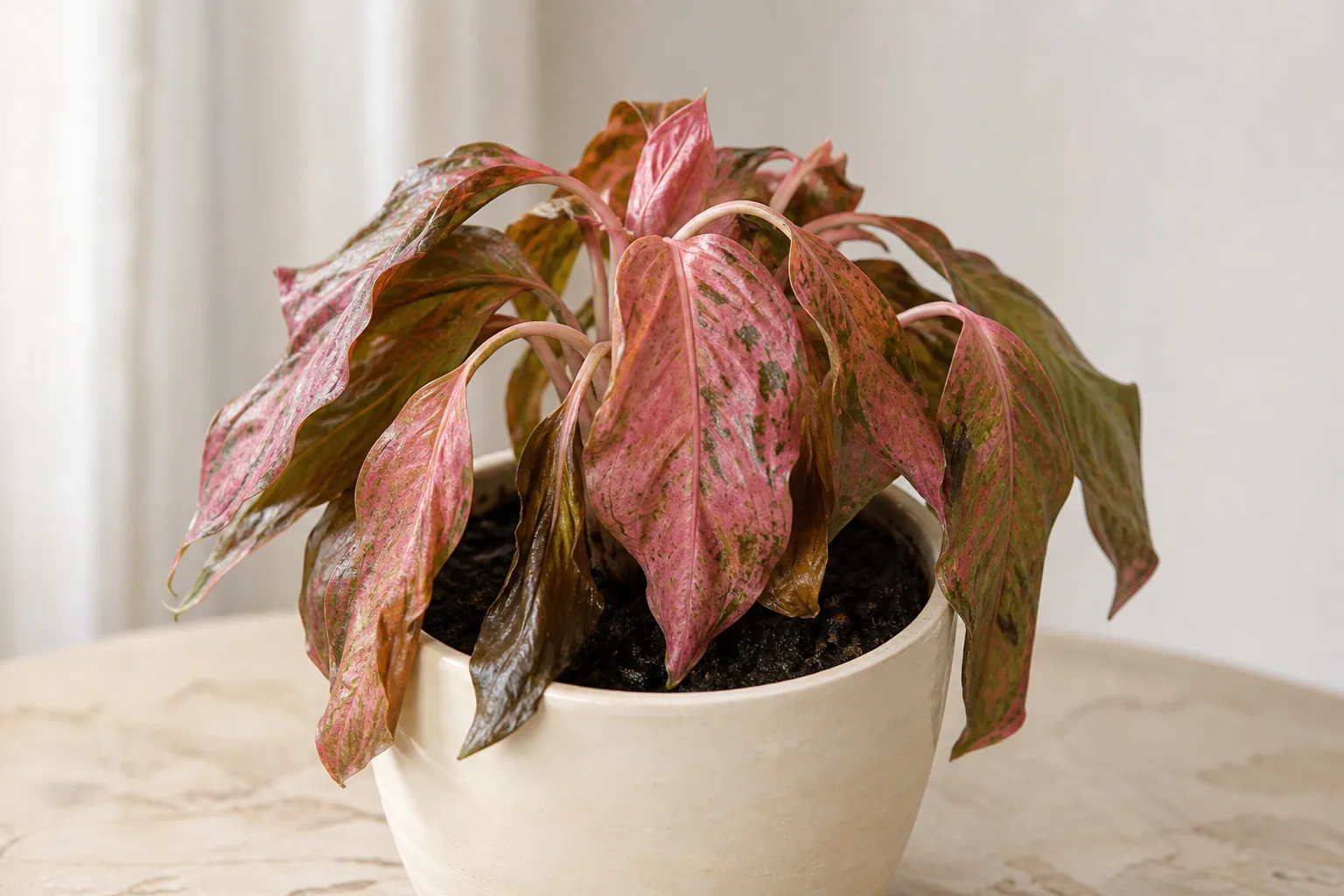
Wilting on Aglaonema Red Valentine: Causes, Checks & Fixes
This guide covers wilting on Aglaonema Red Valentine. See also the general Wilting guide, watering, and light pages for this plant.
Wilting on Aglaonema Red Valentine: Causes, Checks & Fixes
Quick answer
Wilting on Aglaonema Red Valentine means the leaves have lost turgor because water is not moving from roots to foliage. Wilted leaves may indicate the soil is too dry or too wet-rotting roots cannot take up water. That failure almost always starts with how the root zone is managed-not because the plant automatically “needs a drink.” First step: lift the pot and push your finger into the top inch of mix. A heavy, cool pot with dark damp soil and limp leaves means damaged or oxygen-starved roots-stop watering and inspect before you add more water. A light, dry pot with slightly curled but still firm leaves means drought stress-give one thorough bottom-watering and drain completely.
What wilting looks like on Aglaonema Red Valentine
On a healthy Red Valentine, the compact rosette holds upright on short petioles and the pink-red variegation stays vivid against green leaf centers. Wilting changes that profile quickly-and the pattern tells you which direction to investigate.
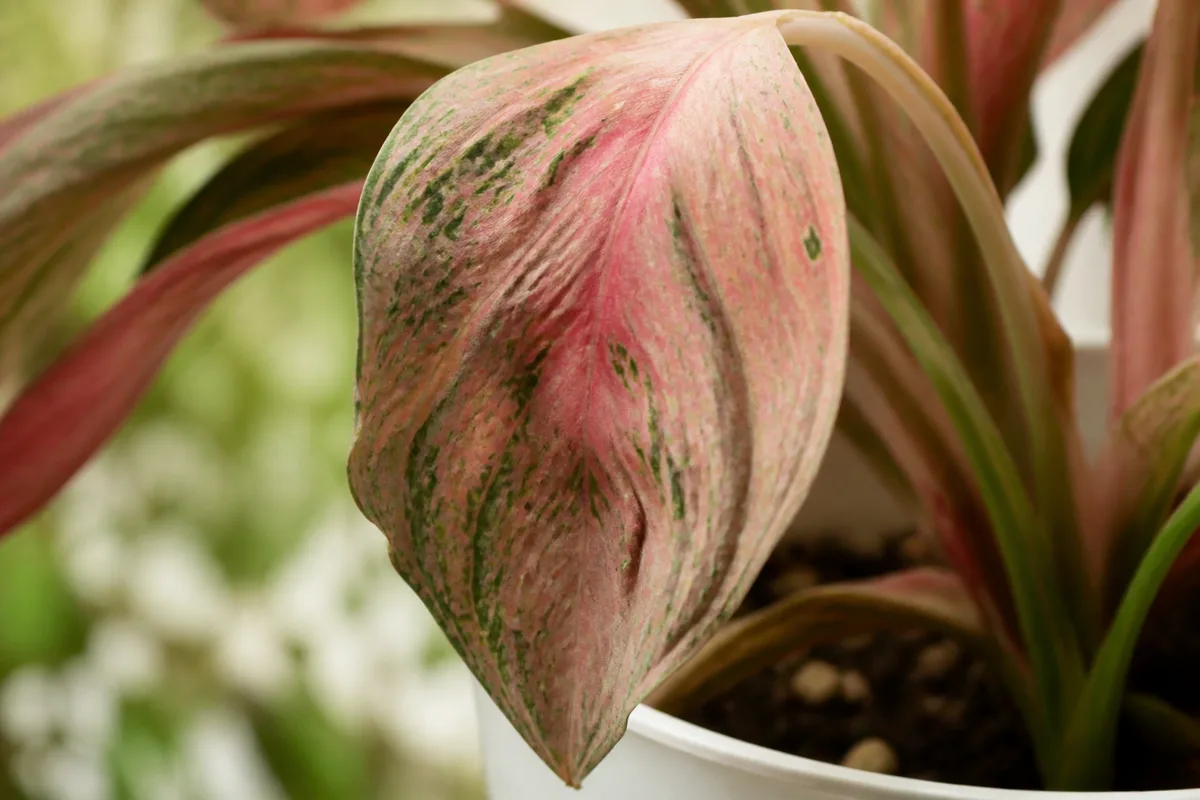
Limp, drooping leaves with dulled pink-red variegation - wilting on Red Valentine when water cannot reach the foliage.
Wet wilt (overwatering or root stress) shows limp, hanging leaves while the mix is dark, cool, and heavy. Lower leaves often yellow first and the pink-red variegation may look dull or washed out as stress spreads. You may see fungus gnats hovering near the surface, white mold on the mix, or a sour smell from the drain holes. The crown-the base where stems meet soil-may feel soft if rot is advancing. This is the pattern owners misread most often: the plant looks thirsty while sitting in wet soil.
Dry wilt (underwatering) shows slightly curled but still firm leaves on a lightweight pot. The mix pulls away from the pot edge, the surface looks pale and dusty, and brown crispy margins may appear on older leaves. Variegation can fade slightly before the whole plant flops. Unlike wet wilt, there is no sour smell and the crown stays firm when you press it gently.
Whole-plant flop after shock appears within a few days of Aglaonema Red Valentine repotting guide, a cold AC draft across an office desk, or moving the plant from a warm greenhouse to a chilly room. Leaves hang uniformly but roots are usually firm and pale when you inspect the edge of the root ball-shock interrupted water uptake rather than killing roots.
Sudden collapse with soft crown is the urgent branch: the entire compact specimen goes limp within days, soil stays wet, and the stem base feels mushy. That pattern points to root rot reaching the crown-not a simple watering mistake.
Pest-related wilt is uncommon on Red Valentine but worth ruling out if wilt persists despite correct moisture. Mealybugs at the crown and root mealybugs under the soil line can weaken uptake; inspect leaf axils and the soil surface with a magnifying glass before assuming water stress alone.
Why Aglaonema Red Valentine wilts
Red Valentine is a variegated Chinese evergreen cultivar bred for pink-red leaf color. Variegated types need low to moderate indirect light and steady moisture without constant sogginess. They tolerate dim office conditions and average humidity, but they show stress quickly when watering, temperature, or drainage goes wrong.
Overwatering and root rot are the most common causes of wilt on indoor Aglaonemas. Root rot usually results from overwatering or a mix that does not drain quickly. Roots growing in waterlogged soil may die because they cannot absorb the oxygen needed to function normally; roots stop absorbing water even while surrounded by moisture. Calendar watering in a dim cubicle, nursery peat that never dries, cachepots without drainage, and oversized pots all keep Red Valentine’s root zone wet too long. Lower leaves yellow and droop first as root function fails.
Underwatering dries fine root hairs before the plant can recover from one missed drink. Small pots near heating vents, summer AC, or a long vacation can leave the mix bone dry while the owner assumes Chinese evergreens are drought-proof. Red Valentine will tolerate brief dryness, but repeated dry cycles cause progressive wilt.
Cold drafts and temperature drops stress tropical foliage. Chinese evergreens prefer roughly 68–80 °F and suffer when chilled below about 55 °F. Exposure to chilling temperatures can cause dropping or wilting leaves even when soil moisture is normal.
Repot shock interrupts water uptake when roots are disturbed, trimmed, or left in mix that repels water after repotting. Open, recently unfurled leaves often wilt first after a hard repot even when the plant will eventually recover.
Heat stress in hot direct sun can soften leaves on a borderline-dry plant. Red Valentine does not like direct sunlight on its foliage; afternoon scorch can mimic wilt until the plant moves to Aglaonema Red Valentine light guide.
Lookalike symptoms to rule out
Drooping without true wilt - One or two aging lower leaves naturally hang while the center stays firm and soil moisture is normal. If only the oldest leaves droop and new growth is upright, you may be seeing senescence rather than a crisis. See drooping leaves on Aglaonema Red Valentine when the pattern is gradual and limited to outer foliage.
Leggy stretch vs. wilt - Plants in very low light grow pale, spaced-out stems with smaller leaves. That etiolation looks weak but leaves stay firm and soil moisture is usually even. Increase light before changing the watering rhythm.
Yellow leaves without immediate wilt - Nutrient issues or natural leaf turnover can yellow lower leaves on an evenly moist plant. Pair yellowing with limp foliage and wet mix before diagnosing rot. See yellow leaves on Aglaonema Red Valentine when color change leads the symptom.
Variegation fade alone - Pink-red color dulls in very low light or chronic stress before the whole plant collapses. Faded variegation plus firm leaves and normal moisture usually means light or mild stress-not emergency wilt.
How to confirm the cause
Work through these checks in order so you do not water a rotting plant or repot one that only needs a drink.
- Surface moisture - Insert a finger to the first knuckle or two. Dry confirms underwatering; damp or wet with limp leaves suggests root failure, not thirst.
- Pot weight - Lift the pot. Light weight plus wilt equals dry. Heavy, cool pot plus wilt equals oversaturated mix or dead roots.
- Leaf pattern - Yellowing from the bottom up on wet mix strongly suggests root rot. Even wilt across all leaves on dry mix points to drought. Dull variegation on limp lower leaves often accompanies wet-soil stress on Red Valentine.
- Crown feel - Press the stem base gently. Firm crown with wilted outer leaves is more recoverable. Soft, dark, or collapsing crown means rot may have reached the growing point.
- Smell and drainage - Sour odor from the pot, water sitting in a cachepot for days, or mix that stays wet a week after watering confirms chronic overwatering habitat.
- Recent history - Repotting within the past two weeks, a vacation dry spell, a cold draft from a new AC vent, or a switch to a much larger pot narrows the cause quickly.
- Root inspection - If wet wilt persists after stopping water for several days, slide the plant from the pot. Healthy Aglaonema roots are firm and pale or light tan; rotted roots are brown, translucent, or slimy.
Confirmed dry wilt: dry surface, light pot, firm crown, firm roots if you peek at the edge of the root ball. Confirmed wet wilt: moist mix, yellow lower leaves, mushy roots, or sour smell. Suspected shock: wilt started right after repotting or a cold draft with mostly intact pale roots.
First fix for Aglaonema Red Valentine
Check pot weight and the top inch of mix before any other action. That single test separates the two opposite fixes.
If the mix is dry and the pot feels light, bottom-water thoroughly. Set the pot in a tray with room-temperature water for 20–30 minutes until the surface moistens, then discard all runoff. Do not leave the plant submerged for days. One proper soak beats repeated sips that never reach deep roots.
If the mix is wet and the plant is wilted, stop watering immediately. A limp plant in very wet soil needs quick action to draw out excess water. Set the pot on folded paper towels or newspapers to wick excess moisture from the drain holes. Move the plant to bright indirect light if it sits in deep shade-slow evaporation worsens wet soil in office conditions. If leaves keep declining after the mix dries, inspect roots for rot.
Make one correction, then wait 48 hours before stacking repotting, fertilizing, and heavy pruning together.
Step-by-step recovery by cause
Dry wilt path
- Bottom-water with room-temperature water for 20–30 minutes; pour off the tray completely.
- If the plant was severely dry, repeat a light surface watering once the root ball accepts moisture-avoid flooding a plant that has been dry for weeks in one uncontrolled pour.
- Resume normal watering only when the top inch to two inches of mix feel dry again.
- Keep the plant out of hot direct sun while it rehydrates.
Wet wilt / root rot path
- Stop all watering. Wick excess moisture with paper towels under the pot.
- Gently remove the plant and rinse away old mix. Cut away brown, mushy, or hollow roots with clean scissors.
- Repot into fresh, well-drained soilless mix with extra perlite or bark for aeration. Choose a pot that fits the root mass-oversized pots stay wet longer and invite relapse. See root rot on Aglaonema Red Valentine for the full rot protocol.
- Water lightly so the mix is evenly moist, then drain fully. Never let the pot sit in standing water.
- Remove soft lower leaves that will not recover; they harbor decay and drain the plant.
- Wait for firm new growth before fertilizing.
Cold-draft or repot-shock wilt
If wilt followed a cold exposure or repotting and roots look mostly healthy, skip the rot protocol. Keep the plant in stable room temperatures above 55 °F, maintain barely moist mix, and wait one to three weeks for new root function. Do not fertilize until new center growth appears.
Recovery timeline
Mild dry wilt often shows firmer leaves within 24–48 hours after proper bottom-watering. Severe drought may take several gradual watering cycles before the rosette fully recovers.
Overwatering without crown damage often stabilizes within one to two weeks once soil oxygen returns and you adjust the watering rhythm. Leaves may stay limp until new growth appears.
Root rot recovery spans two to four weeks when the crown is still firm and enough healthy root remains. If most roots are gone or the crown is soft, survival is unlikely regardless of care.
Transplant or cold shock may need one to three weeks under stable conditions before leaves firm up. Outer leaves lost during stress rarely recover; new center growth is the real benchmark.
What not to do
Do not pour more water onto a wilted Red Valentine when the mix is already wet-that accelerates root rot and is the most common mistake on this cultivar. Do not move a wilted plant into harsh direct sun to “perk it up.” Do not fertilize a stressed plant before you know whether roots are healthy; fertilizer on dry or rotting roots causes further damage. Do not repot on day one unless root rot, failed mix, or a water-trapping cachepot is confirmed-unnecessary repotting adds shock on top of wilt. Do not stack repotting, pruning, and pesticide on the same day.
How to prevent wilting on Aglaonema Red Valentine
Water when the top inch to two inches of mix feel dry-use your finger or pot weight, not a calendar. Empty cachepots and saucers within 30 minutes of watering so the plant never sits in stale water. Use a commercially available soilless mix with extra perlite or bark for drainage, and a pot with drain holes sized to the root ball. Keep Red Valentine in bright indirect light; variegated cultivars need more light than solid-green types but never direct sun on the foliage. Maintain stable room temperatures and keep the plant away from cold AC drafts and hot heating vents. Inspect weekly while problems are still small. For deeper watering rhythm guidance, see watering Aglaonema Red Valentine and overwatering on Aglaonema Red Valentine.
When to worry
Act immediately if the crown softens, the mix stays wet while the whole plant collapses, roots are brown and mushy on inspection, or wilt spreads to new center leaves within days. Those signs mean rot is reaching the heart of the plant-not a reversible dry spell.
You can wait and observe if wilt is mild, the crown is firm, and you have already corrected the most likely cause (one thorough soak for dry wilt, or stopped watering for wet wilt). Re-check in 48 hours for firmer leaves or new growth.
Related Red Valentine problems
Wilting overlaps with several care issues on this cultivar. Use these pages when your symptom pattern points beyond simple water stress:
- Overwatering on Aglaonema Red Valentine - limp leaves on wet soil, fungus gnats, chronic damp mix
- Underwatering on Aglaonema Red Valentine - light pot, dry mix, crispy margins
- Root rot on Aglaonema Red Valentine - mushy roots, sour smell, crown softness
- Drooping leaves on Aglaonema Red Valentine - gradual lower-leaf hang without full collapse
- Aglaonema Red Valentine care overview - light, soil, and routine care hub
When to use this page vs other Aglaonema Red Valentine guides
- Aglaonema Red Valentine watering guide - Use for routine moisture checks before assuming wilting is the main issue.
- Aglaonema Red Valentine problems hub - Browse all 16 common issues on this species.
- Underwatering on Aglaonema Red Valentine - Different entry point when symptoms overlap with wilting.
- Overwatering on Aglaonema Red Valentine - Different entry point when symptoms overlap with wilting.
- Root Rot on Aglaonema Red Valentine - Different entry point when symptoms overlap with wilting.
Related Aglaonema Red Valentine guides
- Aglaonema Red Valentine overview
- Aglaonema Red Valentine watering
- Aglaonema Red Valentine light
- Aglaonema Red Valentine soil
- Underwatering on Aglaonema Red Valentine
- Overwatering on Aglaonema Red Valentine
- Root Rot on Aglaonema Red Valentine
- Drooping Leaves on Aglaonema Red Valentine
- Yellow Leaves on Aglaonema Red Valentine
- Aglaonema Red Valentine problems