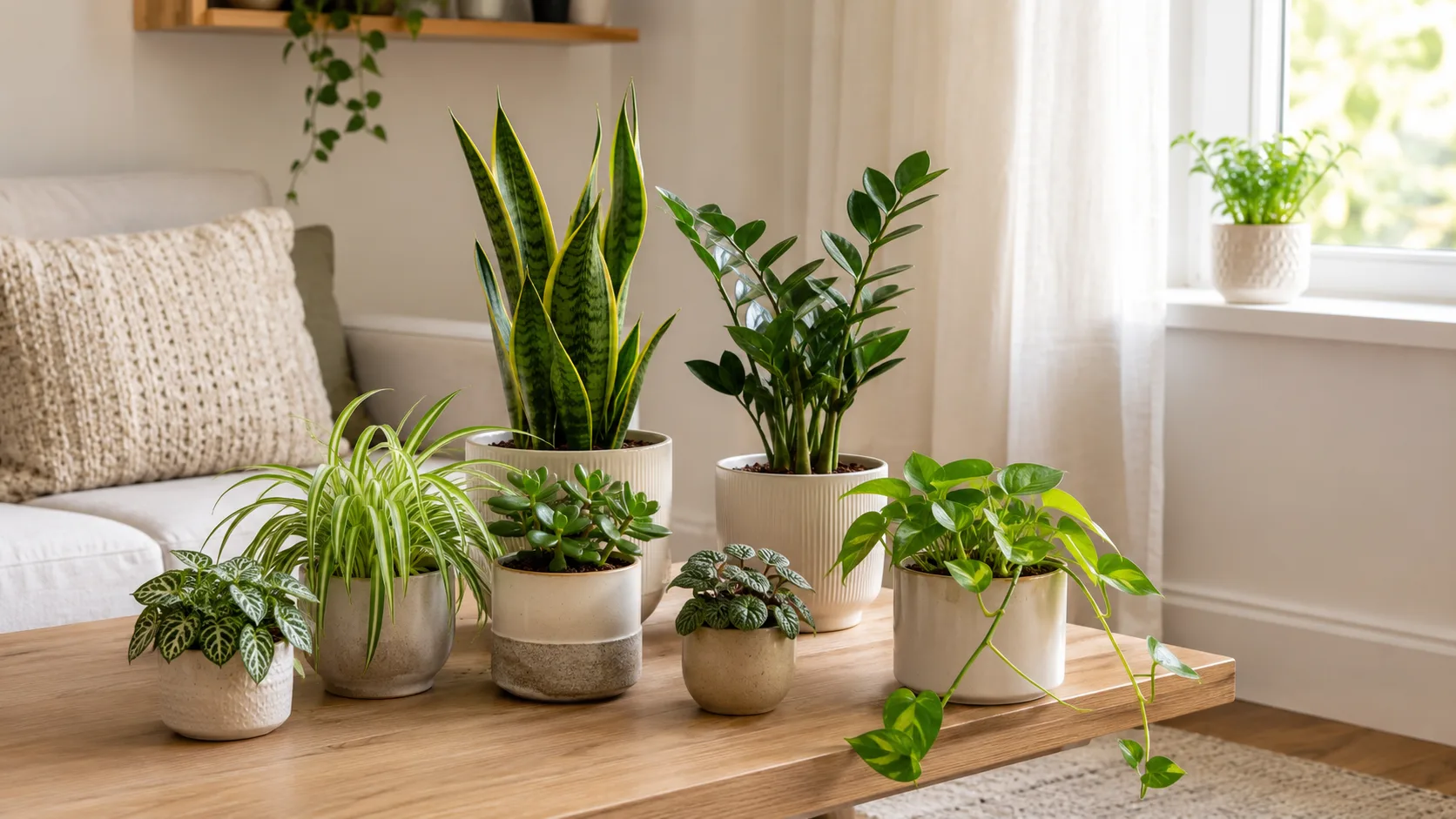
Small indoor plants solve a specific problem: you want living greenery on a desk, bookshelf, or windowsill without committing floor space to a tree that outgrows the room in two seasons. The best small plants either stay compact by nature or stay manageable with small pots and occasional pruning—and they still need the light that matches their biology, not just the shelf that fits the pot.
This guide compares ten compact species by mature indoor footprint, light honesty, and how long they stay desk-scale. For studio layouts and one-window rentals, see Best Plants for Small Apartments. For overhead trails, see Best Hanging Indoor Plants.
The ten best small indoor plants are pilea peperomioides, peperomia, haworthia, echeveria, baby rubber plant, aluminum plant, jade plant, syngonium, string of pearls, and tillandsia. Size labels on nursery tags lie by omission—a four-inch syngonium becomes a twelve-inch climber unless you prune.
What Counts as a “Small” Indoor Plant
Naturally compact: Species that reach modest size in pots even with good care—many peperomias, haworthia, pilea.
Culturally kept small: Succulents and jade that can grow large but stay desk-scale in small pots and bright light.
Trailing small pots: String of pearls and tillandsia have tiny root zones but long trails or spreads—footprint is vertical or horizontal, not just pot diameter.
Not actually small long-term: Fast climbers sold in four-inch pots—syngonium needs pruning to remain shelf-sized.
Light rule: Small pots dry fast on sunny sills and stay wet in dim shelves—size does not remove watering logic.
Quick Pick: Best Small Plant for Your Spot
For a bright desk within three feet of a window, choose pilea or peperomia.
For a sunny sill succulent, choose haworthia or echeveria—echeveria needs more sun to keep tight rosettes.
For low-maintenance glossy leaves, choose baby rubber plant—non-toxic peperomia type, not true rubber tree.
For metallic patterned foliage, choose aluminum plant (Pilea cadierei) on a bright shelf.
For trailing drama in a small pot, choose string of pearls on a high ledge—not a traffic path.
For soil-free counters, choose tillandsia with a bright soak routine.
How We Chose These Ten Plants
Ranked from LeafyPixels data by:
- Mature container footprint in typical home conditions.
- Shelf and desk suitability — stable in 4–6 inch to 8 inch pots.
- Care clarity — species with full hubs and topic pages on site.
- Visual variety — round leaves, rosettes, patterns, and trails.
Small Indoor Plant Comparison Table
Pilea Peperomioides
Best for: Desk focal point, gift plant, shelf roundness
Difficulty: Easy to medium
Light: Bright indirect
Water: Moderate; slight dry-down on top
Best placement: Within five feet of window
Pet safety: Non-toxic (ASPCA)
Pilea’s coin leaves read as sculptural even in a six-inch pot—the benchmark “small plant that does not look like a placeholder.”
Why it works: Naturally compact clump; pups are optional, not mandatory.
Care tip: Rotate pot weekly for even growth.
Common mistake: Back-shelf placement with office-only light—leaves shrink and stems stretch.
Useful care guides:
Peperomia
Best for: Beginner desk, grouped succulent shelf
Difficulty: Easy
Light: Medium to bright indirect
Water: Moderate dry-down
Best placement: Bright desk or sill
Pet safety: Non-toxic (ASPCA)
Peperomia is the workhorse small plant—dozens of species, most staying under a foot in homes. Thick, semi-succulent leaves forgive brief neglect.
Why it works: True small mature size; non-toxic for many desks with pets nearby.
Care tip: Avoid overpotting; peperomias prefer snug roots.
Common mistake: Misting instead of fixing low light when growth stalls.
Useful care guides:
Haworthia
Best for: Sunny desk, windowsill succulent collection
Difficulty: Easy
Light: Bright indirect to some direct
Water: Very dry
Best placement: South or west sill
Pet safety: Non-toxic (ASPCA)
Haworthia rosettes stay tight and desk-sized with adequate light—excellent cat-safe succulent alternative to aloe on a sill.
Why it works: Small root mass; slow growth; stores water in leaves.
Care tip: Use gritty mix and drainage holes—non-negotiable.
Common mistake: Interior desk with no window—rosette stretches pale and tall.
Useful care guides:
Echeveria
Best for: Rosette color on bright sill
Difficulty: Easy to medium
Water: Very dry
Light: Bright to direct sun
Best placement: Sunniest indoor ledge
Pet safety: Non-toxic (ASPCA)
Echeveria is the decorative rosette small plant—when light is strong. Weak light produces leggy stems that no longer look “small.”
Why it works: Stunning form in a four-inch pot with sun.
Care tip: Remove dead lower leaves to discourage pests.
Common mistake: Pairing with haworthia watering on a dim shelf—echeveria needs more sun to stay compact.
Useful care guides:
Baby Rubber Plant
Best for: Glossy desk leaves without tree size
Difficulty: Easy
Light: Medium to bright indirect
Water: Moderate dry-down
Best placement: Shelf or desk near window
Pet safety: Non-toxic (ASPCA)
Peperomia obtusifolia is often sold as baby rubber plant—compact, glossy, and unrelated to large rubber tree Ficus elastica.
Why it works: Stays under a foot; handles typical office humidity.
Care tip: Wipe dust from broad leaves monthly.
Common mistake: Buying it for a dim corner because the tag said “low light tolerant”—it maintains but does not look full.
Useful care guides:
Aluminum Plant
Best for: Patterned small foliage
Difficulty: Easy to medium
Light: Bright indirect
Water: Moderate
Best placement: Bright shelf
Pet safety: Non-toxic (ASPCA)
Aluminum plant (Pilea cadierei) shows silver splashes on small leaves—visual interest without monstera scale.
Why it works: Compact clumping habit in good light.
Care tip: Pinch tips to encourage bushiness if stems stretch.
Common mistake: Confusing with pilea peperomioides—different care and look.
Useful care guides:
Jade Plant
Best for: Bonsai-style sill, slow desk tree
Difficulty: Easy
Light: Bright to direct
Water: Very dry
Best placement: Sunny kitchen or south sill
Pet safety: Toxic if ingested (ASPCA)
Jade can become a floor tree over years—but in a small pot with pruning, it stays a sculptural desk succulent for a long time.
Why it works: Thick leaves; infrequent water; sculptural branching.
Care tip: Prune tips to keep height desk-friendly.
Common mistake: Keeping jade on a dark bookshelf because the pot is small—light matters more than pot size.
Useful care guides:
Syngonium
Best for: Colorful small pot with pruning plan
Difficulty: Easy
Light: Medium to bright indirect
Water: Moderate
Best placement: Shelf with moss pole or regular trim
Pet safety: Toxic if ingested (ASPCA)
Syngonium is sold small but wants to climb. Treat it as a small plant only if you prune or train on a tiny stake.
Why it works: Arrow leaves and pink cultivars in a four-inch pot look premium.
Care tip: Trim vines when they exceed shelf depth.
Common mistake: Assuming nursery size equals long-term desk size without maintenance.
Useful care guides:
String of Pearls
Best for: Elevated small pot, trailing accent
Difficulty: Medium
Light: Bright indirect
Water: Dry between soaks
Best placement: High shelf near window
Pet safety: Toxic if ingested (ASPCA)
The pot stays small; the trail does not. Perfect when vertical space is free and walkways are not.
Why it works: High impact from a four-inch pot.
Care tip: Bottom-water occasionally to avoid rotting crown pearls.
Common mistake: Desk placement where strands get snagged—leaves detach easily.
Useful care guides:
Tillandsia
Best for: Soil-free desk corner, wall clip
Difficulty: Easy to medium
Light: Bright indirect
Water: Soak and dry
Best placement: Bright bath or kitchen ledge
Pet safety: Non-toxic (ASPCA)
Tillandsia is physically small with no soil footprint—ideal for cluttered desks if brightness is adequate.
Why it works: No potting mess; mounts vertically.
Care tip: Soak 20–30 minutes weekly; shake dry.
Common mistake: Mist-only care in dim rooms—plant slowly declines.
Useful care guides:
Small-Plant Mistakes to Avoid
- Equating small pot with low light
- Skipping drainage because the pot is decorative and tiny
- Letting syngonium or jade grow unpruned until they are no longer desk plants
- Grouping many small succulents without matching sun needs on one sill
- Repotting into huge containers “so I won’t repot again”—wet soil kills small roots
Conclusion
Desk and shelf plants succeed when mature habit matches your light, not just your IKEA shelf depth. Start with pilea, peperomia, or haworthia for forgiving compact growth; add echeveria or jade on sunny sills; use string of pearls or tillandsia when soil clutter is the constraint; keep syngonium small only with pruning.
Buy one plant for the measured bright spot, confirm dry-down for two weeks, then expand the collection deliberately.
Related guides
How This List Was Reviewed