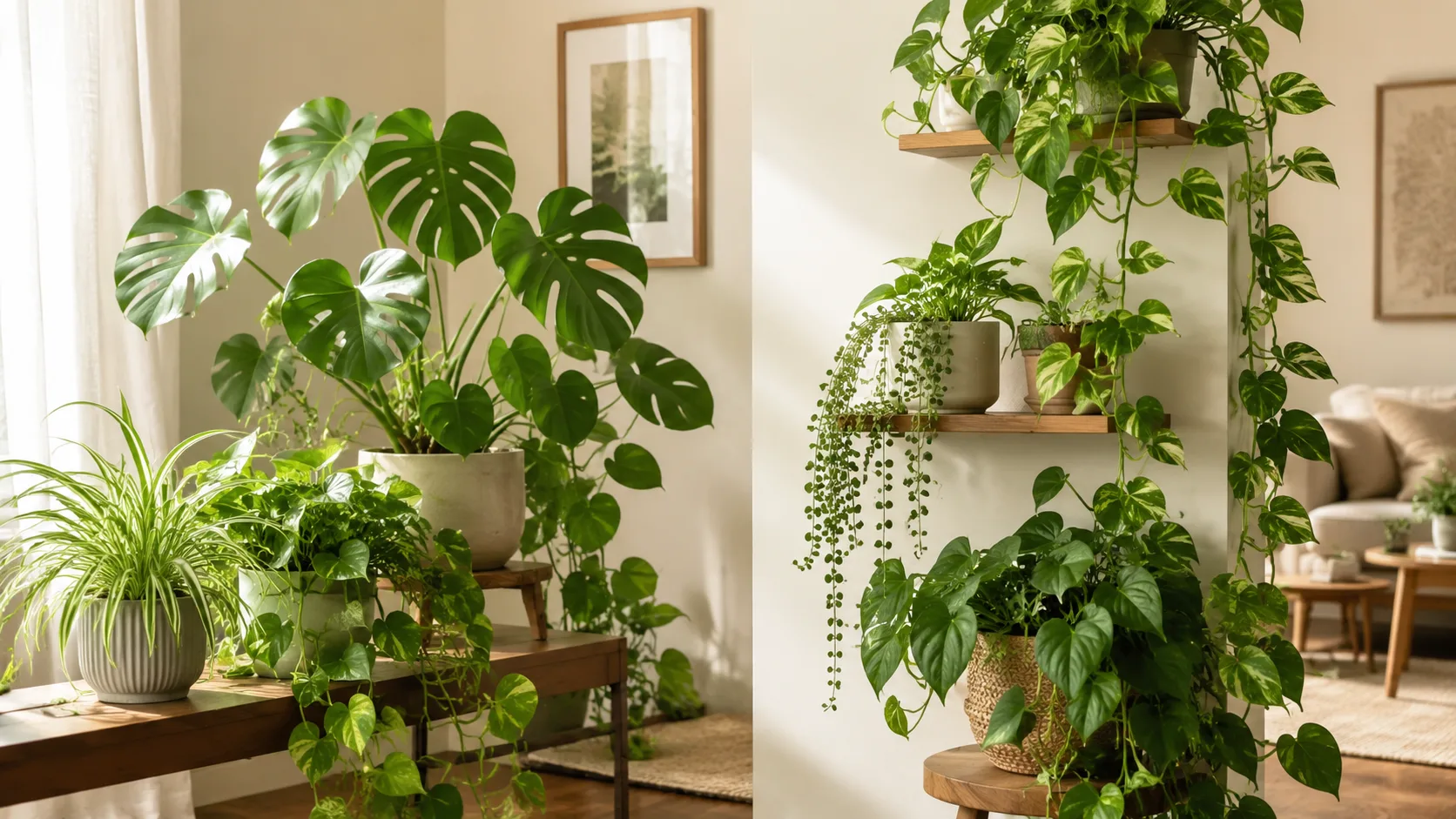
Fast-growing houseplants reward impatient growers with new leaves you can measure week to week—but only when light, drainage, and space keep pace. “Fast” indoors still means bright indirect sun, not a dark hallway. Without light, even pothos crawls.
If you want forgiving slow starters, see Beginner-Friendly Houseplants. This guide ranks ten vigorous species: growth habit, light hunger, space demands, repotting rhythm, and training options.
The 10 best fast-growing houseplants are pothos, monstera deliciosa, heartleaf philodendron, spider plant, jade plant, rubber plant, fiddle leaf fig, snake plant, basil, and mint.
Growth rate is relative: snake plant is “fast” for a succulent in bright light but cannot match pothos vines in the same window. (University of Maryland Extension)
Quick Pick: Fast Grower for Your Goal
For fastest trailing length and easy propagation, choose pothos or philodendron. Root cuttings in water within weeks.
For large split leaves on a vertical pole, choose monstera deliciosa in bright indirect light.
For pet-safe rapid plantlets, choose spider plant—ASPCA-listed non-toxic, prolific offsets.
For edible fast feedback on a sunny sill, choose basil or mint.
For upright glossy height, choose rubber plant—faster than fiddle leaf with fewer mood swings.
For sculptural tree growth when you have stable bright windows, choose fiddle leaf fig—fast vertically but sensitive to moves.
How to Choose Fast-Growing Houseplants
Ask where growth will go before you celebrate speed: shelves, poles, floor spread, or harvest bowl.
Light Sets the Speed Ceiling
Bright indirect light means comfortable daytime reading without all-day harsh sun. Below that, growth slows—even for “fast” species. Supplement with grow lights if your goal is measurable weekly progress.
Budget Repotting and Pruning
Vigorous root systems fill pots in one growing season. IFAS recommends repotting when roots circle or emerge from holes—often spring for active growers. (University of Florida IFAS)
Match Speed to Space
Monstera and pothos need clearance. Snake plant and jade grow upward slowly in footprint but will not trail across the ceiling.
How We Selected These Ten
Chosen for visible indoor progress under good care, distinct growth habits, propagation or harvest payoff, and LeafyPixels guide depth. Ultra-slow collectors’ plants are excluded—this list is for momentum.
Fast-Growing Houseplants Compared
*ASPCA non-toxic; chewing can upset stomachs.
The 10 Best Fast-Growing Houseplants
1. Pothos
Best for: fastest trailing growth, propagation confidence.
Difficulty: Easy | Light: Medium–bright indirect | Water: Top 1–2 in dry
Growth note: Several feet per year possible in bright light
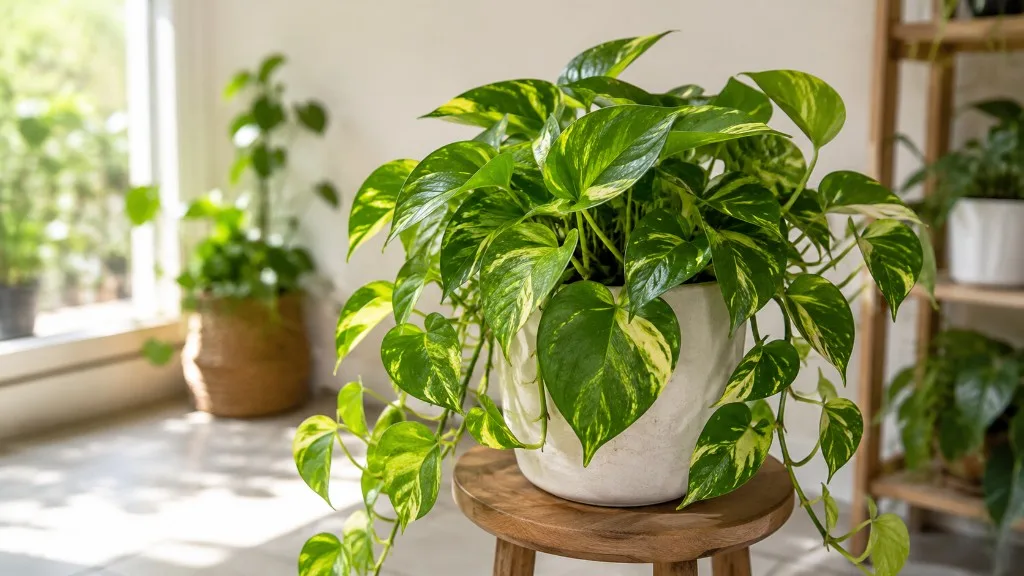
Pothos (Epipremnum aureum) is the benchmark fast indoor vine. New leaves unfold every few weeks in good light; nodes root in water in days.
Why it works: Immediate visual proof that care works.
Care tip: Prune leggy stems to bush the base.
Common mistake: Dark room—growth becomes thin string with tiny leaves.
Avoid if: Cats destroy hanging vines—growth becomes hazard.
Useful care guides:
2. Monstera Deliciosa
Best for: large leaf size increase, moss pole projects.
Difficulty: Easy–medium | Light: Bright indirect | Water: Top 2 in dry
Growth note: Leaves enlarge dramatically with support and light
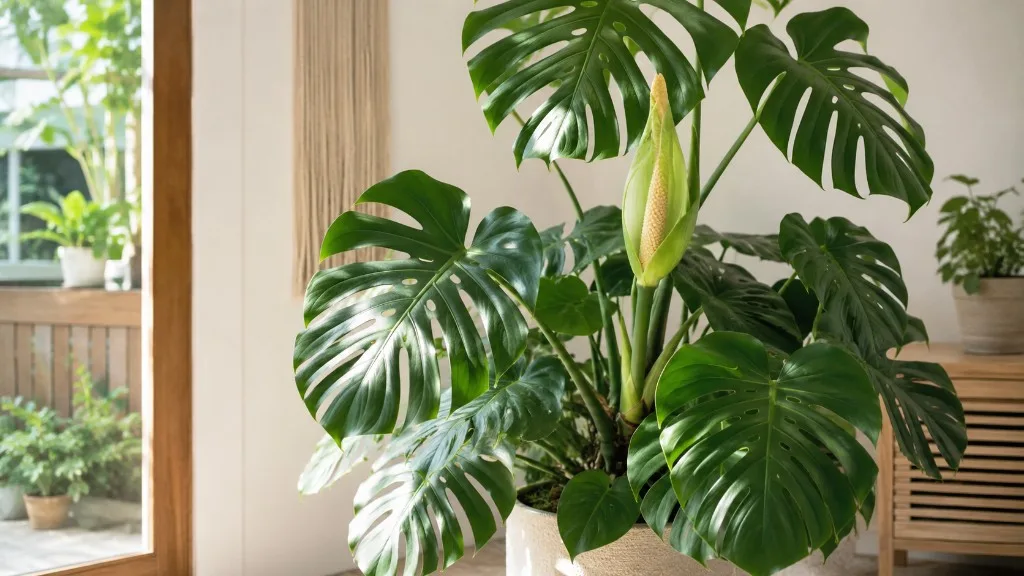
Monstera adds leaf size and fenestration as it climbs—not just stem length. A moss pole focuses energy into fewer, bigger leaves.
Why it works: Fast tropical scale indoors.
Care tip: Tie new stems loosely to pole as aerial roots attach.
Common mistake: No support—monstera sprawls horizontally across floor.
Avoid if: Ceiling under eight feet with no pruning appetite.
Useful care guides:
3. Heartleaf Philodendron
Best for: soft trailing growth, low-cost propagation.
Difficulty: Easy | Light: Medium–bright indirect | Water: Top 1–2 in dry
Growth note: Similar speed to pothos; softer leaf texture
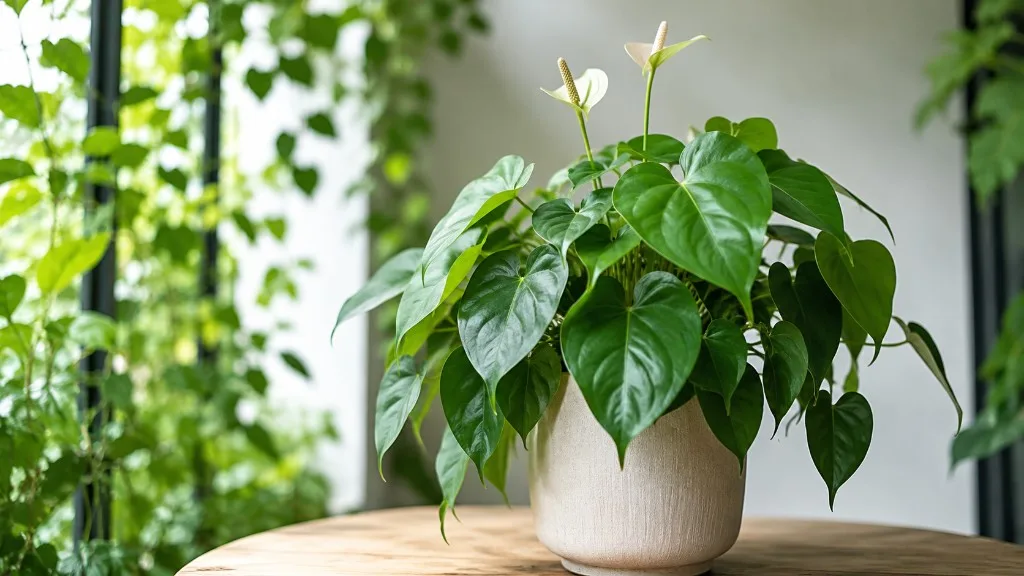
Heartleaf philodendron (Philodendron hederaceum) matches pothos vigor with heart-shaped leaves. Slightly more tolerant of medium light than variegated pothos cultivars.
Why it works: Fast vines without monstera floor space.
Care tip: Pinch tips to encourage branching near pot.
Common mistake: Assuming identical care to succulents on same shelf.
Avoid if: You need pet-safe speed—choose spider plant.
Useful care guides:
4. Spider Plant
Best for: pet-safe fast offsets, bright bathrooms.
Difficulty: Easy | Light: Bright indirect | Water: Top 1–2 in dry
Growth note: Plantlets on runners within one active season
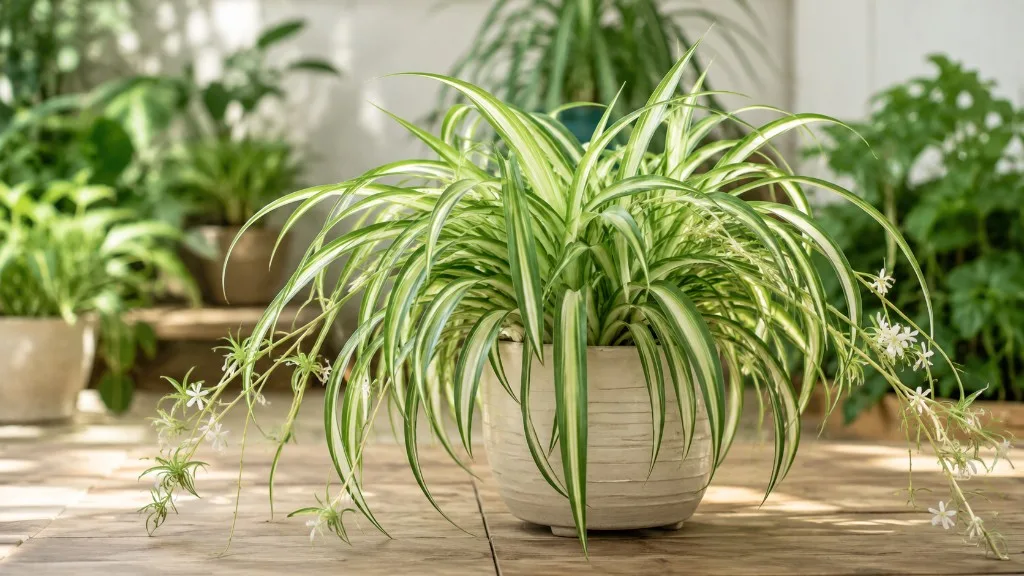
Spider plant multiplies via arching stolons—each plantlet becomes a new pot in weeks. ASPCA-listed non-toxic for cats and dogs.
Why it works: Fast propagation without cuttings guesswork.
Care tip: Root plantlets while attached, then sever when roots hold soil.
Common mistake: Low light—fewer plantlets, weak mother plant.
Avoid if: You hate trimming brown tips from fluoride tap water.
Useful care guides:
5. Jade Plant
Best for: fast succulent branching in sun.
Difficulty: Easy | Light: Bright direct–indirect | Water: Dry between
Growth note: Moderate for succulent class; woody stems thicken yearly
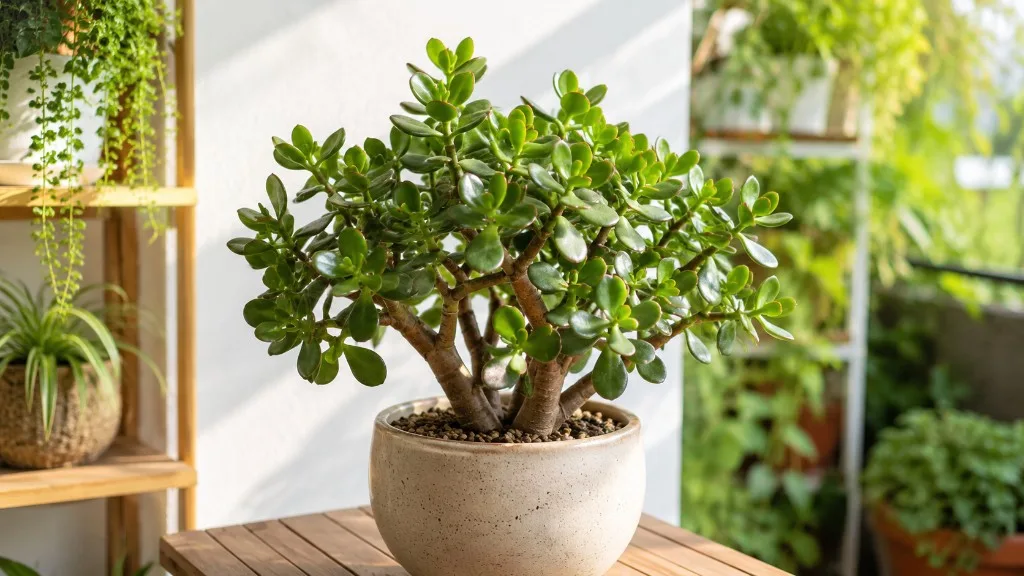
Jade plant accelerates in sunny windows—new leaf pairs appear monthly in summer. Not vine-fast, but visibly stockier each year.
Why it works: Speed without trailing chaos.
Care tip: Pinch growing tips for bushier habit.
Common mistake: Low light—etiolated weak stems.
Avoid if: You want ceiling-length vines in one year.
Useful care guides:
6. Rubber Plant
Best for: upright fast height, glossy leaves.
Difficulty: Easy | Light: Bright indirect | Water: Top 2 in dry
Growth note: New leaves monthly in bright conditions
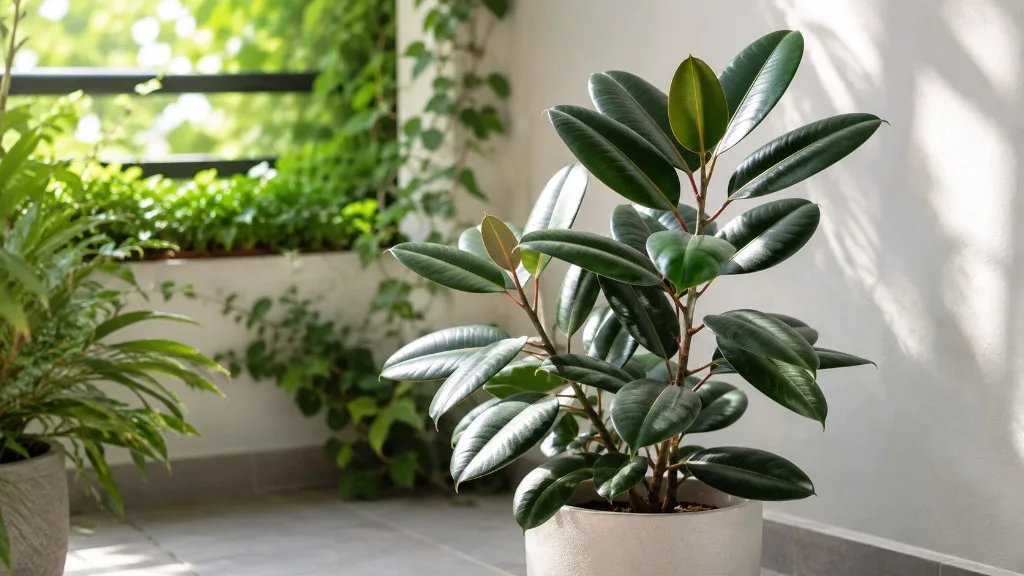
Rubber plant (Ficus elastica) adds height and leaf size steadily—less drama than fiddle leaf, more speed than dracaena in the same window.
Why it works: Floor tree pace without fiddle leaf sensitivity.
Care tip: Wipe dust so new leaves photosynthesize fully.
Common mistake: Overwatering in winter when growth pauses.
Avoid if: Pets chew floor leaves.
Useful care guides:
7. Fiddle Leaf Fig
Best for: vertical tree silhouette, design impact.
Difficulty: Medium–hard | Light: Bright indirect | Water: Consistent
Growth note: Fast when stable; stalls after moves
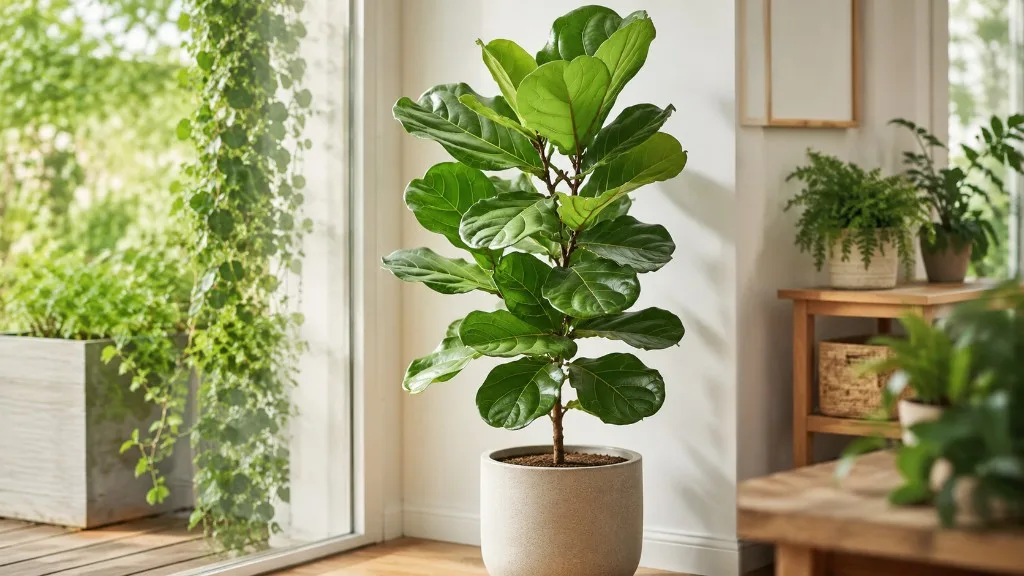
Fiddle leaf fig can add a foot or more per season in ideal stable light—when not shedding leaves from relocation or draft stress.
Why it works: Fastest iconic tree form when conditions stay constant.
Care tip: Pick permanent window before measuring growth promises.
Common mistake: Repotting and moving same month—growth pause.
Avoid if: You rearrange furniture quarterly.
Useful care guides:
8. Snake Plant
Best for: low-light “fast enough” upright growth.
Difficulty: Easy | Light: Low–bright indirect | Water: Fully dry
Growth note: Slow by vine standards; pups appear yearly in bright light
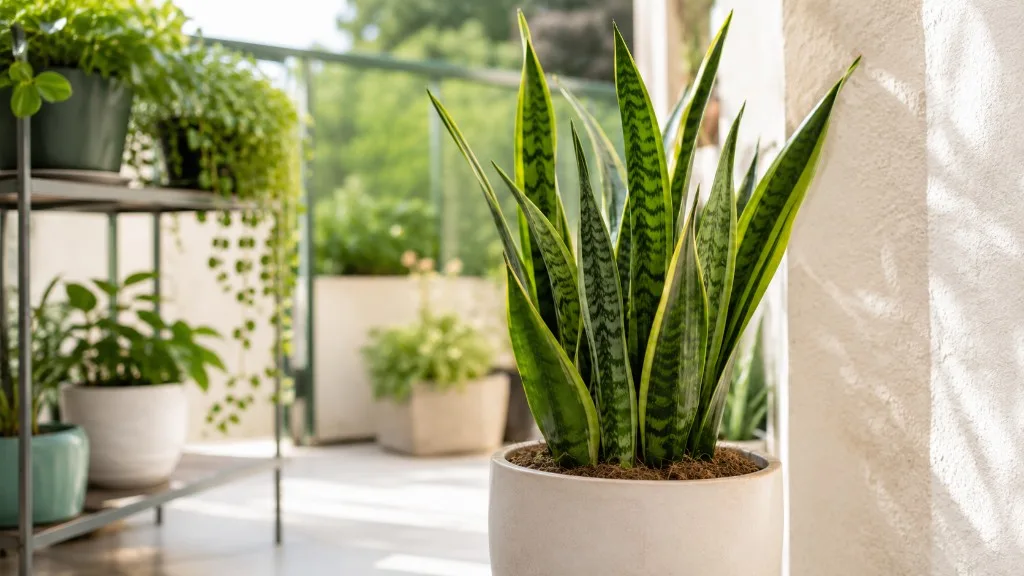
Snake plant is the honest entry for dim rooms—pups and new leaves come faster in bright light, but it will not outrun pothos anywhere.
Why it works: Measurable progress where vines would stall.
Care tip: Brighten light before expecting pup multiplication.
Common mistake: Labeling snake plant “slow” then overwatering in dark corners—rot, not growth.
Avoid if: You want trailing length this season.
Useful care guides:
9. Basil
Best for: edible speed on sunny sills.
Difficulty: Easy–medium | Light: Bright direct | Water: Steady moisture
Growth note: Harvest-and-regrow cycles weekly in summer
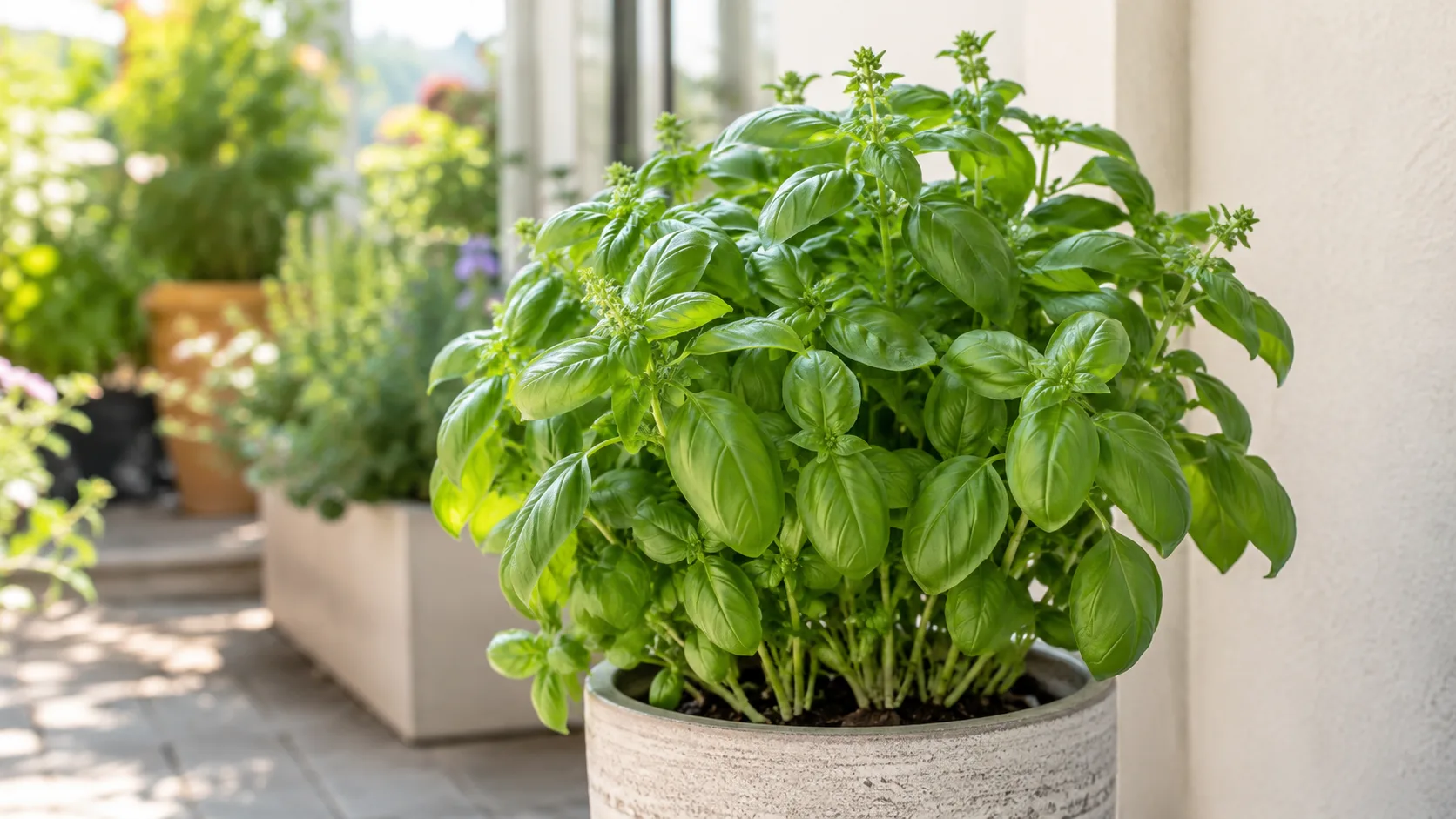
Basil is the fastest feedback loop if you have sun—cut, cook, watch new leaves emerge. Growth stops in dim winter without supplemental light.
Why it works: Growth you can eat.
Care tip: Harvest above leaf nodes to branch bushier.
Common mistake: Indoor winter sill without grow light—leggy decline.
Avoid if: Only north-window light.
Useful care guides:
10. Mint
Best for: aggressive herb spread in containers.
Difficulty: Easy | Light: Bright indirect | Water: Evenly moist
Growth note: Can fill a pot in weeks during active growth
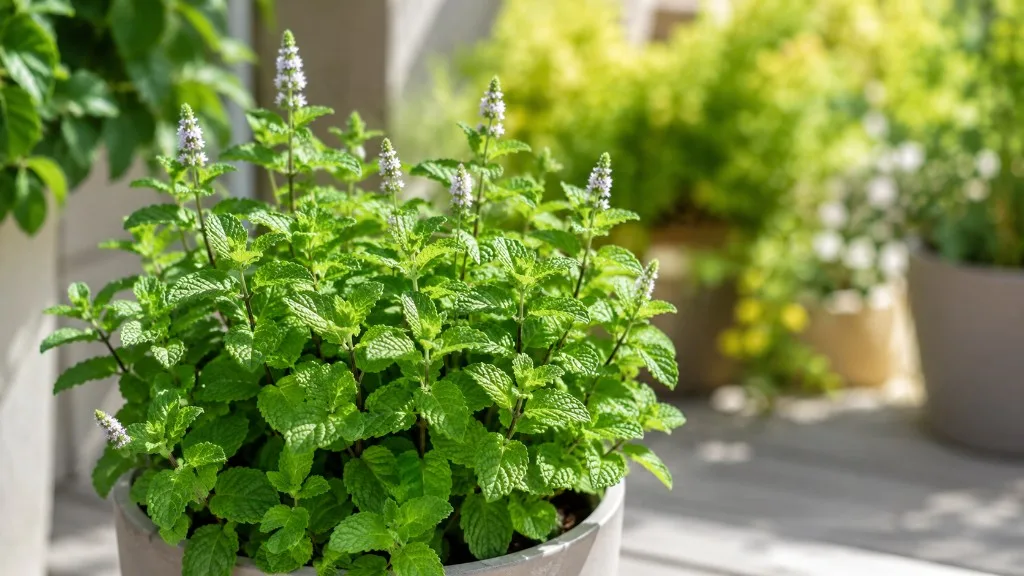
Mint roots run—contained pots on sills become harvest bowls fast. Invasive outdoors; perfect for bounded indoor speed.
Why it works: Fastest culinary spread in bright kitchens.
Care tip: Divide rootball yearly or upsize pot before roots escape drainage holes.
Common mistake: Letting soil dry completely—collapse then panic soak.
Avoid if: You dislike frequent watering.
Useful care guides:
Common Mistakes With Fast Growers
Buying speed without bright light produces leggy disappointment.
Skipping pruning until vines tangle around fixtures.
Ignoring repotting until roots crack pots or water runs straight through.
Fertilizing stressed plants—fix light and water first.
Conclusion
Trailing speed: pothos and philodendron. Large leaves: monstera. Pet-safe propagation: spider plant. Upright height: rubber plant. Edible momentum: basil and mint.
Fast growth is a commitment to light, scissors, and bigger pots—not just a species label. Match vigor to the space you actually have.