Mealybugs on Syngonium: Causes, Checks & Fixes
Quick answer
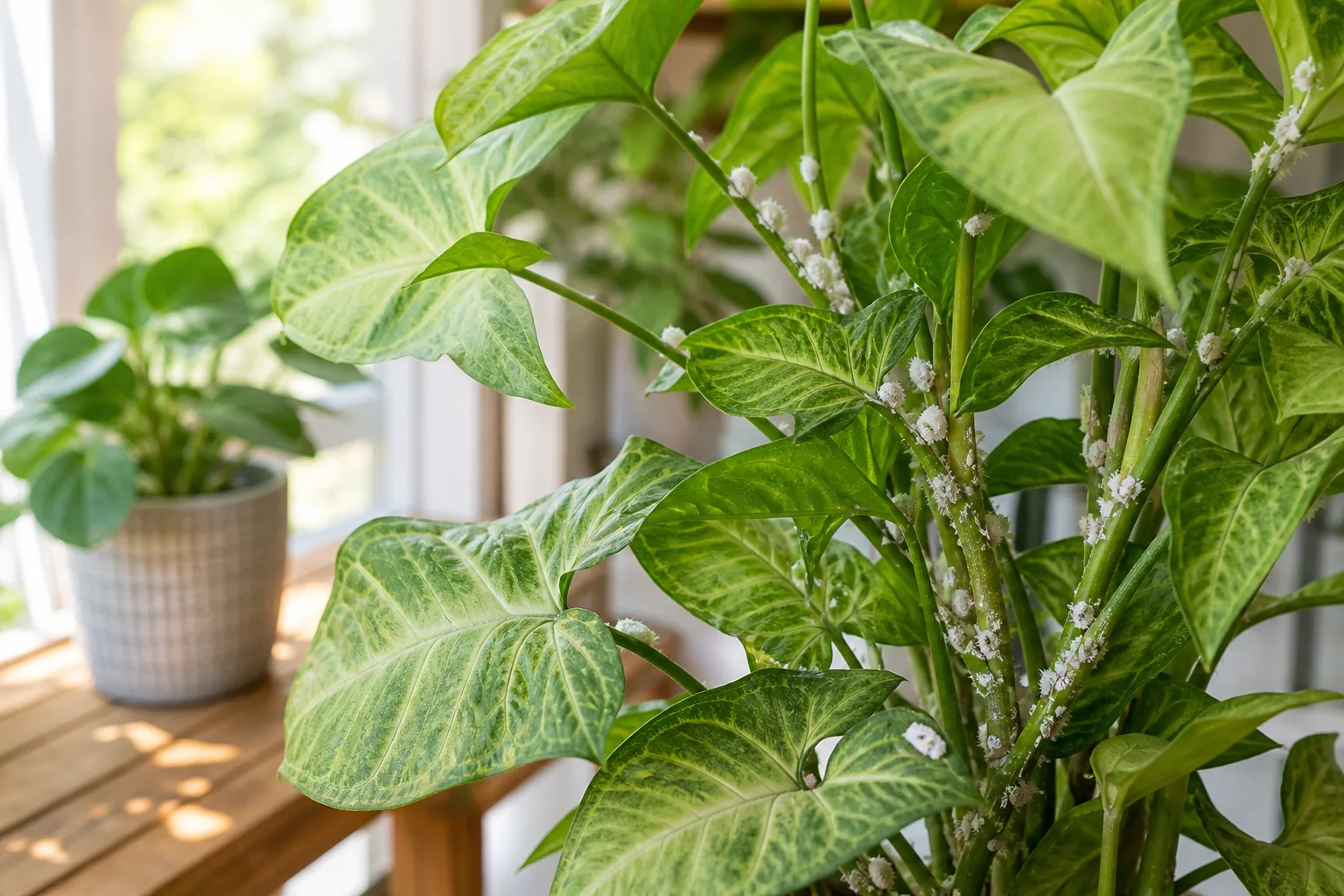
Mealybugs on Syngonium show up as white waxy cotton in leaf axils, stem nodes, and along climbing petioles. First step: isolate the plant and dab every visible cluster with 70% alcohol on a cotton swab before spraying anything else.
Mealybugs on Syngonium: Causes, Checks & Fixes
This guide covers mealybugs on Syngonium. See also the general Mealybugs guide, watering, and light pages for this plant.
Mealybugs on Syngonium: Causes, Checks & Fixes
Quick answer
Mealybugs on Syngonium (Syngonium podophyllum) look like tiny white cotton balls tucked into the protected joints where arrow-shaped leaves meet the stem. Missouri Botanical Garden lists mealybugs among common syngonium pests, and the pattern is predictable on this vining aroid: clusters hide in leaf axils, nodes, and along petioles where a quick glance misses them.
First step: isolate the plant and dab every visible cluster with 70% isopropyl alcohol on a cotton swab. That direct contact kills adults you can reach and stops immediate sap loss while you plan follow-up sprays for eggs and crawlers you cannot see.
Do not spray the whole plant on day one if you have not confirmed the pest. Powdery mildew, mineral dust, and old perlite flecks can look white from a distance-but mealybugs sit in crevices, feel waxy, and often leave sticky honeydew on nearby leaves.
What mealybugs look like on Syngonium
Adult female mealybugs are soft, oval insects coated in white waxy filaments that give them a cottony appearance. On Syngonium they cluster where the plant gives them cover:
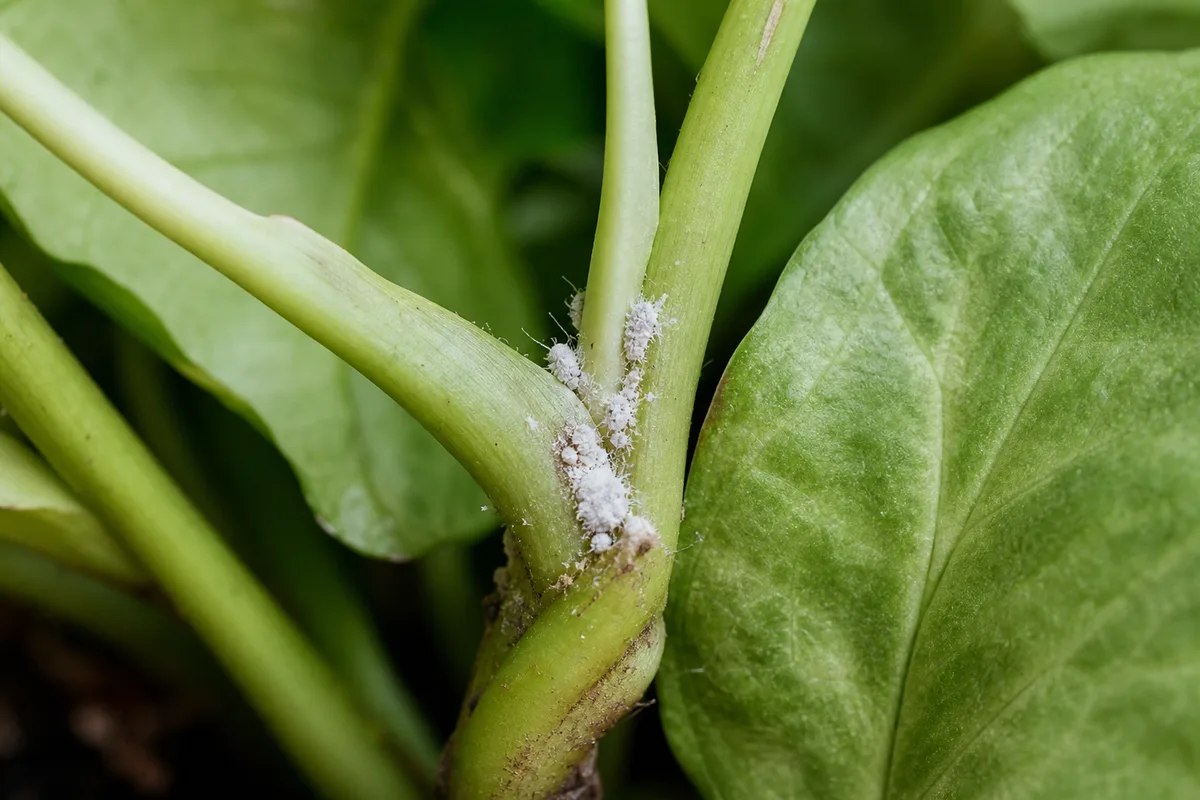
Mealybugs symptoms on Syngonium - compare with healthy tissue on the same plant.
- Leaf axils - the pocket where each arrowhead leaf wraps the stem
- Stem nodes - especially on climbing vines with long internodes
- Undersides of juvenile leaves - soft tissue near the growing tip
- Pot rim and drainage holes - crawlers sometimes hide outside foliage
- Root zone - some species feed below the soil line on roots
Early signs are easy to miss. You may notice a single white speck before the colony spreads. As feeding continues, leaves may yellow, new growth can look stunted, and mealybugs excrete honeydew that supports sooty mold. Ants marching up the pot often appear before you spot the insects themselves.
Unlike hard brown scale, mealybugs look fluffy and disorganized in clumps. Unlike spider mites, they do not produce fine webbing-though both pests can yellow syngonium leaves, so confirm with a hand lens before treating.
Why Syngonium gets mealybugs
Syngonium is not uniquely cursed, but its growth habit makes it a good host indoors. A single vine can carry dozens of leaf joints, each a hiding spot for slow-moving mealybugs that tuck under overlapping petiole bases. Compact bushy plants are somewhat easier to inspect; long climbing specimens take more time to check stem by stem.
Most infestations start with introduction, not spontaneous generation. Mealybugs hitchhike on new nursery plants, cuttings shared between growers, or plants moved indoors after summer outside. Skipping quarantine is the fastest way they reach a healthy arrowhead vine.
Warm, stable indoor conditions favor mealybug reproduction. Syngonium grows best around 16–27°C (60–80°F)-the same comfortable room temperatures that keep pest generations cycling year-round when natural predators are absent indoors.
Stressed plants attract sap feeders. Overwatered syngonium in dim corners stays soft and succulent; drought-stressed vines with crispy edges also weaken. Colorado State Extension notes that growing plants under conditions that allow moderate growth reduces succulence favored by many mealybugs. On Syngonium that means Syngonium light guide, a well-draining mix, and watering when the top inch dries-not keeping roots wet or letting the plant wilt repeatedly.
Crowded plant shelves limit airflow and make crawlers easier to spread when leaves touch neighbors. Dusty foliage does not cause mealybugs, but it slows your ability to spot white clusters during routine care.
How to confirm the cause
Work through these checks before committing to sprays:
- Location pattern - Mealybugs concentrate in protected joints and nodes, not evenly across leaf surfaces. Powdery mildew spreads as dry white patches on blades; perlite and hard-water spots wipe off or sit on top of the cuticle.
- Touch test - Dab a cluster with a dry swab. Mealybugs feel waxy and crush to a pinkish or orange smear. Mildew powder brushes away dry.
- Movement check - Young crawlers are tiny but may move if disturbed. Adults are slow; scale stays firmly attached.
- Honeydew and mold - Sticky upper leaves, shiny residue on the saucer, or black sooty film that wipes off points to sap feeders, not cultural problems alone.
- Ant activity - Ants on the pot or climbing stems strongly suggest honeydew above.
- Neighbor inspection - Check plants touching the syngonium or sharing the same window. Mealybugs walk short distances and spread on tools and hands.
- Root check if stems look clean - Some mealybugs feed on roots. If foliage stays sticky or weak despite clean stems, gently inspect the root ball when the mix is dry enough to handle.
If white cottony clusters sit in axils with honeydew or ants, you have confirmed mealybugs. Yellow leaves alone without insects may point to overwatering on Syngonium or low light-common syngonium issues that deserve separate fixes.
First fix for Syngonium
Move the plant away from others, then dab every visible mealybug with a cotton swab dipped in 70% isopropyl alcohol.
University of Maryland Extension recommends dabbing individual mealybugs with household alcohol for light infestations, and UC IPM advises testing alcohol on a small leaf area first because it can burn sensitive foliage. On Syngonium, keep alcohol on the insects in axils-not pooled on juvenile arrow leaves. Treated bugs turn light brown.
This single step does three things: stops immediate sap loss on a plant that already grows steadily rather than explosively, reduces the breeding population, and forces you to inspect every node you might otherwise skip.
Do not return the plant to the shelf yet. Do not repot on day one unless roots are visibly infested. Do not fertilize a pest-hit vine hoping to push new growth-that produces tender tissue mealybugs prefer.
Step-by-step recovery
After the alcohol dab pass:
- Repeat manual removal every three to five days until you stop finding live cottony clusters on inspection.
- Apply insecticidal soap labeled for houseplants if colonies persist or eggs remain in crevices you cannot reach. Cover axils, stem joints, and undersides thoroughly. Insecticidal soaps work on contact and have no residual effect, so repeat at label intervals-often weekly-for several cycles to catch newly hatched crawlers.
- Consider horticultural oil or neem for heavier infestations where wax protects adults. UC IPM notes oils and soaps suppress younger nymphs more effectively than heavily waxed adults. Test a leaf first; oils can damage some indoor plants if applied in hot sun or at wrong concentration.
- Shower the foliage if the pot can drain freely and the room is warm enough for leaves to dry the same day. Direct water into axils while keeping the root ball from staying soggy-overwatering during treatment stresses syngonium further.
- Treat neighbors if they touched the infested vine or show early white specks. Isolation only works if the rest of the collection is clean.
- Address root-feeding mealybugs if stem treatment fails. A systemic houseplant insecticide watered into the root zone may be needed per label directions, or repot into fresh mix after rinsing roots-only when roots are the confirmed reservoir.
- Wash sooty mold off leaves with plain water once honeydew production stops. Coated older leaves may stay dull; judge success by clean new tips.
Wear gloves when handling cut stems. Syngonium contains calcium oxalate crystals and sap can irritate skin; keep treated plants away from pets until sprays dry.
Recovery timeline
Manual alcohol dabs show results within days when colonies are small and localized to a few nodes. A full soap or oil course often takes two to four weeks with repeated applications because eggs and hidden crawlers hatch on staggered schedules.
Expect yellowed or stippled leaves to remain as-is; syngonium does not repair old blade damage. New arrow leaves should emerge clean and firm once sap feeding stops. If the growing tip stays sticky or distorted after two weeks of consistent treatment, reinfestation or root-zone mealybugs are still active-reinspect axils and roots rather than assuming the pest is gone.
Hold the plant in isolation until you see no new cottony masses for at least two weeks. Missouri Botanical Garden recommends inspecting plants regularly and isolating new acquisitions for two to three weeks to limit indoor spread.
Lookalike symptoms to rule out
Powdery mildew forms dry white patches on leaf surfaces, not cottony clumps in axils. It does not produce honeydew.
Hard scale looks like smooth brown or tan disks glued to stems. Scale does not have the fluffy wax filaments of mealybugs.
Spider mites cause fine stippling and silk webbing, especially in dry winter air near heating vents. Mites are nearly invisible without a lens; webbing separates them from mealybugs.
Mineral dust or perlite wipes off easily and is not clustered in joints.
Fungus gnats fly when disturbed and breed in wet soil-they do not leave white cotton on stems.
Mistakes to avoid
Do not stop after one alcohol dab or one soap spray. Mealybugs hide eggs in crevices along syngonium nodes; a single treatment rarely clears a generation.
Do not use household dish soap as pesticide. Colorado State Extension warns homemade soap solutions can injure plants and lack consistent labeling for indoor use.
Do not return an isolated plant the moment visible bugs disappear. Crawlers are tiny and easy to miss on a vine with thirty nodes.
Do not overwater while treating. Syngonium tolerates some drought but suffers in wet, dense mix-stressed roots plus pest pressure compound weakness.
Do not prune heavily into sap-heavy stems without gloves if pets can reach fallen leaves. Toxicity matters during cleanup, not because mealybugs harm animals directly.
Syngonium care cross-check during treatment
While fighting mealybugs, keep baseline care stable rather than stacking changes:
- Light - Bright indirect light supports moderate growth without the soft leggy tissue that builds in deep shade. Variegated and pink cultivars need enough light to stay firm, not etiolated.
- Water - Water when the top inch of mix dries. Let the pot lighten before soaking; avoid leaving roots wet in cool dim corners during treatment.
- Humidity - 40–60% is adequate. Extra humidity alone does not cure mealybugs, but extremely dry air can stress leaves while you are inspecting frequently.
- Airflow - Space plants so leaves do not touch; this limits crawler bridges between pots.
Fix care drift only after the pest count drops. Changing pot, mix, and location the same week as heavy spraying makes it hard to tell what helped or hurt.
How to prevent mealybugs next time
Quarantine every new syngonium, cutting, or mixed planter for two to three weeks before it joins your display. Inspect leaf axils with a small LED light-white wax reflects brightly in joints.
Add node checks to weekly watering. One minute per vine catches colonies when they are still a single swab dab.
Buy from sources with clean undersides and firm new tips. Missouri Botanical Garden advises watching for mealybugs, aphids, scale, and spider mites on syngonium at purchase.
Keep plants in bright indirect light with well-draining potting mix so growth stays moderate and inspection stays easy. Avoid nitrogen pushes that produce soft tender shoots.
Clean tools between plants when pruning syngonium for bushiness or taking cuttings. Mealybugs spread on blades and hands.
When to worry
Treat as urgent when white clusters cover multiple stems, ants actively farm the pot, or new growth emerges twisted and coated in honeydew before it hardens. Mealybugs weaken plants through sap loss and can cause wilt, yellowing, and dieback if ignored through a full breeding cycle.
Consider discarding a severely infested syngonium rather than months of chemical retreatment-especially if the root ball is heavily colonized, lower stems are bare, and new tips stay infested after repeated labeled treatments. University of Maryland Extension notes heavily infested plants may need to be discarded when control fails. Starting fresh with a clean cutting from an uninfected tip is sometimes more practical than saving a root-bound, pest-saturated mother plant.
A single cluster on one node caught early is not an emergency-isolate, dab, and monitor. Urgency scales with spread rate and plant weakness, not the mere presence of white wax.
Conclusion
Mealybugs on Syngonium reward systematic inspection more than a single blanket spray. Their favorite real estate-leaf axils and nodes along a climbing arrowhead vine-is exactly where casual glances skip. Isolate first, confirm cottony wax in joints, dab what you see with alcohol, then follow with contact sprays on a repeat schedule until new growth stays clean for two weeks. That path protects the rest of your collection and gives a firm, well-lit syngonium the best chance to outgrow old damaged leaves.
When to use this page vs other Syngonium guides
- Syngonium watering guide - Use for routine moisture checks before assuming mealybugs is the main issue.
- Syngonium problems hub - Browse all 17 common issues on this species.
- Yellow Leaves on Syngonium - Different entry point when symptoms overlap with mealybugs.
- Slow Growth on Syngonium - Different entry point when symptoms overlap with mealybugs.
- Spider Mites on Syngonium - Different entry point when symptoms overlap with mealybugs.