Aphids on Syngonium: Causes, Checks & Fixes
Quick answer
Aphids on Syngonium gather on tender new growth and leaf undersides, leaving sticky honeydew and sometimes curled juvenile leaves. First step: isolate the plant and rinse aphids off with a firm water spray before applying any soap or oil.
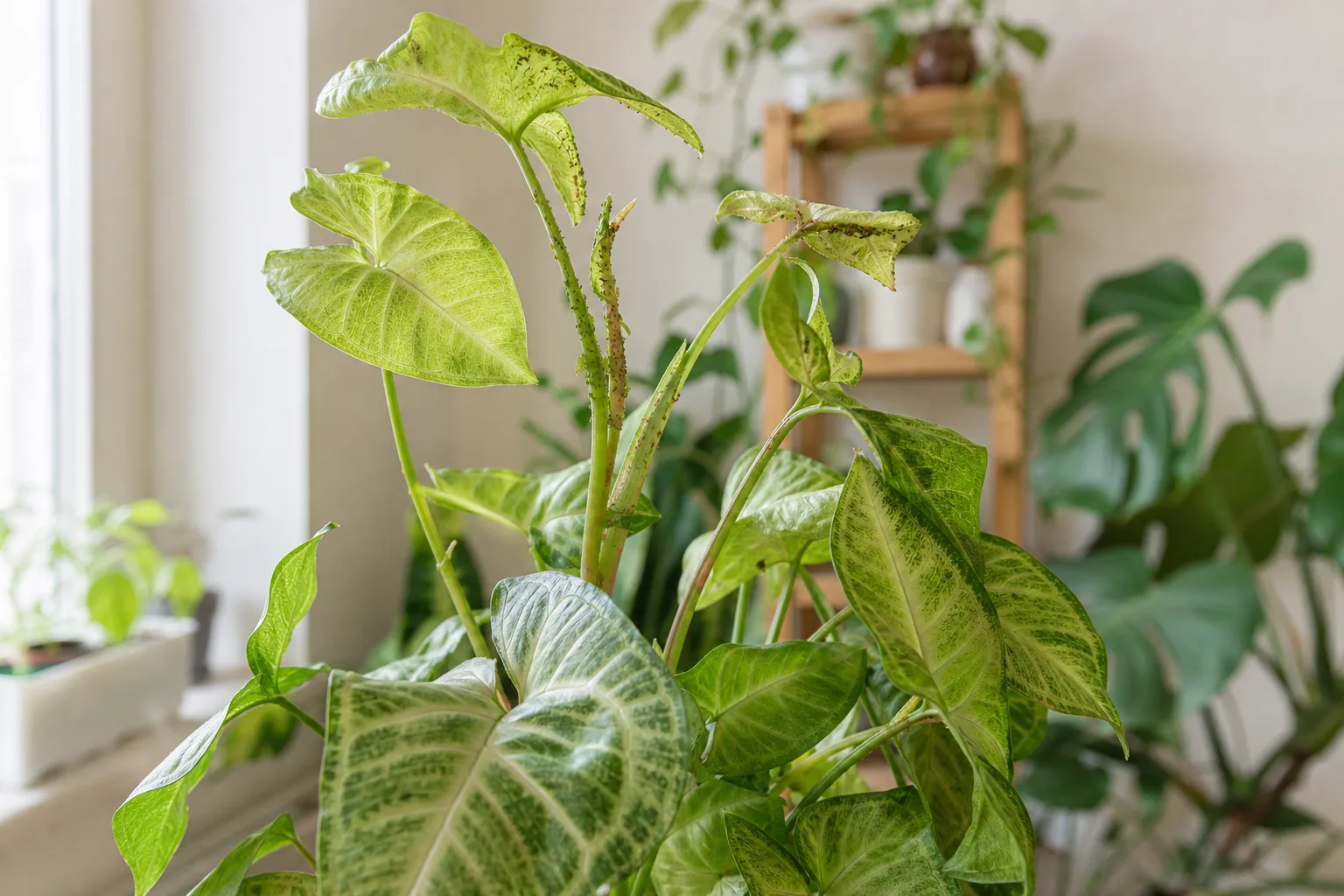
Aphids on Syngonium: Causes, Checks & Fixes
This guide covers aphids on Syngonium. See also the general Aphids guide, watering, and light pages for this plant.
Aphids on Syngonium: Causes, Checks & Fixes
Quick answer
Aphids on Syngonium (Syngonium podophyllum, arrowhead vine) show up as pinhead-sized soft insects on new growth, not randomly across old mature foliage. The vine constantly produces tender juvenile arrowhead leaves and climbing stem tips-exactly where aphids feed, curl leaves, and drip sticky honeydew.
First step: isolate the plant and rinse aphids off with a firm stream of water, targeting leaf undersides and stem joints. You need to confirm live insects and knock down the population before reaching for soap, neem, or any other spray. Indoors, a few aphids become a colony within days because there are no outdoor predators to slow them.
What aphids look like on Syngonium
Aphids are small, pear-shaped, soft-bodied insects-often green, but also black, brown, pink, or gray depending on species. On Syngonium they cluster where sap is easiest to reach:
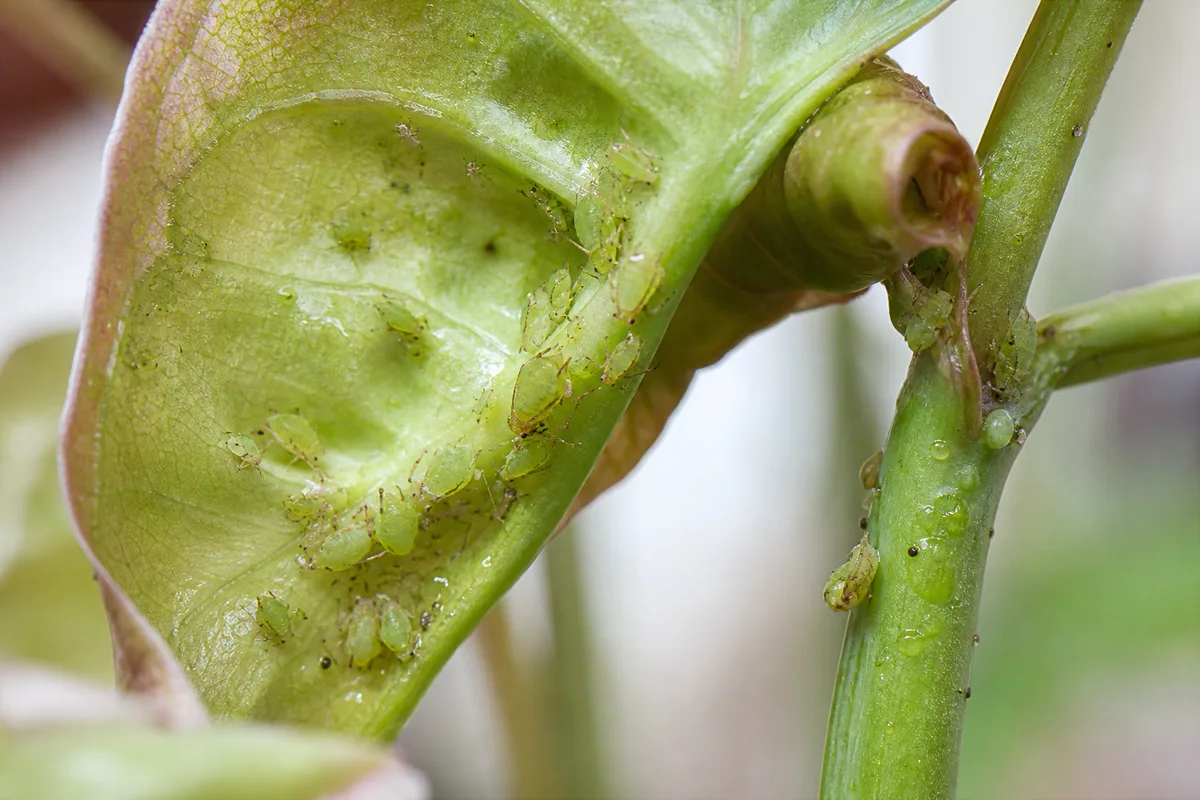
Aphids symptoms on Syngonium - compare with healthy tissue on the same plant.
- New stem tips and the soft tissue just above a node
- Undersides of opening juvenile leaves before they harden into arrow shape
- Leaf axils along vining stems climbing a moss pole or trailing from a basket
- Sticky, shiny honeydew on upper leaf surfaces or nearby furniture
- Ants climbing the pot, stake, or shelf toward the vine
- Black sooty mold growing on honeydew deposits
- Curled, puckered, or stunted new leaves when feeding is heavy
Unlike spider mites, aphids are visible without magnification once you flip a leaf. Unlike mealybugs, they do not form white cottony masses-they look like tiny slow-moving beads. Winged adults may appear when a colony gets crowded; that is a sign the infestation is spreading.
Syngonium rarely flowers indoors, so the classic aphid pattern of clustering below flower buds matters less here. On Syngonium overview, new leaf buds and soft shoots are the hot spots.
Why Syngonium gets aphids
Syngonium is a fast-growing tropical vine in the Araceae family. Missouri Botanical Garden and NC State Extension both list aphids among common pests on Syngonium podophyllum. The plant is not uniquely cursed-but its growth habit makes it a convenient host.
Soft new growth. Syngonium channels energy into climbing stems and fresh juvenile foliage, especially in warm months with good light. Aphids prefer that tender tissue because their mouthparts pierce easily and sap flows freely.
Indoor conditions without predators. Outdoors, lady beetles, lacewings, and parasitic wasps knock aphid numbers down. Inside, populations can double quickly because females give birth to live young without mating.
Introduction from new plants. Aphids hitchhike on nursery stock, open windows in warm weather, or cuttings shared between growers. Skipping quarantine is the most common entry route into a collection.
Stress and excess nitrogen. Over-fertilized plants push lush, soft shoots that aphids colonize faster. Dusty leaves and crowded shelves with poor airflow also weaken the vine and make inspection harder.
Ant protection. Ants harvest honeydew and defend aphid colonies from beneficial insects. Ant trails on a syngonium pot often mean aphids are above, even if you have not spotted them yet.
How to confirm the cause
Work through these checks before treating:
- Location on the plant - Aphids concentrate on new tips and undersides. Yellow lower leaves with dry soil suggest overwatering on Syngonium or underwatering on Syngonium, not aphids.
- Hand lens or phone macro - Confirm soft-bodied insects with visible legs and antennae. Spider mites are specks that leave fine webbing; scale looks like immobile bumps; mealybugs are white and waxy.
- Honeydew test - Sticky residue that wipes off and may feel slightly sweet points to sap feeders. Normal syngonium sap after pruning is localized, not spread across multiple leaves.
- Ant activity - Ants marching up the pot or moss pole strongly suggest aphids or other honeydew producers on the vine above.
- Sooty mold - Black coating on upper leaves that wipes away with a damp cloth confirms honeydew-not a fungal leaf spot infection of the tissue itself.
- Nearby plants - Check pothos, philodendrons, and other soft-leaved companions. Aphids move between houseplants in the same room.
- Recent changes - New nursery purchase, plant moved outdoors for summer, or shared propagation tray? Timing often matches introduction.
If you find insects matching aphids on soft new growth, the diagnosis is confirmed. If sticky leaves appear with no insects anywhere after two careful inspections, reconsider mealybugs, scale, or environmental residue before spraying.
First fix for Syngonium
Move the plant away from others and rinse aphids off with a firm stream of water, aiming at leaf undersides, stem tips, and leaf axils.
Use a sink sprayer, shower head, or hose with enough pressure to dislodge insects but not shred tender syngonium leaves. Support trailing stems with your hand so undersides get direct contact. Let foliage dry in Syngonium light guide the same day-syngonium tolerates rinsing well when the pot is not already waterlogged.
This single step achieves three things: it isolates the infestation, removes a large share of live aphids immediately, and washes away fresh honeydew before ants or sooty mold take hold. Hold off on insecticidal soap until you have finished rinsing and confirmed how many aphids remain once the plant dries.
Do not repot, fertilize, or prune heavily on day one unless a stem is clearly collapsed. Those actions stress a vine already losing sap to feeding.
Step-by-step recovery
After the initial rinse, work through these steps in order based on severity:
- Repeat rinsing every two to three days for two weeks if you still see live aphids. Eggs and nymphs hatch continuously indoors.
- Apply insecticidal soap or horticultural oil if rinsing alone is not enough. Coat undersides and stem joints thoroughly-the product must contact the insect directly. Repeat at five- to seven-day intervals for two to three cycles.
- Manage ants if they are present. Sticky barriers on stakes or pot rims, or removing ant access, lets natural predators help if the plant spends summer outdoors. Indoors, ant control and aphid control go together.
- Prune only heavily infested tips you cannot clean-cut back to healthy tissue with clean scissors. Syngonium resprouts from nodes below cuts.
- Wipe sooty mold from upper leaves with a damp cloth once insects are controlled. The mold itself does not infect syngonium tissue; it grows on honeydew.
- Hold fertilizer until new growth looks normal for two weeks. Feeding a stressed vine pushes more soft tissue aphids prefer.
- Extend quarantine until you see no new aphids for at least two weeks after the last treatment. Returning a plant to a shelf too early reinfects the collection.
For severe colonies covering most of the vine, combine rinsing and soap while accepting that badly curled juvenile leaves may never flatten-focus on clearing stem tips so the next flush stays clean.
Recovery timeline
Expect visible improvement within one week if rinsing and soap contact live aphids consistently. Honeydew stickiness fades once feeding stops. Sooty mold stops spreading within days and wipes off over a week or two.
New growth is the scorecard. A healthy syngonium should produce firm, uncurling juvenile leaves within two to three weeks after control begins. If new tips stay distorted while insects remain visible, the population is still active-do not assume one spray finished the job.
Old damaged leaves do not revert. Lightly marred foliage can stay on the plant if it still photosynthesizes. Heavily curled or blackened leaves can be trimmed once the vine is stable.
If stem tips keep collapsing, leaves yellow in clusters despite pest removal, and no new growth appears after four weeks in good light, look for a secondary stressor-usually overwatering, root issues, or repeated soap application in hot direct sun-not aphids alone.
Lookalike symptoms
Spider mites cause stippled yellowing and fine webbing, especially in dry winter air. Mites are nearly microscopic; aphids are visible clusters.
Mealybugs form white cottony patches in leaf axils and along veins. They move slowly but look fuzzy, not smooth and pear-shaped.
Scale insects appear as flat brown or tan bumps glued to stems. They do not cluster in moving groups like aphids.
Normal syngonium leaf change as leaves mature from heart-shaped juveniles to arrow or divided adult forms can look uneven-but that pattern follows age, not sticky residue or insects.
Overwatering yellow leaves usually start at the base with soggy soil and no honeydew. Low light pale leaves on variegated cultivars lose color evenly, without insect clusters on new tips.
Mistakes to avoid
- Spraying soap before rinsing - You waste product on loose honeydew and miss insects tucked in curled leaves.
- One treatment and done - Aphids reproduce fast indoors; plan for multiple rinses or soap applications.
- Using dish detergent - Household soaps burn syngonium foliage. Use products labeled for plants.
- Ignoring ants - Ants protect aphids; honeydew keeps coming back until both are addressed.
- Returning from quarantine too soon - Two aphid-free days is not enough; wait two full weeks.
- Feeding to “help recovery” - Extra nitrogen produces more aphid-friendly soft shoots on a stressed vine.
- Syngonium repotting guide immediately - Soil aphids on syngonium are uncommon; foliage treatment comes first unless you confirm root-zone pests.
Syngonium care cross-check
Aphid recovery goes faster when baseline care is stable:
- Light: Medium to bright indirect light keeps growth steady without bleaching leaves. Weak light slows recovery and produces soft, stretched shoots pests prefer.
- Water: Water when the top inch of mix dries. Soggy soil stresses roots while you focus on foliage pests.
- Humidity: 40–60% suits syngonium and supports rinsed leaves drying without fungal issues.
- Airflow: Space pots so leaves do not touch neighboring plants-aphids walk short distances to new hosts.
- Handling: Syngonium sap can irritate skin; wear gloves when pruning heavily infested stems. Keep the plant out of pet reach-calcium oxalate crystals make it toxic to cats and dogs.
How to prevent aphids next time
- Quarantine new syngonium and cuttings for at least two weeks before placing near other plants.
- Inspect weekly during spring and summer active growth-flip one new leaf and one stem tip per plant.
- Rinse or wipe dust from leaves monthly so problems show up early.
- Avoid over-fertilizing during peak growth; use balanced feed at half strength monthly in spring and summer only when the plant is healthy.
- Scout after outdoor summer stays - Bring plants back isolated, not straight onto a plant shelf.
- Keep ants off moss poles, shelves, and windowsills near plant collections.
Prevention is inspection habit, not a single product. A five-minute weekly check on new syngonium growth catches aphids when rinsing alone still works.
When to worry
Escalate treatment when:
- Colonies cover most new growth and winged aphids appear
- Ants swarm the vine daily despite rinsing
- Sooty mold blocks large areas of leaf surface
- Multiple plants in the same room develop clusters within a week
- New growth stops entirely while insects remain visible after three treatment cycles
- Stem tips blacken or collapse-rare from aphids alone, but combined with rot from overwatering during a long infestation, the vine may need hard pruning to clean nodes
Syngonium is resilient. Even a heavily infested vine can recover from firm lower stems and healthy nodes if you clear pests and stabilize care. Replace the plant only if stems are mushy, roots smell sour, or repeated treatment fails while the entire vine declines-not because a few curled leaves remain on old growth.
Conclusion
Aphids on Syngonium are a manageable pest when you catch them on soft new arrowhead leaves before colonies spread. Isolate, rinse thoroughly, confirm what remains, then treat with labeled soap or oil on a repeat schedule. Judge success by clean new tips and stopped honeydew-not by old curled leaves that already formed. Weekly checks during active growth keep this common houseplant pest from becoming a collection-wide problem.
When to use this page vs other Syngonium guides
- Syngonium watering guide - Use for routine moisture checks before assuming aphids is the main issue.
- Syngonium problems hub - Browse all 17 common issues on this species.
- Mealybugs on Syngonium - Different entry point when symptoms overlap with aphids.
- Spider Mites on Syngonium - Different entry point when symptoms overlap with aphids.
- Yellow Leaves on Syngonium - Different entry point when symptoms overlap with aphids.