Mealybugs on Stromanthe Triostar: Causes, Checks & Fixes
Quick answer
Mealybugs on Stromanthe Triostar hide as white cottony clusters in leaf axils, folded leaf bases, and near the crown. Isolate the plant, dab visible bugs with 70% alcohol, then spray insecticidal soap on repeat intervals until clear.
Mealybugs on Stromanthe Triostar: Causes, Checks & Fixes
This guide covers mealybugs on Stromanthe Triostar. See also the general Mealybugs guide, watering, and light pages for this plant.
Mealybugs on Stromanthe Triostar: Causes, Checks & Fixes
Quick answer
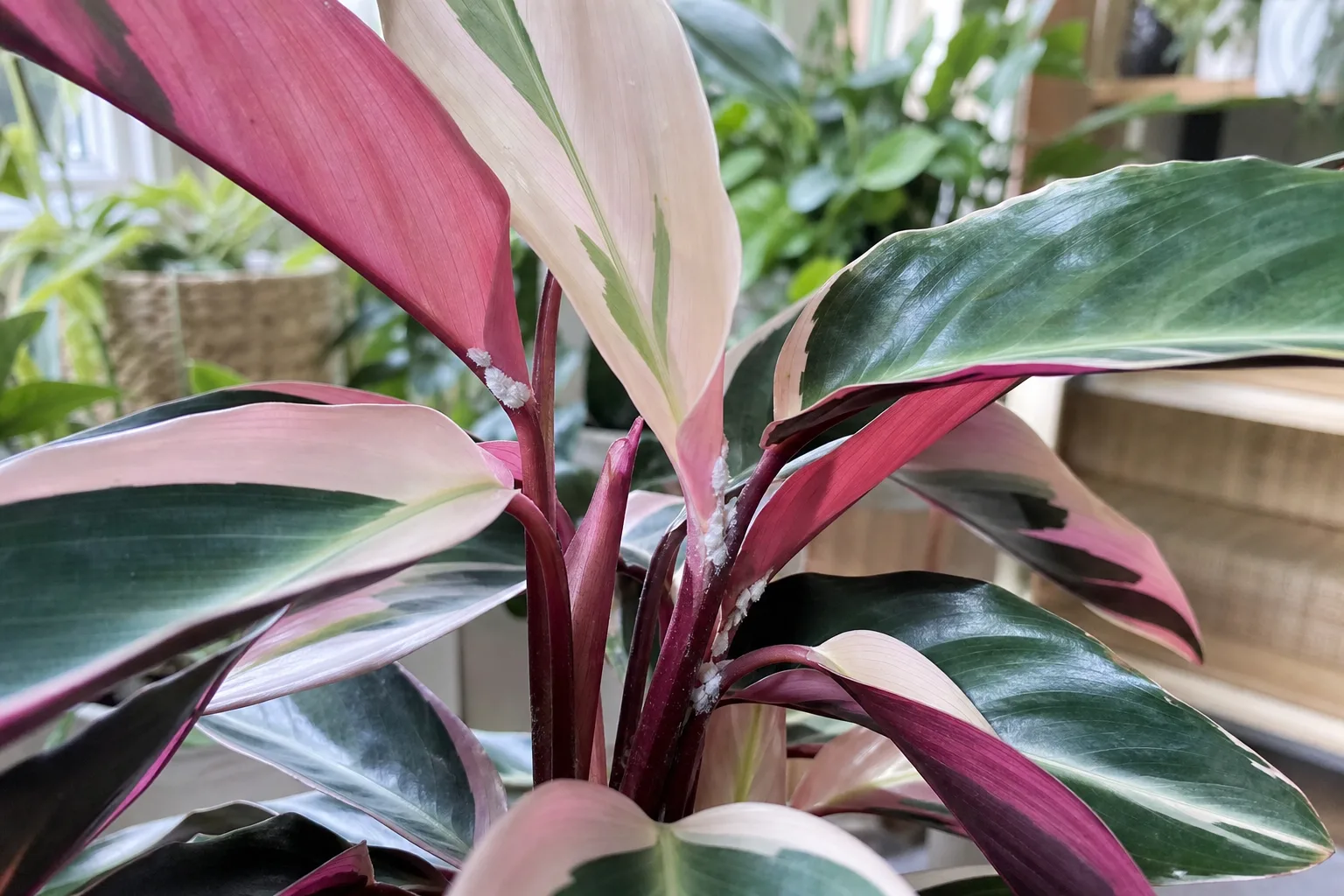
Mealybugs on Stromanthe Triostar (Stromanthe thalia ‘Triostar’) show up as white cottony clusters tucked into the leaf axils and folded bases of its variegated prayer-plant foliage. They suck sap from thin pink-and-cream leaves, can dull new color, and leave sticky honeydew that can lead to sooty mold on foliage.
First step: isolate the plant the same day you spot cottony wax. Move it away from other houseplants before you dab, spray, or rinse anything. Once isolated, remove visible bugs with a cotton swab dipped in 70% isopropyl alcohol, then follow with insecticidal soap on repeat intervals until two clean weeks pass.
Why Stromanthe Triostar gets mealybugs
Mealybugs are common sap-sucking pests on houseplants. They usually arrive on new plants, shared tools, or nearby infested specimens-not because Triostar is uniquely prone, but because its growth habit gives pests protected hiding spots.
Stromanthe Triostar belongs to the Marantaceae prayer-plant family with thick, glossy leaves that fold at night through a pulvinus joint. Each leaf sits on a long pink-to-burgundy petiole rising from a short creeping crown. That architecture creates deep crevices at every axil where mealybugs gather in cottony colonies out of casual view. Grouped humidity displays and decorative cache pots hide the crown, so infestations often start at the soil line before wax appears on upper leaves.
Warm indoor rooms suit mealybugs year-round. UC IPM notes that indoor ornamentals including philodendron and fern relatives are especially vulnerable because mild temperatures favor populations and natural enemies are absent indoors. On Triostar, a recent nursery arrival, summer outdoor patio time, or chronically stressed plants in dim corners often coincide with the first visible clusters. Overfed, soft new spear growth at the crown is easy sap for crawlers after hatching.
Triostar needs high humidity and warm temperatures to keep variegation vivid. Humid microclimates help the plant but also keep pests active when indoor heating dries the rest of the room. Do not assume high humidity alone prevents mealybugs-it does not.
What mealybugs look like on Stromanthe Triostar
Early infestations are easy to miss because waxy filaments hide pinkish bodies beneath variegated tissue. On Triostar, check these patterns together:
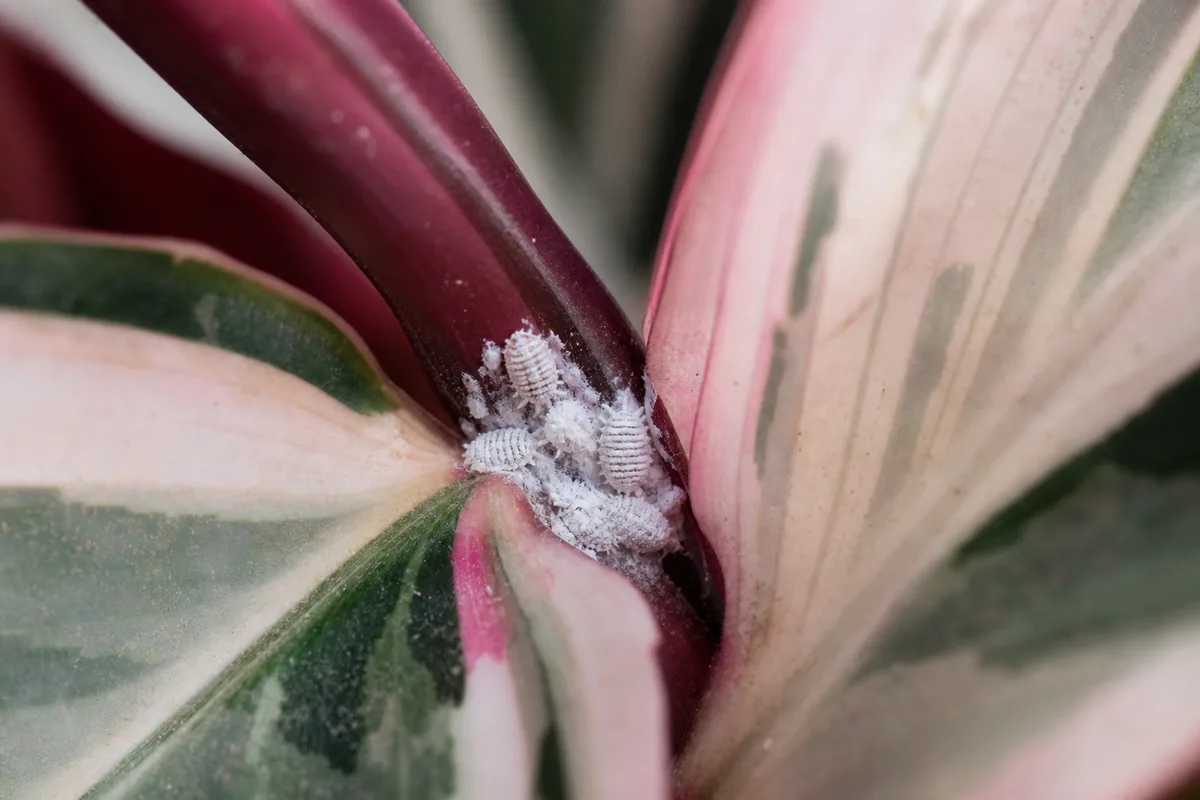
Mealybugs symptoms on Stromanthe Triostar - compare with healthy tissue on the same plant.
- White fluffy tufts tucked into leaf axils where cream-and-pink blades meet burgundy petioles-not loose dust on the leaf surface
- Clusters at the base of rolled new spears before they unfurl
- Cottony patches at the crown near soil, especially inside dense grouped pots
- Waxy masses in the fold where leaves meet the stem when foliage is upright during the day
- Sticky, shiny honeydew on lower leaves or nearby surfaces below active colonies
- Black sooty mold on pale cream or pink leaf panels that honeydew has coated
- Dull or pale new leaves with weakened variegation on infested sections
Do not mistake normal leaf aging for pest damage. Triostar may shed an occasional lower leaf with a dry edge while the rest of the clump stays firm. Mealybug stress shows cottony wax in multiple axils, stickiness, and stalled new spears-not one cosmetic old leaf at the base of an otherwise healthy plant.
How to confirm the cause
Do not treat from one white speck on a leaf tip. Use this inspection order:
- Isolate first - Move the plant away from other houseplants before handling. Isolate infested plants so crawlers do not walk to neighboring pots.
- Crown and soil line - Lift outer leaves gently and inspect where petioles enter the mix. Mealybugs often start here in grouped displays.
- Work up each petiole - Follow each stem and inspect every leaf axil with bright light, including the underside of folded leaves.
- New growth spears - Check rolled new leaves at the center; crawlers settle in tight sheaths before unfurling.
- Pot rim and saucer - Check pots, stakes, and saucers for mealybugs and egg sacs, especially unglazed terracotta where wax clings to porous surfaces.
- Disturbance test - Touch a white patch with a dry cotton swab. Mealybugs smear pinkish when crushed; mineral deposits or perlite do not.
- Neighbor check - Inspect plants that shared a shelf, humidity tray, or windowsill for axil clusters or honeydew.
If roots are firm, soil smells neutral, and the only issue is cottony wax with stickiness, mealybugs fit. If the pot stays heavy for days, soil smells sour, and stem bases soften while mix stays wet, rule out crown rot from chronic overwatering on Stromanthe Triostar before spraying. Prayer plants rot easily when water stands on crowns-that is a different problem from wax in axils.
Lookalike symptoms to rule out
Powdery mildew forms flat white powder on leaf surfaces, not cottony tufts in axils. Mineral or hard-water deposits wipe off dry; mealybugs do not. Scale insects look like hard brown or tan bumps, not fluffy wax. Spider mites leave fine webbing and stippling in hot dry air, not cotton clusters. Normal low-humidity crisping starts at leaf edges on pale panels without wax or stickiness. Guttation produces clear droplets at leaf margins, not tacky honeydew across lower foliage.
First fix for Stromanthe Triostar
Isolate the plant and dab every visible cottony cluster with a cotton swab dipped in 70% isopropyl alcohol.
That single action removes adults you can reach and confirms the pest is alive-not dust-before you commit to sprays. UC IPM recommends dabbing alcohol on small houseplant infestations and testing a small area first for leaf burn on sensitive foliage. Triostar’s pale cream and pink tissue can react to alcohol; dab a hidden axil first and wait 24 hours before treating the whole plant.
Once isolated and dabbed:
- Spray insecticidal soap per label directions, covering all axils, leaf undersides, petiole bases, and the crown. Contact sprays require repeat applications because mealybugs hatch over several weeks.
- Wipe sticky honeydew from leaves with a damp cloth so you can spot new clusters easily.
- Repeat alcohol dabbing and soap spray weekly until no live bugs appear for two consecutive weeks.
Do not fertilize a stressed Triostar during active treatment. Do not blast the crown with a hard water jet that forces moisture into folded leaf bases-water standing on prayer-plant crowns promotes stem rot. Stromanthe Triostar is non-toxic to cats and dogs, but keep pets away from freshly treated plants until sprays dry.
Step-by-step recovery
After the initial treatment:
- Keep the plant isolated in medium to Stromanthe Triostar light guide with stable even moisture-water when the top inch of mix dries, using filtered water if your tap is harsh on pale leaf tissue.
- Re-inspect every leaf axil at each weekly treatment; missed clusters restart the cycle.
- If ants appear on the pot or saucer, they are often farming mealybug honeydew-treat the plant, not just the ants.
- After two clean weeks, return the plant to its normal spot but continue monthly axil checks for two months, especially on new spears.
- Trim leaves that collapse completely or lose most variegation, but leave mostly green foliage until new spears confirm recovery.
Heavy infestations with wax buried at the soil line may need a gentle unpot, alcohol dab on crown tissue, and repot into fresh airy mix-only after the above steps fail twice. Do not jump to an oversized pot during recovery; Triostar prefers evenly moist mix in a appropriately sized container.
Recovery timeline
Light axil infestations on one or two petioles often clear within two to three weeks of weekly alcohol and soap passes. Moderate cases covering multiple leaves may need four to six weeks because UC IPM notes mealybug eggs hatch over staggered intervals and weekly retreatment is needed until the infestation clears. Severe crown damage with stalled new spears can take two months before firm variegated leaves return.
Old yellowed or washed-out leaves will not fully revert. Use clean new spears, firm petioles, and absence of fresh wax as recovery markers-not perfect color on damaged old foliage.
What not to do
- Do not ignore a few white tufts because the clump still looks full-mealybugs multiply in axils out of sight.
- Do not move the plant back among others after one treatment; crawlers travel to neighboring pots.
- Do not pour undiluted alcohol over the entire root zone or pool it inside folded leaf bases.
- Do not fertilize until new growth is clean and watering is stable.
- Do not confuse sticky honeydew with guttation; honeydew feels tacky and pairs with wax in axils.
- Do not repot on day one unless root mealybugs persist after repeated foliar treatment.
- Do not mist heavily into folded leaves during treatment-trapped moisture can mark pale variegation.
How to prevent mealybugs next time
Quarantine every new plant four to six weeks before placing it near your Triostar. Stromanthe is often grouped for humidity-exactly how mealybugs hop between pots.
During weekly care, lift one outer leaf and glance at the axils behind it. Keep medium to bright indirect light so new spears unfurl with strong color. Water when the top inch dries; chronically wet mix weakens the crown without eliminating pests. Rotate the pot so variegated leaves develop evenly and both sides of the clump get inspected.
Disinfect scissors with alcohol after pruning any plant with suspected pests. Inspect plants that shared a nursery bench whenever one shows cottony wax. When moving Triostar outdoors for summer, check for hitchhikers before bringing it back inside.
When to worry
Treat mealybugs as medium severity on Triostar-but escalate if:
- Cottony clusters spread along most petioles within one to two weeks
- New rolled spears stop emerging or open stunted and mostly green
- Ants persist on the pot despite plant treatment
- Sooty mold covers large sections of pale foliage and blocks light
- The infestation reaches feeder roots when you unpot and roots show white wax
If repeated weekly treatment for six weeks fails, consider discarding a heavily infested plant rather than risking your entire collection-heavily infested houseplants are often best discarded when wax coats the crown and most axils.
Conclusion
Mealybugs on Stromanthe Triostar are a sap-feeding pest problem, not a humidity or watering mystery. Confirm white cottony clusters in leaf axils along burgundy petioles and sticky honeydew; act by isolating, dabbing with alcohol, and repeating insecticidal soap until two clean weeks pass. Prevent them by quarantining newcomers and inspecting folded-leaf crevices during routine care. Judge success by firm new spears and clean variegation-not by old foliage returning to perfect pink-and-cream color.
When to use this page vs other Stromanthe Triostar guides
- Stromanthe Triostar watering guide - Use for routine moisture checks before assuming mealybugs is the main issue.
- Stromanthe Triostar problems hub - Browse all 17 common issues on this species.
- Yellow Leaves on Stromanthe Triostar - Different entry point when symptoms overlap with mealybugs.
- Slow Growth on Stromanthe Triostar - Different entry point when symptoms overlap with mealybugs.
- Spider Mites on Stromanthe Triostar - Different entry point when symptoms overlap with mealybugs.