Aphids on Stromanthe Triostar: Causes, Checks & Fixes
Quick answer
Aphids on Stromanthe Triostar show up as soft clusters on unfurling spears and leaf undersides, often with sticky honeydew and wrinkled new tricolor panels. First step: isolate the plant and rinse spears and undersides with lukewarm water before applying insecticidal soap.
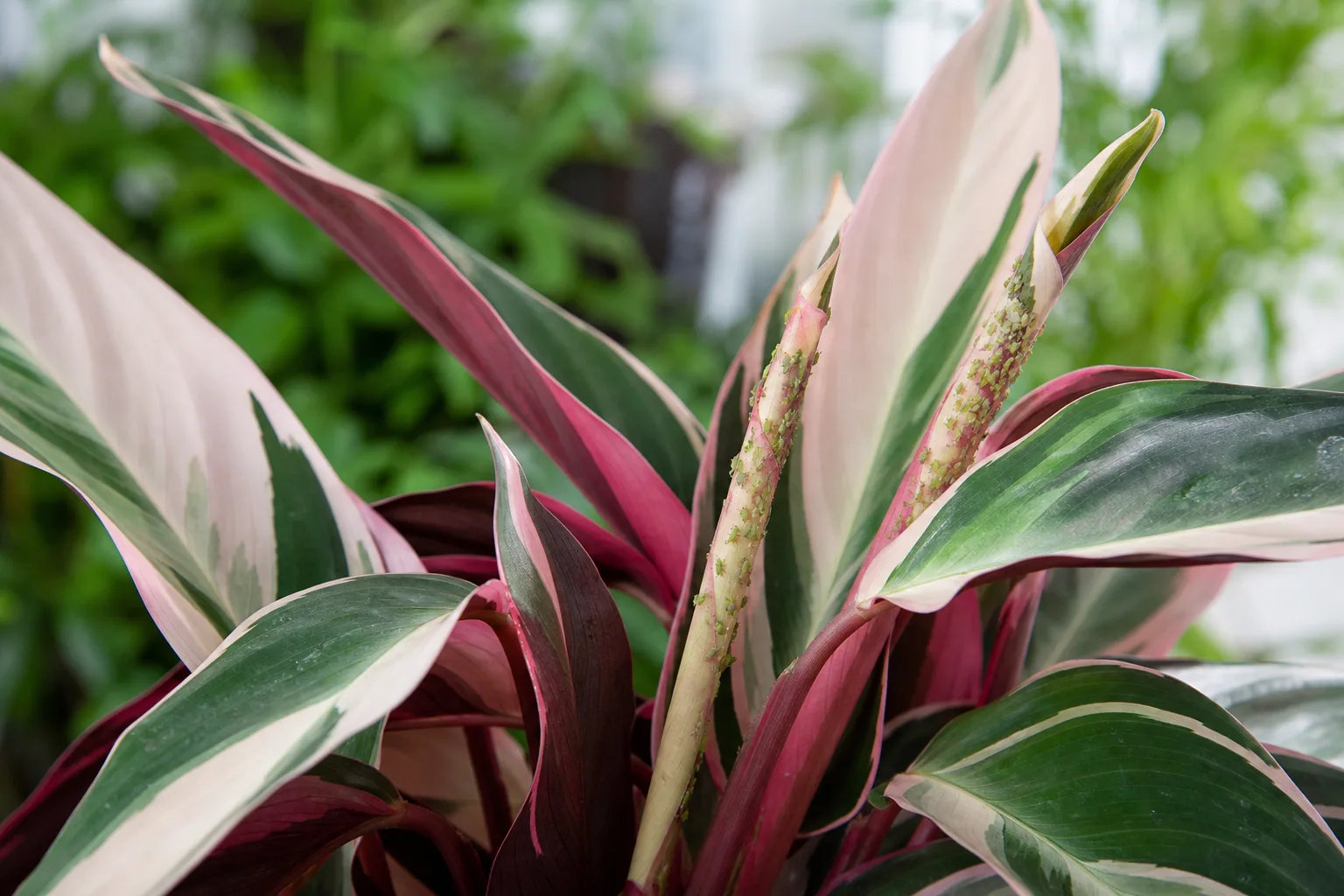
Aphids on Stromanthe Triostar: Causes, Checks & Fixes
This guide covers aphids on Stromanthe Triostar. See also the general Aphids guide, watering, and light pages for this plant.
Aphids on Stromanthe Triostar: Causes, Checks & Fixes
Quick answer
Aphids are small soft-bodied insects that colonize the newest growth on Stromanthe Triostar-unfurling spears, tender leaf undersides, and soft petiole joints. They pierce phloem sap and excrete sticky honeydew that can attract ants and grow black sooty mold on the plant’s pale cream and pink panels.
First step: isolate the plant and rinse spears and leaf undersides with lukewarm water. Hold each leaf gently and direct water into the rolled spear and along the underside veins. Confirm live aphids before reaching for spray. Triostar’s thin variegated tissue shows damage early, but the plant can recover cleanly once pests are gone and humidity and light stay steady.
Why Stromanthe Triostar gets aphids
Stromanthe Triostar belongs to the prayer plant family (Marantaceae) and pushes new spears frequently when it receives bright indirect light and warm temperatures. That constant flush of tender tissue is exactly what aphids prefer-they feed on soft new plant growth rather than older hardened leaves.
Most indoor infestations arrive on new nursery plants, hitchhike from outdoor summer placement, or spread from other houseplants. Skipping quarantine is the most common introduction route. Open windows during warm months can also let winged aphids drift in.
Triostar’s care profile creates a few extra risk windows. Plants kept in dim corners grow slowly but still produce soft spears that aphids colonize before you notice. Overfed plants with excess nitrogen push lush, soft shoots that aphids reproduce on more quickly. Stress from dry air or inconsistent watering does not cause aphids directly, but a weakened plant recovers more slowly after feeding damage.
High humidity-which Triostar needs-does not prevent aphids. Mealybugs and mites get more attention in dry rooms, but aphids thrive in warm, sheltered indoor conditions year-round. Female aphids can produce live offspring without mating, so a few insects on one spear can become a colony within days indoors.
What aphid damage looks like on Stromanthe Triostar
Early signs:
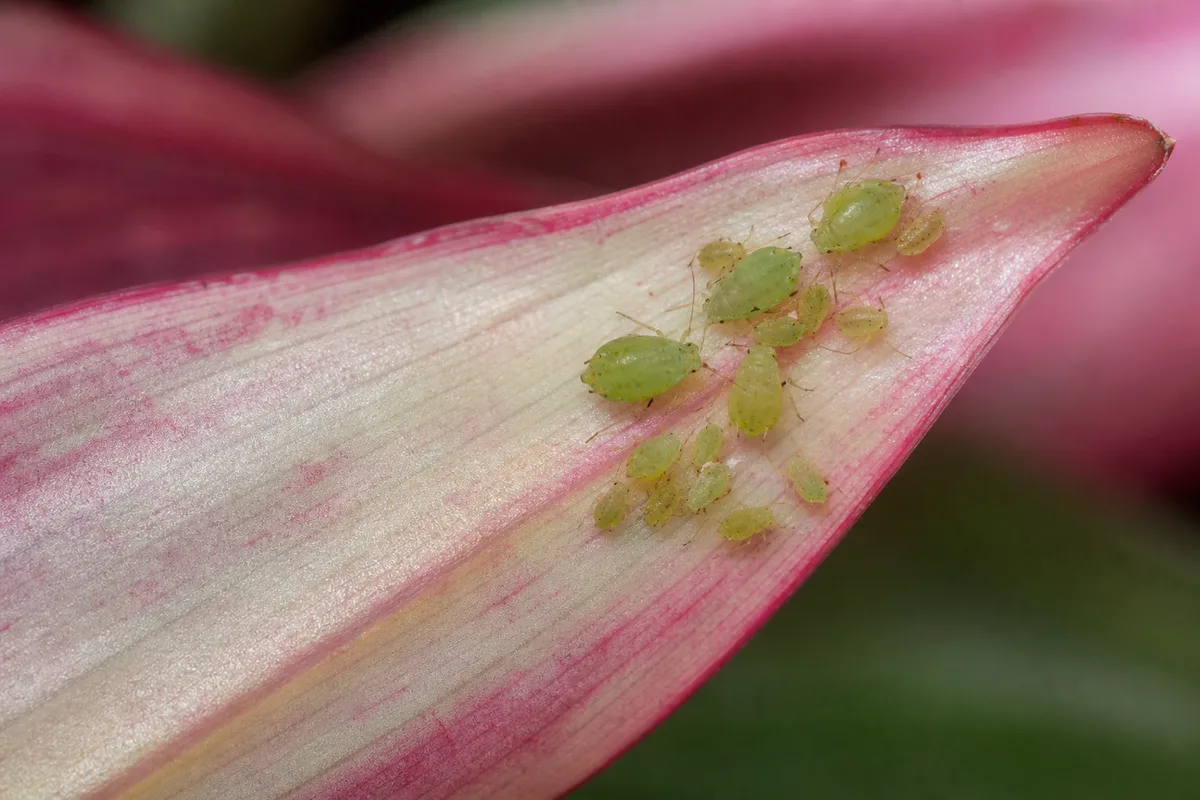
Aphids symptoms on Stromanthe Triostar - compare with healthy tissue on the same plant.
- Soft green, black, or pink pear-shaped insects clustered on spear tips and leaf undersides
- Shiny, sticky patches on upper leaf surfaces where honeydew dripped from above
- White cast skins stuck to leaves or petioles from aphid molting
- Slightly slowed or wrinkled unfurling of new tricolor leaves
Moderate to heavy infestation:
- New spears opening with puckered, uneven cream and pink panels
- Leaves curling or distorting where aphids cluster at the base of the roll
- Black sooty mold growing on honeydew-coated pale tissue
- Ant trails on the pot, saucer, or nearby shelf
- Yellowing on leaves where sap drainage has been heavy
Triostar’s variegation makes damage easy to spot on the pale panels before the whole leaf looks sick. A healthy spear should open flat with crisp color bands. Aphid-hit spears often stall halfway, showing creased pink sections or uneven green streaks that do not smooth out later.
Honeydew is not a Triostar-specific trait-it comes from sap-feeding insects. If leaves feel sticky but you find no insects, recheck at night with a flashlight; aphids are easier to see when they are not disturbed.
How to confirm the cause
Work through these checks in order:
- Spear tip inspection - Peel back the edge of the newest rolled spear with a fingernail or tweezers. Aphids hide inside the roll where the tissue is softest.
- Underside scan - Turn the top three to four leaves over. Aphids feed along midribs and at petiole joints on prayer plants.
- Magnification - Use a hand lens or phone macro mode. Confirm pear-shaped bodies and, on many species, paired cornicles on the rear abdomen-a feature that distinguishes aphids from other small insects.
- Honeydew and mold - Rub a sticky upper leaf. Fresh honeydew feels tacky; sooty mold smears dark and wipes off with water.
- Ant check - Ants on the pot rim strongly suggest aphids or other honeydew producers on the plant above.
- Neighbor plants - Inspect other Marantaceae and nearby houseplants. Green peach aphid and related species feed on many ornamentals, not just one host.
- Lookalike exclusion - No cottony wax means not mealybug. No fine webbing or gritty stippling means not spider mites. No flat oval scales stuck to veins means not scale.
If you find sticky residue but no live insects after two careful checks, wipe the leaves and monitor for three days. Old honeydew can persist briefly after aphids are already gone.
First fix for Stromanthe Triostar
Move the plant away from others, then rinse spears and leaf undersides thoroughly with lukewarm water in a sink or shower.
This single step dislodges aphids from sturdy foliage, washes fresh honeydew before ants arrive, and lets you confirm how large the colony really is. Support each leaf with your hand so the thin variegated tissue does not tear. Angle the spray into rolled spears and along underside veins where aphids cluster.
Do not apply insecticidal soap on day one if a thorough rinse removed every live aphid. Do not fertilize a pest-hit Triostar hoping to push new growth-that produces more tender tissue aphids prefer. Do not repot unless you also find root pests; aphids on Triostar are almost always a foliage problem.
Let the plant drain and dry in bright indirect light the same day. Water standing on folded crowns can rot prayer plant stems, so avoid leaving the center of the clump soggy overnight.
Step-by-step recovery
After the initial rinse:
- Repeat water rinses every two to three days until live aphids are gone on inspection. Most dislodged aphids cannot return to the plant.
- Apply insecticidal soap if colonies persist after several rinses. Spray must contact aphids directly-cover spears, undersides, and petiole joints. Repeat every four to seven days through at least two to three cycles to catch newly hatched nymphs.
- Test one leaf first. Triostar is not listed among the most soap-sensitive houseplants, but variegated Marantaceae can show edge browning if stressed. Wait 24 hours before treating the whole plant.
- Wipe sooty mold off upper leaves with a damp cloth once honeydew production stops. Mold does not infect Triostar tissue; it grows on the sugary coating.
- Trim only severely distorted spears that have stalled open and show no green growth at the base. Do not mass-prune healthy older leaves-Triostar needs foliage for recovery photosynthesis.
- Manage ants if they are farming colonies. Ant stakes or barriers on the shelf can help predators reach aphids; ants protect aphids from natural enemies.
- Hold isolation for two weeks after the last live aphid sighting. Indoor populations rarely decline without intervention.
Keep humidity at the high levels Triostar needs during recovery, but ensure gentle airflow so folded leaves do not stay wet for hours after rinsing.
Recovery timeline
Water knockdown shows results within two to three days when colonies are small and confined to one or two spears. A full soap course typically takes one to two weeks with label-interval repeats. New spears should begin opening flat within two to four weeks once feeding stops and care stays consistent.
Old distorted leaves will not reshape-judge success by clean new growth, not by older wrinkled panels. Honeydew stickiness fades within days after aphids are gone; sooty mold clears as you wipe leaves and new tissue stays clean.
If new spears still emerge coated in aphids after three soap cycles, escalate inspection to hidden leaf bases and neighboring plants rather than increasing fertilizer or Stromanthe Triostar repotting guide.
Lookalike symptoms to rule out
Mealybugs form white cottony clusters in leaf axils and along stems, not loose pear-shaped groups on spear tips. They also produce honeydew but look waxy rather than soft.
Spider mites cause pinpoint stippling and fine silk webbing, especially when humidity is low. Mites rarely produce heavy sticky honeydew. Triostar mites often bronz the pale panels before the green zones.
Scale insects attach as immobile bumps on stems or leaf veins. They excrete honeydew but do not gather as moving clusters on new spears.
Thrips scar and silver pale tissue with scratch-like marks. You may see sticky residue, but the insects are slender and fast, not pear-shaped clusters.
Low humidity crisping browns leaf edges evenly without insects, honeydew, or clustered soft bugs on new growth. Confirm with a pest search before treating humidity alone.
Mistakes to avoid
Do not spray insecticidal soap over the whole collection before confirming aphids on Triostar-misidentification wastes treatment and stresses unrelated plants.
Do not use harsh dish detergent instead of products labeled for plants; proper insecticidal soap is formulated for contact pest control on soft-bodied insects.
Do not return the plant to its regular spot the day after one rinse. Aphid nymphs hatch on a cycle; one treatment rarely finishes the job indoors.
Do not increase nitrogen feeding during an active infestation. Soft lush shoots attract more aphids and delay recovery.
Do not ignore ants. Controlling aphids alone is harder while ants defend colonies on the pot or shelf.
Do not soak the crown repeatedly without airflow-rot risk on prayer plant stems is real even when you are trying to rinse pests away.
Stromanthe Triostar care cross-check
Aphid recovery goes faster when baseline care is stable:
- Light - Medium to bright indirect light keeps spears moving without bleaching pale panels. A dim plant stalls recovery even after pests are gone.
- Water - Keep evenly moist; water when the top inch dries. Chronic drought stress weakens new spears; soggy mix weakens roots without stopping aphids on foliage.
- Humidity - Target high humidity above roughly 60% so new leaves do not crisp while the plant rebuilds.
- Water quality - Filtered or rainwater reduces edge burn on variegated tissue, making it easier to tell pest damage from fluoride crisping.
- Feeding - Resume half-strength balanced fertilizer only after new clean spears appear, not while colonies are active.
Triostar is non-toxic to cats and dogs, which matters when you rinse plants in sinks or tubs pets can reach. Rinse soap residue before pets investigate treated foliage.
How to prevent aphids next time
Quarantine every new plant for at least two weeks before placing it near Triostar or other prayer plants. Inspect spears and undersides on day one and again before release.
Add a monthly shower rinse to your care routine-periodic washing knocks off early aphids before colonies form inside rolled spears.
Avoid excess nitrogen that produces soft shoots. Use slow-release or half-strength feeds during active growth only.
Check Triostar carefully after any outdoor summer stay. Winged aphids can arrive on balcony plants and spread indoors when you move pots back.
Preserve beneficial insects when possible. Lady beetles, lacewings, and parasitic wasps reduce aphid numbers naturally if broad-spectrum sprays have not eliminated them from your home.
Scout weekly during warm months when Triostar pushes spears fastest-that is when aphids are easiest to catch and hardest to miss if ignored.
When to worry
Treat as urgent when colonies coat most new spears, growth stops for more than a week, honeydew drips onto furniture below, or ants swarm the pot. At that stage, isolated rinses alone may not keep up with rapid aphid reproduction indoors.
Replace or heavily cut back a plant only if the crown rots from repeated wet rinsing without airflow, or if every new spear opens distorted for months despite persistent treatment-usually a sign the infestation was ignored too long on a already-stressed specimen.
A handful of aphids on one spear is not an emergency. Confirm, isolate, rinse, and repeat before escalating to chemicals.
Conclusion
Aphids on Stromanthe Triostar concentrate on the tender spears and undersides that make Stromanthe Triostar overview beautiful-and vulnerable. Inspect new growth first, isolate and rinse before you spray, and repeat treatment until new tricolor leaves open clean. Stable humidity, light, and watering do the rest. Catching colonies early keeps honeydew, sooty mold, and distorted spears from becoming a collection-wide problem.
When to use this page vs other Stromanthe Triostar guides
- Stromanthe Triostar watering guide - Use for routine moisture checks before assuming aphids is the main issue.
- Stromanthe Triostar problems hub - Browse all 17 common issues on this species.
- Curling Leaves on Stromanthe Triostar - Different entry point when symptoms overlap with aphids.
- Mealybugs on Stromanthe Triostar - Different entry point when symptoms overlap with aphids.
- Spider Mites on Stromanthe Triostar - Different entry point when symptoms overlap with aphids.