Thin Stems on String of Hearts: Causes, Checks & Fixes
Quick answer
Problem thin stems on String of Hearts usually mean the plant is stretching in too little light or running dry-not that wiry stems are abnormal on their own. Pale flat leaves on limp hair-thin strands point to underwatering; long fragile stems reaching toward a window point to low light. First step: check leaf plumpness and crown light before you prune or feed.
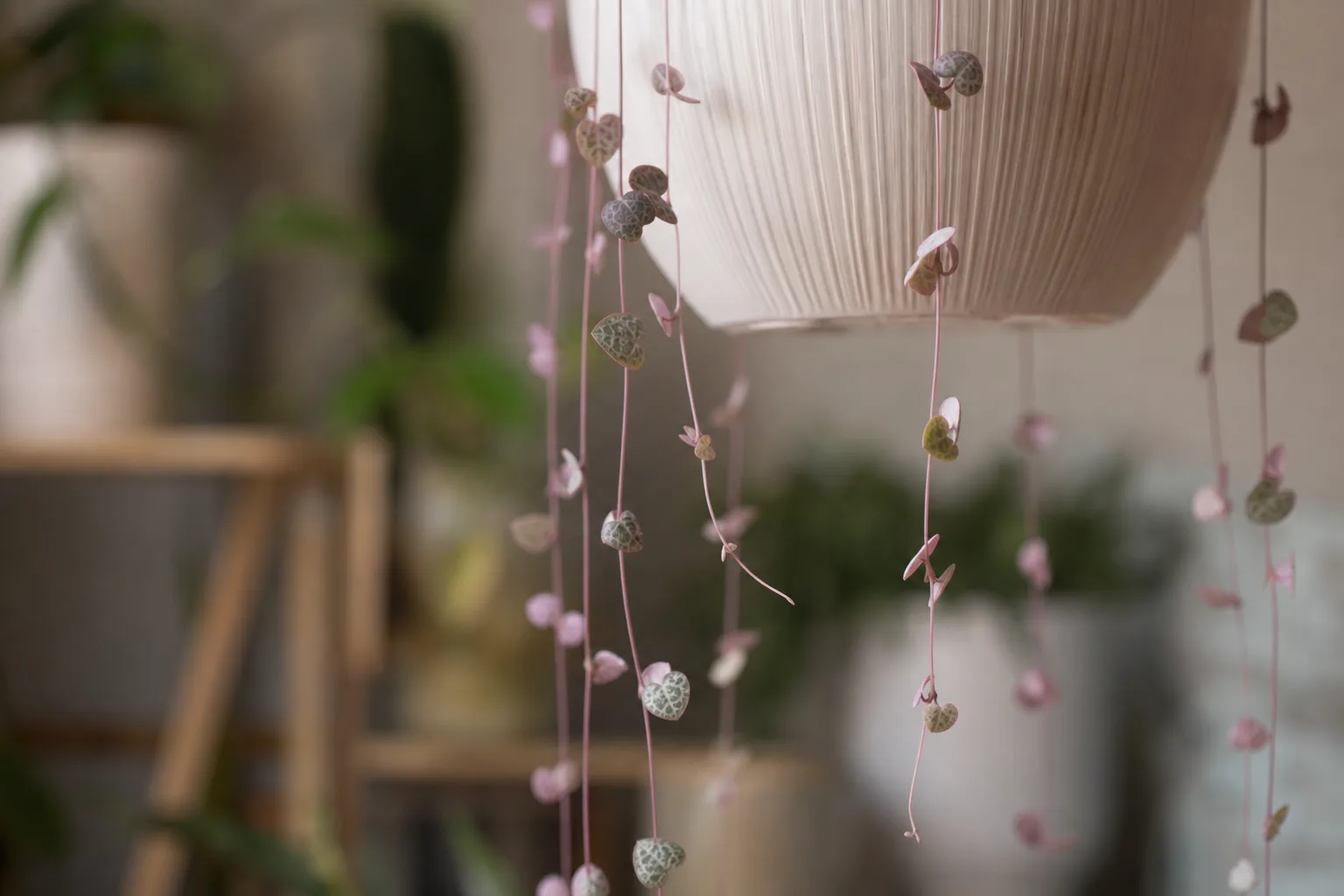
Thin Stems on String of Hearts: Causes, Checks & Fixes
This guide covers thin stems on String of Hearts. See also the general Thin Stems guide, watering, and light pages for this plant.
Thin Stems on String of Hearts: Causes, Checks & Fixes
Quick answer
String of Hearts (Ceropegia woodii) naturally grows on thin, wiry pink-purple stems-that is not a problem by itself. Thin stems become a problem when new growth looks hair-fine, snaps easily, and cannot hold plump heart-shaped leaves, or when the crown keeps sending out fragile strands while older sections look stronger.
The two most common triggers indoors are insufficient light at the crown (stems stretch and weaken while reaching for a window) and chronic underwatering (leaves and stems lose turgor and look deflated). Overwatering with rotting tubers produces a third pattern: thin, mushy stems at the base in damp soil.
First fix: lift trailing vines and inspect the crown together with the newest six inches of growth. Run the taco test on fresh leaves-if they fold flat and the pot is light and dry, water thoroughly once. If leaves are plump but new stems are pale, elongated, and leaning toward glass, move the crown into String of Hearts light guide with one to three hours of gentle morning sun before you prune or fertilize.
What thin stems look like on String of Hearts
Healthy String of Hearts forms opposite heart-shaped leaves along slender purple-pink stems. Mature vines can trail several feet while stems stay wiry-that is normal architecture for a semi-succulent trailer, not a defect.
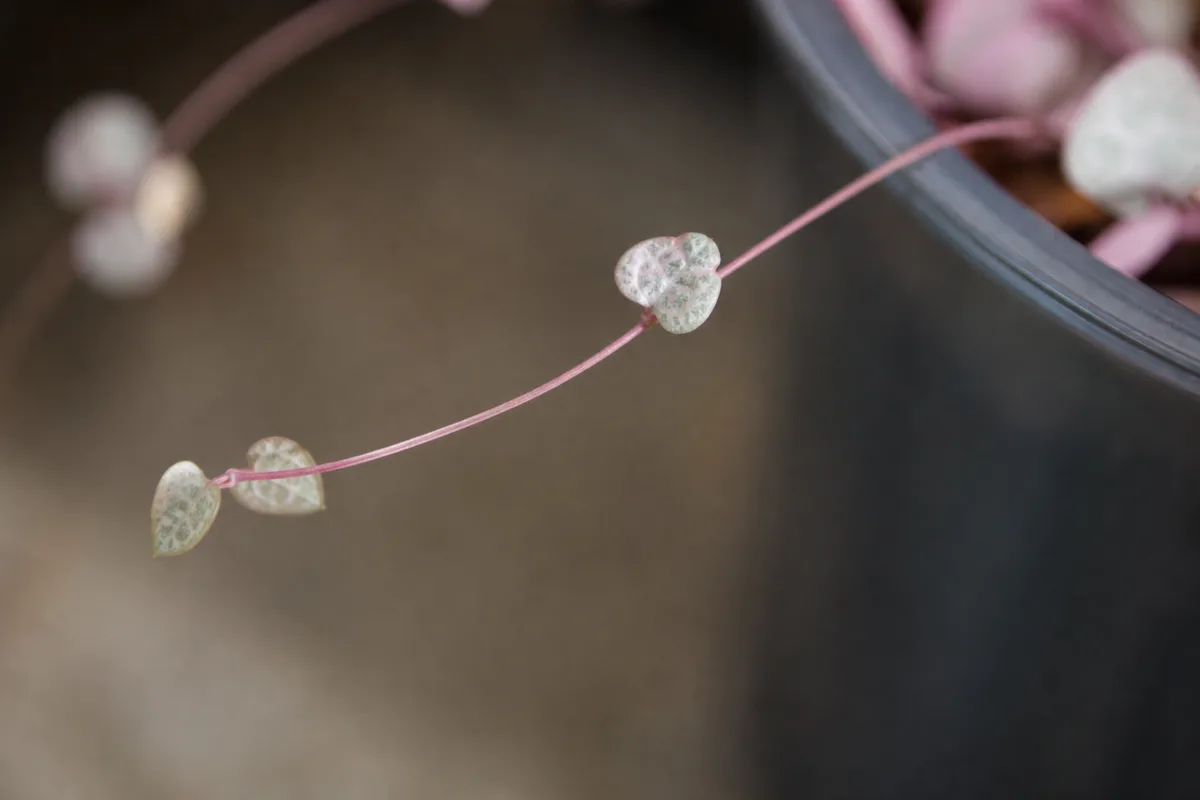
Thin Stems symptoms on String of Hearts - compare with healthy tissue on the same plant.
Problem thin stems show a different pattern:
- Hair-fine new growth that feels fragile between your fingers and snaps before older sections would
- Pale, flat, small leaves on the thinnest strands instead of plump marbled hearts
- Crown thinning when the base sends out weak threads while a few older vines still look fuller
- One-sided lean toward the brightest window, with the shaded side producing the thinnest stems
- Limp deflated strands with dry lightweight soil-underwatering thins tissue rather than stretching it toward light
- Mushy stem bases with yellow leaves and sour-smelling mix-rot weakens support tissue at the crown
Do not confuse thin stems with leggy spacing alone. A vine can hold leaves closely along a naturally wiry stem and still be healthy. Worry when stem thickness, leaf plumpness, and crown density decline together-not when you simply notice that Ceropegia woodii is not a thick-stemmed plant.
Why String of Hearts gets thin stems
Ceropegia woodii evolved as a sun-loving succulent vine native to southern Africa, storing water in tuberous roots and bead-like aerial tubers along stems. It can survive dim corners, but it cannot build strong compact tissue without adequate light and periodic deep watering.
Low light at the crown. When usable light falls below what the plant needs, stems elongate and thin-a form of etiolation. Indoor plants stretch toward light sources when intensity is inadequate. Hanging baskets placed above or beside a window often leave the crown in shade while dangling tips reach light, producing hair-thin new strands at the soil line.
Chronic underwatering. String of Hearts draws on tuber reserves during dry spells. Prolonged drought leaves thin, soft, pliable leaves and limp wiry stems that look fragile even though the plant is not actively stretching. Wilted leaves result from underwatering on String of Hearts overview. The taco test-healthy hydrated leaves resist folding-helps separate thirst from stretch.
Overwatering and tuber rot. Wet soil in weak light suffocates tuberous roots. As rot advances, the crown cannot supply new growth, and remaining stems thin out, yellow, and feel mushy at the base. This is more dangerous than cosmetic etiolation because damaged tubers may not recover.
Seasonal light drop. Shorter winter days reduce usable light at the same window. Growth that was sturdy in summer may come out finer and more fragile from late fall through early spring unless you move the plant closer or add supplemental lighting.
Overfertilizing in dim rooms. Extra nitrogen without matching light can push soft, elongated shoots that still look thin because tissue cannot densify without adequate photosynthesis.
Pest stress at nodes. Mealybugs and scale at leaf axils weaken stems locally. Inspect for white cottony patches or brown bumps before assuming light or water is the only issue.
How to confirm the cause
Work through these checks in order:
- Taco test on newest leaves - Plump leaves resist bending; thin flat leaves that fold easily point to underwatering if soil is dry. Plump leaves on long pale reaching stems point to low light instead.
- Internode spacing on fresh tips - Widening gaps between tiny hearts on hair-fine stems confirm ongoing stretch from insufficient crown light.
- Pot weight and soil moisture - A light dry pot with deflated strands suggests drought. A heavy damp pot with yellowing and soft tubers suggests rot-not a light fix alone.
- Crown light exposure - Lift trailing vines aside. If the soil surface and base stems sit in shadow while tips hang in light, placement is the problem.
- Direction of lean - Strong tilt toward one window confirms active phototropism. Rotate the pot and watch whether new tips bend back within days.
- Tuber firmness - Gently press bead-like tubers along stems and at the soil line. Firm tubers with dry droopy leaves mean thirst; soft black tubers in wet mix mean rot.
- Pest inspection - Check leaf nodes and tubers for mealybugs, aphids, or scale before you change light or watering.
If new stems are pale, reaching, and fragile in a dim spot with firm tubers and moderate soil moisture, insufficient light is confirmed. If the whole strand deflates with dry soil and firm roots, underwatering is confirmed. Mushy bases in wet soil require rot treatment, not brighter light alone.
First fix for String of Hearts
If newest stems lean toward a window, show wide leaf spacing, and look hair-fine while leaves stay somewhat plump: move the crown into bright indirect light with one to three hours of gentle morning sun-directly in front of an east window or filtered west window, not above the frame or across the room.
Gradually increase exposure over seven to ten days if the plant came from very dim conditions. Sudden harsh afternoon sun on shade-adapted tissue can scorch thin leaves.
If leaves fold flat on limp strands and the pot is light and dry: water thoroughly once until excess drains from the bottom, then discard saucer water. Check leaf plumpness in twenty-four to forty-eight hours.
Do not fertilize, repot, or hard-prune on day one. Fix the primary stress-light or water-then wait for new growth before secondary steps.
Step-by-step recovery
Once the first fix matches the confirmed cause:
- Wait two to four weeks for new tips to show plumper leaves, shorter internodes, or firmer stem feel before judging success.
- Rotate the pot a quarter turn weekly so all sides build even strength and the plant stops leaning one direction.
- Trim the weakest hair-fine sections above a leaf node after healthier new growth appears on at least one strand. Clean cuts can trigger side shoots from the node below.
- Pin aerial tubers to soil on sparse crown areas if you want fuller coverage without discarding long vines. Press bead-like tubers into moist-not wet-mix at the pot surface; they root and send up new growth points.
- Adjust String of Hearts watering guide after light improves-plants in brighter spots dry faster. Check pot weight before each soak rather than following an old calendar automatically.
- For rot suspects, stop watering, unpot, trim soft black tubers, air-dry one to two days, and repot into fresh fast-draining mix. Do not soak a plant with mushy tubers hoping to revive it.
- Add a full-spectrum grow light twelve to eighteen inches above the crown for eight to ten hours daily if your best window is north-facing or obstructed.
- Resume diluted fertilizer at half strength every four to six weeks only after growth looks normal again during active spring and summer.
Remove no more than one third of total length per pruning round so remaining foliage can support tuberous roots through recovery.
Recovery timeline
Thin tissue that already formed does not thicken retroactively. Expect improvement in new growth first: plumper leaves, shorter gaps, and stems that feel less hair-fine within two to four weeks after light or watering correction.
Underwatering recovery often shows in leaf texture within one to two days of a thorough soak if tubers are firm. Light correction takes longer because the plant must produce fresh compact tissue.
Bare crown sections fill slowly. Side shoots from pruning or rooted tubers typically appear within three to six weeks during warm active growth. Winter rest slows everything-hold major trimming until spring unless strands are breaking.
Judge success by new stem strength and leaf plumpness, not by old stretched sections regaining thickness. If fresh growth stays hair-fine after four to six weeks in corrected conditions, the spot may still be too dim or the crown remains shaded.
Lookalike symptoms to rule out
Leggy growth with normal stem thickness shows long bare gaps but stems still feel appropriately wiry for Ceropegia woodii-not hair-fine or snapping. Spacing is the main issue; see light correction similarly.
Normal trailing length on dense strands is healthy. Mature vines naturally lengthen while keeping firm leaves along wiry stems.
Drooping from underwatering deflates the whole strand rather than producing long pale reaching stems. Dry pot weight confirms thirst.
root rot on String of Hearts pairs thin mushy crown stems with yellow leaves, sour soil, and soft tubers despite wet mix. Light alone will not fix this.
Mealybugs at nodes leave white cottony patches and sticky residue, not uniform crown thinning. Treat pests before reassessing stem strength.
Variegated cultivars show naturally lighter leaf color. Compare stem fragility and spacing, not color alone.
Mistakes to avoid
Do not treat all wiry stems as a problem-String of Hearts is supposed to look delicate when leaves are plump and marbling is rich.
Do not prune aggressively without fixing light or water first. Fresh cuts under ongoing stress produce another wave of weak regrowth.
Do not jump to fertilizer when stems look pale. Pale fragile stems in a dim corner are etiolation, not nitrogen deficiency.
Do not increase watering to “help” a sparse plant in weak light. Slow photosynthesis means slow water use; extra moisture raises rot risk on tuberous roots.
Do not hang the basket so only trailing tips see the window while the crown sits in shadow-that pattern produces hair-thin base growth on otherwise long vines.
Do not move directly from a dark room to harsh south-window midday sun without acclimating over seven to ten days.
String of Hearts care cross-check
Thin stems often appear alongside watering confusion because weak vines use water slowly. Ceropegia woodii prefers fast-draining mix similar to a cactus blend and should dry between waterings-roughly every ten to fourteen days in summer for many homes. In winter, reduce watering further during rest.
Strong appropriate light helps the mix dry predictably and builds sturdier new tissue. A plant in a dim corner may stay wet too long even when you water on the same schedule as a compact plant in a bright window.
Temperature between 18–27°C (65–80°F) supports steady growth. Cold drafts below 10°C (50°F) can weaken stems and slow recovery on recently pruned plants.
How to prevent thin fragile stems next time
Place new String of Hearts with the crown directly in front of your brightest suitable window-not above the frame or on a side shelf with only tips lit. East windows with morning sun are ideal.
Rotate weekly from the start so the plant builds even stem strength rather than correcting a heavy lean later.
Learn your pot’s dry-down rhythm in bright light and water when the mix is mostly or fully dry-not on autopilot weekly watering.
Use grow lights in north rooms before the crown sends out hair-fine winter stretch-not after half the pot looks fragile.
Accept slightly finer winter growth, or supplement light rather than letting vines weaken for months in short days.
When to worry
Thin stems are rarely an emergency on their own, but act fast when mushy crown tissue, sour soil, and yellow leaves appear together-that combination often precedes fatal tuber rot.
Treat as priority when hair-fine strands snap under their own weight while the mix stays damp for weeks-weak light plus wet tuberous roots raises rot risk.
Replace hope with action if new growth continues to come out hair-fine after four to six weeks in your brightest acclimated spot; the location may not be viable without a grow light.
No need to panic over long trailing vines with firm plump leaves on naturally wiry stems-delicacy with strength is normal for this species.
Conclusion
Problem thin stems on String of Hearts mean weak new tissue from too little crown light, chronic drought, or-when mushy-failing tubers in wet soil-not that wiry pink stems are wrong for the plant. Large gaps between leaves on stretched strands confirm insufficient light at the crown. Inspect leaf plumpness and crown exposure together, correct light or water as the checks indicate, then trim or pin tubers once compact new growth returns. Old thin sections will not thicken, but steady care rebuilds the marbled cascade this plant is meant to show.
When to use this page vs other String of Hearts guides
- String of Hearts watering guide - Use for routine moisture checks before assuming thin stems is the main issue.
- String of Hearts problems hub - Browse all 45 common issues on this species.