Leggy Seedlings on String of Hearts: Causes, Checks & Fixes
Quick answer
String of Hearts seedlings stretch when light is too weak after germination-not because the flat needs fertilizer. First step: remove the humidity dome, then place grow lights within 2–4 inches of the tops for 14–16 hours daily.
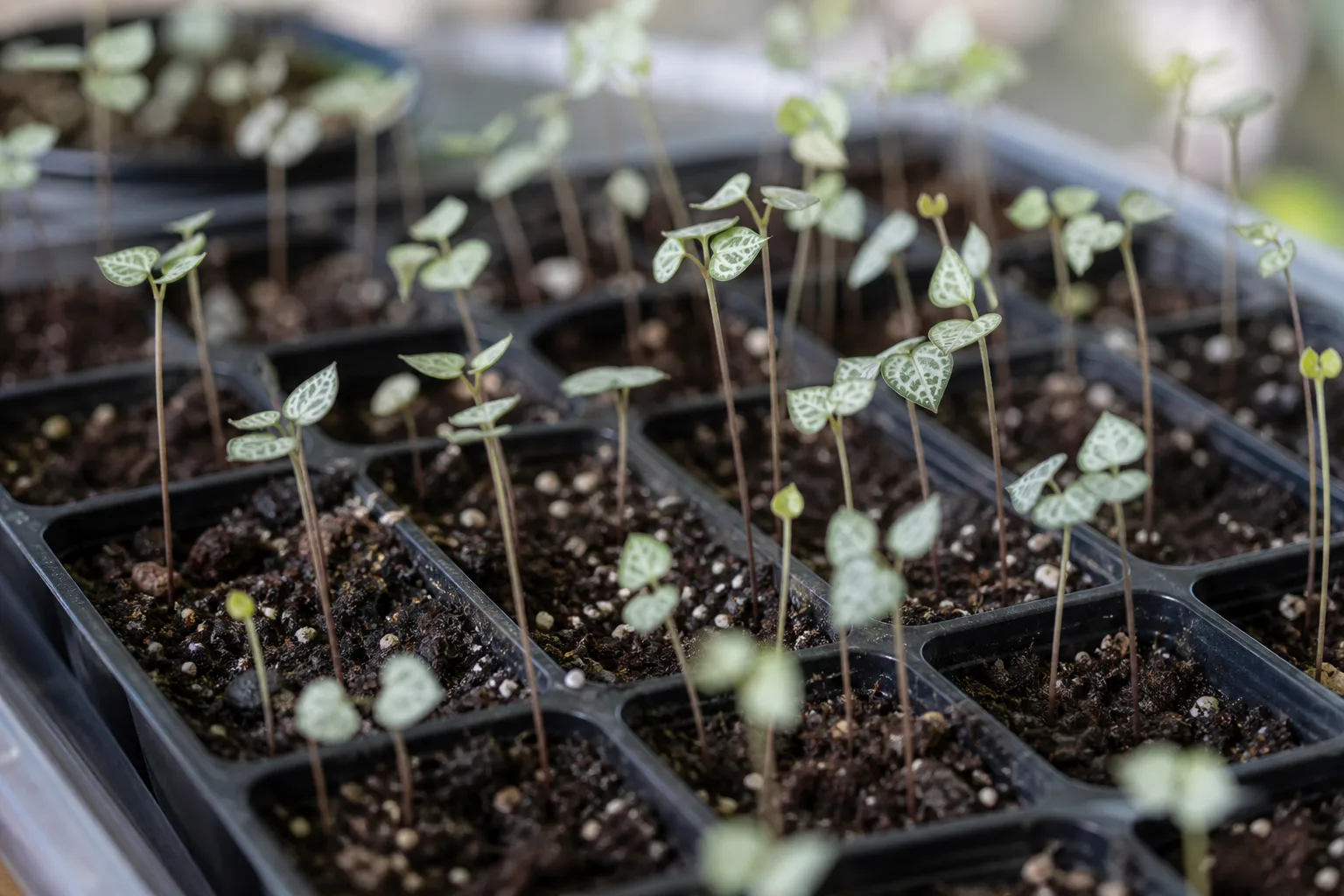
Leggy Seedlings on String of Hearts: Causes, Checks & Fixes
This guide covers leggy seedlings on String of Hearts. See also the general Leggy Seedlings guide, watering, and light pages for this plant.
Leggy Seedlings on String of Hearts: Causes, Checks & Fixes
Quick answer
Leggy String of Hearts (Ceropegia woodii) seedlings mean insufficient light intensity right after germination-not too little water or fertilizer on fresh seed-starting mix. This semi-succulent vine wants bright conditions from the first true leaves; when photons are weak, seedlings etiolate into thin pink stems with tiny pale heart-shaped leaves spaced far apart.
First step: remove any humidity dome, then move grow lights to within 2–4 inches of the seedling tops and run them 14–16 hours daily on a timer. Lack of light is the major cause of elongated, skinny stems on indoor starts. Hold off on fertilizer, String of Hearts repotting guide, or burying stretched stems until light is corrected. Extra moisture or feed on weak sprouts will not shorten stems that have already stretched toward a window.
What leggy seedlings look like on String of Hearts
Ceropegia woodii seedlings emerge with small opposite heart-shaped leaves on thin wiry stems-the same basic shape as mature vines, just miniature. Healthy starts hold leaves relatively close along each stem with hints of green marbling on the tops.
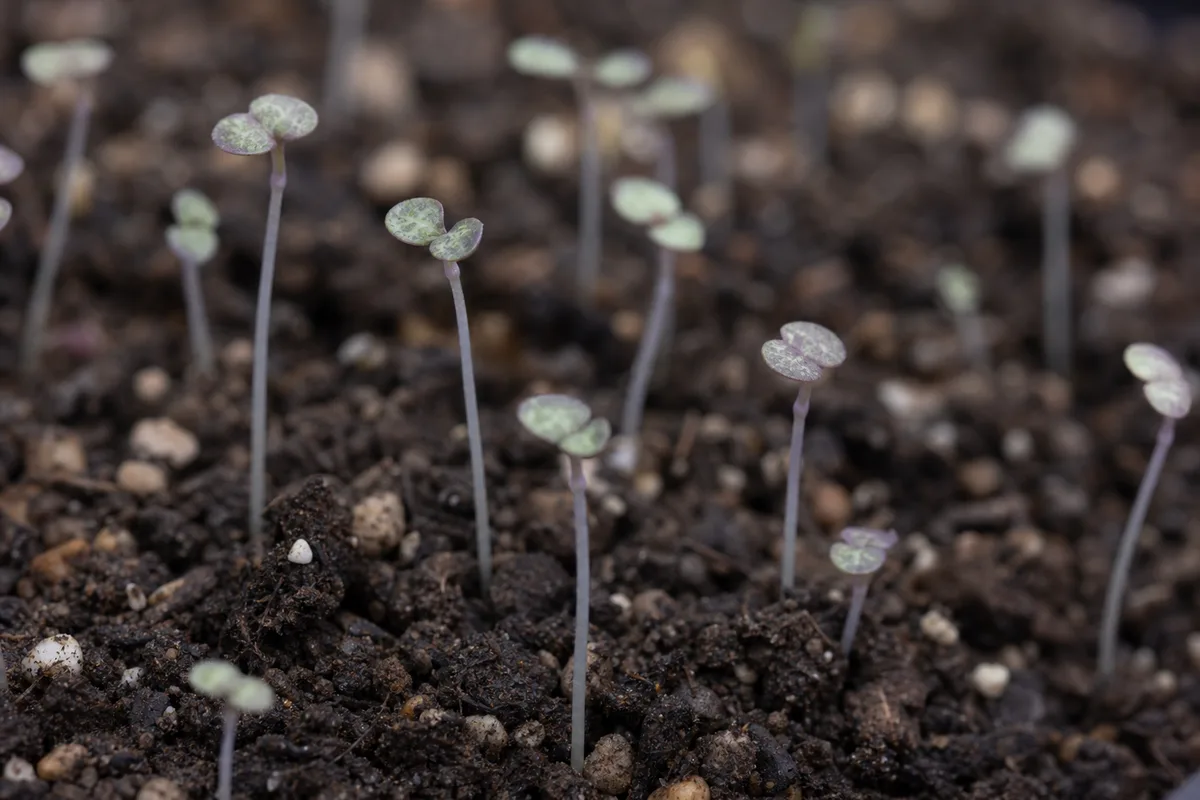
Leggy Seedlings symptoms on String of Hearts - compare with healthy tissue on the same plant.
Leggy seedlings reverse that compact pattern:
- Long bare gaps between tiny heart-shaped leaves along otherwise thin pink-purple stems
- Pale, flat leaves without the silver marbling healthy String of Hearts shows in good light
- Leaning or tipping toward the brightest window or the center of a weak overhead fixture
- Floppy thread-like stems that cannot support new leaf pairs without falling over
- Slow root development while tops keep reaching-leggy seedlings prioritize height over tuber formation
This differs from normal early seedling height. A healthy Ceropegia woodii start may produce a short wiry stem before the first heart pairs fill in; legginess is the spacing between leaves and stem thickness, not total height alone.
Compare to mature plant leggy growth on established hanging baskets-that is an ongoing light problem on older vines, not a seed-tray culture issue. Seedling legginess appears in the first weeks after germination, often while a humidity dome is still on or the flat sits on a winter windowsill.
Why String of Hearts seedlings stretch
Ceropegia woodii evolved as a sun-loving succulent vine native to southern Africa. It stores water in developing tuberous roots, but it cannot store light. Seedlings inherit that appetite for brightness from emergence; weak indoor light triggers etiolation-the same stretch response that causes leggy growth on mature plants, but faster because young tissue grows rapidly.
Several seed-starting habits compound stretch on String of Hearts specifically:
Surface-sown seeds left under domes too long. Ceropegia seeds need light to germinate and are pressed onto moist mix without burying. Growers often keep plastic domes on for moisture during germination-which is fine-but leaving covers on after sprouting blocks airflow, diffuses light, and delays moving seedlings under strong supplemental illumination.
Windowsill-only culture after germination. Windowsill-grown seedlings tend to be too tall, with thin, bent stems because natural light through glass drops sharply in late fall and winter-exactly when many growers start rare Ceropegia seed indoors. A warm windowsill looks bright to your eyes but delivers too little intensity at the leaf surface for String of Hearts overview.
Distant or weak grow lights. Lights hung a foot or more above a flat may look adequate while seedlings stretch toward them. String of Hearts seedlings need the same close, bright treatment as other indoor starts-intensity matters more than duration alone.
Warm germination without matching light. Heat mats or warm rooms speed emergence, but warm cells plus weak light produce soft elongated stems rather than stocky growth with firm tissue.
Overwatering on succulent seed mix. String of Hearts prefers fast-draining mix similar to a cactus blend. Soggy flats do not cause etiolation directly, but wet stagnant conditions weaken crowns and invite damping-off-often confused with simple legginess.
Crowded sowing. Ceropegia seed is tiny; multiple sprouts per cell compete for the same light cone. Outer seedlings lean and stretch while inner ones stay pale.
Leggy seedlings are rarely a nutrient problem on sterile fresh mix. Reaching for light comes first.
How to confirm the cause
Work through these checks in order before you trim, transplant, or repot:
- Light distance - Measure from bulb or LED panel to the tallest seedling. More than 4 inches with visible stretch confirms insufficient intensity.
- Photoperiod - Confirm a timer runs at least 14 hours daily; seedlings need 12 to 16 hours of light daily, and fewer hours triggers etiolation even when intensity is moderate.
- Dome status - If clear plastic still covers germinated seedlings, remove it and reassess after three days under corrected light.
- Direction of lean - Uniform lean toward a window points to windowsill culture. Even stretch across the flat under a centered fixture points to distance or weak bulbs.
- Leaf color and spacing - Compare newest leaves to the first pair after cotyledons. Widening gaps on fresh growth confirm ongoing etiolation. Yellowing with wet, sour-smelling mix suggests overwatering or rot-not light alone.
- Stem base - Firm green or pink tissue at the soil line supports a light diagnosis. Pinched, brown, or mushy stems at the crown suggest damping-off, not etiolation alone.
- Cell density - More than one seedling per cell increases competition for light.
Confirmed leggy String of Hearts seedlings stay green or pink at the base, grow taller without gaining girth, and stop stretching within days once lights move closer. If collapse at the soil line spreads despite a dry surface, switch to damping-off response instead.
First fix for String of Hearts
Remove the humidity dome if germination finished, then move grow lights to within 2–4 inches of the seedling tops and set the timer to 14–16 hours daily.
Use ordinary fluorescent shop lights or full-spectrum LEDs-expensive specialty fixtures are not required if distance and duration are correct. Raise the fixture on chains as seedlings grow, always maintaining that close gap. Turn lights off overnight; continuous light stresses seedlings.
Place the flat in String of Hearts light guide with no harsh midday sun on brand-new sprouts. Ceropegia woodii tolerates gentle morning sun on established plants, but unhardened seedlings scorch easily under direct afternoon glass.
Do not bury stretched stems deeper as your first move unless you have already corrected light and elongation is mild. Deep planting without fixing photons invites rot on developing tuberous roots.
Step-by-step recovery
Once light is corrected, follow this sequence:
- Remove humidity domes when seedlings are tall enough to touch them-within a day of sprouting, or sooner if mold appears on the mix surface.
- Thin to one seedling per cell - snip extras at soil level with scissors rather than pulling, which disturbs fragile roots.
- Pinch or trim above the second leaf pair once stems feel firm. This forces side shoots and keeps future growth compact under strong light.
- Transplant to individual small pots if seedlings were sown in shared trays and are crowding each other-use fast-draining cactus-style mix, not heavy peat.
- Mist lightly or bottom-water so mix stays lightly moist but never soggy. Let the surface dry slightly between waterings once seedlings have three or four leaf pairs.
- Run a gentle fan for an hour daily to strengthen wiry stems once domes are off-avoid cold drafts below 18°C (65°F).
- Hold fertilizer until true leaves are well developed and light is stable; then use quarter-strength succulent fertilizer every four to six weeks during active warm-season growth only.
If seedlings remain irreversibly thread-thin after a week of corrected light, restart from stem cuttings or aerial tubers-methods that succeed faster for most String of Hearts growers than nursing severely stretched seed starts.
Recovery timeline
Already stretched internodes do not shorten-judge recovery by new growth, not old stem length.
Under corrected light, Ceropegia woodii seedlings usually stop stretching within three to five days and produce darker, more compact new leaves within two to three weeks. Side shoots from pinching appear in two to four weeks at warm room temperatures around 21–27°C (70–80°F).
Developing tuberous roots lag behind top growth on seed starts. Expect meaningful root mass four to eight weeks after germination in warm active conditions-not within the first fortnight.
Worsening signs: continued rapid height gain despite close lights, stems flopping after pinching, or base softening at the soil line-those point to remaining light failure, overwatering, or damping-off, not normal recovery lag.
Lookalike symptoms
Damping-off - Seedlings collapse at the soil line with pinched brown stems; often in cold, wet domed flats. Fix moisture and airflow, not just light.
Normal wiry seedling habit - Ceropegia woodii naturally produces thin stems even in good light; judge by internode spacing and leaf color, not stem diameter alone.
Mature plant leggy growth - Large gaps between the leaves indicate insufficient light on established hanging vines-not a seed-tray culture issue. See leggy-growth guidance for older plants.
Underwatering on young sprouts - Mix pulled completely dry for days makes leaves flat and dull; internodes do not usually stretch dramatically toward light. Rehydrate gently with misting.
Heat stress from lights too close - Leaf edges brown or curl if fixtures touch foliage; back lights to 2–4 inches, do not confuse with stretch.
Mistakes to avoid
Do not leave seedlings on a windowsill alone in late fall or winter and expect compact growth-close artificial light outperforms weak natural light for this species during seed starting.
Do not keep domes on after germination except during the first day of emergence. Stagnant humid air weakens stems and encourages mold.
Do not use heavy peat-based mix that stays wet for days. String of Hearts seedlings need fast drainage from day one.
Do not fertilize heavily on stretched seedlings; salts stress weak tissue without fixing photons.
Do not pull crowded seedlings to thin-cut extras at soil level.
Do not start seed in autumn or winter dormancy unless you can supply strong supplemental light and warmth-Ceropegia woodii propagates most reliably during active summer growth.
Do not confuse seedling stretch with mature leggy vines and apply basket-hanging fixes before correcting flat lighting.
String of Hearts care cross-check
Seed starting sits upstream of normal String of Hearts care. Once seedlings outgrow cells, they need the same fundamentals as mature plants: bright indirect light with some gentle morning sun, fast-draining mix, and watering only when the mix dries-not on a calendar.
Leggy seedling flats often sit in too much moisture because growers mist domed trays on schedule. After domes come off, transition toward the dry-between-waterings rhythm this semi-succulent expects. Pick up pots to judge weight rather than spraying on habit.
Most growers propagate String of Hearts from stem cuttings or aerial tubers because seed is slow and seedlings are delicate. If your seed start stays weak despite corrected light, switching to tuber or cutting propagation is a practical recovery path-not a failure.
How to prevent leggy seedlings next time
Start with prevention tied to how Ceropegia woodii is actually sown:
- Surface-sow and press seeds into moist fast-draining mix - do not bury deeply; seeds need light to germinate.
- Place lights within 2–4 inches of tops from the day seedlings emerge, on a 14–16 hour timer.
- Remove plastic domes immediately after germination and move flats under supplemental lights, not just a bright window.
- Sow one seed per cell when possible; Ceropegia seed is extremely small and overcrowding is common.
- Keep post-germination temps around 21–27°C (70–80°F) with bright indirect light-not a dim corner.
- Pinch early once the second leaf pair is sturdy-compact side shoots form readily under adequate light.
- Schedule sowing for spring or early summer when natural warmth supports active growth and roots develop faster.
Ordinary fluorescent tubes in a shop-light fixture work well if distance and duration are correct-you need not invest in expensive plant-specific lights before mastering the basics.
When to worry
Leggy seedlings are a correctable culture problem, not a disease-but String of Hearts seed starts are slower and more delicate than common bedding-plant flats.
Restart the tray if stems are thread-thin, breaking when you lift cells, or stretching continues for more than a week after lights sit 2–4 inches above tops. Fresh seed, mix, and a corrected light setup cost less than nursing irreversibly weak plants.
Escalate to damping-off checks if stems soften at the base, gray mold appears, or healthy-looking tops collapse on wet mix-especially in domed trays that never dried at the surface.
Consider abandoning seed for stem cuttings or aerial tubers if repeated sowings stretch despite proper light-those methods match how most successful String of Hearts collections are built.
Conclusion
Leggy String of Hearts seedlings are telling you light is too weak or too far away after germination-not that the flat needs more water or feed. Confirm dome status, light distance, and photoperiod first; move fixtures to within 2–4 inches of tops for 14–16 hours daily; thin crowded cells; and pinch above early leaf pairs once stems firm up. Judge success by compact new heart-shaped leaves over the next two to three weeks-not by whether old stretched sections shrink. Stocky seedling starts-or a quick pivot to tuber propagation-set you up for the dense marbled cascades this plant is meant to become.
When to use this page vs other String of Hearts guides
- String of Hearts watering guide - Use for routine moisture checks before assuming leggy seedlings is the main issue.
- String of Hearts problems hub - Browse all 45 common issues on this species.