Crispy Leaves on String of Hearts: Causes, Checks & Fixes
Quick answer
Crispy leaves on String of Hearts mean leaf tissue dried faster than tuberous roots could replace moisture-or sun burned exposed hearts. First step: lift the pot, check whether mix is bone dry at depth, and note whether damaged leaves face hot window glass before you trim or repot.
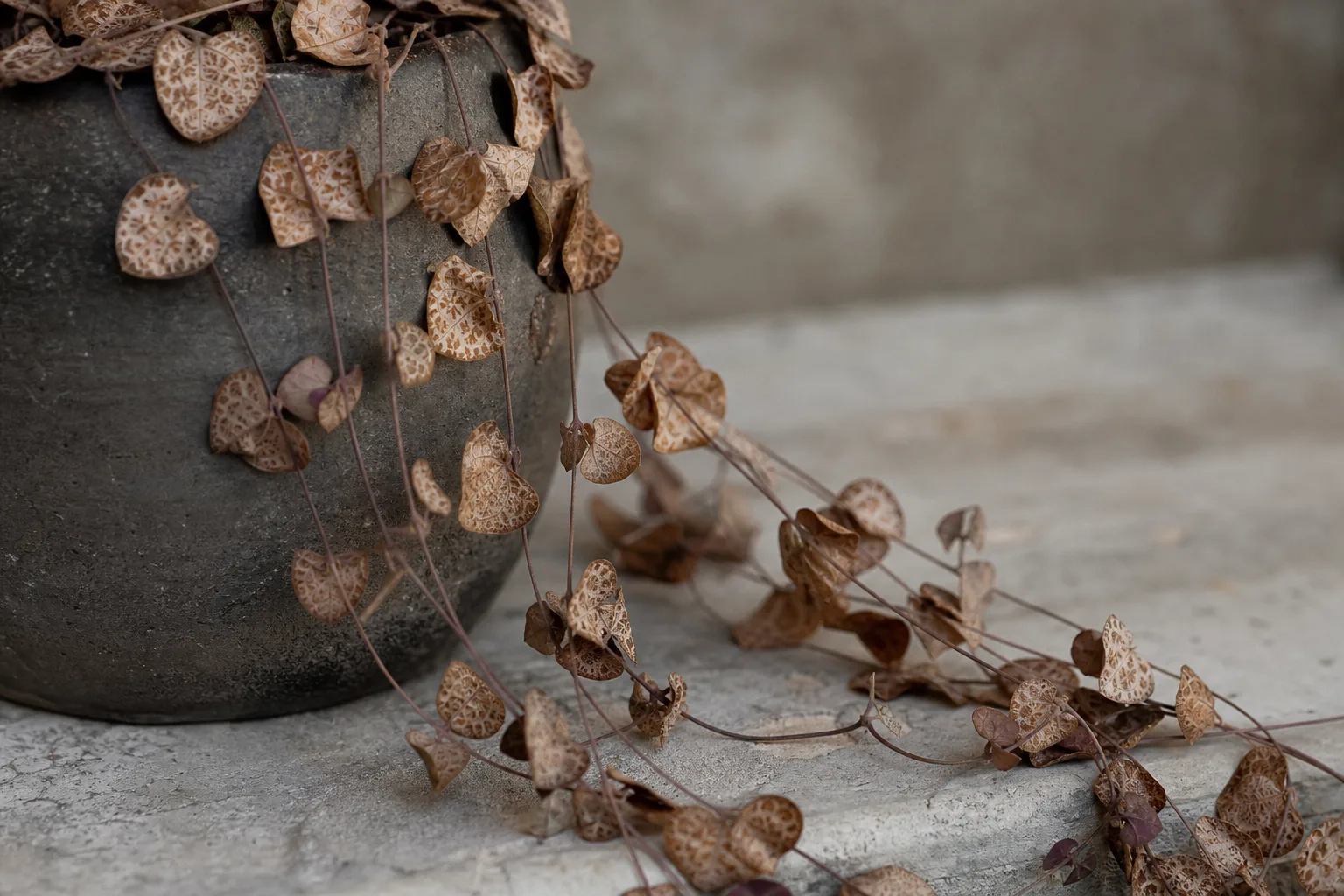
Crispy Leaves on String of Hearts: Causes, Checks & Fixes
This guide covers crispy leaves on String of Hearts. See also the general Crispy Leaves guide, watering, and light pages for this plant.
Crispy Leaves on String of Hearts: Causes, Checks & Fixes
Quick answer
Crispy leaves on String of Hearts (Ceropegia woodii) mean leaf tissue lost moisture faster than tuberous roots could replace it-or that intense sun literally dried and burned exposed hearts. The small, thin leaves along wiry pink stems dry out quickly when care swings wrong; this is not a fungal disease or a humidity crisis on a plant built for dry southern African hillsides.
First step: lift the pot, confirm whether the mix is completely dry at depth, and check whether damaged leaves sit on the sun-facing side of the hanger. String of Hearts prefers bright, indirect sunlight and should dry out completely between waterings. Too much sunlight will result in scorched leaves, and wilted leaves are the result of underwatering. Unlike calathea or peace lily, this semi-succulent handles normal indoor air well-do not reach for a humidifier before you fix light and water.
What crispy leaves look like on String of Hearts
Healthy String of Hearts hearts are small, plump, and firm-dark green marbled with silver on top and purple underneath, spaced every few inches along trailing stems. Crispy damage stands out because affected leaves feel dry, papery, and brittle rather than succulent. They may curl inward, shatter when touched, or drop from the strand entirely.
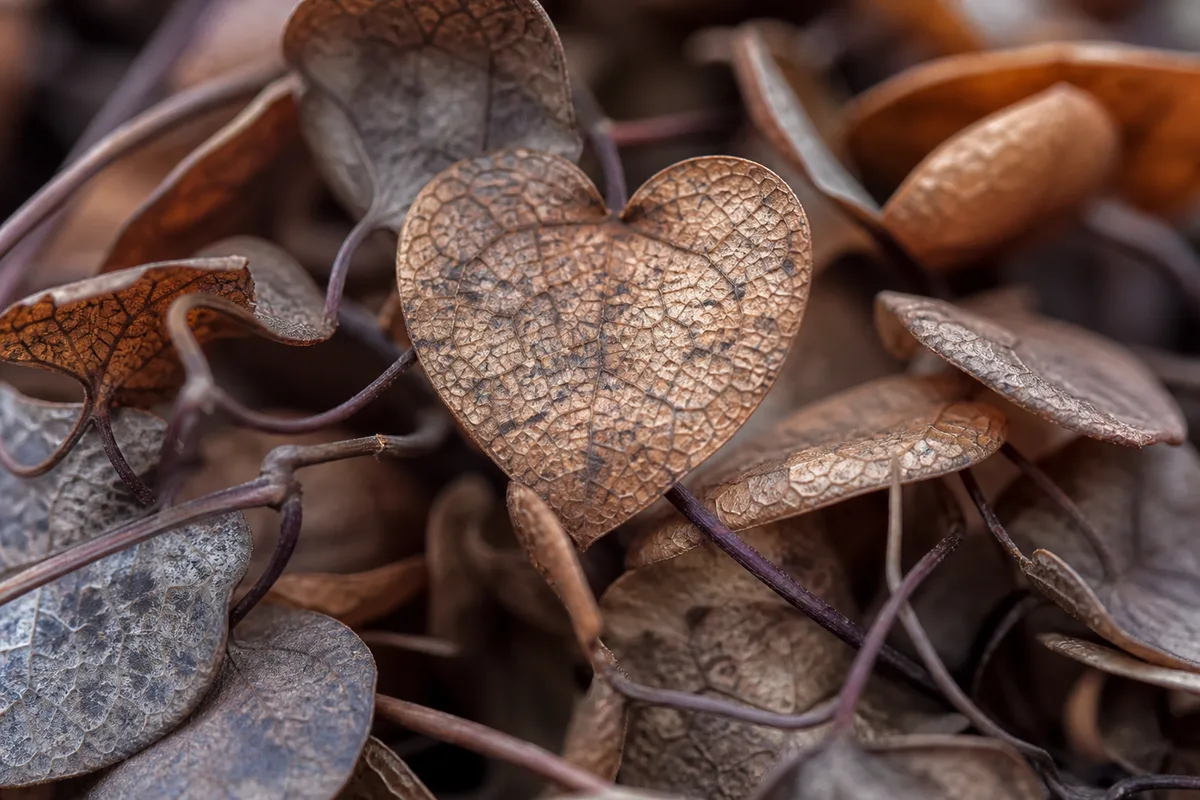
Crispy Leaves symptoms on String of Hearts - compare with healthy tissue on the same plant.
Underwatering pattern:
- Whole leaves or large sections turn tan to brown and feel like dry paper
- Leaves look thin, flat, or slightly shriveled before going fully crisp
- Pot feels very light; mix is dusty dry through drainage holes
- Vine may look limp overall until water returns
- Tubers along the strand and at the soil line stay firm
Sun scorch pattern:
- Crispy, bleached tan or brown patches on leaves facing the window or hottest side of the basket
- Damage often appears days after moving closer to glass or placing outdoors without acclimation
- Outer curve of hanging strands burns first because every exposed heart catches direct rays
- Stems and tubers remain firm; soil moisture may be normal
Root-stress pattern (often from overwatering):
- Leaves crisp even though you have been watering-roots cannot move water upward
- Yellowing, soft stems near the soil line, or sour-smelling mix may appear alongside crispness
- Soil stays damp for days; tubers at the crown may feel soft
- Leaves may look slightly translucent or mushy at the base while tips and edges go dry
Heat and draft pattern:
- Crisp margins scattered on leaves nearest a furnace vent, radiator, or cold window glass
- Damage develops quickly during winter heating or summer AC blasts
- Soil moisture may be normal; the issue is rapid moisture loss at the leaf surface
Normal aging:
- A few oldest hearts at the end of very long strands turn crisp and drop while the rest of the vine pushes healthy new growth
- Firm tubers, steady new leaves elsewhere, and a stable pattern-not an emergency
Why String of Hearts gets crispy leaves
String of Hearts evolved on rocky hillsides in southern Africa, storing water in tubers, a woody caudex at the base, and fleshy leaves. It tolerates dry soil much better than soggy soil and is easily killed by overwatering. That physiology explains why crispy leaves usually trace to how fast the plant loses or receives water, not low humidity.
Prolonged underwatering is the most common cause during active growth. Long gaps between deep drinks, combined with bright light or heat, pull moisture from thin leaves faster than tubers can supply it. Because String of Hearts looks drought-tolerant, many growers wait too long-leaves deplete their reserves and go fully brittle before the next watering.
Harsh or sudden direct sun dries and burns leaf tissue. The plant can take some morning sun, but leaves adapted to lower indoor light will scorch if you move the basket into hot afternoon glass without gradual transition. Hanging strands expose every outer heart to direct rays-one-sided crisp patches are a classic sign.
Overwatering and root damage create a confusing mirror image: soil stays wet, yet leaves crisp because failing roots cannot hydrate the vine. Overwatering can cause root rot and yellowing of the leaves. Watering again when roots are already damaged makes crispness spread.
Heat and airflow extremes-furnace vents, AC blasts, or a hot windowsill in summer-accelerate moisture loss from thin leaves without changing how you water. This is secondary to sun and water but common on hanging plants near ceiling vents.
Salt buildup from hard tap water or heavy fertilizer concentrates minerals at leaf margins and can extend crispness beyond simple tip burn. Feed infrequently-at most monthly when actively growing, at half strength.
Low humidity alone rarely causes whole-leaf crispness on String of Hearts the way it does on tropical foliage plants. Treat humidity as a last suspect after light, watering, and root health.
How to confirm the cause
Work through these checks in order:
- Soil moisture at depth - Insert a finger or wooden skewer through the drainage hole or deep into the pot. Bone dry throughout with thin, brittle leaves points to underwatering. Damp mix days after watering with soft tubers points to root stress.
- Pot weight - Lift the hanger. A very light pot with crisp leaves fits drought; a heavy pot that stays wet fits overwatering.
- Light history - Did you move the plant, rotate the basket, or place it outdoors in the last one to two weeks? One-sided crispy patches on the exposed side strongly suggest scorch.
- Tuber and stem firmness - Press bead-like tubers along the strand and at the soil line. Firm tissue with dry soil is likely underwatering or sun; soft tubers with sour smell is rot.
- Heat source scan - Note whether damaged leaves hang in a vent blast or against cold window glass that swings temperature daily.
- Pest scan - Spider mites can stipple and dry leaves in warm dry winter rooms. Look for fine webbing or orange specks on white paper when you shake a strand over it.
- Pattern on the vine - Crispness only on outer sun-facing leaves suggests light. Crispness scattered on inner and outer leaves with a light pot suggests water stress. Widespread crispness on new and old leaves with wet soil suggests roots.
If sun scorch and underwatering both fit, protect from harsh light first, then adjust watering once you know the mix is dry-not before a thorough check.
First fix for String of Hearts
Move the plant out of harsh direct sun and confirm whether the potting mix is completely dry at depth before you water, trim, or repot.
Pull the basket back from hot south- or west-facing glass, or add sheer filtering if only that window works. At the same time, verify moisture at the bottom of the pot-not just the surface, which dries faster on crowded succulent mixes. This single step prevents further scorch and stops you from watering an already wet root zone.
Do not strip all crisp leaves immediately, repot on day one, or mist for humidity. Do not fertilize a plant showing leaf crispness-that can add salt stress on top of existing damage.
Step-by-step recovery
Once you know whether light, drought, salts, or roots are driving the crispness, work in this order:
Underwatering
- Water deeply so moisture reaches the whole root ball-not a light surface sprinkle on dry, hydrophobic mix.
- Wait until the pot feels noticeably heavier, then let the mix dry completely before the next watering.
- Expect thin leaves to plump within one to two days; tissue already fully crisp will not re-green.
- In winter dormancy, reduce frequency further-String of Hearts needs less water when growth slows.
Sun scorch
- Move to String of Hearts light guide with optional gentle morning sun only.
- Acclimate gradually when increasing light-add an hour or two of stronger exposure every few days over two to three weeks rather than jumping straight to midday sun.
- Remove fully dead leaves with clean scissors if they bother you; leave any green tissue intact.
- Resume normal watering only when the mix is completely dry, then water thoroughly until a little runs from drainage holes.
Root stress from overwatering
- Stop watering immediately and unpot only if tubers feel soft or the mix smells sour.
- Cut away mushy tubers or roots with clean scissors; let cuts air-dry for a day before String of Hearts repotting guide into fresh, fast-draining mix.
- Repot dry, wait several days, then give one moderate drink-do not soak a recovering root system.
- Keep in bright indirect light while the vine re-establishes; judge success by firm tubers and clean new leaves, not old crisp tissue.
Salt buildup
- Stop fertilizing until new growth emerges clean.
- Flush the pot with plain room-temperature water, letting several pot-volumes run through the mix over one session; empty the saucer so the plant is not sitting in runoff.
- Resume half-strength fertilizer at most monthly during active growth only after crispness stops on new leaves.
Recovery timeline
Isolated sun scorch or mild underwatering often stops spreading within one to two weeks once light and water stabilize. New hearts should emerge without crispness within two to four weeks during active spring or summer growth.
Old crisp leaves never turn green again-that is permanent tissue death. Recovery means the pattern stops and new leaves stay plump and clean.
Root-related crispness takes longer: four to eight weeks or more if tubers were damaged. If new growth continues to crisp while soil stays wet, or tubers keep softening, the underlying rot may be advanced.
Winter dormancy slows visible improvement even when care is correct. Hold expectations until longer days return and watering naturally increases with growth.
Lookalike symptoms to rule out
Brown tips only affect the point or edge of the heart while the center stays firm and green-usually sun or watering swings at the margin, not whole-leaf crispness.
Root rot shows yellow mushy leaves, soft tubers, and sour soil-not isolated crisp leaves on an otherwise firm plant with dry mix.
Spider mites leave fine webbing, stippled yellow dots, or orange specks when you shake a strand over white paper-especially in warm dry winter rooms.
Not enough light causes large gaps between the leaves and pale washed-out color-leggy growth rather than scorched crispness.
Normal leaf aging affects a few oldest hearts at strand ends while the rest of the vine pushes healthy new growth. No care change needed if tubers are firm and the pattern is stable.
Mistakes to avoid
Do not assume crispy leaves mean low humidity. String of Hearts is not a calathea-humidifiers rarely fix scorch or watering issues here.
Do not move a low-light plant straight into summer midday sun. Gradual acclimation prevents repeat scorch.
Do not water on a calendar without checking dryness. Summer may need drinks every 10–14 days; winter dormancy needs far less.
Do not increase fertilizer to “green up” crisp leaves. That often worsens salt burn.
Do not pull every crisp leaf before fixing the cause-you lose diagnostic clues and stress the vine unnecessarily.
Do not repot into a much larger container while troubleshooting. String of Hearts does best when crowded; oversized pots stay wet longer.
How to prevent crispy leaves next time
Place the hanger where it gets bright indirect light with some morning sun, filtered from harsh afternoon rays. Rotate the basket occasionally so one outer strand is not the only sun shield.
Water when the mix is completely dry, then soak thoroughly. Track pot weight through a full dry-down cycle in your home before locking into a schedule.
Feed lightly and rarely-half strength, at most monthly during active growth, and not at all in winter rest.
When upgrading light, acclimate over two to three weeks. If you summer the plant outdoors, start in shade and increase exposure gradually.
Keep strands away from heat vents and cold draft blasts that dry leaves faster than roots can compensate.
When to worry
Treat as urgent when crispness spreads quickly with yellow mushy leaves, blackening stems at the soil line, soft tubers, or a sour smell from the pot. That combination suggests rot or advanced root failure-not cosmetic dryness.
Isolated crisp leaves on firm tubers, dry soil, and recent sun exposure are not urgent. Adjust light and water; wait for clean new growth before taking drastic action.
Replace or heavily cut back a vine only if tubers keep rotting after dry repotting and most new leaves continue to crisp for more than two months in warm active-season conditions.
Conclusion
Crispy leaves on String of Hearts usually mean the leaves dried faster than tuberous roots could hydrate them-or sun burned exposed tissue. Lift the pot, check moisture at depth, and note whether damaged hearts face hot glass before you trim, mist, or repot. Fix light and watering first; judge recovery by firm tubers and new plump hearts without crispness, not by old leaves that will stay brittle forever.
When to use this page vs other String of Hearts guides
- String of Hearts watering guide - Use for routine moisture checks before assuming crispy leaves is the main issue.
- String of Hearts problems hub - Browse all 45 common issues on this species.
- Brown Tips on String of Hearts - Different entry point when symptoms overlap with crispy leaves.
- Brown Leaves on String of Hearts - Different entry point when symptoms overlap with crispy leaves.
- Curling Leaves on String of Hearts - Different entry point when symptoms overlap with crispy leaves.