Spider Plant Pruning: When, Where, and What to Cut
Spider Plant Pruning: When, Where, and What to Cut
Spider Plant Pruning: When, Where, and What to Cut
Quick Answer - Remove One Dead Leaf at the Crown First
First action: in good light, find one fully yellow or brown strap leaf and cut it at the crown base - where the leaf emerges from the central compressed stem cluster - using clean sharp scissors. Do not pull; slice cleanly through the petiole at soil level or just above it.
Spider plant pruning on Chlorophytum comosum is crown grooming, cosmetic tip trimming, and spiderette management - not vine pinching. Each arching strap leaf arises from a short central crown; Wisconsin Extension describes narrow strap-shaped leaves arising from a central point on this clump-forming perennial. Individual leaves do not branch or regrow if cut mid-blade. New foliage comes from the crown and from spiderettes on long stolons, not from lateral buds on leaf tissue.
After that first sanitation cut, decide whether you need tip trims, spiderette cleanup, or division at Spider Plant repotting guide - not all three on the same day unless the plant is healthy and actively growing.
What Spider Plant Pruning Can and Cannot Fix
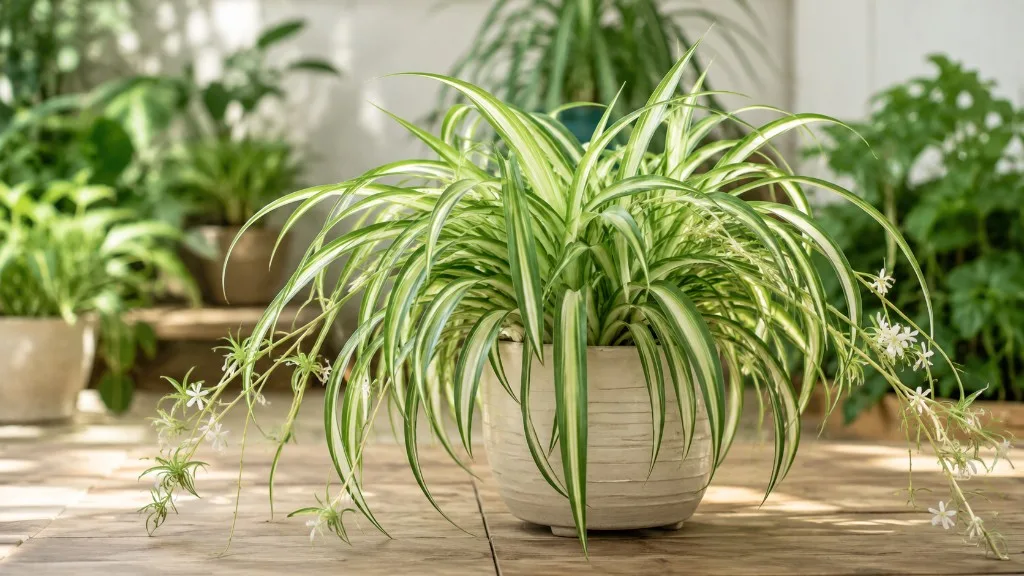
Indoors, spider plant is grown for cascading strap foliage and the baby plantlets (spiderettes) that hang from wiry stolons. Clemson HGIC notes that healthy plants produce long stems with small white flowers and miniature plantlets that root on contact with soil - a stoloniferous habit NC State Extension documents for Spider Plant overview.
Pruning can remove unsightly yellow or brown crown leaves, tidy brown tip edges on otherwise healthy blades, reduce spiderette clutter on tabletops, harvest plantlets for propagation, and improve appearance after you divide an overcrowded clump. Removing damaged outer leaves lets light reach inner crown leaves and makes the plant look cleaner within days.
Pruning cannot make a single strap leaf branch like a pothos vine. It cannot fix recurring brown tips if fluoride in tap water or chronic dry soil is still stressing new growth - Wisconsin Extension lists fluoride, chlorine, salt accumulation, and low humidity among common tip-burn causes. Cosmetic tip trimming alone leaves the underlying problem intact. Pruning also cannot replace division when the crown is crowded and the center looks bare - stripping outer leaves without splitting the rhizome often makes the clump look thinner, not fuller.
What to Check Before You Cut
Walk through this inspection before batch grooming or spiderette removal:
- Leaf color pattern: note whether yellowing is one outer leaf or many leaves at once - widespread yellow often signals overwatering or root stress, not a scissors problem.
- Tip burn vs whole-leaf failure: brown margins on green blades need angled tip trims; fully yellow or collapsed leaves need crown removal.
- Crown density: look into the center - if many leaves overlap and new growth is slow, division may matter more than leaf stripping.
- Stolon load: count how many spiderettes and bare runners drag below the pot; decide whether to keep, root, or remove them before cutting.
- Soil moisture: if the mix stays wet for days or smells sour, postpone heavy grooming until drainage and watering are corrected - stressed roots recover poorly from simultaneous leaf loss and soggy soil.
Have sharp scissors or snips, 70% isopropyl alcohol for blade wiping, and a clear view of the crown so you cut the petiole base, not a neighbor leaf.
When to Prune Spider Plant
Timing matters less for dead-leaf removal than for cosmetic batch work and division.
Best Window for Batch Grooming
Remove fully dead or yellow leaves any time you notice them - that is sanitation, not seasonal shaping. For tip trimming, spiderette cleanup, and removing healthy green leaves for size control, spring through early summer is the best window when the plant is actively growing and can push new crown leaves within weeks. Clemson HGIC notes spider plants grow quickly in Spider Plant light guide; grooming during active growth keeps the pot from looking bare for long.
Avoid removing large amounts of healthy green foliage in late fall and winter unless your indoor conditions stay warm and bright year-round. The same crown cut in April near a bright window often shows new leaves in two to four weeks; in a dim winter room it may sit unchanged until spring.
Emergency Removal Any Time
Cut out tissue that will not recover: fully collapsed yellow leaves, brown mushy bases at the crown, and leaves with heavy scale or mealybug clusters you cannot wash off. If a stolon breaks or a spiderette rots at the base, remove it at the parent crown attachment. After emergency cuts, keep light steady and let the mix dry on your normal schedule before resuming heavy watering.
When to Wait
Postpone batch grooming when the plant is wilted, was repotted within two weeks, sits in chronically wet soil, or dropped many leaves suddenly after a move. Fix watering, light, and root health first - then trim damaged growth once new crown leaves feel firm. Pruning a stressed spider plant on wet soil adds leaf loss without solving the underlying problem.
Where to Cut - Crown, Tips, and Stolons
Spider plant anatomy drives every cut location. There are no nodes on strap leaves where new branches emerge - only the crown and stolon tips produce new growth.
Fully Yellow or Brown Leaves
Trace the failing leaf down to where its petiole meets the crown. Cut at that junction, as close to the crown as you can without slicing into neighboring green petioles. Missouri Botanical Garden describes the clump of strap leaves arising from a central base - that is your cut point for whole-leaf removal. Never yank leaves; tearing can damage the crown rhizome.
Brown Tips on Otherwise Green Leaves
When only the leaf margin is brown but the blade is firm and green, trim only the dead edge at an angle that follows the natural leaf curve - mimicking the pointed strap shape. The cut edge will stay brown; that is normal. Do not cut deep into healthy green tissue hoping the tip will re-green. If new leaves keep developing brown tips, switch to filtered or rainwater and check that the top 2 inches of mix dry between waterings before you trim again.
Spiderettes and Stolons
Spiderettes form at stolon ends after short-day flowering triggers - NC State Extension notes stolons and plantlets develop when the mother plant receives short days and long uninterrupted nights. You have three options:
- Leave them for hanging-basket display or stolon layering into small pots of moist mix.
- Snip plantlets once small aerial roots appear and root them in water or soil - propagation, not crown pruning.
- Cut stolons at the parent crown when runners drag on furniture or the plant looks cluttered - removing spiderettes does not harm the parent and redirects energy to crown foliage.
Shortening a stolon mid-length is fine for tidiness; new stolons often appear on healthy plants, especially when days shorten in fall per Clemson HGIC.
Tools and Sanitation
Use sharp household scissors, floral snips, or small bypass pruners - spider plant tissue is soft and crushes easily with dull blades. Wipe blades with 70% isopropyl alcohol between plants and after cutting any leaf with pest or rot signs. Iowa State Extension recommends alcohol or a diluted bleach solution for sanitizing pruning tools between cuts on diseased tissue. You do not need heavy loppers; crown petioles are thin. A small tray or bag for trimmings keeps dropped spiderettes from rooting on nearby surfaces.
Step-by-Step Spider Plant Grooming
Work in this order after your first dead-leaf cut:
- Sanitize scissors and inspect the crown in good light.
- Remove all fully yellow or brown leaves at the crown base - pull none; cut each petiole cleanly.
- Trim brown tips on green leaves only where damage is minor and cosmetic - skip blades that are mostly brown.
- Decide on spiderettes - root chosen plantlets, pin others to soil for layering, or cut stolons at the crown for a cleaner parent.
- Assess fullness - if the center is crowded and outer leaves mask bare inner growth, plan division at the next repot rather than stripping more green leaves today.
- Resume normal care - allow the top 2 inches of mix to dry before the next thorough watering; avoid soaking a freshly groomed plant in a pot that was already wet.
Do not fertilize immediately after a heavy grooming session. Wait until new crown leaves appear and the plant is clearly growing again.
How Much You Can Safely Remove
Limit removal of healthy green leaves to about one-third of total foliage per session. Fully dead or yellow leaves do not count toward that limit - take them all off. Spider plants recover faster than many houseplants during active growth, but over-trimming healthy blades before new crown leaves emerge leaves a sparse, unbalanced clump for weeks.
If the plant is severely overgrown, spread green-leaf removal across two sessions two to three weeks apart in spring or summer rather than one hard strip. For hanging baskets that have outgrown their space, combining moderate leaf thinning with division often works better than repeated leaf removal alone.
Division for a Fuller Clump
When the crown is root-bound, leaves crowd the center, and the plant looks like a ring with a bare middle, division at repotting produces the bushiest result - not repeated leaf stripping. Wisconsin Extension lists division among standard propagation methods alongside plantlets. Clemson HGIC recommends dividing before thick tuberous roots crack the container.
Unpot the clump, gently tease apart rooted sections with your hands or a clean knife through the rhizome, and pot each division in fresh well-draining mix. Each section needs crown leaves and healthy roots. Wait four to six months before feeding newly divided plants heavily, per Clemson guidance. Division is structural maintenance - schedule it in spring or early summer when recovery is fastest.
Using Spiderettes from Pruning
Spiderettes are the main propagation product from grooming - not individual leaf cuttings. Leaf sections without a crown or plantlet base will not root. Root plantlets that already show small nubs at the base; Wisconsin Extension describes pinning attached plantlets to moist mix until roots form, then severing the stolon. Alternatively, pot detached plantlets with visible roots directly into small containers. Water lightly and keep bright indirect light until new growth confirms establishment.
Aftercare and Recovery
After grooming, place the plant in bright to medium indirect light - the same conditions that support healthy growth indoors. Avoid moving it immediately to harsh direct midday sun, which can scorch recently trimmed leaves. Resume your normal Spider Plant watering guide once the top 2 inches of mix feel dry.
Recovery Timeline
During active spring or summer growth, expect new crown leaves within two to four weeks after moderate grooming. Spiderette production may pause briefly after heavy stolon removal, then resume when the plant stabilizes - often when days shorten in fall. Division recovery takes longer: each section may need four to eight weeks before it looks full again. Winter grooming in cool, dim rooms can double those timelines.
Signs Pruning Worked
- New strap leaves emerge from the crown with firm green tissue.
- Brown-tip trimming stops spreading up the blade on new growth once water quality improves.
- The silhouette looks cleaner - fewer dragging stolons, no collapsed yellow outer leaves.
- After division, each section produces independent crown growth and eventually new stolons.
Signs You Cut Too Much or Too Soon
- The clump looks thin with visible bare crown and slow new leaf production.
- Remaining leaves wilt or yellow within days of a heavy session - often paired with wet soil or root stress.
- Tip burn returns on every new leaf despite repeated trimming - signals fluoride or watering issues, not insufficient cutting.
If the plant looks sparse after over-trimming, stop removing healthy green leaves, fix light and water, and wait for crown growth before any second cosmetic pass.
Common Pruning Mistakes
Cutting healthy leaves mid-blade expecting branching. Strap leaves do not regrow from the cut point - you are left with a permanent stub that browns at the tip.
Tip trimming without addressing fluoride or dry soil. New leaves keep arriving with burned margins until water quality and moisture rhythm improve.
Removing every spiderette on a plant grown for hanging display. Spiderettes are optional to remove - only cut them if clutter or propagation goals warrant it.
Stripping outer leaves instead of dividing a crowded crown. Bare-center clumps need rhizome division, not more leaf removal.
Heavy grooming on a wilted, overwatered plant. Check roots and drainage before batch trimming - pruning does not fix root rot on Spider Plant.
Pulling yellow leaves by hand. Tearing damages the crown; always cut at the petiole base.
Bottom Line
Spider plant pruning starts with one dead or yellow leaf at the crown base, then moves to cosmetic tip trims, spiderette decisions, and - when the clump is crowded - division at repotting for real fullness. Cut whole failing leaves at the crown, trim brown tips only on green blades, and manage stolons at the parent base. Limit healthy green removal to one-third per session, groom heavily in spring through summer, and fix fluoride and watering if tips keep returning. The ASPCA lists spider plant as non-toxic to cats and dogs - trimmings chewed by curious pets are messy but not poisonous, which makes routine crown grooming low-stress in pet-friendly homes.
When to use this page vs other Spider Plant guides
- Spider Plant overview - Start here for whole-plant context before deep-diving this topic.
- Spider Plant problems hub - Jump to symptom-specific fix guides when this care topic does not resolve the issue.
- Leggy Growth on Spider Plant - Escalate here when pruning adjustments are not enough.
- Brown Tips on Spider Plant - Escalate here when pruning adjustments are not enough.