Spider Plant Light Requirements: Best Window, Sun
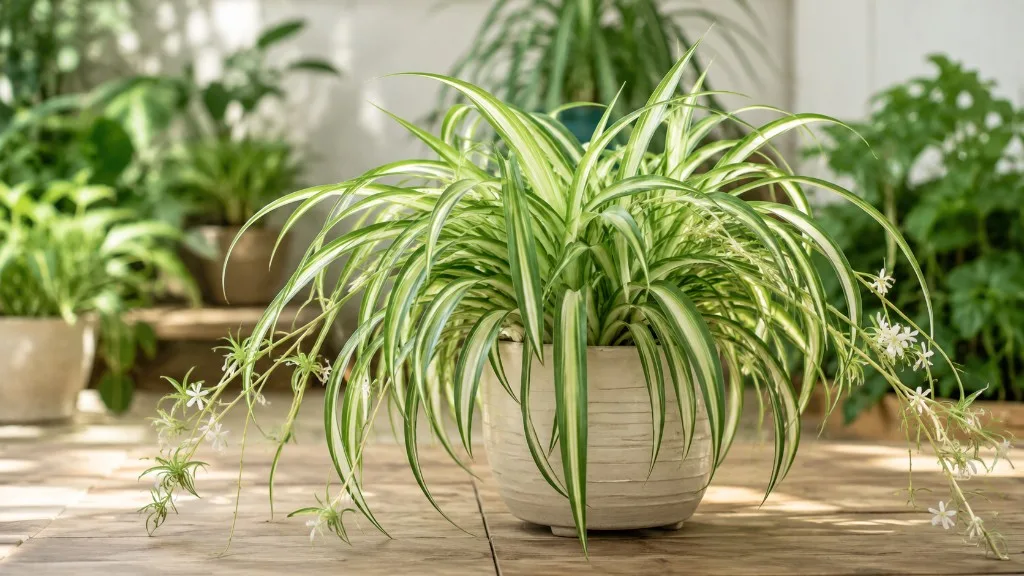
Spider Plant Light Requirements: Best Window, Sun, and Warning Signs
Spider Plant Light Requirements: Best Window, Sun, and Warning Signs
Chlorophytum comosum earns its reputation as a beginner houseplant partly because it survives imperfect conditions longer than most foliage plants. That tolerance creates a trap: a spider plant can hang in a dim corner for months while quietly losing variegation, slowing growth, and refusing to produce the arching stolons and plantlets that make the species so satisfying. Light is the variable that separates a lush, cascading basket from a pale, tip-burned plant you keep because it technically still has green leaves.
The practical goal is straightforward: give the plant bright, indirect light for most of the day, allow gentle morning direct sun when acclimated, and avoid harsh midday rays that bleach variegated leaves. Clemson HGIC notes that spider plants grow best in bright indirect light and can tolerate some direct sun, but midday light may scorch leaves. The Royal Horticultural Society recommends a bright position with indirect or dappled light and warns against direct summer sun that scorches foliage.
This guide focuses on decisions you can make today: which window, how much direct sun is safe, what low light actually costs you, when to add a grow light, and how to read warning signs before the plant stops producing healthy new leaves and spiderettes.
How Much Light Spider Plants Actually Need
Spider plants are not shade-house ferns and not full-sun succulents. In their native range along coastal and forest-edge habitats in southern Africa, they grow where light is bright but filtered - stronger than deep understory shade, softer than open midday sun on exposed rock. Indoors, that translates to a spot where the leaves receive strong ambient brightness without the leaf surface heating up under intense direct beams for hours at a time.
Most healthy indoor spider plants sit in a band you could call bright indirect light: close enough to a window that the canopy is clearly illuminated, but not so close to hot afternoon glass that variegated tissue bleaches. They also tolerate moderate or low light for periods, which is why they survive office desks and north rooms - but tolerance is not the same as optimal performance. In lower light, growth slows, white striping on cultivars like ‘Vittatum’ and ‘Variegatum’ fades toward plain green, and flowering plus plantlet production often stall.
For home growers, the usable shorthand is this: aim for bright indirect light most of the day, add one to three hours of cool morning direct sun if the plant is acclimated, and treat anything dimmer as a compromise you monitor with the new-growth test described later. If you cannot provide that naturally for much of the year, plan on a supplemental grow light rather than assuming the species will “adapt” indefinitely without consequence.
The Short Answer for Busy Growers
If you only remember three rules, use these. Best default placement: an east-facing window or a bright spot set back slightly from a south or west window with a sheer curtain during hot months. Distance: keep hanging baskets and pots within a few feet of the glass, not across a bright-looking room where intensity drops sharply. Direct sun: morning sun is fine for most acclimated plants; midday and harsh afternoon sun through unfiltered glass is where scorch appears on variegated leaves.
Judge success by new growth, not old damage. Within two to three weeks of better light, new leaves should look firm, appropriately colored for your cultivar, and spaced at normal intervals along the arching rosette. If the plant pushes stolons with plantlets, your light plan is likely strong enough - though maturity and season also matter, as covered below.
Why Spider Plants Are More Flexible Than They Look
Flexibility is real, but it has trade-offs worth understanding before you put a variegated basket in a bathroom with frosted glass and expect magazine-photo stripes.
First, spider plants store resources in thick, fleshy roots and can coast through short periods of weak light without collapsing. That resilience hides gradual decline: the plant stays alive while internode spacing on new leaves lengthens slightly, white margins narrow, and water use drops so an unchanged Spider Plant watering guide can lead to soggy mix and root stress. Light and watering are linked; a dim plant in wet soil is a common silent failure mode.
Second, variegation is a light-sensitive trait. White or cream tissue on leaves contains less chlorophyll and contributes less photosynthetic power than green tissue. In low light, the plant physiologically favors greener growth because it is more efficient. RHS guidance explicitly notes that in relatively low light, growth is slower and leaves may lose their variegation. This is not a random cosmetic issue - it is the plant reallocating energy under insufficient brightness.
Third, spider plants use light as a cue for reproductive effort - the small white flowers and the plantlets on long wiry stolons. Clemson Extension observes that spider plants produce most offshoots when days shorten in fall, but chronic too-little-light conditions suppress flowering even when the calendar says autumn. RHS lists too little light, cool temperatures, and an overly large pot among reasons a mature plant may not produce offsets. Light alone does not guarantee babies, but it is one of the few variables you control directly.
Where Spider Plants Grow in Nature - and What That Means Indoors
Native context is not trivia; it explains why spider plants handle a wide range of indoor exposures yet still punish two specific mistakes: deep shade and unfiltered hot sun.
Chlorophytum comosum grows in regions with strong overall daylight but often filtered by taller vegetation, rock overhangs, or coastal humidity that softens intensity. The plant evolved to capture consistent moderate-to-bright light while avoiding leaf temperatures that damage soft, strap-like foliage. It did not evolve for the dark interior corner of a living room or for a south-facing pane that acts like a magnifying lens in July.
That background sets a realistic indoor target: reproduce bright, filtered light, not brief sunbeams plus long dim hours and not all-day blast furnace exposure.
Filtered Light Under the Forest Canopy
Under natural canopy filter, light arrives from multiple angles with softer shadows. Indoors, windows create directional light from one side, which is why spider plants in windows lean toward the glass and why rotating the pot every few days produces a more symmetrical rosette. A sheer curtain, frosted bathroom glass, or placement just outside the direct beam on a bright sill mimics canopy diffusion better than bare hot glass.
If you are choosing between two spots - a dim center of a bright room and a moderately lit window ledge - the ledge almost always wins for spider plants, even if the room “feels” equally bright to you. Human eyes adapt; the plant does not.
Best Window Placement for Spider Plants
Indoor spider plants fail most often because the basket hangs where the room looks bright rather than where leaves receive photons for enough hours. Window direction is a starting label, not the final answer. Obstructions, overhangs, season, glass type, and distance matter as much as compass orientation.
Place the plant on the brightest unobstructed exposure where leaf temperature stays moderate. For many homes, that means east for gentle direct morning sun plus strong indirect light the rest of the day, or south/west with diffusion during peak heat. Hanging baskets should sit near the upper portion of the window zone where light is strongest, not at mid-wall where ceiling shadow cuts intensity.
East, South, West, and North Windows Compared
An east-facing window is the default sweet spot for variegated spider plants. Morning sun tends to be bright but cooler than late-day sun, supplying useful direct light without the heat load that bleaches white stripes. Many kitchens and bathrooms with east exposure grow compact rosettes and reliable stolons through spring and autumn. If an east plant leans hard toward the glass or new leaves look pale, add a small LED rather than moving to harsh west afternoon sun.
A south-facing window delivers the strongest winter sun in northern latitudes and can be excellent for green-leaved cultivars or well-acclimated variegated plants set back a foot or behind a sheer curtain. Unfiltered south glass in midsummer is a common scorch site: sun-facing leaves develop bleached patches or dry tan edges while the shaded side still looks fine. South works when you monitor leaf temperature and pull the basket back or diffuse light during heat spikes.
A west-facing window can perform well in spring and fall and become risky in summer. Late-afternoon sun carries heat as well as intensity. West is viable with a sheer curtain, slightly greater distance from the pane, or by accepting that the plant may need repositioning in July and August. Watch for sudden damage after moving a plant from a dim shelf to an unfiltered west sill without acclimation.
A north-facing window provides mainly indirect light. Spider plants can survive here - the species is famous for that - but treat north exposure as a slow-growth setting with faded variegation and fewer plantlets unless you supplement. If the plant looks healthy by casual glance but never produces stolons despite being mature, north light is a prime suspect.
Rotate the pot or basket a quarter turn every few days so arching leaves and stolons do not all train one direction. Rotation does not fix insufficient total light, but it prevents lopsided display and helps you see which side scorches first when sun is too strong.
Distance, Sheer Curtains, and Hanging Baskets
Hanging baskets add a wrinkle: the top of the plant may sit in strong light while lower inner leaves sit in shadow, or the entire basket may hang too far below the window header where light falls off sharply. Aim to keep the center of the foliage mass in the brightest zone of the window, typically within 1 to 3 feet (30 to 90 cm) of the glass for floor placements and not more than a few inches below the sill for hooks mounted above the frame.
Sheer curtains are one of the most useful spider plant tools. They cut peak intensity enough to prevent scorch while still transmitting plenty of brightness for variegation and growth. Frosted bathroom windows often produce excellent results for the same reason: diffusion without deep shade.
Use a simple field test on a clear day. In mid-morning and mid-afternoon, look at the canopy. If direct sunbeams hit variegated leaves for many hours and edges crisp by evening, diffuse or move back. If no part of the plant receives clear illumination and leaves look dull green-grey, move closer or add light. The plant’s response over the next two weeks confirms what your eyes guessed.
Can Spider Plants Take Direct Sun?
Yes - conditionally. Spider plants are often described as indirect-light plants, but that label describes the safest default, not the absolute maximum they can use. Clemson HGIC states they can tolerate some direct sunlight while warning that midday light may scorch leaves. The practical distinction is dose and acclimation, not a binary yes/no.
Direct sun that arrives low on the horizon, filtered by sheer fabric, or limited to early morning frequently improves growth, especially in winter when overall daily light totals are low. Direct sun that heats leaf tissue through glass in summer is where variegated cultivars show white patches turning brown and tips desiccating faster than you can blame fluoride or fertilizer.
Morning Sun vs Afternoon Sun
Morning sun is the safer direct exposure. Angles are lower, temperatures are cooler, and spider plants acclimated to an east window often show stronger stolon production and tighter rosettes than siblings kept in dim indirect-only placements. One to three hours of morning beams on part of the canopy is a reasonable target for most homes.
Afternoon sun, especially southwest and west, carries higher heat load. Variegated leaves are more scorch-prone than all-green forms because pale tissue has less protective pigment and overheats faster. RHS specifically notes leaf scorch when variegated plants are exposed to direct sunlight, recommending avoidance of hot, bright locations especially in summer. If afternoon sun is your only bright option, use diffusion and distance rather than raw glass contact.
Green-leaved Chlorophytum comosum plain species tolerates stronger direct exposure than heavily variegated ‘Vittatum’ or curly ‘Bonnie’, but even green plants can bleach if moved suddenly from a dim office to a blazing patio.
Acclimating to Brighter Light Safely
Leaves formed in low light are not sun-ready. Moving a plant from a north room to an unfiltered south window in one step is how bleached patches appear within days. Acclimate over 7 to 14 days by stepping the plant closer to the light source or opening curtains incrementally.
Start with one hour of early direct sun, then increase exposure every two or three days while watching newest leaves and sun-facing older tissue. If you see sudden bleaching, curling during brightest hours, or crisp tan patches, hold at the current level or pull back slightly before continuing. Acclimation works on future growth more than it repairs already damaged leaves; trim unsightly tips if you want, but fix exposure first.
When moving a hanging basket, change only light for ten to fourteen days before adjusting watering or fertilizer. Brighter light increases water use; dimmer light reduces it. Stacking changes makes it impossible to know whether scorch, yellowing, or tip browning came from sun, soil moisture, or feed salts.
Low-Light Limits and What to Expect
Spider plants can grow in low light in the sense that they often remain alive where pothos and calatheas would look worse faster. RHS notes they will also tolerate low light levels, with the caveat that performance changes. Treat low light as a survival setting, not a display or propagation setting, unless you accept slower growth and plain-looking foliage.
In low light, expect longer intervals between new leaves, narrower white stripes or loss of variegation, fewer or no plantlets, and higher risk of overwatering because the plant transpires less while your habits stay on a summer schedule. Spider plants in dim offices often show yellowing lower leaves from combined low energy and wet mix, which owners misread as nutrient deficiency and fertilize - adding salts to an already stressed root zone.
When Low Light Works and When It Fails
Low light works when your goal is keeping a known plant alive through a temporary placement, when you have a mostly green cultivar that does not depend on sharp variegation, or when you supplement photoperiod with a grow light while natural intensity stays modest. A north room with a 12-hour LED often outperforms a misleadingly “bright” living room far from any window.
Low light fails when you want dense white striping, fast cascading growth, or regular plantlets for propagation, or when the plant sits in cool, dim, wet soil for weeks. If variegation washed out over months, the fix is brighter light on new growth - old leaves may not fully regain contrast, but emerging leaves should show sharper patterning within a few weeks of improvement.
Do not confuse low light with no light. A hallway with only artificial ceiling LEDs and no window is not spider plant territory long term unless you run a dedicated horticultural fixture over the basket. Standard room bulbs are optimized for human vision, not the daily light totals foliage plants use.
How Indoor Light Differs From What Your Eyes See
Your brain corrects for dim rooms. A space that feels adequately lit to you may deliver a fraction of outdoor brightness at the leaf surface. Spider plants do not care how bright the wallpaper looks; they respond to photons reaching chlorophyll across the hours of the day.
Windows add further distortion. Glass reflects and filters part of the spectrum. Deep window sills and hanging hooks place some leaves in strong light and others in shadow. Season shifts day length and sun angle more dramatically indoors than many growers notice because the furniture never moves - but the beam that grazed the sill in June may miss it entirely by December.
Seasonal Light Drops in Winter
Winter hits spider plants with a double reduction: lower intensity and shorter days. Growth slows, stolons pause, and pots stay wet longer. This is normal dormancy-like behavior, not necessarily disease - but it becomes harmful when low light pairs with unchanged heavy watering.
Move baskets to the brightest available pane for winter, clean dust off leaves so light absorption improves, and extend photoperiod with a grow light if variegation fades or new leaves emerge small and pale. Resume expecting plantlets when day length increases and the plant has received consistent bright conditions through early spring. Clemson notes offshoot production peaks as days shorten in fall, which surprises growers who assume summer sun alone triggers babies; maturity, genetics, and overall plant health matter as much as calendar season.
Grow Lights for Spider Plants When Natural Light Falls Short
When windows cannot supply enough daily brightness - common in north rooms, deep apartments, and October through March at mid and high latitudes - a full-spectrum LED grow light is the most reliable fix. Spider plants are not high-light succulents; they do not need expensive specialty rigs. They do need consistent duration and enough intensity at the canopy.
As a starting point, spider plants in indoor culture benefit from roughly 6 to 8 hours of quality light daily when natural light is moderate, with longer photoperiods when natural light is weak or absent. Fully artificial setups often run 12 to 14 hours daily on a timer, while supplemental setups that already receive 4 to 6 hours of window light may add 6 to 8 hours of LED exposure. Adjust based on plant response rather than treating hours as a guarantee of health.
Fixture Choice, Height, and Timer Schedule
Choose a full-spectrum white LED labeled for seedlings, herbs, or houseplants - not a standard desk bulb. Clip-on bulbs, bar lights, and small panels all work if they cover the foliage mass evenly. For hanging baskets, suspend the fixture above the rosette, not beside it, to reduce one-sided stretching.
Distance is the first variable to dial in. A practical starting range is 12 to 18 inches (30 to 45 cm) above the top of the arching leaves for moderate-output home LEDs. If new growth pales and stretches, move the light slightly closer or add one hour to the timer. If leaf edges bleach or feel hot, raise the fixture 2 to 3 inches or reduce hours. Change one variable at a time.
Use a timer so the plant receives predictable photoperiod. Spider plants tolerate a wide range, but consistency beats random long weekends of light followed by dim weekdays. Combine overhead LED with a bright window when possible; hybrid setups often preserve variegation better than either source alone.
Heat management matters less with modern LEDs than with older bulbs, but ** enclosed fixtures near dry leaf tips** can still worsen brown tip appearance. If tips brown only on the side facing a hot bulb while window-side leaves stay clean, raise the light or improve air movement before blaming fluoride in tap water.
Warning Signs Your Spider Plant Is Getting the Wrong Light
Spider plants signal light problems on new tissue first and on sun-facing surfaces when excess is the issue. Old brown tips from past fluoride or drought will not tell you about today’s placement. Watch emerging leaves, stolon vigor, and variegation on the youngest foliage.
After any move, wait 10 to 14 days before changing watering, fertilizer, or pot size. Light stress and moisture stress overlap in symptoms; simultaneous changes make diagnosis guesswork.
Too little light shows up as loss or narrowing of white variegation, smaller new leaves, longer gaps between leaves on stolons and rosettes, pale yellow-green tone overall, leaning strongly toward the window, no plantlets despite a mature plant in autumn, and soil staying wet too long because transpiration dropped while watering stayed on schedule. Fixes: move closer to the glass, remove obstructions, add or lower a grow light, extend timer hours, and reduce watering to match slower growth.
Too much light or heat stress shows up as bleached white or tan patches on sun-facing leaves, crisp brown edges that appear suddenly after a move, downward curling during brightest hours, yellowing on exposed leaves while shaded leaves stay dark green, and tip burn accelerating on variegated margins even when soil moisture is correct. Fixes: pull back from hot glass, add a sheer curtain, shift from west to east exposure, acclimate gradually instead of jumping from shade to patio sun, and avoid dark pots that radiate heat onto roots near a hot sill.
Brown leaf tips alone are ambiguous. RHS and Clemson both list fluoride and soluble salts, inconsistent watering, low humidity, and bright sunlight or very dry air among causes. Treat tip browning as a multi-factor symptom: improve light if exposure was extreme, but also check whether the pot dries evenly and whether tap water might contribute if tips persist under moderate light.
Conclusion
Spider plants forgive bad placement longer than most houseplants, which is exactly why light problems hide in plain sight. The target that keeps variegation sharp, growth steady, and plantlets coming is bright indirect light most of the day, with gentle morning direct sun when the plant is acclimated and protection from harsh midday rays especially on striped cultivars. East windows and filtered bright south or west exposures beat dim “bright rooms,” and distance to the glass matters more than the plant’s reputation for surviving neglect.
Use the plant as your meter. Firm, well-colored new leaves, balanced rosette shape without extreme leaning, and stolons on a mature plant mean your light plan is working. Faded stripes, slow wet soil, stretching, and silent years without babies mean the current spot is survival mode, not thriving mode. Fix light first, read new growth for two weeks, then adjust watering to match the brighter or dimmer reality. That sequence turns a generic beginner plant into the cascading, propagating specimen people remember from their grandmother’s kitchen - without scorched leaves or washed-out variegation on the way there.
When to use this page vs other Spider Plant guides
- Spider Plant overview - Start here for whole-plant context before deep-diving this topic.
- Spider Plant problems hub - Jump to symptom-specific fix guides when this care topic does not resolve the issue.
- Leggy Growth on Spider Plant - Escalate here when light adjustments are not enough.