Leggy Growth on Spider Plant: Causes, Checks & Fixes
Quick answer
Leggy growth on Spider Plant means the plant is stretching for light-long pale stolons, wide gaps between leaf clusters, and few spiderettes. First step: move it to bright indirect light and rotate the pot weekly. Old stretched tissue stays long; new growth firms up in better light.
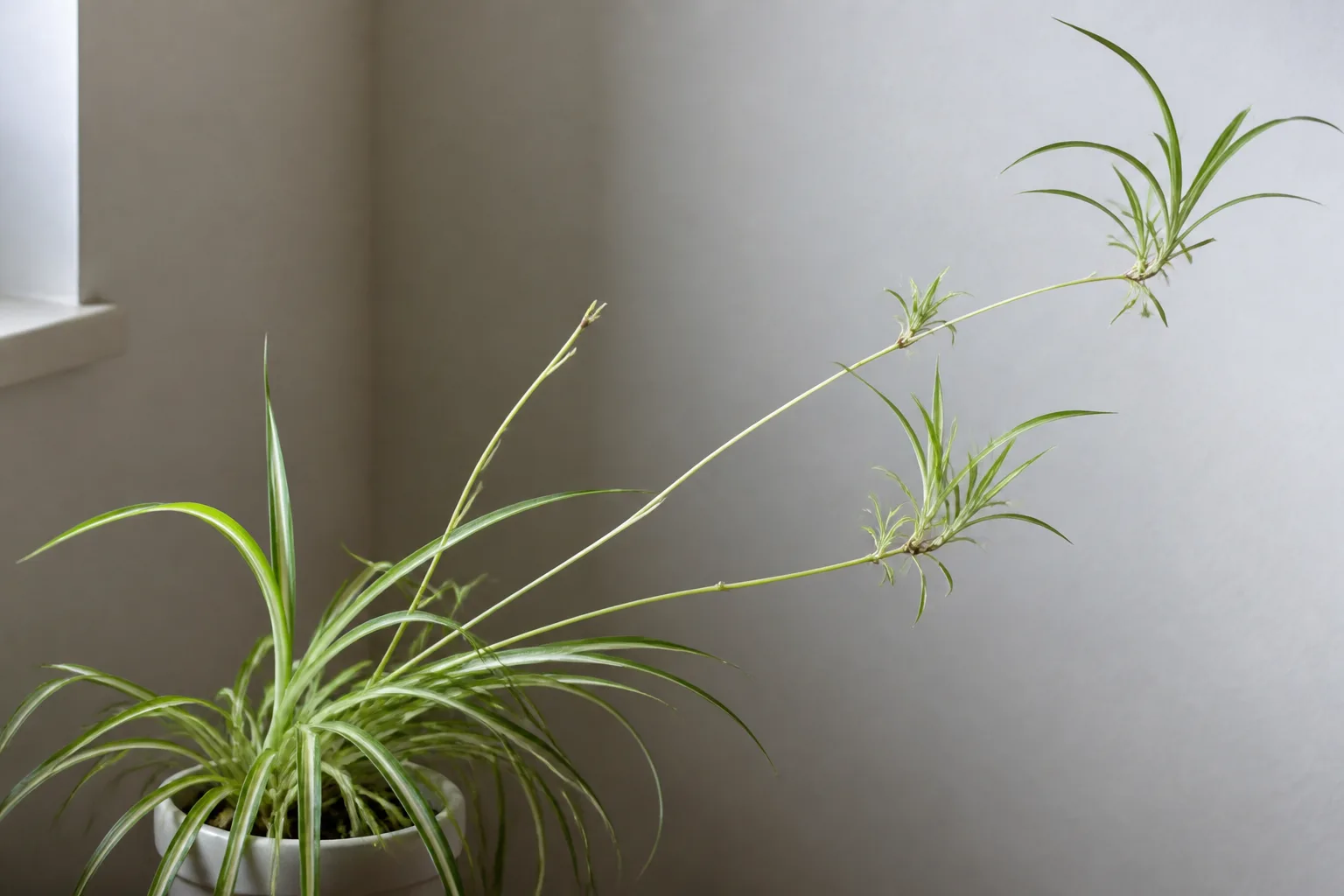
Leggy Growth on Spider Plant: Causes, Checks & Fixes
This guide covers leggy growth on Spider Plant. See also the general Leggy Growth guide, watering, and light pages for this plant.
Leggy Growth on Spider Plant: Causes, Checks & Fixes
Quick answer
Leggy growth on Spider Plant is etiolation-the plant stretching toward usable light. Long thin stolons, pale strappy leaves, wide spacing between leaf clusters, and a basket that stops producing spiderettes all point the same direction. Spider Plant survives deep shade, but compact arching foliage and regular plantlets need brighter conditions than a dark hallway provides.
First step: move the pot to Spider Plant light guide-near an east window, or set back from south or west glass where midday sun will not hit the blades directly. Rotate the pot a quarter-turn each week so growth does not lean one-sided toward the window. Do not repot, fertilize, or prune everything at once until the plant has been in better light for a few weeks and you can see how new growth responds.
What leggy growth looks like on Spider Plant
Healthy Spider Plant forms dense clumps of arching, grass-like leaves with long wiry stolons that carry small white flowers and miniature plantlets. Leggy plants lose that balanced fountain shape.
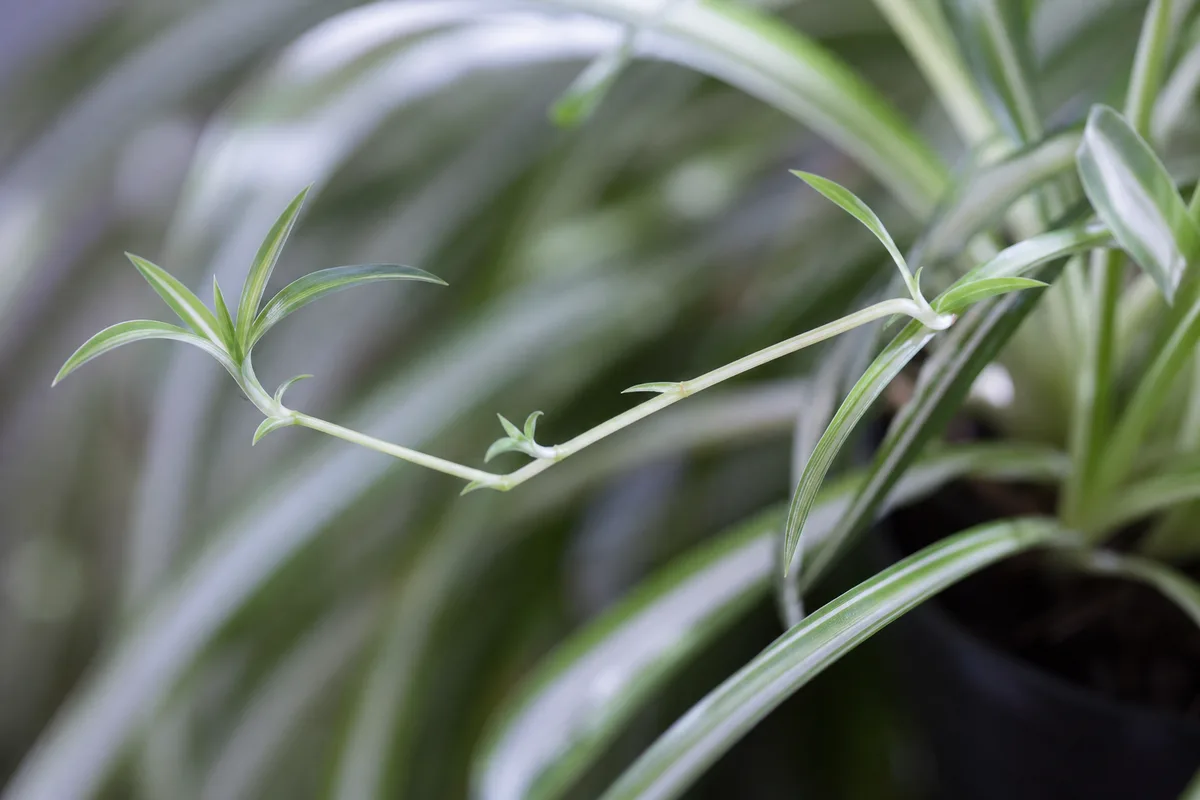
Leggy Growth symptoms on Spider Plant - compare with healthy tissue on the same plant.
Typical signs on Chlorophytum comosum:
- Long gaps between leaves on both the main crown and trailing stolons-newer internodes are noticeably longer than older growth lower on the plant
- Pale or washed-out foliage, especially on variegated cultivars where white or yellow stripes fade toward solid green
- Thin, reaching stolons with few or no spiderettes at the nodes, even during warm months when a well-lit plant would be producing babies freely
- One-sided lean toward the brightest side of the room
- Soft, weak new blades that arch limply instead of holding a crisp curve
Legginess is not the same as a root-bound plant pushing growth upward, and it is not the same as overwatering yellowing-though those problems can overlap in dim corners where soil dries slowly. Leggy tissue usually looks uniformly stretched across the whole plant or concentrated at the newest tips after a recent move to a darker spot.
Why Spider Plant gets leggy
Spider Plant is marketed as tolerant, and that is true-it can live in offices and north-facing rooms where fussier houseplants fail. Tolerance is not the same as preference. When light intensity drops, the plant allocates energy toward stem elongation so leaves can intercept more photons. University of Maryland Extension notes that indoor plants in too little light become spindly or leggy as they stretch, often with fading leaf color and poor overall growth.
Insufficient light is the main cause
Missouri Botanical Garden recommends bright indirect sunlight for indoor Spider Plants. NC State Extension lists medium light as ideal while noting the species tolerates deep shade and is intolerant of direct sunlight. In practice, a basket three metres from a window, tucked behind furniture, or sitting in a bathroom with frosted glass may keep the plant alive while forcing etiolated growth.
Spider Plant’s natural habit makes the symptom obvious. Stolons that should cascade with weight from dense plantlets instead become long bare wires searching for light. Variegated forms such as ‘Vittatum’ and ‘Variegatum’ often lose their contrast first because the white tissue cannot photosynthesize as efficiently and the whole plant compensates by stretching.
Uneven light and no rotation
Light reaching the plant from one direction triggers directional growth. Maryland Extension also warns that when light comes from only one side, houseplants develop a lean. Hanging baskets amplify the effect because the whole mass tilts toward the glass. Weekly rotation prevents lopsided stretch but does not replace adequate intensity.
Seasonal light drop in winter
Leggy tips that appear only on the newest growth after October often trace to shorter days and lower window intensity-not a sudden care mistake. The fix is the same: brighter placement or supplemental lighting during the darkest months, not more fertilizer.
Over-fertilizing in low light
Excess nitrogen in shade pushes soft, elongated tissue that still looks leggy even though the primary driver is light. Missouri Botanical Garden and NC State both note that heavily fertilized plants may not form as many new plantlets. Feeding a dim, stretched plant does not tighten internodes; it adds weak top growth on an already unstable structure.
Crowding and shade from other plants
A Spider Plant on a crowded shelf may receive enough ambient room brightness for survival while the foliage itself sits in another plant’s shadow. The crown stretches toward the gap where light enters. This pattern shows legginess only on the shaded side or on stolons trapped beneath neighboring leaves.
How to confirm the cause
Work through these checks before pruning or Spider Plant repotting guide:
- Light at the leaf surface - Hold your hand above the foliage at midday. A sharp, defined shadow suggests enough intensity for compact growth. A faint or absent shadow means the plant is working with low light even if the room looks bright to your eyes.
- Pattern on the plant - Uniform long gaps throughout the plant mean chronic under-lighting. Long gaps only at the top suggest a recent move to a darker spot or winter light decline.
- Variegation check - If stripes on a variegated Spider Plant have faded and the plant is stretching, light is the leading suspect.
- Plantlet production - A mature, well-lit Spider Plant produces plantlets on stolons during active growth. Months with zero spiderettes in warm weather strongly support a light diagnosis.
- Soil dry-down speed - Push your finger 5 cm into the mix. If the top stays damp for two weeks while the plant looks pale and stretched, low light is slowing water use. That combination raises overwatering risk and deserves a watering adjustment after you move the plant.
- Pest and disease scan - Leggy growth alone rarely involves insects. If you see webbing, sticky residue, or spotty lesions, treat those separately-but do not let a pest hunt distract from an obvious light problem.
If light is clearly inadequate and no other stress signs appear, you have enough to act. You do not need to repot to confirm legginess.
First fix for Spider Plant
Move the pot to the brightest location that still avoids harsh direct sun on the leaves.
Clemson HGIC recommends bright indirect light for Spider Plants and notes that midday direct sunlight may scorch leaves. Practical placements include:
- An east-facing windowsill or the floor directly beside it
- A spot 0.5–1.5 metres back from an unobstructed south or west window, ideally behind a sheer curtain if afternoon sun is strong
- Under a full-spectrum grow lamp if natural light is weak-Missouri Botanical Garden notes Spider Plant tolerates artificial light very well, which makes it workable in offices
After moving, rotate the pot weekly. Wait two to three weeks before major pruning so you can see whether new leaves emerge tighter and greener. If the plant came from very deep shade, shift it in one step to bright indirect light rather than deep shade to hot direct sun-the leaf tips scald easily.
Do not increase watering to “help” a leggy plant. Lower light use means slower dry-down. Water when the top 5 cm of soil is dry, matching the rhythm from your main Spider Plant care routine.
Step-by-step recovery
Once the plant is in better light, secondary steps bring the basket back to a pleasing shape:
- Let new growth lead - Watch the crown and newest stolons. Tighter leaf spacing and restored variegation on fresh blades confirm the placement is working.
- Trim bare stolons after stabilization - Cut elongated, plantlet-free stolons back to the base or to a node once new compact growth is visible. Old stretched sections never shorten on their own.
- Root leggy spiderettes if you want a reset - Small plantlets on weak stolons can be potted separately once they show nubs of aerial roots. This is optional propagation, not required for the parent plant to recover.
- Hold fertilizer until growth normalizes - When new leaves look firm and appropriately colored, feed lightly during active growth. Avoid heavy feeding while the plant is still adjusting.
- Adjust watering to the new location - Brighter light usually means faster dry-down. Recheck the pot weekly rather than keeping a dim-corner schedule.
Recovery timeline and what to expect
Spider Plant responds quickly once light improves, but old tissue does not transform.
- Week 1–2: Lean may stop worsening; new tiny leaves may appear slightly darker than the stretched tissue above them
- Week 3–6: New arching blades should show shorter internodes; variegated cultivars may regain stripe contrast on fresh growth
- Month 2–3: Stolons on a well-lit plant often resume plantlet formation if photoperiod and temperature support it-NC State notes plantlets form when the spider plant receives short days and long, uninterrupted nights for at least three weeks
- Beyond: Older leggy leaves and stolons remain long unless you prune them
If six weeks in a clearly brighter spot produce no improvement in new growth color or spacing, reassess whether the location is still too dim or whether a second issue such as chronic overwatering is limiting recovery.
Lookalike symptoms
Not enough light vs. leggy growth: On LeafyPixels these topics overlap. “Not enough light” is the broader condition; leggy growth is the visible stretch pattern. The fix for both is improving light-this page focuses on the elongated stolon and internode pattern rather than every low-light symptom.
Overwatering yellow leaves: Yellowing with wet soil and soft tuberous roots is a root-zone problem. Leggy plants can have green leaves and still stretch. If both appear, fix light first, then let soil dry appropriately before repotting.
Root-bound crowding: A severely root-bound Spider Plant may slow overall growth and shed lower leaves, but it does not typically produce the long pale stolons characteristic of etiolation. Check for roots circling drainage holes if growth is stalled without stretch.
Normal stolon length: Spider Plant stolons are naturally long when loaded with plantlets. A heavy cascade of babies on green firm foliage is healthy, not leggy. Legginess means bare, thin runners with wide leaf gaps and weak color.
Mistakes to avoid
- Pruning heavily before improving light - Cut stems regrow, but they will stretch again if the photon budget is still too low.
- Jumping from deep shade to hot direct sun - Spider Plant scorches in direct sun. Bright indirect light is the target.
- Feeding more to “bulk up” a stretched plant - Fertilizer does not replace photons and may reduce plantlet formation.
- Repotting on day one - Legginess is not a pot-size problem unless separate root-bound signs exist.
- Keeping the same watering calendar - Dim corners and bright windows dry at different speeds. Let the soil guide you.
- Assuming stretch means healthy vigor - Fast stem length in low light is weak etiolation, not thriving growth.
How to prevent leggy growth
Place the parent plant where it receives bright indirect light for most of the day, or supplement with artificial light in offices and north rooms. Rotate hanging baskets weekly. Match watering to dry-down in that specific spot-Spider Plant prefers moist soil with good drainage, not stale wet mix in a dark corner.
If you want regular spiderettes, avoid over-fertilizing and remember the photoperiod cue for plantlet formation. A well-lit plant with appropriate day length produces babies far more reliably than a stretched survivor in deep shade.
For winter, expect some slowdown. Either accept slightly thinner growth until spring or add a grow lamp on a timer so day length and intensity stay adequate through the dark season.
When to worry
Leggy growth alone is a cosmetic and cultural issue, not an emergency. Escalate care when:
- Soil stays wet for weeks and lower leaves yellow while tuberous roots feel soft-possible root rot on Spider Plant in a dim, overwatered corner
- New growth continues to pale and stretch even after a clear move to bright indirect light for six or more weeks
- Leaf tips brown widely after a sudden move to direct sun-that is scorch, not etiolation; pull the plant back from the glass
Spider Plant rarely dies from legginess alone. It does suffer when low light pairs with chronic overwatering around its fleshy tuberous roots. Fix placement first, then align watering with how the plant actually uses moisture in the new spot.
When to use this page vs other Spider Plant guides
- Spider Plant watering guide - Use for routine moisture checks before assuming leggy growth is the main issue.
- Spider Plant problems hub - Browse all 4 common issues on this species.
- Yellow Leaves on Spider Plant - Different entry point when symptoms overlap with leggy growth.