Brown Tips on Spider Plant: Causes, Checks & Fixes
Quick answer
Brown tips on Spider Plant usually mean fluoride or chlorine in tap water, fertilizer salt buildup, or low humidity-not a disease. Switch to rainwater, distilled, or RO water, trim dead tips for appearance, and judge recovery by clean margins on new leaves within two to four weeks.
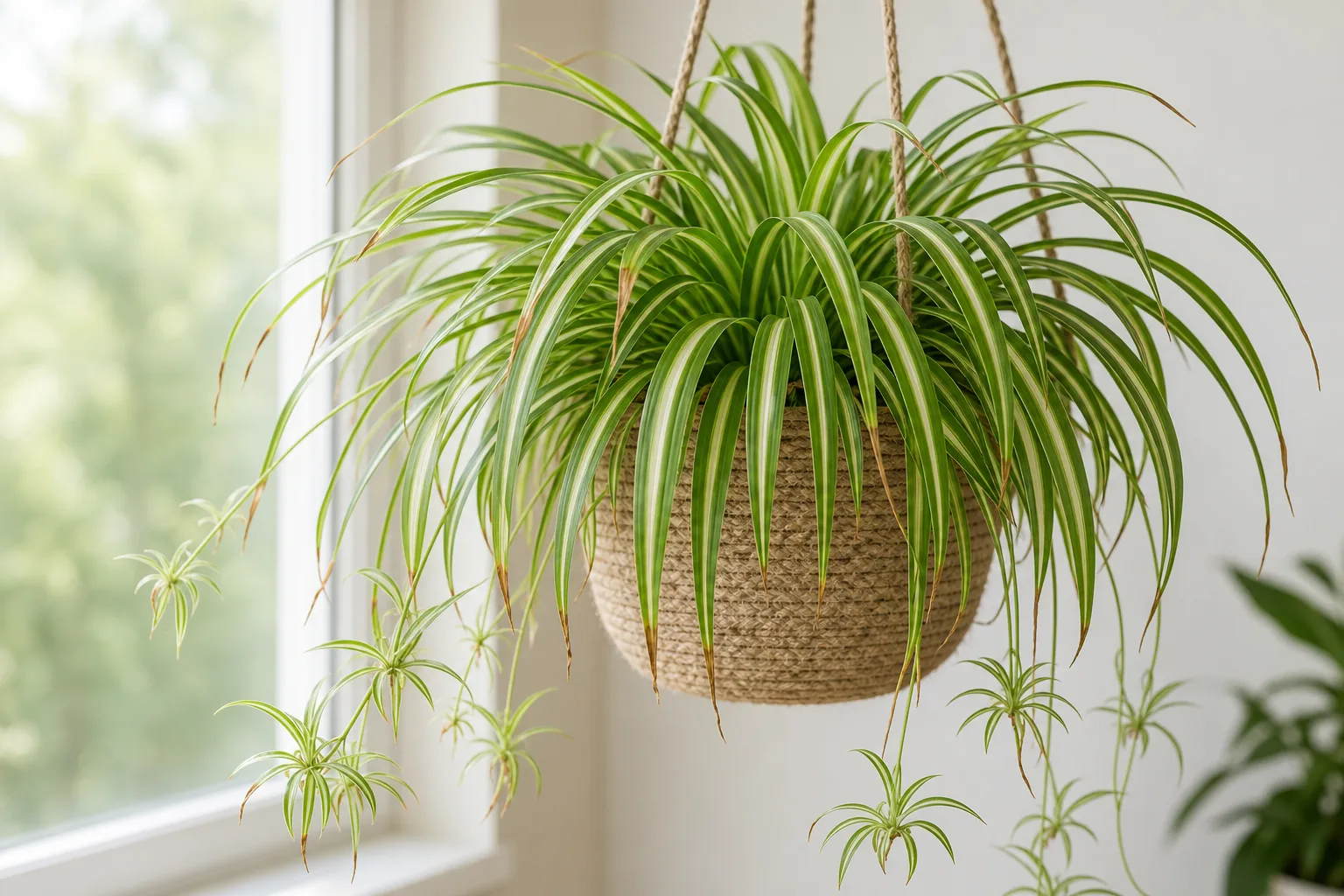
Brown Tips on Spider Plant: Causes, Checks & Fixes
This guide covers brown tips on Spider Plant. See also the general Brown Tips guide, watering, and light pages for this plant.
Brown Tips on Spider Plant: Causes, Checks & Fixes
Quick answer
Use this guide when leaf tips turn brown but tuberous roots are firm and the plant is otherwise growing. Brown tips on Spider Plant (Chlorophytum comosum) are usually a water-chemistry or salt problem-not rot, not spider mites, and not a reason to water more. Spider plants are particularly sensitive to fluoridated water among common houseplants, and long arching blades transport minerals to the furthest point-the narrow tip-where fluoride and salts accumulate and cause necrosis.
The first fix is to switch all future waterings to rainwater, distilled, or reverse osmosis (RO) water, then flush the pot once with that clean water to dilute old minerals in the mix. Trim existing brown tips with clean scissors for appearance only; damaged tissue will not re-green. Judge success by clean margins on new leaves and spiderettes within two to four weeks.
If tips brown while soil stays wet for days, soft tubers develop, or lower leaves yellow widely, stop here and use the overwatering guide instead-wet soil plus fluoride worsens tip burn. If a hygrometer reads below 35–40% after heat turns on and browning clusters on exposed blades, also read the low humidity guide for vent placement and humidifier setup.
Why Spider Plant gets brown tips
Spider Plant tip burn is rarely mysterious once you understand how this species moves water. Each long strap-shaped leaf pulls moisture and dissolved minerals from thick tuberous roots at the crown. The terminal tip is the last stop-and the first place excess fluoride, chlorine residues, boron, and fertilizer salts concentrate. MSU Extension lists spider plant among monocots especially susceptible to fluoride toxicity when irrigated with fluoridated city water, alongside dracaena and lilies.
Fluoride and salt accumulate at leaf tips
Municipal tap water in many North American cities contains fluoride-often near 0.7 mg/L in fluoridated systems-plus chlorine or chloramine disinfectants. Chlorine largely off-gasses if tap water sits open for 24 hours. Fluoride does not evaporate and builds up in potting mix and leaf tissue over months of routine watering. NC State advises avoiding tap water because chlorine and fluorides cause leaf tip burn on this species.
The signature pattern is progressive inward burn: the very tip browns first, then necrosis creeps along the margin on successive new leaves even when humidity and watering rhythm look fine. White crust on the pot rim or soil surface points to fertilizer salt buildup-Clemson HGIC lists too much fertilizer or high-soluble-salt water as leaf tip burn causes. Heavy feeding on dry soil is a common salt-burn trigger.
Low humidity and inconsistent watering overlap
Spider Plant is drought tolerant at the root zone but not at leaf margins. Wisconsin Extension notes low humidity, dry soil, salt buildup, and chemicals in tap water among brown tip causes. In winter-heated rooms, dry air pulls moisture from the narrow tips of arching blades faster than tuberous roots replace it-especially on hanging baskets mounted below ceiling vents.
Underwatering episodes also crisp tips: Missouri Botanical Garden notes leaf tips turn brown from too little water, too low humidity, and/or too much salts and excess fluorides. A light pot with dusty dry soil through most of the root ball points to drought stress, not fluoride alone. The plant prefers moderately moist soil during active growth with a real dry-down between drinks-see the watering guide for the top-2-inch check rhythm.
What brown tips look like on Spider Plant
On Spider Plant, tip burn is usually cosmetic before it threatens the whole plant. Learn the patterns so you do not treat the wrong problem.
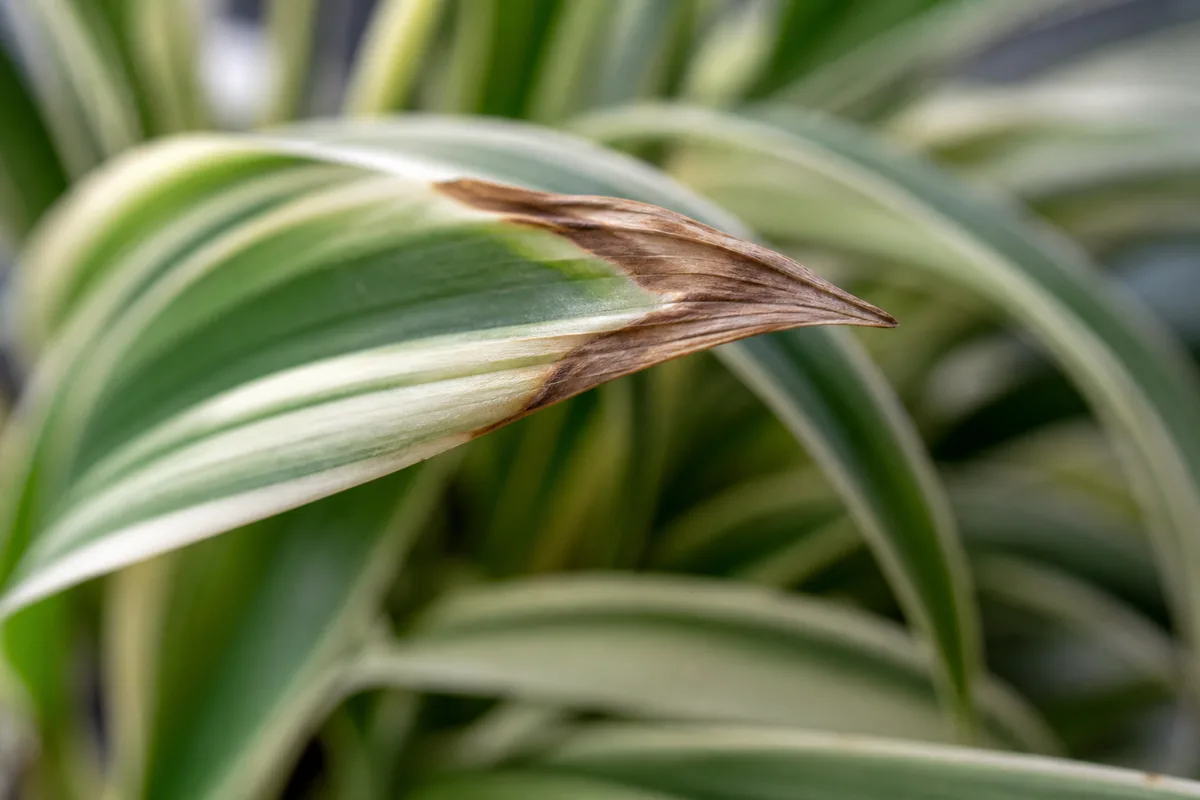
Brown Tips symptoms on Spider Plant - compare with healthy tissue on the same plant.
- Dry brown or tan tips on green or white-striped arching leaves, often confined to the last few millimeters at first
- Progressive margin burn creeping inward on new leaves over weeks when fluoride is the trigger
- Parallel brown streaks along leaf edges when dry air or salt stress persists
- Spiderette tip burn on trailing stolons while the mother rosette still looks mostly green-tender new tissue shows damage first
- Crispy, papery tips that break when bent, while mid-leaf tissue stays firm and green
Variegated cultivars (‘Vittatum’, ‘Bonnie’)
Variegated spider plants like ‘Vittatum’ and ‘Variegatum’ often show damage on pale white leaf sections first because those tissues have less chlorophyll and less margin for error under mineral stress. Curly ‘Bonnie’ follows the same fluoride pattern on twisted blades. Cosmetic trimming is especially worthwhile on variegated plants where brown tips contrast sharply against white stripes.
Lookalikes: sun scorch, spider mites, underwatering
Several problems copy tip burn:
| Pattern | What you see | Quick check |
|---|---|---|
| Fluoride / salt burn | Tips and margins on new growth; progressive inward creep | Humid room, consistent watering, firm tubers |
| Low humidity | Tips on longest exposed blades after heat/AC runs | Hygrometer below 35–40%; see low humidity guide |
| Underwatering | Crisp tips plus limp leaves; pot very light | Dry soil 2 inches down; plant perks after one soak |
| Sun scorch | Bleached or brown patches on window-facing side | Spider Plant is intolerant of direct sunlight; not tip-only |
| Spider mites | Stippling plus fine webbing on undersides | Tap leaf over white paper; see spider mites guide |
Unlike sun scorch, fluoride burn usually affects tips on multiple sides of the rosette, not just the window-facing blade. Unlike spider mites, there is no stippling or webbing on leaf undersides.
How to confirm the cause
Work through these checks in order before changing everything at once.
Water source and fluoride check
- Know your supply. If your city fluoridates tap water, treat fluoride as the top suspect when tips burn on every new leaf.
- Review recent fertilizing. Heavy doses on dry soil or white crust on the pot rim suggest salt burn first.
- Note the burn pattern. Progressive inward tip necrosis on fresh growth in a humid room fits fluoride better than dry air alone.
Humidity and vent mapping
- Place a hygrometer at foliage height beside the pot. Spider Plant grows best in medium air humidity-roughly 40–60% for stable indoor growth. Readings below 35% for more than a few days explain winter tip burn in heated rooms.
- Map heat vents, radiators, and ceiling registers above hanging baskets. Warm dry air rising across cascading foliage crisp tips even when roots are adequately watered.
Soil moisture and salt buildup
- Feel pot weight and probe the top 2 inches. Firm tubers with neutral-smelling soil and a light pot point to underwatering overlap. A heavy wet pot for days suggests overwatering-route to overwatering before adding more water for “dry tips.”
- Look for salt crust on soil surface or pot rim. Flush if present.
Confirmation decision table
| Your findings | Most likely cause | First action |
|---|---|---|
| Fluoridated tap water; burn on every new leaf; firm tubers | Fluoride toxicity | Switch to rainwater, distilled, or RO; flush pot |
| Hygrometer below 35%; burn after furnace runs; firm tubers | Low humidity | Move away from vents; humidifier-see low humidity guide |
| White crust; burn after heavy feed | Salt buildup | Flush; hold fertilizer |
| Very light pot; dry soil; limp leaves | Underwatering | Soak once; resume dry-down rhythm |
| Wet soil days; yellow lower leaves | Overwatering stress | Stop watering; inspect tubers |
| Window-side patches; direct afternoon sun | Sun scorch | Move to bright indirect light |
First fix for Spider Plant
Make one primary change before stacking treatments.
Switch water source (filtered, distilled, RO, rainwater)
Change what you water with-not how often you water. Replace fluoridated or hard tap water with rainwater, distilled water, or RO water for every drink going forward. Do not rely on overnight-settled tap water for fluoride-sensitive spider plants; chlorine may reduce, but fluoride remains.
A practical hierarchy:
| Water source | Fluoride | Chlorine/chloramine | Best use on Spider Plant |
|---|---|---|---|
| Rainwater (clean collection) | Absent | Absent | Ideal |
| Distilled water | Absent | Absent | Ideal; higher cost |
| Reverse osmosis (RO) | Removed | Removed | Excellent long term |
| Tap water, rested 24 hrs | Still present | Reduced chlorine | OK only if tips stay clean |
| Carbon filter (Brita-style) | Often still present | Partially reduced | Mild cases; may not fix progressive burn |
| Fluoridated hard tap water | Present | Present | Likely to cause progressive tip burn |
After switching sources, flush the pot once with the new water-water until copious drainage runs-to dilute old mineral buildup in the mix.
Trim, flush, and adjust humidity
Once water chemistry is addressed:
- Trim brown tips with clean scissors at a slight angle following the natural leaf curve. Trimming is cosmetic; it does not fix the cause but clarifies whether new growth emerges clean.
- Raise humidity if a hygrometer confirms dry air-use a room humidifier or pebble tray under the pot, keeping tuberous roots above standing water. For hanging baskets, move the basket away from ceiling vents first.
- Hold fertilizer until at least two new leaves open without fresh tip burn.
Do not increase watering frequency because tips are brown. Wet soil plus fluoride worsens tip burn on sensitive monocots.
Recovery timeline
Existing brown tip tissue is irreversible once necrotic-it will not turn green again. Judge recovery by new growth, not old damage.
- Within 1–2 weeks: Active tip burn should stop spreading once water source and humidity stabilize
- Within 2–4 weeks: New arching leaves and spiderettes should show cleaner margins if conditions hold
- After 4–8 weeks: Heavily browned outer leaves can be trimmed for appearance; the crown should look fuller from the center
If every new leaf still burns after a full month on rainwater or distilled water, recheck whether fertilizer salts, direct sun, or spider mites are contributing. If tips brown while soil stays soggy and tubers soften, pivot to the overwatering guide-that is root stress, not cosmetic tip burn.
What not to do
- Do not assume overnight tap water fixes fluoride burn. Chlorine off-gasses; fluoride does not.
- Do not water more because tips are brown. Wet soil plus fluoride accelerates damage on this species.
- Do not heavily fertilize stressed plants. Salt burn mimics and compounds fluoride necrosis.
- Do not place in direct midday sun to “help” the plant-that causes foliage scald, not healthier tips.
- Do not trim every leaf before fixing water chemistry. New blades will burn again until the source changes.
- Do not repot on day one unless salt crust is severe or the mix is clearly failing-stabilize water and humidity first.
How to prevent brown tips next time
Long-term prevention is simpler than repeated rescue:
- Use low-fluoride water as your default-rainwater, distilled, or RO-for spider plants in fluoridated municipalities
- Flush the pot monthly during active growth with plain water to leach salts, especially if you fertilize regularly
- Keep hanging baskets away from ceiling vents and maintain roughly 40–60% humidity in heated winter rooms
- Water on a dry-down rhythm-top 2 inches dry before the next soak-per the watering guide
- Fertilize lightly during active growth; MOBOT notes heavily fertilized plants may not form as many new plantlets
- Keep temperatures in the 55–80°F range with stable placement
Spider Plant is non-toxic to cats and dogs, so you can hang baskets safely while adjusting water quality-no need to relocate the plant for pet safety when fixing tips.
Related Spider Plant guides
Page roles: This guide owns water chemistry, fluoride, and salt tip burn. Use siblings for overlapping symptoms:
- Spider Plant overview - species biology, cultivars, and baseline care
- Watering guide - dry-down rhythm, seasonal schedule, and full water-source depth
- Low humidity guide - dry-air tip burn, hygrometer checks, and vent mapping
- Overwatering guide - wet soil with yellow leaves and soft tubers
- Underwatering guide - drought crisping with very dry soil
- Spider mites guide - stippling and webbing that mimic margin damage